If there is one number that every property buyer in Luxembourg needs to understand before making any decision, it is the price per square metre. In my experience working with clients across Luxembourg — from first-time buyers stretching their budget for a studio in Bonnevoie to seasoned investors evaluating entire buildings in Kirchberg — I have seen how a clear understanding of price per square metre by area can make the difference between a smart purchase and an expensive mistake. Luxembourg property prices per sqm vary enormously depending on which commune, which neighbourhood, and even which street you are looking at. In 2026, those differences are more pronounced than they have been in years, and this guide is designed to give you the complete, unfiltered picture.
I have written this article as a practical reference tool — something you can come back to when you are comparing properties, negotiating with sellers, or simply trying to understand whether a listing price is fair. You will find detailed price per square metre data for every major area in Luxembourg, from the most expensive streets in Luxembourg City to the affordable commuter belt towns that are quietly becoming some of the smartest buys in the country. Every figure is based on transaction data, notarial records, and the patterns I observe every day in my own work as a real estate professional in Luxembourg. If you are new to the Luxembourg property market, I recommend reading my complete 2026 market analysis first for the broader context, then using this guide to zoom in on the areas that interest you most.
What I always tell my clients is this: price per square metre is not just a number — it is a language. Once you learn to read it fluently, you can instantly assess whether a property is fairly priced, identify where the market is heading, and spot the areas where your euro will work hardest for you. Let me teach you that language, area by area.
Understanding Price per Square Metre in Luxembourg: Why It Matters
Before we dive into the neighbourhood-by-neighbourhood breakdown, let me explain why price per square metre is the metric that matters most in Luxembourg real estate — and why raw listing prices can be deeply misleading.
When you see a property listed at EUR 750,000, your first instinct might be to compare it with another property listed at EUR 680,000 and assume the second is the better deal. But if the first property is 85 square metres and the second is 62 square metres, the price per square metre tells a very different story: EUR 8,824/sqm versus EUR 10,968/sqm. The "cheaper" property is actually 24 percent more expensive on a per-metre basis. In Luxembourg, where apartment sizes vary wildly between new builds and older stock, this kind of comparison is essential.
From what I see in the market right now, many buyers — especially those relocating from countries where property markets are structured differently — struggle with this concept initially. They focus on the total price and the number of bedrooms rather than the underlying value per square metre. This is particularly dangerous in Luxembourg, where developers sometimes design apartments with generous common areas or terraces that inflate the total surface but do not contribute equally to the liveable space. In my experience working with clients, I always insist on comparing the habitable surface area (surface habitable) rather than the total surface, as this gives a far more accurate picture of what you are actually paying for.
Luxembourg's official statistics body, STATEC, and the Observatoire de l'Habitat both track price per square metre as their primary metric for monitoring the property market. When the government discusses housing affordability, when banks assess property valuations for mortgage purposes, and when investors calculate yields, price per square metre is the common currency. Understanding it is not optional — it is fundamental to making a sound property decision in this market.
What this means for you: Always calculate and compare the price per habitable square metre when evaluating any property. Ask the agent for the surface habitable figure, not just the total surface area, and use it as your basis for comparison.
Luxembourg City: The Complete Price per Square Metre Map in 2026
Luxembourg City remains the most expensive commune in the country and the benchmark against which every other area is measured. But calling it simply "expensive" misses the extraordinary variation within the city itself. In 2026, the difference between the most expensive and least expensive quartiers within Luxembourg City is approximately EUR 5,000 per square metre — that is almost the entire average price in some secondary cities. Let me break down every major district so you can see exactly where the value lies.
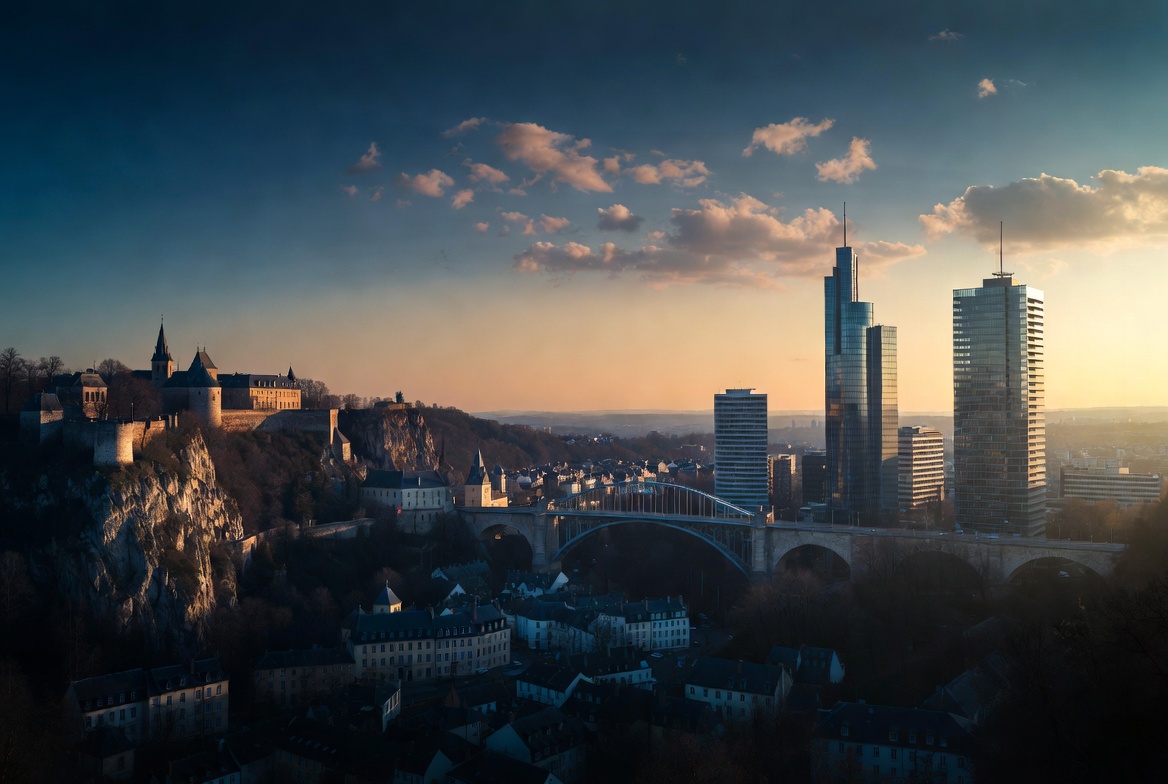
Luxembourg City in 2026 — the most diverse property market in the Grand Duchy, with prices ranging from EUR 7,800 to over EUR 14,000 per square metre depending on the district
Luxembourg City Districts — Price per Square Metre Comparison (Q1 2026)
| District | Avg. Price/sqm (EUR) | Price Range/sqm (EUR) | Trend (vs. 2025) | Profile |
|---|---|---|---|---|
| Kirchberg | 12,200 | 10,800 – 14,500 | +4.8% | Premium / Institutional |
| Belair | 11,400 | 10,200 – 13,000 | +3.5% | Established Residential |
| Limpertsberg | 11,100 | 9,800 – 12,800 | +3.9% | Family / University |
| Centre (Ville Haute) | 10,800 | 9,500 – 12,500 | +2.8% | Historic / Mixed-use |
| Merl | 10,200 | 9,200 – 11,500 | +4.1% | Residential / Green |
| Gasperich / Cloche d'Or | 10,100 | 9,200 – 11,200 | +5.2% | Business Hub / New-build |
| Neudorf / Weimershof | 9,600 | 8,500 – 10,800 | +3.7% | Central / Mixed |
| Hollerich | 9,400 | 8,500 – 10,500 | +5.8% | Regenerating / Value |
| Bonnevoie | 8,800 | 7,800 – 9,800 | +5.5% | Multicultural / Tram |
| Gare | 8,600 | 7,500 – 9,800 | +4.6% | Transport Hub / Rental |
| Cessange | 8,400 | 7,600 – 9,400 | +6.1% | Emerging / New-build |
| Hamm | 8,200 | 7,400 – 9,200 | +4.3% | Residential / Quiet |
| Beggen | 8,100 | 7,200 – 9,100 | +3.4% | Suburban / Family |
| Dommeldange | 7,900 | 7,000 – 8,800 | +3.2% | Suburban / Value |
Kirchberg, Belair, and Limpertsberg: The Premium Triangle
These three districts form what I call Luxembourg City's "premium triangle" — the areas where prices per square metre are highest and where demand from institutional buyers, wealthy expats, and established families remains consistently strong regardless of broader market conditions.
Kirchberg — The Financial Capital's Address
Kirchberg is where Luxembourg's identity as a European financial centre is most visible. Home to the European Investment Bank, the European Court of Justice, major fund management companies, and a growing number of tech firms, Kirchberg generates an extraordinary concentration of high-income professionals who need housing close to work. In my experience working with clients who work in Kirchberg, the conversation almost always starts with the same question: "Can I afford to live where I work?"
The answer in 2026 is that Kirchberg remains the most expensive district for new-build apartments, with premium developments regularly exceeding EUR 13,000 per square metre. A typical two-bedroom apartment of 80 square metres in a modern Kirchberg residence will cost between EUR 880,000 and EUR 1,050,000. What justifies these prices is not just the location but the quality of the building stock — Kirchberg has some of the newest, most energy-efficient residential buildings in Luxembourg, many achieving energy class A or A+, which significantly reduces ongoing costs and maintains resale value.
What I always tell my clients considering Kirchberg is that the district's price floor is remarkably solid. Even during the 2022-2023 correction, when some Luxembourg areas saw drops of 15 to 18 percent, Kirchberg prices fell only 8 to 10 percent. The institutional demand provides a buffer that softer residential areas simply do not have. If you want security and prestige, Kirchberg delivers — but you pay a premium for that stability.
Belair — Old Money, Enduring Value
Belair is Luxembourg City's most established residential neighbourhood, characterised by tree-lined streets, elegant villas, high-quality apartment buildings, and proximity to the Parc de Merl. If Kirchberg represents corporate Luxembourg, Belair represents its residential aristocracy. Prices here average EUR 11,400 per square metre, with period properties in prime locations commanding even more.
One thing that surprises most of my clients about Belair is how limited the supply is. Because much of the housing stock consists of older, well-maintained buildings on large plots, there is very little new construction. When a property comes onto the market in prime Belair, it often sells within days — sometimes before it even reaches the public listings. I have worked with clients who waited months for the right Belair property, and when it appeared, they had to move immediately. If Belair is your target, having your financing pre-approved and your search criteria crystal clear is not optional — it is essential. For guidance on getting your mortgage ready, see my comprehensive mortgage guide.
Limpertsberg — The University Quarter
Limpertsberg combines the residential prestige of Belair with a slightly more dynamic, youthful energy driven by its proximity to the University of Luxembourg's original campus and a vibrant selection of restaurants and cafes along its main streets. Prices average EUR 11,100 per square metre, placing it firmly in the premium bracket but with slightly more accessible entry points than Kirchberg or Belair.
From what I see in the market right now, Limpertsberg is particularly popular with professional couples and young families who want a Luxembourg City address with genuine neighbourhood character. The tram connection through Limpertsberg has reinforced its desirability, and I expect prices here to continue appreciating at 3 to 5 percent annually through 2026 and into 2027.
What this means for you: If your budget allows, these districts offer the most defensive investment in Luxembourg real estate. Expect lower yields (2.5 to 3.5 percent) but stronger capital preservation and appreciation. They are ideal for buyers who prioritise security over short-term returns.
Bonnevoie, Gare, Gasperich, and Hollerich: The Value and Growth Districts
If the premium triangle is where you park wealth, these four districts are where you grow it. In my experience, the smartest buyers in Luxembourg are not the ones paying EUR 12,000 per square metre in Kirchberg — they are the ones buying at EUR 8,500 to EUR 10,000 per square metre in districts with strong growth fundamentals and watching their investment appreciate faster than the city average.
Bonnevoie — Momentum and Multiculturalism
I have written extensively about Bonnevoie in my guide to the best areas to buy in Luxembourg, and my conviction has only strengthened. At EUR 8,800 per square metre on average, Bonnevoie offers a genuine Luxembourg City address at a 20 to 25 percent discount compared with the premium triangle. The tram connection, the proximity to the Gare, and the vibrant community make it a magnet for young professionals and expats.
What excites me most about Bonnevoie in 2026 is the pace of regeneration. New residential projects, improved streetscaping, and the growing reputation of its restaurant and cultural scene are all contributing to a positive feedback loop: better amenities attract better tenants, which supports higher rents, which attracts more investors, which funds more development. I have seen this pattern before in other European cities, and it typically continues for 8 to 12 years before the area reaches maturity. Bonnevoie is perhaps five years into that cycle, which means there is still significant upside ahead.
Gasperich and Cloche d'Or — The Corporate Engine
Gasperich has been transformed by the Cloche d'Or development — a massive mixed-use project that brought corporate headquarters, a shopping centre, residential towers, and green spaces to what was previously a fairly unremarkable southern edge of the city. At EUR 10,100 per square metre on average, Gasperich sits in the middle of the Luxembourg City price range, but its growth trajectory has been among the strongest: up 5.2 percent year-on-year and showing no signs of slowing.
In my experience working with clients who work for the Big Four accounting firms, banks, or fund administrators — many of whom are based in or near Cloche d'Or — Gasperich is often the first area they consider. The appeal is straightforward: walk to work, modern apartment, good amenities, and a feeling of being in a purpose-built community rather than an older city neighbourhood that was not designed for 21st-century lifestyles. For investors, the rental demand from this corporate tenant base is extremely reliable. Vacancy rates in well-located Gasperich apartments are among the lowest in the country.
Gare — The Undervalued Transport Hub
The Gare district, centred around Luxembourg City's main railway station, has historically been one of the most affordable areas within the city limits. At EUR 8,600 per square metre on average, it remains so in 2026 — but the trajectory is firmly upward. The Gare is being reshaped by several forces simultaneously: the tram now connects it directly to Kirchberg, ongoing urban renewal projects are improving the streetscape, and the sheer convenience of having the national rail hub at your doorstep is becoming more valued as commuter patterns evolve.
What I always tell my clients about the Gare is that it offers the best rental yields within Luxembourg City — typically 4.0 to 4.5 percent gross. The tenant profile is dominated by cross-border workers and young professionals who value the transport connections above all else. If you are an investor focused on cash flow rather than capital appreciation, the Gare district deserves serious consideration. For a deeper analysis of investment returns, see my investment strategy guide.
Hollerich — The Quiet Riser
Hollerich is perhaps the district I am most excited about in 2026. Situated between the Gare and the city centre, this small neighbourhood has been overlooked for years but is now experiencing rapid transformation. At EUR 9,400 per square metre on average, Hollerich is priced between the affordable Gare/Bonnevoie tier and the premium central districts — and its 5.8 percent year-on-year growth rate is the second highest in the city.
The catalyst is the planned Hollerich urban renewal, which will bring new housing, public spaces, and improved connectivity over the coming years. From what I see in the market right now, early movers into Hollerich are positioning themselves to benefit from one of the most significant gentrification stories in Luxembourg. I recently helped a client purchase a 72-square-metre apartment in Hollerich at EUR 9,100 per square metre — a property that I believe could be worth EUR 10,500 per square metre within three to four years as the neighbourhood transformation accelerates.
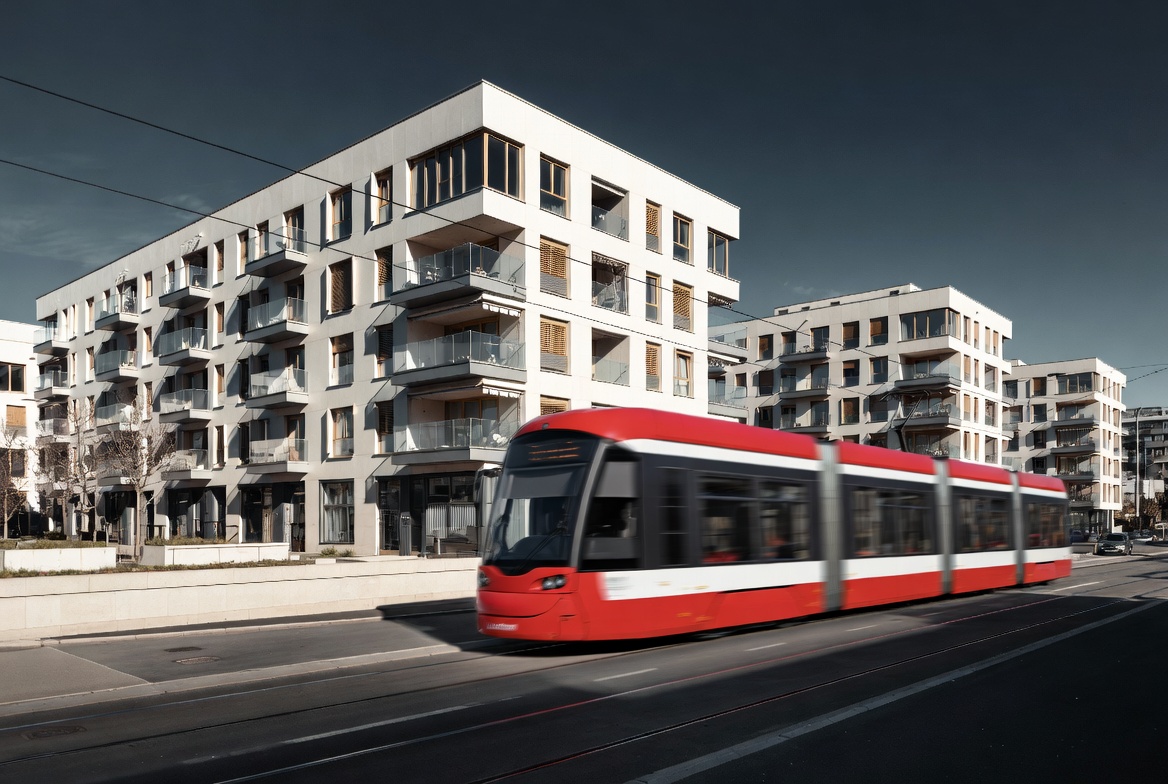
The tram network has been a game-changer for districts like Bonnevoie, Gasperich, and Hollerich — properties near tram stops command premiums of 12 to 18 percent
Not Sure Which District Fits Your Budget and Goals?
I help buyers navigate Luxembourg's price landscape every day. Whether you are looking for maximum growth potential or stable rental returns, I can match you with the right area and the right property.
📊 Free Consultation 💬 WhatsApp DanielaSecondary Cities: Where Your Euro Goes Further
Luxembourg City gets most of the attention, but in 2026, some of the most compelling value in Luxembourg real estate is found in the secondary cities. With average prices 30 to 50 percent below Luxembourg City and improving transport links, these towns are increasingly attracting buyers who have been priced out of the capital — or who simply recognise that paying half the price for 80 percent of the lifestyle is a rational choice.
Secondary Cities — Price per Square Metre Comparison (Q1 2026)
| City | Avg. Price/sqm (EUR) | Price Range/sqm (EUR) | Trend (vs. 2025) | Distance to Lux City | Train Commute |
|---|---|---|---|---|---|
| Esch-sur-Alzette | 6,400 | 5,500 – 7,500 | +6.7% | 19 km | ~22 min |
| Differdange | 5,600 | 4,800 – 6,500 | +5.4% | 25 km | ~30 min |
| Dudelange | 5,900 | 5,100 – 6,800 | +5.8% | 17 km | ~25 min |
| Ettelbruck | 5,300 | 4,500 – 6,200 | +4.9% | 32 km | ~28 min |
| Bettembourg | 6,800 | 5,900 – 7,600 | +5.1% | 15 km | ~15 min |
| Mersch | 5,800 | 5,000 – 6,600 | +4.5% | 18 km | ~22 min |
| Strassen | 8,500 | 7,600 – 9,500 | +4.0% | 5 km | ~10 min (bus) |
| Bertrange | 8,200 | 7,200 – 9,300 | +3.8% | 7 km | ~12 min (bus) |
| Hesperange | 8,000 | 7,100 – 9,000 | +4.2% | 6 km | ~10 min (bus) |
Esch-sur-Alzette — Luxembourg's Second City
Esch-sur-Alzette is the story I find myself telling the most in 2026. As Luxembourg's second-largest city, Esch has undergone a remarkable transformation driven by the University of Luxembourg's Belval campus, the Esch2022 European Capital of Culture legacy, and significant urban renewal investment. At EUR 6,400 per square metre on average, Esch offers prices that are nearly half those of Luxembourg City — yet it is only a 22-minute train ride from the capital.
What I always tell my clients about Esch is that it offers the most compelling value proposition in the country for buyers who are comfortable with a short commute. A 90-square-metre apartment that would cost EUR 880,000 in Bonnevoie or EUR 1,100,000 in Kirchberg can be purchased in a modern Belval development for around EUR 580,000 to EUR 620,000. That is a difference of EUR 300,000 to EUR 500,000 — money that can dramatically change your financial trajectory, whether you use it to reduce your mortgage burden, invest elsewhere, or simply enjoy a higher quality of life.
In my experience, the buyer profile in Esch has shifted significantly over the past three years. Where it was once predominantly first-time buyers and budget-conscious families, I am now seeing more established professionals who could afford Luxembourg City but choose Esch for the value, the space, and the improving lifestyle offering. The Belval area in particular has a modern, campus-like feel that appeals to professionals working in tech, research, and academia. For more on how to evaluate the rent-versus-buy equation in these secondary cities, check my renting versus buying analysis.
Differdange — Affordable Entry Point
At EUR 5,600 per square metre, Differdange is one of the most affordable communes in Luxembourg, making it an attractive entry point for first-time buyers who cannot yet stretch to Luxembourg City or even Esch-sur-Alzette prices. The town has a working-class heritage and a more modest infrastructure compared with the capital, but it offers genuine community, decent schools, and improving transport links.
From what I see in the market right now, Differdange is attracting a growing number of investors who are buying apartments in the EUR 280,000 to EUR 380,000 range and renting them to cross-border workers and young professionals. Gross rental yields here can reach 4.5 to 5.0 percent — among the highest in the country. The risk profile is different from Luxembourg City, of course, but for investors with a long-term horizon and a tolerance for secondary market dynamics, Differdange can be a smart addition to a diversified portfolio.
Dudelange — Southern Charm with Strong Commute Links
Dudelange, situated in the southeast of Luxembourg near the French border, offers a compelling blend of affordability and connectivity. At EUR 5,900 per square metre, it is priced slightly above Differdange and Ettelbruck but below Esch, and its train connection to Luxembourg City takes approximately 25 minutes. The town has invested significantly in public amenities, sports facilities, and cultural spaces, giving it a liveability quotient that punches above its price bracket.
What I always tell my clients considering Dudelange is that it is one of the few secondary cities where you can still find older houses with gardens at prices that are genuinely accessible. A renovated terraced house of 120 square metres in a good Dudelange location can still be found for EUR 650,000 to EUR 750,000 — a property type that would cost EUR 1,200,000 or more anywhere within Luxembourg City limits.
Ettelbruck — The Northern Gateway
Ettelbruck, in the north of Luxembourg, is the administrative and commercial centre of the Nordstad agglomeration. At EUR 5,300 per square metre, it offers some of the lowest prices in the country while still providing good rail connections to the capital (approximately 28 minutes by train). The Nordstad project, which aims to create a cohesive urban area by connecting Ettelbruck with neighbouring Diekirch, Colmar-Berg, and Erpeldange, has the potential to transform the region over the next decade.
I have been recommending Ettelbruck to budget-conscious buyers and long-term investors who can afford to be patient. The growth rate here has been more modest than in the south — 4.9 percent year-on-year — but the entry prices are so low that even moderate appreciation generates attractive percentage returns relative to the capital invested.
What this means for you: If your budget is under EUR 650,000 and you want a property larger than 60 square metres, the secondary cities should be your primary focus. The commute trade-off is increasingly modest given Luxembourg's free public transport and improving rail services.
Emerging Areas and the Commuter Belt: The Next Growth Hotspots
Beyond the well-known cities and suburbs, Luxembourg has a ring of communes that are increasingly catching buyers' attention. These are the areas where prices are lowest, growth potential is highest, and the lifestyle trade-offs — primarily longer commutes and fewer urban amenities — are gradually diminishing as infrastructure improves.
Emerging Communes — Price per Square Metre (Q1 2026)
| Commune | Avg. Price/sqm (EUR) | YoY Change | Key Driver |
|---|---|---|---|
| Mondorf-les-Bains | 6,200 | +5.9% | Spa town, French border proximity |
| Junglinster | 6,500 | +4.8% | Family appeal, green setting |
| Steinfort | 5,700 | +5.2% | Belgian border, affordability |
| Petange | 5,400 | +5.6% | Rail connection, affordability |
| Mamer | 7,800 | +3.6% | International schools, family |
| Niederanven | 7,500 | +3.4% | Airport proximity, green setting |
| Wiltz | 4,200 | +6.8% | Nordstad expansion, lowest prices |
| Echternach | 4,800 | +5.1% | Tourism, lifestyle, nature |
Several patterns stand out in this data. First, the communes with the lowest absolute prices — Wiltz at EUR 4,200 and Echternach at EUR 4,800 — are showing some of the highest percentage growth rates. This reflects the affordability-driven demand shift I mentioned earlier: as Luxembourg City prices push beyond reach for many buyers, demand cascades outward to the most affordable areas still within reasonable commuting distance.
Second, the communes adjacent to Luxembourg City — Mamer, Niederanven, Strassen, Bertrange — command prices that are only 10 to 25 percent below the city itself. These are not really "bargains" in the traditional sense, but they offer more space (particularly houses rather than apartments) and a suburban lifestyle that appeals to families with children. In my experience working with clients who have school-age children, Mamer is consistently the most requested area due to the concentration of international schools nearby.
Third, the southern corridor — Bettembourg, Dudelange, Differdange — continues to offer the best combination of price, rail connectivity, and improving urban amenities. Free public transport means that a resident of Bettembourg pays nothing for a 15-minute train commute to Luxembourg City, which effectively erases one of the biggest costs of living outside the capital.
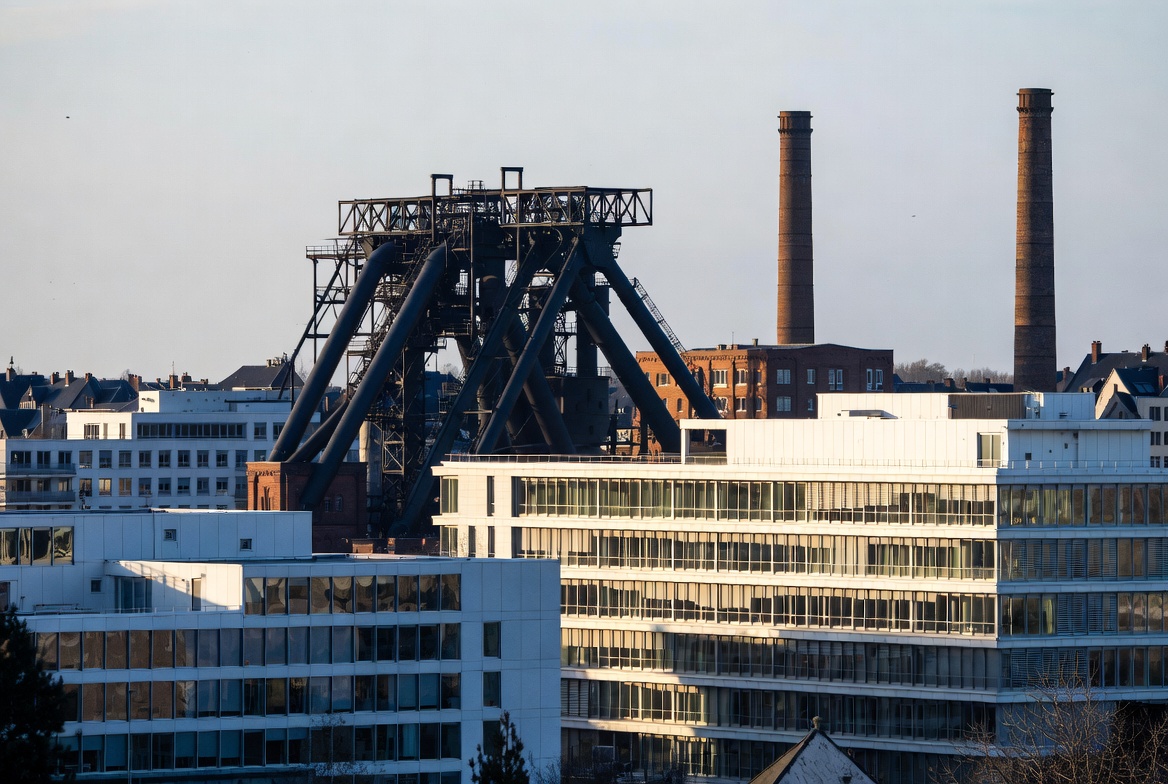
The Belval development in Esch-sur-Alzette — Luxembourg's most ambitious urban renewal project, driving property prices upward in the country's second city
Price Evolution 2020-2026: How the Market Has Moved
To truly understand where Luxembourg property prices per square metre stand in 2026, you need to see the full arc of the past six years. This period has included a pandemic-driven boom, a historic price correction, and the recovery that is still unfolding today. The table below shows the national average alongside key areas to illustrate how differently the cycle played out across the country.
Price per Square Metre Evolution by Area (2020-2026)
| Year | National Avg. | Lux City Avg. | Kirchberg | Bonnevoie | Esch | Ettelbruck |
|---|---|---|---|---|---|---|
| 2020 | 6,150 | 8,200 | 10,100 | 7,100 | 4,600 | 3,900 |
| 2021 | 6,900 | 9,200 | 11,200 | 7,850 | 5,200 | 4,300 |
| 2022 (Peak) | 7,200 | 9,800 | 12,000 | 8,400 | 5,600 | 4,700 |
| 2023 (Correction) | 6,200 | 8,500 | 10,800 | 7,500 | 4,900 | 4,100 |
| 2024 | 6,600 | 9,000 | 11,200 | 7,800 | 5,400 | 4,500 |
| 2025 | 7,000 | 9,500 | 11,600 | 8,300 | 6,000 | 5,000 |
| 2026 (Q1) | 7,300 | 9,800 | 12,200 | 8,800 | 6,400 | 5,300 |
Several crucial insights emerge from this data. First, the 2022 peak was followed by a correction that was sharper in absolute terms for expensive areas (Kirchberg lost EUR 1,200 per square metre) but harsher in percentage terms for affordable areas (Esch fell 12.5 percent compared with Kirchberg's 10 percent). This confirms what I tell every client: premium locations fall less and recover faster.
Second, by Q1 2026, most areas have surpassed or are approaching their 2022 peaks. Luxembourg City as a whole is essentially back to its pre-correction level, while Kirchberg has already exceeded it. The secondary cities are still below their peaks in some cases but are closing the gap rapidly, with Esch on track to surpass its 2022 high by mid-2026.
Third, the growth rate divergence between areas is widening. Esch has grown 6.7 percent year-on-year compared with Kirchberg's 4.8 percent. This convergence trend — where cheaper areas appreciate faster than expensive ones — is typical of a market in recovery mode, where affordability pressures redirect demand downward. For a complete analysis of market timing, read my detailed 2026 market outlook.
What this means for you: If you were waiting for the "bottom" of the market, you have already missed it. Prices are rising again across all segments. The window of opportunity that the correction created is closing, and buyers who act in 2026 will still benefit from prices that are reasonable by historical standards — but that window will not stay open indefinitely.
How Luxembourg Compares with European Capitals
One question I get from almost every international client is: "How do Luxembourg property prices compare with other European cities?" This is a perfectly reasonable question, especially for buyers relocating from London, Paris, Munich, or Amsterdam, where they may already own property or have a frame of reference for what is "expensive."
Price per Square Metre — European Capital Comparison (Q1 2026)
| City | Avg. Price/sqm (EUR) | Prime District Price/sqm (EUR) | Gross Rental Yield | Property Tax Burden |
|---|---|---|---|---|
| Luxembourg City | 9,800 | 12,200 | 3.0 – 4.5% | Very Low |
| Paris | 10,200 | 15,000+ | 2.5 – 3.5% | High |
| Munich | 9,500 | 14,000+ | 2.0 – 3.0% | Medium |
| Amsterdam | 7,800 | 11,000+ | 2.5 – 3.5% | Medium-High |
| Brussels | 3,800 | 6,500 | 3.5 – 5.0% | Medium |
| London (Zone 1-2) | 13,500 | 22,000+ | 2.5 – 3.5% | High (Stamp Duty) |
| Zurich | 14,000 | 18,000+ | 2.0 – 3.0% | Low-Medium |
The comparison reveals something important: Luxembourg City is expensive by European standards but not exceptionally so. It sits in the same tier as Paris and Munich for average prices, while being significantly cheaper than London or Zurich. However, Luxembourg distinguishes itself in two critical ways that often go unnoticed in simple price comparisons.
First, property taxes in Luxembourg are among the lowest in Europe. Annual property tax (impot foncier) in Luxembourg is negligible — often just EUR 100 to EUR 300 per year for an apartment. Compare this with France's taxe fonciere (which can be EUR 2,000 to EUR 5,000 annually in Paris), the Netherlands' OZB, or the UK's council tax and stamp duty. When you factor in the total cost of ownership rather than just the purchase price, Luxembourg looks significantly more attractive than its headline numbers suggest.
Second, Luxembourg's income levels are the highest in the EU. With a median gross salary exceeding EUR 65,000 and many professional positions paying EUR 80,000 to EUR 150,000, the price-to-income ratio in Luxembourg — while still stretched — is more favourable than in cities like Paris or London, where salaries have not kept pace with property prices. This income dynamic underpins the demand side of the market and provides a structural floor for property values.
What I always tell my international clients is this: do not compare Luxembourg property prices in isolation. Compare the total cost of ownership, the income potential, the tax environment, and the lifestyle. When you do that calculation properly, Luxembourg emerges as one of the most rational property markets in Europe — expensive, yes, but supported by fundamentals that justify the prices.
Seven Factors That Drive Price Differences Between Areas
Understanding why prices vary so dramatically between Luxembourg's different areas is essential for making a smart purchase. In my experience, the buyers who get the best value are those who understand these underlying drivers and can identify areas where the fundamentals are strong but the prices have not yet caught up. Here are the seven factors I consider most important.
1. Transport Infrastructure
Nothing moves property prices in Luxembourg like transport infrastructure. The tram expansion has added 12 to 18 percent to property values within 500 metres of stops. Rail connectivity — particularly the direct train lines to the Gare — supports price premiums in southern corridor towns like Bettembourg and Esch-sur-Alzette. Bus rapid transit corridors are beginning to have a similar, if smaller, effect. In my experience working with clients, the single best predictor of future price appreciation in Luxembourg is proximity to planned transport infrastructure.
2. Employment Centres
Luxembourg's economy is concentrated in a few key employment nodes: Kirchberg (EU institutions, financial services), Cloche d'Or / Gasperich (Big Four, corporates), Belval (university, research), and the city centre (government, professional services). Properties near these nodes command premiums because they reduce commute times and appeal to the high-income professionals employed there. The further you move from these nodes, the lower the price — but also the higher the potential upside if a new employment centre develops nearby.
3. School Quality and International Education
For family buyers — who make up a significant portion of the Luxembourg market — proximity to good schools, and particularly international schools, is a major price driver. Communes like Mamer, Strassen, and Bertrange command above-average prices partly because of their access to international schools such as the European School and the International School of Luxembourg. This is a factor I always discuss with my family clients before they even start viewing properties.
4. New-Build Supply
Areas with significant new-build development tend to have higher average prices per square metre (because new builds are priced at a premium to existing stock) but also more negotiating room for buyers. In Gasperich, for example, the high volume of new-build apartments means developers sometimes offer incentives — upgraded kitchens, parking spaces included, or flexible payment schedules — that effectively reduce the real price below the listed figure. In areas with limited new supply, like Belair or Limpertsberg, there is almost no room for negotiation.
5. Green Space and Liveability
Post-pandemic, the premium attached to green space and liveability factors has increased significantly. Communes with easy access to parks, forests, and outdoor recreation — such as Niederanven, Junglinster, and the Mullerthal region — have seen faster price appreciation than their location and transport links alone would suggest. In my experience, this trend has become more pronounced since 2024 as remote and hybrid working have become permanent features of Luxembourg's professional landscape.
6. Energy Efficiency and Building Age
Energy performance class has become a significant price differentiator. Properties with energy class A or B command premiums of 8 to 15 percent compared with class D or E equivalents in the same location. This is partly regulatory — Luxembourg is implementing increasingly strict energy standards — and partly financial, as energy costs for poorly insulated properties can add EUR 200 to EUR 400 per month. When comparing prices per square metre between areas, always check whether you are comparing like with like in terms of building age and energy class.
7. Border Proximity and Cross-Border Dynamics
Luxembourg's border communes — particularly those near France, Belgium, and Germany — have complex price dynamics influenced by cross-border buyer behaviour. Some buyers choose to live just across the border in France (where prices can be 40 to 60 percent lower) and commute into Luxembourg, which dampens demand in the Luxembourg border communes themselves. Conversely, Luxembourg border communes that offer a clear quality-of-life advantage over their cross-border equivalents — better schools, lower crime, superior infrastructure — can attract premium prices. Understanding these dynamics is essential if you are considering border areas like Petange, Mondorf-les-Bains, or Echternach.
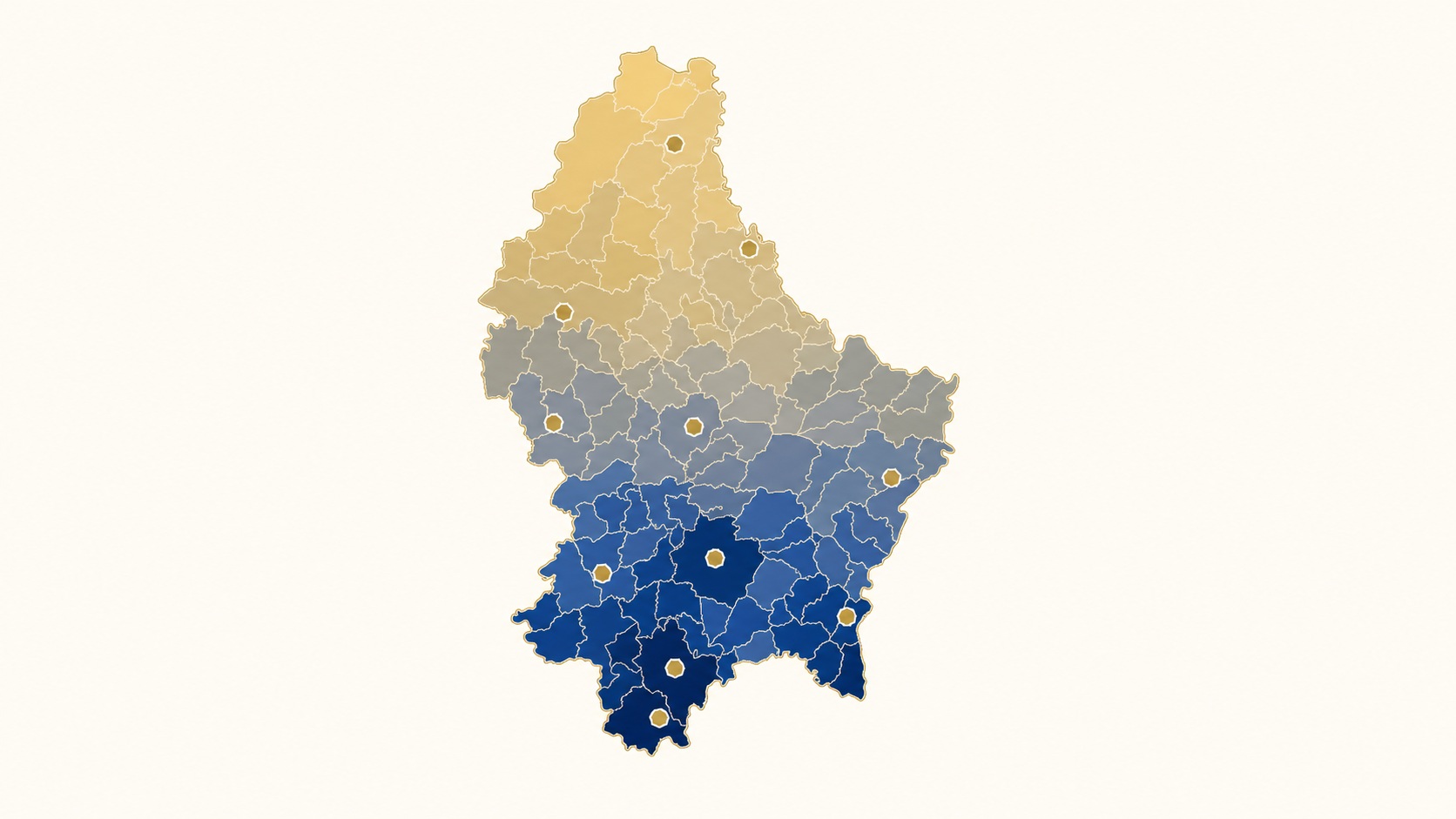
Luxembourg property price zones — prices per square metre range from under EUR 4,500 in the rural north to over EUR 12,000 in Luxembourg City's premium districts
Want to Know the Fair Price per Square Metre for a Specific Property?
I provide detailed price-per-sqm analysis for any property or area in Luxembourg. Get an independent assessment before you commit — it could save you tens of thousands of euros.
📊 Free Consultation 💬 WhatsApp DanielaHow to Get the Best Price per Square Metre: Practical Tips from My Experience
After years of helping clients buy property in Luxembourg, I have developed a clear set of principles for maximising the value you get per square metre. These are not theoretical concepts — they are strategies I use with my own clients every week, and they work.
1. Buy Existing Stock, Not New-Build (Unless You Need the Energy Class)
New-build apartments in Luxembourg carry a premium of 15 to 25 percent over equivalent existing stock in the same area. For a 75-square-metre apartment in Gasperich, that premium could mean EUR 100,000 to EUR 150,000. Unless you specifically need a new-build (for the energy class, the VAT advantage on the first EUR 50,000, or the developer warranty), buying a well-maintained existing apartment and doing targeted improvements will almost always give you more square metres for your money.
I recently helped a client who was initially set on a new-build in Kirchberg at EUR 13,200 per square metre. After we reviewed the options, they purchased a 2015-vintage apartment in the same neighbourhood at EUR 10,800 per square metre — saving EUR 180,000 on an 85-square-metre property while getting an apartment that was already energy class B and in excellent condition. That saved money went into a complete kitchen renovation and furnishing, with EUR 120,000 still left over.
2. Look at the Tram Corridor — But Two Stops Ahead
The properties closest to existing tram stops have already seen their "tram premium" priced in. The real opportunity lies in areas where the tram is planned but not yet operational. In 2026, the most interesting corridor is the southern extension towards Bonnevoie and beyond. Properties here are priced as "future tram" but will become "current tram" within two to three years — and that transition has historically added 8 to 12 percent to values.
3. Negotiate Hard on Properties That Have Been Listed More Than 60 Days
In the current market, well-priced properties sell within 30 to 45 days. If a property has been on the market for more than 60 days, it is almost certainly overpriced. This gives you negotiating leverage. From what I see in the market right now, buyers who target these "stale" listings can negotiate discounts of 5 to 10 percent below the asking price — which, on a EUR 700,000 property, represents EUR 35,000 to EUR 70,000.
4. Consider Ground-Floor and Top-Floor Units
In Luxembourg, middle-floor apartments command the highest prices per square metre. Ground-floor units trade at a discount of 5 to 8 percent (due to perceived security and privacy concerns) and top-floor units under the roof can also be discounted if they have sloped ceilings that reduce usable space. However, ground-floor apartments with private gardens are increasingly sought after by families, and well-designed top-floor units with terraces can actually command premiums. The key is to identify units where the discount does not reflect a genuine quality problem — just a market perception that you can exploit.
5. Buy in Winter
Luxembourg's property market has a seasonal pattern that is remarkably consistent. Activity peaks in spring (March to June) and drops significantly in November to February. Properties listed during the quiet winter months often receive fewer offers, which improves your negotiating position. I have helped clients achieve better prices in January than they would have paid for the same property type in April — simply by being active when other buyers were not.
6. Understand What Is Included in the Advertised Price
In Luxembourg, listed prices for existing properties typically include notary fees (approximately 7 percent of the transaction value), but this is not always the case with new-builds. Some developers quote prices excluding TVA (VAT) or with only partial TVA, which can make the headline price appear deceptively low. Always ask for the "prix tout compris" — the all-in price including all taxes and fees — and calculate your price per square metre on that basis. For a detailed walkthrough of all the costs involved, see my step-by-step buying guide.
7. Get an Independent Valuation
The asking price is the seller's hope, not the market's verdict. An independent valuation — which I provide for my clients — compares the property against recent transactions in the same area, adjusting for size, condition, energy class, floor, orientation, and other factors. In my experience, about 30 percent of the properties I evaluate are overpriced by 5 percent or more. Having that data gives you the confidence to negotiate from a position of knowledge rather than guesswork.
What this means for you: Work with an agent who can provide independent price-per-sqm analysis, help you identify overpriced listings, and negotiate effectively on your behalf. The right guidance pays for itself many times over.
Real Examples from My Work: What Clients Actually Pay per Square Metre
Data tables are useful, but nothing illustrates real estate prices like actual transactions. Here are five anonymised examples from clients I have worked with over the past 12 months. These show what people are really paying — not what the averages suggest, but the actual negotiated prices in real transactions.
Example 1: Young Couple, First Apartment in Bonnevoie
Property: 65-square-metre, two-bedroom apartment in a 2008 building. Energy class C. Third floor with balcony. Listed at EUR 595,000.
Negotiated price: EUR 560,000 (EUR 8,615 per square metre). The property had been on the market for 72 days — well above the average — which gave us leverage to negotiate a EUR 35,000 reduction. The couple secured a 25-year mortgage at 3.15 percent with a 10 percent down payment. Their monthly payment is approximately EUR 2,150, which is comparable to the rent they were paying for a smaller apartment in the same area.
Example 2: Investor, Rental Property in Esch-sur-Alzette
Property: 52-square-metre, one-bedroom apartment in a 2019 building near Belval. Energy class B. Ground floor with terrace. Listed at EUR 345,000.
Negotiated price: EUR 328,000 (EUR 6,308 per square metre). This was a motivated seller who was relocating abroad, which allowed us to close quickly at a discount. The apartment is now rented at EUR 1,350 per month, generating a gross yield of 4.94 percent. After accounting for management fees, insurance, and maintenance, the net yield is approximately 3.8 percent — which the investor considers excellent given the quality of the building and the tenant.
Example 3: Family, House in Strassen
Property: 155-square-metre, four-bedroom semi-detached house built in 2001. Energy class D. Garden and double garage. Listed at EUR 1,380,000.
Negotiated price: EUR 1,320,000 (EUR 8,516 per square metre). Houses in Strassen rarely come onto the market, so the negotiating margin was smaller than with apartments — but the EUR 60,000 reduction was still significant. The family chose Strassen for the proximity to the European School and the easy bus commute to the city centre. They plan to invest approximately EUR 80,000 in energy renovations to bring the property to class B, which will reduce running costs and protect the resale value.
Example 4: Professional, New-Build in Kirchberg
Property: 78-square-metre, two-bedroom apartment in a 2025 development. Energy class A. Seventh floor with panoramic views. Listed at EUR 1,020,000.
Negotiated price: EUR 998,000 (EUR 12,795 per square metre). New-build negotiations in Kirchberg are difficult because demand typically exceeds supply, but we managed a modest EUR 22,000 reduction by committing to a quick purchase timeline. The buyer, a fund manager working in Kirchberg, prioritised the walk-to-work convenience and the building quality. At nearly EUR 13,000 per square metre, this is the upper end of what I would consider fair value — but for this particular buyer, the lifestyle premium was worth it.
Example 5: Investor, Studio in Gare District
Property: 32-square-metre studio in a renovated 1960s building. Energy class D. Second floor, no balcony. Listed at EUR 275,000.
Negotiated price: EUR 258,000 (EUR 8,063 per square metre). This was a straightforward investment purchase: the studio rents at EUR 1,100 per month to a cross-border commuter, yielding 5.12 percent gross. The lower energy class is a risk factor, and I advised the investor to budget EUR 15,000 to EUR 20,000 for window and insulation improvements within the next three years to maintain the property's competitiveness as energy regulations tighten.
These examples illustrate a crucial point: the actual price per square metre you pay depends not just on the area but on your negotiating strategy, the seller's motivation, the property's condition, and the market timing. What I always tell my clients is that every property is a negotiation, and having expert guidance through that process can save you tens of thousands of euros. For more on what to expect at each stage, see my complete buying process guide.
New-Build vs Existing Stock: The Price per Square Metre Premium
One of the most important decisions facing buyers in Luxembourg is whether to purchase a new-build (VEFA — Vente en l'Etat Futur d'Achevement) or an existing property. The price per square metre difference between these two categories is significant and worth understanding in detail.
| Area | New-Build Avg. (EUR/sqm) | Existing Avg. (EUR/sqm) | Premium (%) |
|---|---|---|---|
| Kirchberg | 13,200 | 11,000 | +20% |
| Gasperich | 10,800 | 9,200 | +17% |
| Bonnevoie | 9,600 | 8,200 | +17% |
| Esch-sur-Alzette | 7,200 | 5,800 | +24% |
| Differdange | 6,200 | 5,100 | +22% |
| Ettelbruck | 5,900 | 4,800 | +23% |
The new-build premium ranges from 17 to 24 percent depending on the area, with secondary cities showing higher premiums because the existing stock tends to be older and less well-maintained. In Luxembourg City, where even the "existing stock" is often relatively recent and in good condition, the premium is smaller but still substantial.
From what I see in the market right now, new-builds offer genuine advantages for certain buyers: the 3 percent super-reduced VAT rate on the first EUR 50,000 of the property value, the developer warranty (garantie decennale), the high energy efficiency standards, and the ability to customise finishes before completion. However, for investors focused purely on maximising their return per euro invested, existing stock almost always delivers better value. The EUR 100,000 to EUR 200,000 you save on the purchase price can be invested in improvements that add value while still spending less overall than you would on a new-build.
Frequently Asked Questions About Luxembourg Property Prices per Square Metre
What is the average price per square metre in Luxembourg in 2026?
The national average price per square metre in Luxembourg in Q1 2026 is approximately EUR 7,300 for apartments. However, this national average is heavily influenced by Luxembourg City, which brings the figure up. If you are looking specifically at Luxembourg City, the average is approximately EUR 9,800 per square metre, while secondary cities like Esch-sur-Alzette average around EUR 6,400 and more rural communes can be as low as EUR 4,200 per square metre. The most meaningful comparison is always within a specific commune or district rather than at the national level.
Are Luxembourg property prices per sqm going up or down in 2026?
Property prices per square metre in Luxembourg are going up in 2026. After the significant correction of 2022-2023 (when prices fell approximately 14 percent nationally), the market has been in recovery mode since mid-2024. In Q1 2026, most areas are showing year-on-year increases of 3 to 7 percent, with the strongest growth in affordable areas like Esch-sur-Alzette (+6.7 percent) and regenerating city districts like Hollerich (+5.8 percent) and Cessange (+6.1 percent). For a full market timing analysis, I recommend reading my 2026 market outlook.
Which area in Luxembourg has the cheapest price per square metre?
The lowest prices per square metre in Luxembourg are found in the northern communes, particularly Wiltz (approximately EUR 4,200 per square metre), Echternach (EUR 4,800), and Ettelbruck (EUR 5,300). These areas are further from Luxembourg City and have fewer urban amenities, but they offer excellent value for buyers who work remotely or do not mind a longer commute. The affordability of these areas is increasingly attracting attention from both first-time buyers and investors looking for higher percentage returns on lower capital outlay.
How much does a typical apartment cost in Luxembourg City in 2026?
Based on the current average price per square metre of approximately EUR 9,800 for Luxembourg City, a typical 60-square-metre one-bedroom apartment costs around EUR 590,000, an 80-square-metre two-bedroom apartment around EUR 785,000, and a 100-square-metre three-bedroom apartment around EUR 980,000. In premium districts like Kirchberg, these figures can be 20 to 30 percent higher, while in more affordable districts like Bonnevoie or Gare, they can be 10 to 15 percent lower. Remember that these are averages — individual properties can deviate significantly based on condition, floor, orientation, energy class, and other factors.
Is it cheaper to buy per square metre near the borders of Luxembourg?
Yes, generally. Luxembourg's border communes — Petange (EUR 5,400/sqm), Mondorf-les-Bains (EUR 6,200/sqm), and Steinfort (EUR 5,700/sqm) — tend to be cheaper than the centre of the country. However, it is worth noting that some border communes near Luxembourg City, like Strassen (EUR 8,500/sqm) and Bertrange (EUR 8,200/sqm), are actually more expensive than some Luxembourg City districts because of their suburban family appeal and proximity to international schools. The cheapest option is technically to buy across the border in France, Belgium, or Germany — but that comes with different tax implications, regulatory frameworks, and lifestyle trade-offs. For most buyers working in Luxembourg, staying within the Grand Duchy makes sense for tax and practical reasons.
How do Luxembourg property prices compare with neighbouring countries?
Luxembourg property prices are significantly higher than those in the neighbouring regions of France (Lorraine), Belgium (Province of Luxembourg), and Germany (Rhineland-Palatinate / Saarland). In Thionville, France — just 30 minutes from Luxembourg City — average prices are approximately EUR 2,500 to EUR 3,500 per square metre, roughly one-third of Luxembourg City prices. In Arlon, Belgium, prices are EUR 2,000 to EUR 2,800 per square metre. This price differential is why approximately 200,000 cross-border workers commute into Luxembourg daily. However, living across the border means you lose access to Luxembourg's favourable tax regime, free public transport system, and social security benefits — so the cheaper property price does not necessarily translate to a lower total cost of living.
My Final Advice on Luxembourg Property Prices per Square Metre in 2026
After walking you through every major area, the price evolution, the comparison with European capitals, and the strategies for getting the best value, let me distil everything into the advice I would give if you were sitting across the table from me right now.
If you are a first-time buyer with a budget under EUR 600,000: Focus on Esch-sur-Alzette, Dudelange, Differdange, or the Gare district. These areas offer the most square metres for your money, strong rental fallback options if your circumstances change, and genuine growth potential. Do not stretch your budget to buy a tiny apartment in a premium area when you could buy something spacious and practical in an area with strong fundamentals.
If you are a family buyer with a budget of EUR 800,000 to EUR 1,200,000: Consider Bonnevoie, Gasperich, Hesperange, or Mamer. These areas balance price, space, connectivity, and family-friendly amenities. Pay attention to school catchment areas and commute patterns — what works for a couple without children may not work when the school run enters the equation.
If you are an investor focused on rental yield: The Gare district, Esch-sur-Alzette, and Differdange offer the highest gross yields in Luxembourg — 4.0 to 5.0 percent or more. Focus on small to medium apartments (one to two bedrooms) near transport links, and prioritise ease of rental over capital appreciation. For investment strategy in detail, see my investment guide.
If you are looking for long-term capital preservation: Kirchberg, Belair, and Limpertsberg are the safest stores of value. Prices are high and yields are low, but the volatility is minimal and the long-term appreciation track record is exceptional. Think of these areas as the "blue chips" of Luxembourg real estate.
If you want growth potential and are willing to accept some risk: Hollerich, Cessange, and the southern suburbs between Bonnevoie and Bettembourg are where I see the most upside. These areas are in the path of infrastructure development, urban renewal, and demand migration from the increasingly unaffordable city centre.
Whatever your situation, the single most important piece of advice I can give you is this: do not make your decision based on price per square metre alone. Use it as a starting point, a way to compare and filter — but always go deeper. Visit the area at different times of day, understand the transport connections firsthand, talk to residents, and assess whether the neighbourhood fits your lifestyle and goals. Price per square metre tells you what the market values today; your job is to assess what it will value tomorrow.
I work with buyers across Luxembourg every day, helping them navigate exactly these decisions. If you want a personalised analysis of which areas and price points make the most sense for your specific situation, I am always happy to have that conversation.
Ready to Find the Right Property at the Right Price?
I provide personalised price-per-sqm analysis, independent valuations, and expert negotiation support for buyers across Luxembourg. Whether you are buying your first apartment or building an investment portfolio, I can help you get the best value for every euro.
📊 Free Consultation 💬 WhatsApp DanielaThis article was written by Daniela Pelliccia, real estate consultant based in Luxembourg. All price data is based on Q1 2026 transaction records, STATEC publications, and proprietary market analysis. Prices reflect averages and should not be taken as valuations for specific properties. For personalised advice, contact Daniela directly.