
Your complete guide to navigating Luxembourg's mortgage market in 2026 — from comparing fixed and variable rates to understanding exactly how much you can borrow, which banks offer the best deals, and what hidden costs to watch for.
Getting the right mortgage in Luxembourg can save you tens of thousands of euros over the life of your loan — or cost you just as much if you get it wrong. In a country where the average property price hovers around EUR 700,000 and mortgage terms routinely stretch to 25 or 30 years, even a 0.25% difference in your interest rate translates into thousands of euros in extra payments. Yet most buyers in Luxembourg spend more time choosing their kitchen tiles than they do comparing mortgage offers. That is a mistake you do not have to make.
Whether you are a first-time buyer trying to figure out how much you can realistically borrow, an expat navigating Luxembourg's banking system for the first time, or a seasoned investor looking to optimise your next acquisition, this guide is built for you. I have put together everything you need to know about Luxembourg mortgages in 2026 — current rates, bank comparisons, borrowing capacity calculations, hidden costs, tax benefits, and real-world examples from my work helping clients secure the best possible financing. In my experience helping clients navigate Luxembourg's mortgage market, knowledge is the single most powerful negotiating tool you can bring to the table.
By the time you finish reading, you will understand exactly where rates stand today, which banks are offering the most competitive terms, how to calculate your borrowing power, and how to avoid the costly mistakes that catch so many buyers off guard. If you are also considering whether 2026 is the right time to buy, be sure to read our complete 2026 market analysis for the full picture. Let us dive in.
Luxembourg Mortgage Market in 2026 — What Has Changed?

Understanding your mortgage options is the first step to securing the best deal in Luxembourg's 2026 market
The Luxembourg mortgage landscape in 2026 looks fundamentally different from what buyers experienced just two or three years ago. After the aggressive rate-hiking cycle that the European Central Bank (ECB) initiated in mid-2022 to combat inflation, we have now entered a period of monetary easing that has significantly improved borrowing conditions. The ECB's main refinancing rate, which peaked at 4.50% in September 2023, has been gradually reduced through a series of cuts throughout 2024 and 2025. As of early 2026, the rate sits at 2.65%, and market consensus points toward at least one more reduction before the end of the year.
For Luxembourg buyers, this shift has been transformative. Mortgage rates that climbed above 4% for fixed-rate products in late 2023 have now settled back into a much more manageable range. Twenty-year fixed rates from major Luxembourg banks currently sit between 2.85% and 3.50%, depending on the bank, the loan-to-value ratio, and the borrower's profile. Variable rates have dropped even further, with some banks offering rates as low as 2.40% for well-qualified borrowers. This represents a significant improvement in affordability compared to the 2023-2024 period, though rates remain above the historic lows of 2021 when some borrowers locked in fixed rates below 1.5%.
The Luxembourg mortgage market has also seen increased competition among banks. With transaction volumes recovering after the 2023-2024 slowdown — when higher rates and falling prices caused many buyers to pause — banks are once again actively competing for mortgage business. This competition has led to better terms for borrowers, including more flexible conditions around early repayment, more generous LTV ratios for first-time buyers, and reduced arrangement fees. From what I see with current bank offers, borrowers who take the time to compare multiple banks can secure significantly better terms than those who simply walk into their existing bank and accept whatever is offered.
ECB Rate History and Impact on Luxembourg Mortgage Rates (2020–2026)
| Year | ECB Main Rate | Avg. Fixed Rate (20yr) in Luxembourg | Avg. Variable Rate in Luxembourg | Market Impact |
|---|---|---|---|---|
| 2020 | 0.00% | 1.20–1.60% | 0.80–1.20% | Historic lows, strong demand |
| 2021 | 0.00% | 1.10–1.50% | 0.70–1.10% | Record-low rates, price boom |
| 2022 | 0.00% → 2.50% | 1.80–3.20% | 1.50–2.80% | Rapid rate hikes begin |
| 2023 | 3.00% → 4.50% | 3.50–4.30% | 3.20–4.00% | Peak rates, market slowdown |
| 2024 | 4.50% → 3.15% | 3.10–3.80% | 2.80–3.40% | Easing cycle begins, market stabilises |
| 2025 | 3.15% → 2.65% | 2.90–3.60% | 2.50–3.10% | Continued easing, confidence returns |
| 2026 (current) | 2.65% | 2.85–3.50% | 2.40–3.00% | Competitive market, banks competing |
What stands out from the data is the speed and magnitude of the rate cycle. Buyers who purchased in 2021 at historic lows saw rates triple within two years, but those same rates have now retraced significantly. For buyers entering the market in 2026, the current rate environment represents a balanced middle ground — not the extraordinary lows of 2021, but far more favourable than the peak conditions of late 2023.
What this means for you: If you have been waiting for rates to come down before buying, conditions are now favourable. However, do not wait for rates to return to 2021 levels — those were an anomaly, not the norm. Focus on locking in a good rate now while competition among banks works in your favour.
Fixed vs Variable Rate — Which Is Right for You?
One of the most important decisions you will make when taking out a mortgage in Luxembourg is whether to go with a fixed or variable interest rate. Each option has distinct advantages and risks, and the right choice depends on your financial situation, your risk tolerance, and your view on where rates are heading. What I always recommend to my clients is to understand both options thoroughly before making a decision — do not simply default to whichever your bank suggests first.
Fixed Rate Mortgages
A fixed-rate mortgage locks in your interest rate for the entire duration of the loan — or for a defined period (such as 10, 15, or 20 years). In Luxembourg, most banks offer fixed rates for terms between 10 and 30 years. The key advantage is predictability: your monthly payment stays the same regardless of what happens with ECB rates or market conditions. This makes budgeting straightforward and protects you against future rate increases.
The trade-off is that fixed rates are typically higher than variable rates at the time of origination. As of early 2026, 20-year fixed rates in Luxembourg range from approximately 2.85% to 3.50%, depending on your bank and borrower profile. For a 30-year term, expect to pay a modest premium of 0.10% to 0.30% above the 20-year rate. Fixed rates also come with limitations on early repayment — most Luxembourg banks charge a penalty (indemnity) if you repay your fixed-rate loan ahead of schedule, typically calculated as the present value of the interest the bank would have earned.
Variable Rate Mortgages
A variable-rate mortgage (also called a floating or adjustable rate) means your interest rate fluctuates based on a reference index — typically the 3-month or 12-month Euribor, plus a fixed margin set by your bank. In Luxembourg, variable rates currently range from approximately 2.40% to 3.00%. The rate is typically reviewed every 3, 6, or 12 months, and your monthly payment adjusts accordingly.
The advantage of a variable rate is that you start with a lower rate and benefit immediately if rates continue to fall. Given that the ECB is still in an easing cycle, there is a reasonable argument that variable rates could decrease further in 2026 and 2027. Variable-rate mortgages also typically offer more flexibility around early repayment, with lower or no penalties. The risk, of course, is that if rates rise unexpectedly, your monthly payments could increase significantly. Luxembourg law does provide some protection — most variable-rate mortgages have a cap that limits how much your rate can increase over the life of the loan — but even within those caps, the impact on your budget can be substantial.
Mixed Rate Options
Some Luxembourg banks also offer mixed-rate products where you fix the rate for an initial period (for example, 5 or 10 years) and then switch to a variable rate for the remainder of the term. This can be an attractive compromise, giving you the security of a fixed rate during the early years when your loan balance is highest, while preserving the potential to benefit from lower rates later.
Fixed vs Variable Rate Comparison on a EUR 500,000 Loan (20-Year Term)
| Feature | Fixed Rate (3.15%) | Variable Rate (2.60%) |
|---|---|---|
| Monthly payment | EUR 2,824 | EUR 2,674 |
| Monthly savings vs fixed | — | EUR 150/month |
| Total interest paid (if rate unchanged) | EUR 177,760 | EUR 141,760 |
| Interest savings over full term | — | EUR 36,000 |
| Payment certainty | 100% — fixed for 20 years | Fluctuates with Euribor |
| Risk if rates rise by 1% | No impact | +EUR 260/month approx. |
| Risk if rates rise by 2% | No impact | +EUR 535/month approx. |
| Early repayment penalty | Typically 1–6 months of interest | Usually none or minimal |
| Best suited for | Risk-averse buyers, long-term holders, fixed-income households | Flexible buyers, those expecting rate drops, shorter holding periods |
In my experience helping clients navigate Luxembourg's mortgage market, I have found that most first-time buyers and families are better served by a fixed rate. The peace of mind that comes from knowing exactly what you will pay each month for the next 20 or 25 years is invaluable, especially in a country with already high living costs. Variable rates tend to work better for more financially sophisticated borrowers who have a buffer to absorb potential payment increases and who may plan to sell or refinance within a shorter timeframe.
What this means for you: Choose fixed if you value certainty and plan to hold your property long-term. Choose variable only if you have a financial cushion and can tolerate monthly payment fluctuations. In the current environment, I lean toward fixed rates for most buyers — locking in a rate around 3% for 20 years is historically very reasonable.
How Much Can You Borrow in Luxembourg?
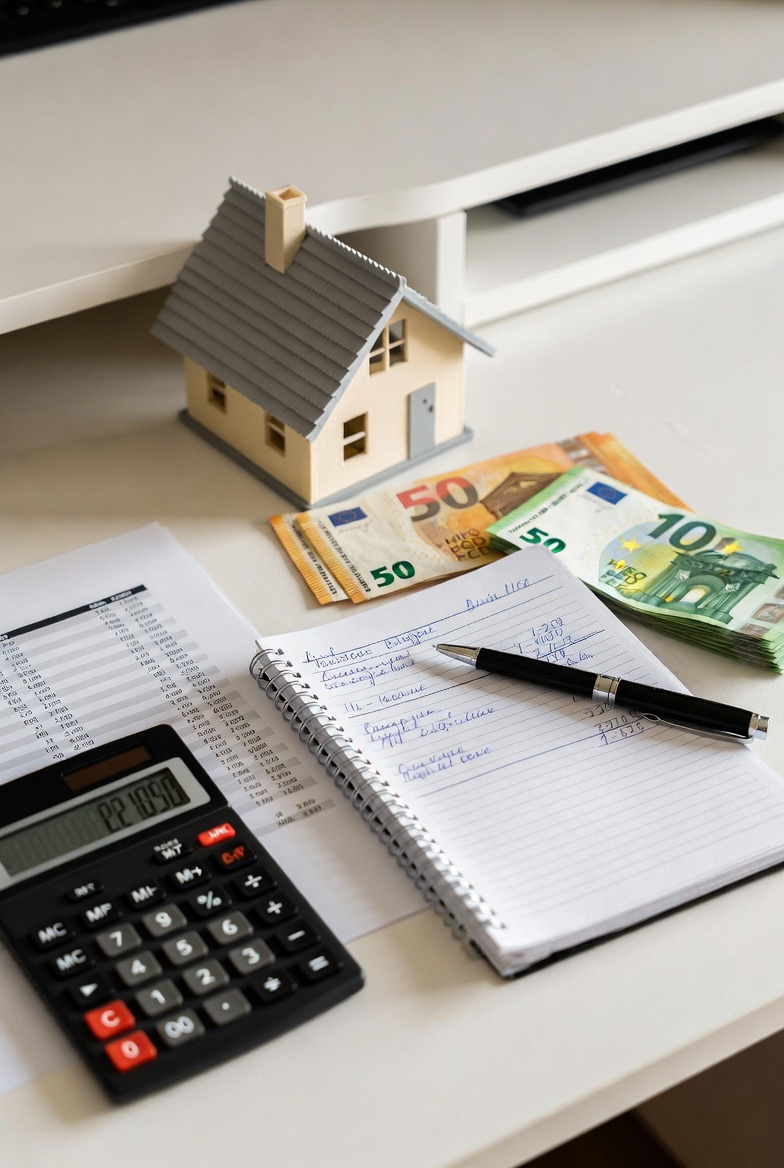
Calculating your borrowing capacity — the foundation of every successful property purchase in Luxembourg
Understanding your borrowing capacity is the essential first step in any property search. There is no point falling in love with a EUR 900,000 apartment if your bank will only lend you EUR 600,000. Luxembourg banks use a combination of factors to determine how much they will lend you, and understanding these criteria will help you set realistic expectations and negotiate more effectively.
The Debt-to-Income Ratio (DTI)
The single most important factor in determining your borrowing capacity is your debt-to-income ratio, commonly known as the DTI ratio or the "taux d'effort" in Luxembourg's banking terminology. This measures the percentage of your gross monthly income that goes toward servicing all your debts — including your new mortgage payment, any existing loans, credit card payments, and other financial obligations. Luxembourg's financial regulator, the CSSF (Commission de Surveillance du Secteur Financier), recommends a maximum DTI of 40%. Most banks adhere strictly to this guideline, though some may allow up to 45% for very strong borrower profiles with high incomes and substantial assets.
In practical terms, this means that if your gross monthly household income is EUR 8,000, your total monthly debt payments (including the mortgage) should not exceed EUR 3,200. If you already have a car loan costing EUR 400 per month, then the maximum mortgage payment a bank would approve would be approximately EUR 2,800.
Loan-to-Value Ratio (LTV)
The LTV ratio determines how much of the property's value the bank will finance. In Luxembourg, the standard maximum LTV for a primary residence is 80%, meaning you need to provide at least a 20% down payment. However, there are important exceptions. First-time buyers in Luxembourg can often secure LTV ratios of up to 100% from certain banks, meaning they can borrow the full purchase price without a down payment — though they will still need to cover transaction costs (notary fees, registration duty, bank fees) from their own funds. For second homes and investment properties, most banks limit the LTV to 80% or even 70%.
One thing I always tell first-time buyers: even if you qualify for a 100% LTV mortgage, having some equity from the start gives you a stronger position. It reduces your monthly payments, gives you more negotiating power with the bank on rates, and provides a buffer if property values dip. If you can put down even 10-15%, you will typically get a meaningfully better rate than at 100% LTV.
Income Calculation
Luxembourg banks typically consider your gross annual income, including your base salary, any guaranteed bonuses or 13th-month pay (common in Luxembourg), and sometimes a portion of variable bonuses (usually 50-70% of the average over the last 2-3 years). If you are a dual-income household, both incomes are included. For self-employed borrowers, banks generally look at the average of the last three years of declared income, which can be more conservative. Rental income from other properties may be partially included (typically 70-80%) if you can demonstrate a track record.
Borrowing Capacity by Household Income (Fixed Rate 3.15%, 25-Year Term, No Existing Debt)
| Gross Annual Household Income | Max Monthly Payment (40% DTI) | Approx. Max Loan Amount | Property Budget (80% LTV) | Property Budget (100% LTV) |
|---|---|---|---|---|
| EUR 60,000 | EUR 2,000 | EUR 370,000 | EUR 462,500 | EUR 370,000 |
| EUR 80,000 | EUR 2,667 | EUR 495,000 | EUR 618,750 | EUR 495,000 |
| EUR 100,000 | EUR 3,333 | EUR 620,000 | EUR 775,000 | EUR 620,000 |
| EUR 120,000 | EUR 4,000 | EUR 745,000 | EUR 931,250 | EUR 745,000 |
| EUR 150,000 | EUR 5,000 | EUR 930,000 | EUR 1,162,500 | EUR 930,000 |
Note: These figures are indicative and assume no existing debt obligations. Actual borrowing capacity varies by bank, individual profile, employment status, and other factors. The property budget at 80% LTV assumes your loan amount represents 80% of the purchase price (you provide 20% equity). At 100% LTV, your maximum property price equals your maximum loan amount, though you still need cash for transaction costs.
As you can see from the table, a dual-income household earning EUR 100,000 combined can typically borrow around EUR 620,000 — enough for a two-bedroom apartment in Luxembourg City or a house in areas like Esch-sur-Alzette or Differdange. For a deeper look at which areas offer the best value, check out our neighbourhood guide. If you are not sure where your income puts you, I encourage you to get in touch for a free consultation.
What this means for you: Before you start viewing properties, get a clear picture of your borrowing capacity. Request a non-binding indication from at least two banks, and remember to account for all your existing debt obligations in the calculation.
Best Banks for Mortgages in Luxembourg (2026)
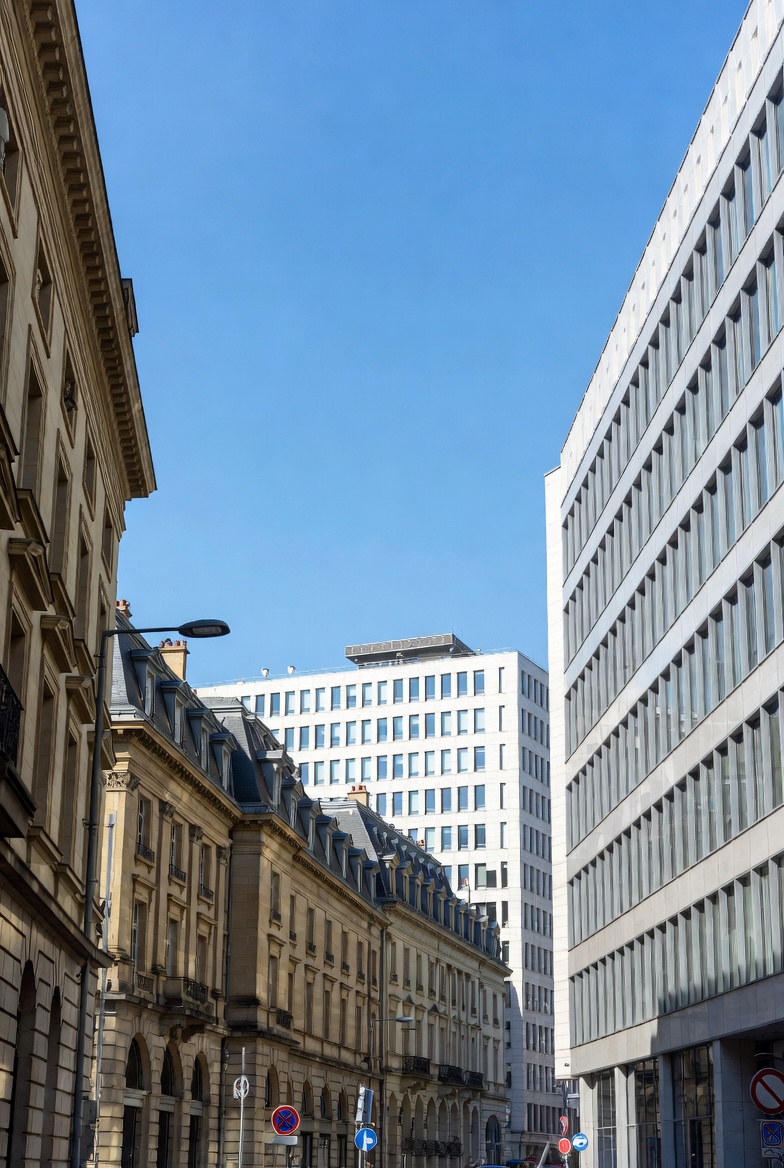
Luxembourg's banking district — home to the major lenders competing for your mortgage business
Luxembourg has a concentrated banking market, with five major retail banks accounting for the vast majority of mortgage lending. Each bank has its own strengths, rate structures, and special features. I have seen many buyers make this mistake: they go only to their existing bank and accept the first offer without comparing. In my experience, comparing at least three banks can save you anywhere from EUR 5,000 to EUR 30,000 over the life of your mortgage. Here is an overview of the main players.
Spuerkeess (BCEE)
The state-owned savings bank remains Luxembourg's largest mortgage lender. Spuerkeess is known for competitive rates, particularly for first-time buyers and for borrowers seeking fixed-rate products. Their rates tend to be among the most transparent, and they offer the full range of fixed, variable, and mixed-rate products. Their application process is thorough but can be slower than some private banks. They are particularly strong on longer-term fixed rates (25-30 years) and are often willing to offer higher LTV ratios for first-time buyers with stable employment.
BGL BNP Paribas
As part of the BNP Paribas group, BGL benefits from the resources of one of Europe's largest banking groups. They offer competitive rates, particularly for borrowers with higher incomes and larger loan amounts. BGL is known for a relatively fast application process and flexible conditions, especially around partial early repayment. They are often particularly competitive for cross-border workers and expats with income from France, Belgium, or Germany.
BIL (Banque Internationale à Luxembourg)
BIL is one of Luxembourg's oldest banks and offers a strong mortgage product range. They are known for personalised service and flexibility in structuring mortgages, particularly for more complex situations (self-employed borrowers, investment properties, cross-border income). BIL's rates are generally competitive, though they may not always offer the absolute lowest headline rate. Where they stand out is in their willingness to work with borrowers who have non-standard profiles.
ING Luxembourg
ING offers a strong digital mortgage experience and competitive variable-rate products. They tend to be particularly attractive for borrowers who prefer a more modern, streamlined application process. ING's variable rates are often among the lowest in the market, and they offer attractive mixed-rate products (fixed for an initial period, then variable). They may be slightly more conservative on LTV ratios for first-time buyers compared to Spuerkeess.
Raiffeisen
Raiffeisen is a cooperative bank with strong roots in Luxembourg's regions. They are particularly well-suited for buyers purchasing outside Luxembourg City, and they offer competitive rates for local residents with a connection to the cooperative banking model. Raiffeisen is known for a personal approach and competitive arrangement fees. They may offer better terms for properties in their traditional areas of strength, particularly in the north and east of the country.
Bank Comparison — Indicative Mortgage Terms (2026)
| Bank | Fixed Rate (20yr) | Variable Rate | Max LTV (First-Time) | Max LTV (Standard) | Key Strengths |
|---|---|---|---|---|---|
| Spuerkeess (BCEE) | 2.85–3.20% | 2.45–2.85% | Up to 100% | 80% | Best for first-time buyers, transparent rates |
| BGL BNP Paribas | 2.90–3.30% | 2.50–2.90% | Up to 100% | 80% | Fast process, strong for cross-border workers |
| BIL | 2.95–3.35% | 2.50–2.95% | Up to 100% | 80% | Flexible structuring, good for complex profiles |
| ING Luxembourg | 2.95–3.40% | 2.40–2.80% | Up to 90% | 80% | Best variable rates, strong digital experience |
| Raiffeisen | 2.90–3.35% | 2.50–2.90% | Up to 100% | 80% | Personal service, competitive fees, regional strength |
Note: Rates shown are indicative ranges as of early 2026 and will vary based on individual borrower profile, LTV ratio, loan amount, and term. Always request a personalised quote. Rates are subject to change.
What I always recommend to my clients is to apply to at least three banks. The application process takes some time, but the potential savings are enormous. Once you have multiple offers in hand, you can negotiate — banks will often match or beat a competitor's rate if you present them with a written offer from another institution. This is one of the most effective ways to get the best possible rate, and it costs you nothing but a few hours of paperwork.
What this means for you: Apply to a minimum of three banks and use competing offers as leverage. A difference of 0.20% on a EUR 500,000, 25-year loan translates to approximately EUR 16,000 in interest savings over the full term.
Hidden Costs Most Buyers Don't Know About
When most people think about the cost of buying property in Luxembourg, they focus on the purchase price and the mortgage rate. But there is a whole layer of additional costs that can add 7-12% to your total outlay — and failing to account for them is one of the most common mistakes I see. Understanding these costs upfront is essential for accurate budgeting and avoiding unpleasant surprises at the notary's office. For a complete walkthrough of every step in the process, see our step-by-step buying guide.
Registration Duty (Droit d'enregistrement)
This is the largest transaction cost for most buyers. For existing properties (resale), the registration duty is 6% of the purchase price. For newly-built properties (VEFA or new-build), the rate is typically 3% because the duty is applied only to the land component, while the construction portion is subject to VAT. There is a significant tax benefit for first-time buyers called the "Bëllegen Akt" (more on this below), which provides a credit of up to EUR 40,000 per buyer against registration duty — that is EUR 80,000 for a couple buying together. This can substantially reduce or even eliminate your registration duty.
Notary Fees (Frais de notaire)
In Luxembourg, all property transactions must go through a notary. Notary fees typically range from 1% to 2% of the purchase price and cover the notary's remuneration, the costs of preparing the deed, land registry fees, and various administrative charges. Unlike in some countries, you cannot choose a "cheaper" notary — the fees are largely regulated. However, the exact amount can vary slightly depending on the complexity of the transaction.
Bank Fees
Most banks charge an arrangement fee (frais de dossier) for processing your mortgage application. This typically ranges from EUR 300 to EUR 1,500, depending on the bank and the complexity of your application. Some banks waive or reduce this fee as part of promotional offers or for existing customers. It is worth asking about this upfront and including it in your negotiations.
Valuation Fee
Your bank will require an independent valuation of the property before approving your mortgage. This cost is typically borne by the borrower and ranges from EUR 300 to EUR 800, depending on the type of property and the complexity of the valuation. Some banks include this in their arrangement fee, while others charge it separately.
Mortgage Insurance
Luxembourg banks require borrowers to take out a "remaining balance insurance" (assurance solde restant dû), which pays off the mortgage in the event of the borrower's death or total disability. The cost depends on your age, health, smoking status, and loan amount, but it typically adds between EUR 30 and EUR 150 per month for a EUR 500,000 loan. You are not obligated to take the insurance from your bank — shopping around for insurance can save you thousands over the life of the mortgage.
Home Insurance
Banks also require you to have adequate buildings insurance covering fire, flood, and other perils. This is a standard requirement and is relatively affordable — typically EUR 300 to EUR 800 per year depending on the property size and value.
Total Transaction Costs Breakdown — EUR 600,000 Existing Property
| Cost Item | Rate / Amount | Cost (No Bëllegen Akt) | Cost (With Bëllegen Akt, Couple) |
|---|---|---|---|
| Registration duty | 6% of purchase price | EUR 36,000 | EUR 0 (covered by EUR 80,000 credit) |
| Transcription duty | 1% of purchase price | EUR 6,000 | EUR 6,000 |
| Notary fees | ~1.0–1.5% | EUR 7,500 | EUR 7,500 |
| Mortgage registration (inscription hypothécaire) | ~0.5% of loan amount | EUR 2,400 | EUR 2,400 |
| Bank arrangement fee | Flat fee | EUR 750 | EUR 750 |
| Property valuation | Flat fee | EUR 500 | EUR 500 |
| Total Transaction Costs | EUR 53,150 (~8.9%) | EUR 17,150 (~2.9%) |
The difference is striking. A first-time buying couple using the Bëllegen Akt benefit on a EUR 600,000 property saves approximately EUR 36,000 in registration duty alone. This is one of the most valuable tax benefits available to property buyers in Luxembourg, and yet many buyers — particularly expats — are not aware of it until late in the process. I always ensure my clients know about this benefit before they begin their search.
What this means for you: Budget for all transaction costs from the start. Even with a 100% LTV mortgage, you will need EUR 17,000–55,000+ in cash depending on your buyer status and property price. Make sure your savings plan accounts for these costs on top of any down payment.
Monthly Payment Examples
To help you plan your budget, here are monthly payment examples across different loan amounts, interest rates, and terms. These figures assume a standard annuity mortgage (equal monthly payments combining principal and interest) and do not include insurance premiums or other recurring costs.
Monthly Mortgage Payments by Loan Amount, Rate, and Term
| Loan Amount | Rate | 20-Year Term | 25-Year Term | 30-Year Term |
|---|---|---|---|---|
| EUR 400,000 | 2.60% | EUR 2,139 | EUR 1,815 | EUR 1,598 |
| 3.15% | EUR 2,259 | EUR 1,940 | EUR 1,728 | |
| 3.50% | EUR 2,320 | EUR 2,006 | EUR 1,796 | |
| EUR 500,000 | 2.60% | EUR 2,674 | EUR 2,269 | EUR 1,997 |
| 3.15% | EUR 2,824 | EUR 2,425 | EUR 2,160 | |
| 3.50% | EUR 2,900 | EUR 2,507 | EUR 2,245 | |
| EUR 600,000 | 2.60% | EUR 3,209 | EUR 2,722 | EUR 2,397 |
| 3.15% | EUR 3,389 | EUR 2,910 | EUR 2,592 | |
| 3.50% | EUR 3,480 | EUR 3,009 | EUR 2,694 | |
| EUR 750,000 | 2.60% | EUR 4,011 | EUR 3,403 | EUR 2,996 |
| 3.15% | EUR 4,236 | EUR 3,638 | EUR 3,240 | |
| 3.50% | EUR 4,350 | EUR 3,761 | EUR 3,368 |
A few things stand out from these numbers. First, extending your term from 20 to 30 years can reduce your monthly payment by EUR 500–900 depending on the loan amount, but you will pay significantly more interest over the life of the loan. For example, on a EUR 500,000 loan at 3.15%, going from 20 to 30 years reduces your monthly payment by EUR 664 but adds approximately EUR 100,000 in total interest paid. Second, even a small difference in rate has a meaningful impact. At EUR 600,000 over 25 years, the difference between 2.60% and 3.50% is EUR 287 per month — that is EUR 3,444 per year, or EUR 86,100 over the full term.
Real Client Example: How Marco and Sophie Found Their Ideal Mortgage

Marco and Sophie — from first-time mortgage application to happy homeowners in just 8 weeks
To bring all of this to life, let me share a realistic scenario based on the kinds of clients I work with regularly. Marco and Sophie are an Italian-French couple who relocated to Luxembourg in 2023 for work. Marco is a software engineer at an international company earning EUR 85,000 per year, and Sophie works in audit at a Big Four firm earning EUR 72,000. Combined, their gross household income is EUR 157,000. They had been renting a two-bedroom apartment in Kirchberg for EUR 2,200 per month and decided it was time to buy their first home.
Their situation was typical of many expat clients I work with: good income, limited savings (they had EUR 60,000 set aside), and no experience navigating Luxembourg's property and banking system. They came to me asking whether they could realistically afford to buy, and if so, what kind of property and what kind of mortgage they should target.
Here is how we worked through their situation. With a combined gross monthly income of approximately EUR 13,083 and no existing debt, their maximum monthly payment at a 40% DTI ratio was EUR 5,233. At a 3.10% fixed rate over 25 years, this gave them a maximum borrowing capacity of approximately EUR 990,000. As first-time buyers, they qualified for up to 100% LTV from Spuerkeess, meaning their EUR 60,000 in savings could be allocated entirely to transaction costs rather than a down payment.
After discussing their budget and lifestyle preferences, we agreed to target a maximum purchase price of EUR 750,000 — well within their borrowing capacity but leaving them comfortable room in their monthly budget. We found a beautiful three-bedroom apartment in Gasperich that ticked all their boxes, listed at EUR 720,000. I helped them negotiate the price down to EUR 695,000.
I then connected Marco and Sophie with three banks for mortgage quotes. The results varied considerably:
- Bank A offered a 20-year fixed rate of 3.20% with no arrangement fee
- Bank B offered a 25-year fixed rate of 3.05% with a EUR 1,000 arrangement fee
- Bank C offered a 25-year fixed rate of 2.95% with a EUR 500 arrangement fee, contingent on moving their salary accounts
They went with Bank C's offer — a EUR 695,000 loan at 2.95% fixed for 25 years, giving them a monthly payment of EUR 3,289. Combined with their Bëllegen Akt benefit (EUR 80,000 credit as a couple), their registration duty was effectively zero on a EUR 695,000 purchase. Their total transaction costs came to approximately EUR 19,500, well within their EUR 60,000 savings. After purchasing, they still had over EUR 40,000 as a financial buffer.
Their monthly mortgage payment of EUR 3,289 was about EUR 1,100 more than their previous rent, but they now own a three-bedroom apartment building equity instead of paying someone else's mortgage. In my experience helping clients navigate Luxembourg's mortgage market, this kind of outcome — a comfortable monthly payment, solid rate, and financial buffer — is exactly what good preparation and bank comparison can achieve.
Find Out What You Can Afford — Free Property Valuation
Not sure where to start? Get a free property valuation and a personalised mortgage affordability estimate. I will help you understand your budget and connect you with the best bank for your situation.
📊 Get Free Valuation 💬 WhatsApp DanielaCommon Mortgage Mistakes to Avoid
After years of helping clients buy property in Luxembourg, I have identified several recurring mistakes that cost buyers real money. Avoid these, and you will be in a much stronger position.
1. Not Comparing Banks
This is by far the most expensive mistake. Too many buyers simply walk into their existing bank and accept whatever terms are offered. As I showed above, the difference between bank offers can be 0.30% or more, which on a EUR 600,000 loan over 25 years represents more than EUR 28,000 in additional interest. Taking the time to get three or four quotes and negotiating between them is the single most valuable thing you can do in the mortgage process.
2. Ignoring Total Cost of the Loan
Many buyers focus exclusively on the interest rate and forget about the other costs — arrangement fees, insurance premiums, early repayment conditions, and valuation fees. A bank offering a slightly lower rate but charging higher fees or requiring expensive insurance through their own partner may not actually be the cheapest option overall. Always compare the total cost of the loan (TAEG — taux annuel effectif global), which includes all costs expressed as a single annual percentage.
3. Over-Leveraging
Just because a bank will lend you EUR 900,000 does not mean you should borrow that much. I have seen buyers stretch to their absolute maximum borrowing capacity and then struggle when unexpected costs arise — renovations, appliance replacements, building charges, or changes in personal circumstances. My recommendation is to borrow no more than 85-90% of your maximum capacity, leaving room for life's surprises. A comfortable mortgage is one that allows you to still save, enjoy life, and sleep well at night.
4. Not Accounting for the Bëllegen Akt
An alarming number of first-time buyers — particularly expats — do not know about the Bëllegen Akt tax credit until late in the buying process, or worse, after they have already purchased a property and missed the opportunity to claim it correctly. This benefit provides a credit of up to EUR 40,000 per person (EUR 80,000 per couple) against registration duty, potentially saving you tens of thousands of euros. Make sure your notary applies this correctly and that you meet the residency requirements.
5. Skipping the Mortgage Broker or Expert Advice
While Luxembourg does not have a traditional mortgage broker market like some countries, working with a knowledgeable real estate professional who understands the financing side can be invaluable. A good agent will know which banks are currently most competitive, which ones are flexible on LTV for your profile, and how to structure your application for the best possible outcome. This is exactly the kind of guidance I provide to every one of my clients.
6. Not Reading the Fine Print on Early Repayment
Life changes. You may want to sell your property, refinance your mortgage, or make a large lump-sum payment at some point during your loan term. Fixed-rate mortgages in Luxembourg typically carry early repayment penalties that can amount to several months of interest. Make sure you understand these conditions before signing. If flexibility is important to you, this should be a key factor in your bank comparison.
Tax Benefits for Property Buyers in Luxembourg
Luxembourg offers several tax benefits that can significantly reduce the cost of buying and owning property. Understanding and maximising these benefits is an important part of your overall property strategy. For a deeper dive into how property fits into a broader investment strategy, see our investment strategy guide.
Bëllegen Akt (Registration Duty Credit)
The Bëllegen Akt is Luxembourg's most significant tax benefit for first-time property buyers. It provides a credit of up to EUR 40,000 per buyer against registration and transcription duties when purchasing your main residence. For a couple buying together, this means up to EUR 80,000 in credits. To qualify, the property must become your primary residence, and you must not have previously benefited from the Bëllegen Akt. This benefit applies to both new-build and resale properties and can effectively eliminate the registration duty on properties up to a certain price threshold.
For example, on a EUR 600,000 existing property, the standard registration duty at 6% would be EUR 36,000, plus a 1% transcription duty of EUR 6,000, totalling EUR 42,000. A couple claiming the Bëllegen Akt would have their full EUR 42,000 covered by their EUR 80,000 combined credit, paying zero in registration and transcription duties. The remaining EUR 38,000 of unused credit is unfortunately not refundable or transferable.
Mortgage Interest Deduction
Luxembourg allows you to deduct mortgage interest payments from your taxable income, subject to certain limits. The deduction limits depend on how long you have occupied the property:
- Years 1–5: Up to EUR 3,000 per person per year (EUR 6,000 per couple)
- Years 6–10: Up to EUR 2,250 per person per year (EUR 4,500 per couple)
- After year 10: Up to EUR 1,500 per person per year (EUR 3,000 per couple)
Given Luxembourg's progressive tax rates, these deductions can translate into meaningful annual tax savings — typically EUR 1,000 to EUR 3,000 per year for a couple in the early years of their mortgage, depending on their tax bracket. Over the life of the loan, the cumulative tax savings can amount to EUR 20,000 to EUR 40,000 or more. The deduction is available for your primary residence only and applies to interest on the mortgage used to acquire, build, or renovate the property.
Additional Tax Considerations
Property owners in Luxembourg also benefit from a very low property tax (impôt foncier), which is calculated on outdated cadastral values and typically amounts to just EUR 50–250 per year for a standard residential property. Additionally, if you sell your primary residence after having occupied it for at least two years, the capital gain is fully exempt from income tax. For investment properties, capital gains tax rules are more complex but still offer advantages compared to many other European countries. If you are considering property as an investment, read our rent vs buy comparison for a detailed financial analysis.
What this means for you: Make sure you claim every benefit you are entitled to. Work with a notary and tax advisor who understand these rules, and structure your purchase to maximise the Bëllegen Akt credit. If you are buying as a couple, ensure both partners are listed on the deed to double the credit.
Ready to Build Your Property Investment Strategy?
Whether this is your first home or your fifth investment property, I can help you develop a tailored strategy that maximises your returns and minimises your risks in Luxembourg's property market.
📊 Explore Investment Options 💬 WhatsApp DanielaFrequently Asked Questions: Mortgages in Luxembourg
What is the minimum down payment for a mortgage in Luxembourg?
For a standard mortgage on a primary residence, most Luxembourg banks require a minimum down payment of 20% (equivalent to an 80% loan-to-value ratio). However, first-time buyers may qualify for up to 100% LTV from certain banks — notably Spuerkeess, BGL BNP Paribas, BIL, and Raiffeisen — meaning no down payment on the property itself. Even with 100% LTV, you will need cash to cover transaction costs, which typically amount to 3-10% of the purchase price depending on your tax situation. For investment properties and second homes, expect to need a minimum 20-30% down payment.
Can expats get a mortgage in Luxembourg?
Yes, absolutely. Luxembourg is a highly international country, and the banking system is well accustomed to lending to expats. Whether you are an EU or non-EU national, you can apply for a mortgage provided you have a valid residence permit (if applicable), a stable employment contract in Luxembourg or a neighbouring country, and sufficient income to meet the bank's debt-to-income requirements. In my experience, expats from within the EU typically face no additional hurdles beyond what Luxembourg residents encounter. Non-EU expats may face slightly more scrutiny but can absolutely secure mortgages, especially if they have a CDI (permanent contract) with a Luxembourg-based employer. Cross-border workers living in France, Belgium, or Germany and working in Luxembourg can also get mortgages from Luxembourg banks, though some banks may be more accommodating than others for this profile.
What is the maximum loan-to-value ratio in Luxembourg?
The CSSF (Luxembourg's financial regulator) sets guidelines for maximum LTV ratios. For a primary residence, the standard maximum is 80% (meaning a 20% down payment). First-time buyers can qualify for up to 100% LTV under certain conditions, primarily with stable employment and good income. For buy-to-let or investment properties, the typical maximum is 80%, and some banks limit it to 70-75%. For second homes (holiday homes or properties not used as your primary residence), the maximum LTV generally ranges from 70-80%. These are guidelines, not hard caps — individual banks may be more or less flexible depending on the borrower's overall financial profile.
How long does mortgage approval take in Luxembourg?
The typical timeline from application to formal mortgage approval in Luxembourg is 2 to 6 weeks, depending on the bank and the complexity of your application. A straightforward application from a salaried employee with standard documentation can sometimes be approved within 10-15 business days. More complex situations — self-employed borrowers, multiple income sources, cross-border arrangements — can take longer. Once the mortgage is approved, it typically takes another 4-8 weeks to complete the notarial deed and finalise the purchase. My advice: start the mortgage application process as soon as you have a signed preliminary sales agreement (compromis de vente), and have your documentation ready in advance. You can even get a pre-approval or "accord de principe" before you find a property, which strengthens your negotiating position as a buyer.
Is it better to fix my rate or go variable in 2026?
This is the question I get asked most often, and the honest answer is that it depends on your personal circumstances and risk tolerance. In April 2026, fixed rates around 2.85-3.50% represent historically reasonable value — not as low as the extraordinary 2020-2021 period, but significantly better than the 2023 peak. Variable rates around 2.40-3.00% offer an immediate saving, and if the ECB continues to cut rates, they could decrease further. However, if you choose variable and rates unexpectedly rise, your monthly payments could increase substantially. My general guidance: if you value payment certainty and are buying your primary residence for the long term, a fixed rate is usually the safer choice. If you have a strong income, significant savings, and can tolerate payment fluctuations, a variable rate or a mixed-rate product (fixed for 5-10 years then variable) can be a smart strategy. There is no one-size-fits-all answer, which is why I discuss this in detail with every client.
Can I get a mortgage for a buy-to-let property in Luxembourg?
Yes, Luxembourg banks do offer mortgages for buy-to-let (investment) properties, though the conditions are typically stricter than for a primary residence. Expect a maximum LTV of 70-80% (meaning a minimum 20-30% down payment), a potentially higher interest rate (typically 0.10-0.30% above primary residence rates), and a more conservative approach to income calculation. Banks will generally include expected rental income in their affordability assessment, but usually at only 70-80% of the projected rent to account for vacancies and maintenance. You will also not qualify for the Bëllegen Akt tax credit on an investment property. That said, Luxembourg's strong rental market and consistently high rental demand make buy-to-let an attractive strategy for many investors. The key is to run the numbers carefully and ensure the rental yield covers your mortgage payments with a healthy margin.
Conclusion: Making the Right Mortgage Decision in 2026
Navigating the Luxembourg mortgage market does not have to be overwhelming. The fundamentals are straightforward: understand your borrowing capacity, compare multiple banks, choose the right rate structure for your situation, account for all costs, and maximise your tax benefits. In 2026, the conditions are genuinely favourable for buyers. Rates have come down significantly from the 2023 peak, banks are actively competing for business, and the Bëllegen Akt benefit continues to offer first-time buyers a substantial financial advantage.
The biggest advantage you can give yourself is preparation. Know your numbers before you start viewing properties. Get a pre-approval from at least one bank so you understand exactly what you can afford. Compare offers from multiple lenders. And work with a professional who knows the Luxembourg market inside and out.
From what I see with current bank offers, buyers who are well-prepared and who take the time to compare are consistently securing excellent terms. Whether you are buying your first apartment in Bonnevoie or your fifth investment property in Esch-sur-Alzette, the principles are the same: do your homework, compare your options, and do not leave money on the table.
If you would like personalised guidance on your mortgage options, a free property valuation, or help finding the right property for your budget, I am here to help. You can start your property search today through our property finder, or get in touch directly for a no-obligation consultation.
Start Your Luxembourg Property Journey Today
Get expert guidance on mortgages, property selection, and negotiation. I will help you find the right property, secure the best mortgage, and navigate every step of the buying process.
📊 Free Property Valuation 🏠 Find Your Property 💬 WhatsApp DanielaSources: ECB, CSSF, Observatoire de l'Habitat, Chambre Immobilière du Grand-Duché de Luxembourg. All rates and figures are indicative as of early 2026 and may vary. This article is for informational purposes only and does not constitute financial advice. Always consult with your bank and a qualified financial advisor before making mortgage decisions.