
Luxembourg has quietly delivered some of the most consistent real estate returns in all of Europe for over two decades. While other markets have ridden waves of boom and bust, the Grand Duchy's unique combination of economic strength, political stability, and chronic housing undersupply has created something rare in property investment: a market that rewards both long-term holders and strategic rental investors alike. If you have been thinking about putting your money to work in bricks and mortar, few places on the continent offer a stronger case than Luxembourg in 2026.
This guide is your complete roadmap to building wealth through Luxembourg real estate. Whether you are a first-time investor exploring the market, an experienced landlord looking to diversify your portfolio, or a cross-border professional wondering if buy-to-let in Luxembourg makes financial sense, you will find everything you need right here. We will walk through rental yields by neighbourhood, compare investment strategies, break down the tax implications, plan budgets at every level, and show you exactly how to avoid the mistakes that cost investors thousands of euros every year.
In my experience advising property investors in Luxembourg, the ones who succeed are those who take the time to understand the market before committing capital. That is precisely what this guide will help you do. By the end, you will have a clear, actionable property investment strategy tailored to Luxembourg's 2026 market conditions. For broader market context, you can also read our complete 2026 market analysis.
Why Luxembourg Real Estate Is a Smart Investment in 2026
Before you invest a single euro, you need to understand why Luxembourg's property market behaves differently from its neighbours. The answer lies in a set of economic fundamentals that are virtually unmatched anywhere else in Europe.
Population growth that outpaces housing supply. Luxembourg's population has grown by over 25% in the past fifteen years, driven by a thriving financial sector, EU institutions, and a cosmopolitan quality of life. The country currently has approximately 680,000 residents, and projections from STATEC indicate it will surpass 750,000 by 2030. Yet housing construction has consistently lagged behind demand. The Observatoire de l'Habitat estimates a structural deficit of approximately 30,000 housing units. This imbalance is not going away any time soon, and it is the single most important driver of both rental demand and capital appreciation.
An economy built on stability. Luxembourg holds a coveted AAA credit rating from all three major rating agencies. Its GDP per capita is the highest in the European Union. The financial sector, which accounts for roughly 25% of GDP, continues to attract skilled professionals from across Europe and beyond. Unemployment sits at just 5.7%, well below the eurozone average. These are not abstract numbers — they translate directly into a deep pool of tenants who can afford premium rents and a buyer market supported by high household incomes.
Political stability and regulatory transparency. Luxembourg's governance is predictable, its legal system protects property rights, and its tax framework — while evolving — remains investor-friendly relative to most Western European countries. For investors, this means less political risk and more confidence in long-term planning.
| Economic Indicator | Luxembourg 2026 | EU Average |
|---|---|---|
| GDP per capita | ~EUR 128,000 | ~EUR 38,000 |
| Population growth (annual) | +1.6% | +0.1% |
| Housing deficit (estimated) | ~30,000 units | Varies |
| Unemployment rate | 5.7% | 6.5% |
| Credit rating | AAA (all agencies) | Varies (A to AAA) |
| Annual population growth (last 10 yrs avg) | +1.8% | +0.2% |
What this means for you: You are investing into a market with structurally high demand. The question is not if property values will hold — it is how to position yourself to capture the best returns.
Understanding Rental Yields in Luxembourg
If you are considering a buy-to-let strategy in Luxembourg, understanding rental yields is absolutely essential. A yield that looks attractive on paper can quickly evaporate once you factor in the real costs of ownership. So let us start with the basics.
Gross Yield vs Net Yield: What Is the Difference?
Gross rental yield is the simplest calculation. Take your annual rental income and divide it by the purchase price of the property, then multiply by 100 to get a percentage. For example, if you purchase an apartment for EUR 500,000 and rent it out for EUR 2,000 per month (EUR 24,000 per year), your gross yield is 4.8%.
Net rental yield is the number that actually matters for your bank account. It deducts all the costs that eat into your rental income: property tax (impôt foncier), management fees if you use an agency, insurance, maintenance reserves, potential vacancy periods, and any condominium charges that you as the owner must bear. In Luxembourg, net yields typically run 1% to 1.5% below gross yields.
Here is the formula you should use:
Gross Yield = (Annual Rental Income ÷ Purchase Price) × 100
Net Yield = ((Annual Rental Income − Annual Costs) ÷ (Purchase Price + Acquisition Costs)) × 100
What I always tell investors looking at this market: never make a buy-to-let decision based on gross yield alone. The devil is always in the details — and in Luxembourg, some of those details (like high condominium charges in luxury developments) can significantly reduce your actual return.
Current Rental Yields by Area (2026)
Rental yields in Luxembourg vary considerably depending on location. Premium areas like Kirchberg and the city centre command higher rents in absolute terms, but their elevated purchase prices mean yields are often lower. Conversely, areas like Esch-sur-Alzette, Differdange, and Belval offer more accessible entry prices and can deliver meaningfully higher percentage returns.
| Area | Avg Price/sqm (EUR) | Avg Monthly Rent (2-bed) | Gross Yield | Est. Net Yield |
|---|---|---|---|---|
| Kirchberg | EUR 10,800 | EUR 2,200 | 2.8% | ~1.8% |
| Bonnevoie | EUR 8,200 | EUR 1,850 | 3.6% | ~2.5% |
| Gasperich | EUR 9,500 | EUR 2,100 | 3.1% | ~2.1% |
| Esch-sur-Alzette | EUR 6,200 | EUR 1,650 | 4.5% | ~3.3% |
| Differdange | EUR 5,500 | EUR 1,500 | 4.8% | ~3.5% |
| Belval | EUR 6,800 | EUR 1,750 | 4.2% | ~3.0% |
| Ettelbruck | EUR 5,800 | EUR 1,600 | 5.0% | ~3.6% |
What this means for you: If maximising rental income is your priority, look beyond Luxembourg City centre. Areas like Ettelbruck, Differdange, and Esch-sur-Alzette offer yields that are nearly double those of Kirchberg — and often with lower vacancy risk due to high tenant demand at accessible price points.
Best Areas for Property Investment in 2026
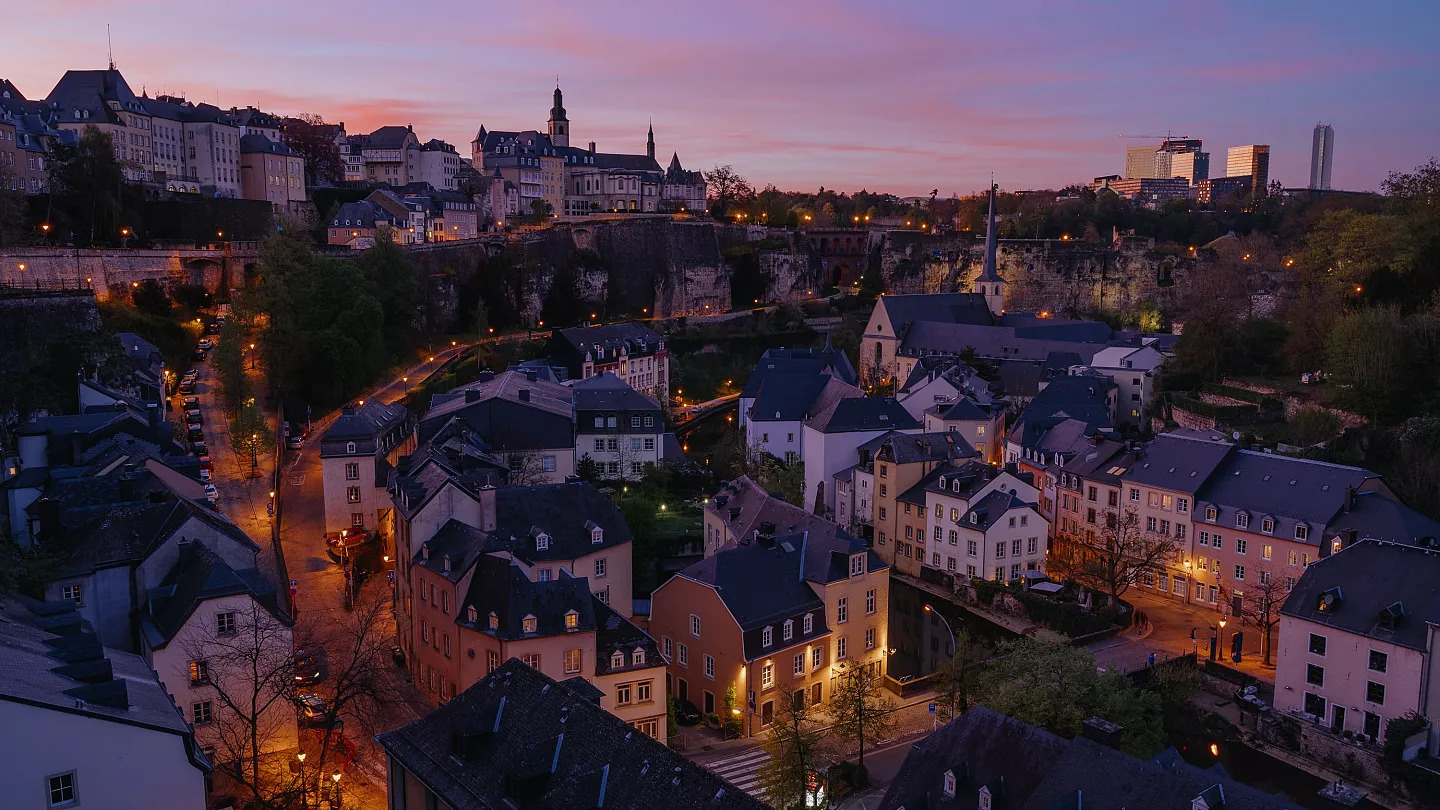
Luxembourg's property market — consistent capital appreciation driven by economic strength and housing demand
Choosing the right location is the single most impactful decision you will make as a property investor. In Luxembourg, the investment landscape can be broadly divided into two categories: high-yield areas that deliver strong rental returns today, and capital growth areas where the value of your property is likely to appreciate faster over time. The best strategy often involves a blend of both.
High-Yield Investment Areas
Esch-sur-Alzette is Luxembourg's second city and has undergone a remarkable transformation in recent years. The University of Luxembourg campus in nearby Belval, new tram extensions, and major urban renewal projects have brought a wave of young professionals and students. Entry prices remain 35-40% below Luxembourg City, yet rents have been climbing steadily. For buy-to-let investors, Esch represents one of the best value propositions in the country.
Differdange and Petange in the southwest offer some of the lowest entry points in Luxembourg, making them attractive for investors with tighter budgets or those looking to acquire multiple units. The planned extension of public transport links and ongoing industrial redevelopment are gradually improving the appeal of these communes.
Ettelbruck and Diekirch in the north serve as regional hubs with growing populations. These towns benefit from government decentralisation efforts and offer yields that often exceed 5% gross. The upcoming rail improvements will further reduce commuting times to the capital.
Capital Growth Areas
Kirchberg continues to be the institutional heart of Luxembourg, home to EU institutions, major banks, and the Philharmonie. Properties here command premium prices but have historically delivered strong capital appreciation of 5-7% annually.
Gasperich / Clôche d'Or is Luxembourg's newest business district. With major corporate tenants like PwC, Deloitte, and Amazon, the area attracts high-income professionals. New-build apartments here have seen particularly strong demand.
Bonnevoie sits in a sweet spot between yield and growth. It is close enough to the city centre to benefit from capital appreciation, yet diverse enough in housing stock to offer reasonable entry prices. I consider Bonnevoie one of the most underrated investment areas in the greater Luxembourg City region.
Emerging Neighbourhoods to Watch
Hollerich is undergoing massive redevelopment with the new national football stadium project and mixed-use developments. Current prices still reflect the neighbourhood's industrial past, but the area's transformation over the next 3-5 years could deliver significant capital gains.
Dudelange in the south is increasingly attracting young families priced out of the capital. Its proximity to the French border and improving transport connections make it a candidate for above-average appreciation. For a deeper dive into specific neighbourhoods, see our neighbourhood guide.
| Area | Avg Price/sqm | Gross Rental Yield | Capital Growth Potential | Risk Level |
|---|---|---|---|---|
| Kirchberg | EUR 10,800 | 2.8% | High (5-7%/yr) | Low |
| Gasperich | EUR 9,500 | 3.1% | High (5-6%/yr) | Low |
| Bonnevoie | EUR 8,200 | 3.6% | Medium-High (4-6%/yr) | Low-Medium |
| Belval | EUR 6,800 | 4.2% | Medium-High (4-5%/yr) | Medium |
| Esch-sur-Alzette | EUR 6,200 | 4.5% | Medium (3-5%/yr) | Medium |
| Ettelbruck | EUR 5,800 | 5.0% | Medium (3-4%/yr) | Medium |
| Differdange | EUR 5,500 | 4.8% | Medium (3-4%/yr) | Medium |
| Hollerich (emerging) | EUR 7,800 | 3.4% | Very High (6-8%/yr) | Medium-High |
| Dudelange | EUR 5,900 | 4.6% | Medium-High (4-5%/yr) | Medium |
What this means for you: Before choosing a location, define whether you want strong monthly cash flow, long-term appreciation, or a balance of both. This decision will drive every other choice you make.
Investment Strategy 1: Buy-to-Let
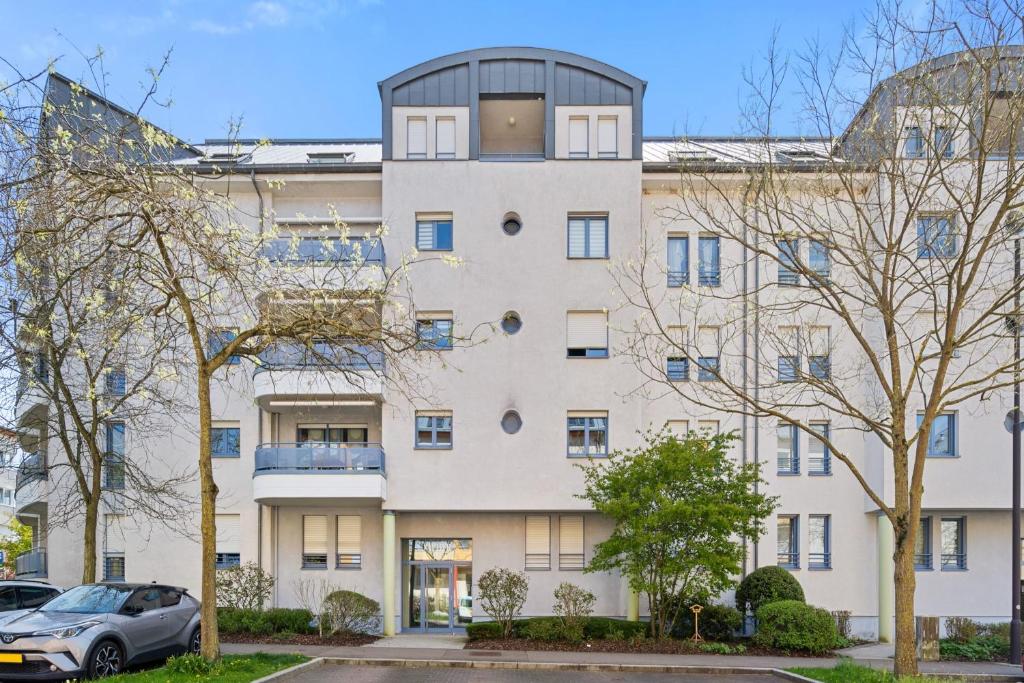
Buy-to-let in Luxembourg — well-maintained rental properties generate consistent income in a high-demand market
Buy-to-let is the most common property investment strategy in Luxembourg, and for good reason. With a large expatriate population — many of whom rent rather than buy — tenant demand is consistently strong, and vacancy rates across the country remain low.
How Buy-to-Let Works in Luxembourg
The concept is straightforward: you purchase a property, rent it out, and the rental income (ideally) covers your mortgage repayments while also generating positive cash flow. Over time, your tenant effectively pays down your mortgage while the property appreciates in value.
In practice, achieving positive cash flow in Luxembourg requires careful planning. Purchase prices are high, which means mortgage payments are substantial. However, interest rates in early 2026 have settled into the 3.2-3.8% range, and if you secure a competitive rate and choose your area wisely, the numbers can work very well. For current mortgage rates and strategies, check our mortgage guide.
Typical Buy-to-Let Returns
A well-chosen buy-to-let property in Luxembourg can deliver a total return (rental yield plus capital appreciation) of 6-10% annually. For example, a EUR 450,000 apartment in Esch-sur-Alzette yielding 4.5% gross rental income plus 4% annual capital appreciation gives you a combined return of 8.5% per year — before considering the leverage effect of your mortgage.
From what I see in the current investment landscape, the sweet spot for buy-to-let investors right now is two-bedroom apartments in the EUR 350,000 to EUR 550,000 range, located in areas with strong transport links and proximity to employment centres. These properties attract the widest pool of tenants and tend to re-let quickly when vacancies occur.
Tax Implications of Buy-to-Let
Rental income in Luxembourg is taxed as part of your overall income. It is added to your other earnings and taxed at your marginal rate, which ranges from 0% to 42% depending on your total income. However, you can deduct a wide range of expenses: mortgage interest, insurance premiums, maintenance and repair costs, property management fees, and depreciation on the building (typically 2-3% of the building value per year, excluding land). These deductions can significantly reduce your taxable rental income.
Pros and Cons of Buy-to-Let in Luxembourg
Advantages:
- Regular monthly income stream that can cover mortgage payments
- Strong tenant demand due to Luxembourg's large expatriate population
- Generous tax deductions (interest, depreciation, maintenance)
- Benefit from capital appreciation while someone else pays your mortgage
- Low vacancy rates — well-located properties rarely sit empty
Disadvantages:
- High entry prices mean substantial deposit requirements (typically 20-25% for investment properties)
- Management responsibilities (or management fees of 8-10% of rent)
- Potential for void periods between tenants
- Wear and tear on the property reduces long-term value if not maintained
- Rental income tax can be significant at higher marginal rates
Investment Strategy 2: Capital Growth (Buy & Hold)
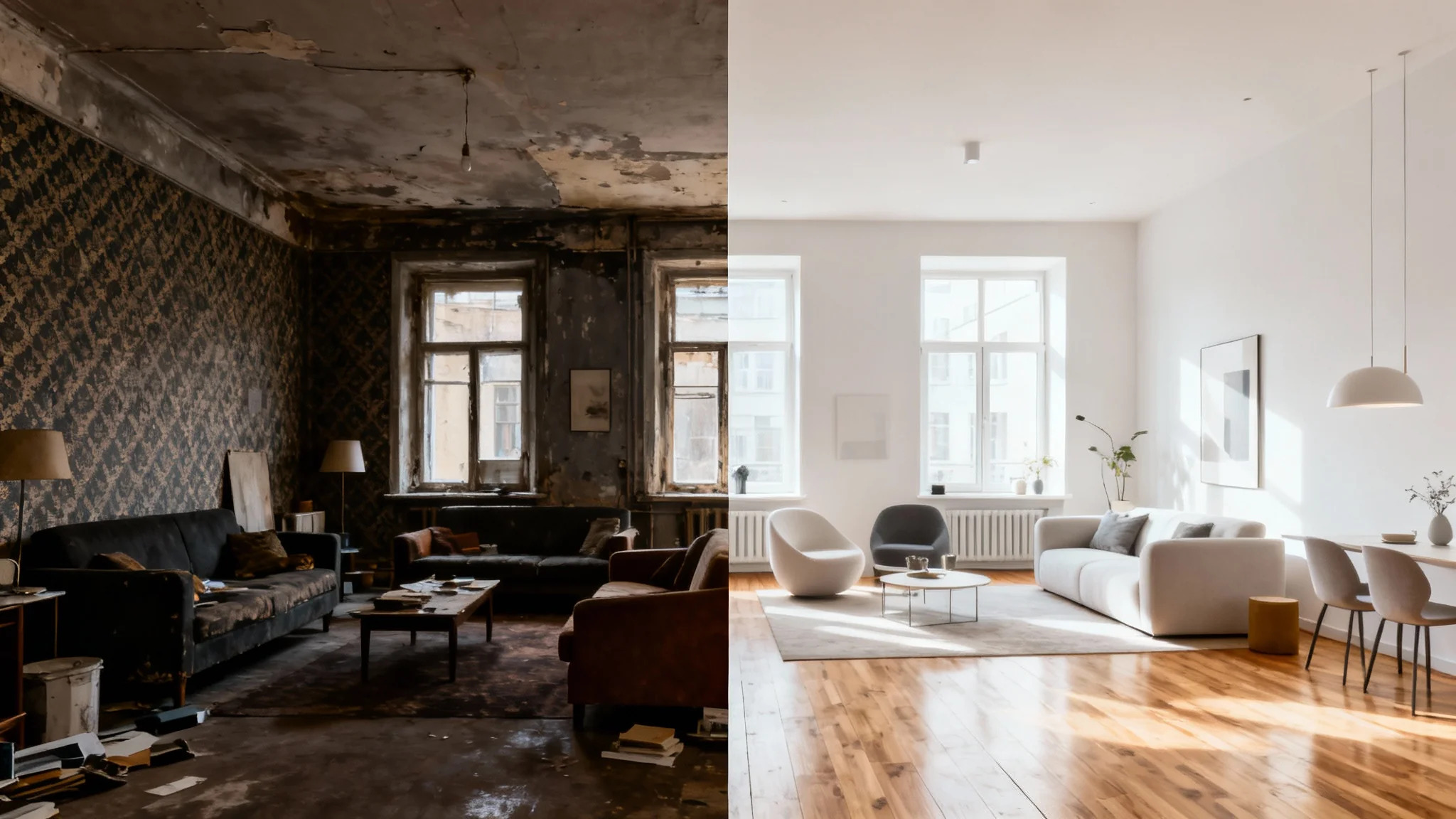
Capital growth through renovation — adding value to Luxembourg properties can significantly boost your returns
If you have a longer time horizon and are less concerned about immediate rental income, a capital growth strategy — buying property and holding it for appreciation — has historically been one of the most reliable ways to build wealth in Luxembourg.
Historical Appreciation: The Numbers Speak
According to data from STATEC and the Observatoire de l'Habitat, Luxembourg property prices have appreciated at an average rate of 4-7% annually over the past decade, depending on location and property type. Even during the brief market correction of 2022-2023, when prices dipped by 10-15% from their 2022 peak, values have since recovered and in many areas now exceed previous highs. This pattern of correction followed by recovery is exactly what you would expect in a market with strong underlying fundamentals.
One thing most investors don't realize about Luxembourg is the sheer power of compounding when you combine capital growth with leverage. If you purchase a EUR 600,000 property with 20% down (EUR 120,000 equity) and the property appreciates by 5% per year, after 10 years your property is worth approximately EUR 977,000. Your equity has grown from EUR 120,000 to nearly EUR 497,000 — a 314% return on your invested capital. That is the magic of leveraged real estate investment in a growing market.
Best Areas for Capital Growth
For a pure capital growth strategy, focus on areas where demand is highest and supply most constrained: Kirchberg, Limpertsberg, Belair, Gasperich, and emerging redevelopment zones like Hollerich. These areas have consistently outperformed the national average in price appreciation.
| Area | 2018 Avg/sqm | 2022 Peak/sqm | 2024 Corrected/sqm | 2026 Avg/sqm | Total Growth (2018-2026) |
|---|---|---|---|---|---|
| Kirchberg | EUR 7,600 | EUR 11,500 | EUR 10,000 | EUR 10,800 | +42% |
| Gasperich | EUR 6,400 | EUR 10,200 | EUR 8,800 | EUR 9,500 | +48% |
| Bonnevoie | EUR 5,800 | EUR 9,000 | EUR 7,600 | EUR 8,200 | +41% |
| Esch-sur-Alzette | EUR 4,300 | EUR 6,800 | EUR 5,800 | EUR 6,200 | +44% |
| Belval | EUR 4,800 | EUR 7,500 | EUR 6,300 | EUR 6,800 | +42% |
| Ettelbruck | EUR 4,000 | EUR 6,400 | EUR 5,400 | EUR 5,800 | +45% |
| Differdange | EUR 3,700 | EUR 6,000 | EUR 5,100 | EUR 5,500 | +49% |
As the data shows, even areas with lower absolute prices have delivered strong percentage growth. Differdange, for instance, has appreciated 49% over eight years — an annualised rate of approximately 5.1%. For investors with a 10+ year horizon, the buy-and-hold approach in Luxembourg has been a remarkably effective wealth-building tool.
Investment Strategy 3: New-Build (VEFA)
Buying off-plan — known in Luxembourg as VEFA (Vente en État Futur d'Achèvement) — is a popular strategy among investors who want a brand-new property with modern energy standards, reduced maintenance costs, and important tax advantages.
How VEFA Works
When you buy VEFA, you purchase a property that has not yet been built (or is under construction). You sign a reservation contract, then a notarised sales agreement, and payments are staggered according to construction milestones — typically over 18-30 months. You do not need to pay the full price upfront, which spreads your cash flow requirements and allows you to benefit from any price appreciation during the construction period.
The Tax Advantage: VAT vs Registration Duty
This is one of the most significant financial benefits of VEFA. When you buy an existing property in Luxembourg, you pay registration duty (droits d'enregistrement) of 7% of the purchase price — a substantial cost on high-value properties. When you buy VEFA (new-build), you pay 3% super-reduced VAT on the property instead, provided it is your first purchase of a principal residence or you meet specific conditions. For standard investment purchases without the super-reduced rate, the standard VAT of 17% applies to the construction portion, while the land portion is subject to 7% registration duty.
However, even at standard rates, VEFA can be advantageous because new-build properties typically command higher rents (thanks to superior energy ratings and modern finishes) and have lower maintenance costs in the first 10-15 years, protected by the garantie décennale (10-year structural warranty).
Timeline and Risks
VEFA projects typically take 18-30 months from purchase to delivery. During this period, you face certain risks: construction delays, potential developer insolvency (mitigated by Luxembourg's strong developer guarantee requirements), and the inability to generate rental income until the property is completed. You also cannot inspect the finished product before committing, though show apartments and detailed plans help mitigate this concern.
For a complete walkthrough of the buying process, including VEFA specifics, refer to our step-by-step buying guide.
What this means for you: If you can afford to wait 18-30 months for delivery and want a low-maintenance, high-spec property that attracts premium tenants, VEFA is worth serious consideration — especially in new developments in Gasperich, Belval, and Hollerich.
Budget Planning for Property Investors
One of the most common questions I receive is: "How much do I actually need to invest in Luxembourg property?" The answer depends on your strategy, target area, and financing approach. Below, I have mapped out four realistic investment scenarios to give you a concrete picture of what is achievable at different budget levels.
These scenarios assume a 25% equity contribution (typical for investment property mortgages in Luxembourg), a mortgage rate of 3.5%, and a 25-year repayment term. Monthly cash flow is calculated after mortgage payments, estimated charges, and a 5% vacancy provision. Management costs are not included — add 8-10% of rent if you plan to use a letting agent.
| Investment Budget | What You Can Buy | Target Area | Expected Gross Yield | Monthly Rent | Monthly Mortgage | Est. Monthly Cash Flow |
|---|---|---|---|---|---|---|
| EUR 300,000 (EUR 75k equity) | Studio/1-bed (45-55 sqm) | Differdange, Ettelbruck, Petange | 4.8-5.2% | EUR 1,200-1,300 | EUR 1,120 | EUR -70 to +30 |
| EUR 500,000 (EUR 125k equity) | 2-bed apartment (65-80 sqm) | Esch, Belval, Bonnevoie | 3.8-4.5% | EUR 1,600-1,900 | EUR 1,870 | EUR -470 to -170 |
| EUR 750,000 (EUR 188k equity) | Large 2-bed/3-bed (85-110 sqm) | Gasperich, Kirchberg, Bonnevoie | 2.8-3.5% | EUR 2,100-2,400 | EUR 2,800 | EUR -900 to -600 |
| EUR 1,000,000 (EUR 250k equity) | Premium 3-bed / small house | Kirchberg, Limpertsberg, Belair | 2.5-3.0% | EUR 2,800-3,200 | EUR 3,740 | EUR -1,200 to -800 |
What this means for you: Do not fixate on monthly cash flow alone. A property that costs you EUR 300-500 per month out of pocket but appreciates by EUR 25,000-40,000 per year is still an exceptional investment. Think in terms of total return, not just rental profit.
A critical consideration that many new investors overlook: acquisition costs. In Luxembourg, on top of the purchase price, you will pay registration duty (7% for existing properties), notary fees (approximately 1-1.5%), and potentially mortgage arrangement fees. On a EUR 500,000 purchase, that is roughly EUR 40,000-42,500 in additional costs. Always factor these into your budget. For financing options, consult our mortgage guide to find the best rates available in 2026.
Tax Considerations for Property Investors in Luxembourg
Understanding the tax landscape is not optional for property investors — it is essential. Luxembourg's tax system offers both opportunities and obligations for real estate investors. Getting this right can mean the difference between a mediocre return and an excellent one.
Rental Income Taxation
Rental income (revenus locatifs) is treated as net income under Luxembourg tax law. You declare your gross rental income and then deduct allowable expenses to arrive at your taxable rental income. This net figure is added to your other income and taxed at your marginal rate. For tax class 1 (single person), the top marginal rate is 42% on income above EUR 200,004. For tax class 2 (married/partnership), the same rate applies but the bracket thresholds are effectively doubled.
Deductible Expenses
Luxembourg is relatively generous with deductions for property investors. You can deduct:
- Mortgage interest — the interest portion of your loan repayments (not the capital repayment)
- Depreciation — typically 2% of the building construction cost per year for buildings less than 6 years old, or 3% for buildings 6 years or older (excluding land value)
- Insurance premiums — building insurance, landlord liability insurance
- Maintenance and repairs — costs to maintain the property in its current condition (not improvements)
- Property management fees — if you use a letting agent
- Property tax (impôt foncier) — though this is relatively low in Luxembourg
- Condominium charges — the owner's share of building charges
- Professional fees — accounting, legal advice related to the rental activity
Capital Gains Tax
When you sell an investment property, capital gains tax applies. The rate and treatment depend critically on how long you have held the property:
- Held less than 2 years: The gain is treated as speculative income and taxed at your full marginal income tax rate (up to 42%).
- Held 2 years or more: You benefit from a half-rate taxation — only 50% of the gain is taxable, effectively reducing the maximum rate to approximately 21%. Additionally, you receive a EUR 50,000 allowance (EUR 100,000 for couples) that can be applied once every 10 years.
This is why holding property for at least two years before selling is almost always advisable from a tax perspective. The difference in tax treatment is dramatic.
| Tax Category | Treatment | Effective Rate | Notes |
|---|---|---|---|
| Rental income | Added to total income, taxed at marginal rate | 0% - 42% | Deductible expenses reduce taxable amount |
| Capital gains (<2 years) | Speculative income — full marginal rate | Up to 42% | No allowance available |
| Capital gains (≥2 years) | Half-rate taxation, with EUR 50k allowance | Up to ~21% | EUR 50k allowance (EUR 100k couples), once per 10 years |
| Property tax (annual) | Based on unité de valeur (assessed value) | Very low (EUR 50-500/yr typical) | Varies by commune; reform pending |
| Registration duty (purchase) | 7% of purchase price (existing property) | 7% | Paid once at purchase; VEFA has different structure |
| Depreciation deduction | 2-3% of building value per year | Reduces taxable rental income | Building <6 years: 2%; ≥6 years: 3% |
Real Client Example: Building a Rental Portfolio in Luxembourg

Smart investing starts with data — reviewing your Luxembourg property portfolio for maximum returns
Case Study: Marco's First Investment Property in Bonnevoie
Marco, a 38-year-old financial analyst working in Kirchberg, approached me in early 2025 with a clear goal: he wanted to start building a real estate portfolio alongside his salaried career. He had EUR 150,000 in savings and was willing to commit EUR 130,000 as equity for his first investment purchase.
After analysing Marco's financial situation, risk tolerance, and long-term goals, we identified a two-bedroom apartment in Bonnevoie — a 72 sqm unit in a well-maintained 2008-era residence, listed at EUR 510,000. The building had recently undergone facade renovation and offered a parking space, which is critical for attracting quality tenants in that area.
The numbers:
Purchase price: EUR 510,000
Acquisition costs (registration duty + notary): ~EUR 38,000
Minor renovation (kitchen refresh, painting): EUR 8,000
Total investment: EUR 556,000
Marco's equity: EUR 130,000 (23.4%)
Mortgage: EUR 426,000 at 3.4% over 25 years
Monthly mortgage payment: EUR 2,110
Rental outcome:
Monthly rent achieved: EUR 1,900
Monthly charges (owner's share): EUR 180
Net monthly rental income: EUR 1,720
Monthly cash flow (after mortgage): EUR -390
But here is the full picture:
While Marco pays EUR 390 per month out of pocket, his tenant is paying down EUR 1,070 per month in mortgage capital. The property is projected to appreciate approximately 4-5% per year in Bonnevoie. After just three years, Marco's equity in the property has grown by approximately EUR 100,000 — a return of over 75% on his initial EUR 130,000 investment.
I've helped many clients build their real estate portfolios starting with exactly this kind of strategic first purchase. The key was finding a property in a strong rental location, at a price that made the numbers work, and with features that minimise vacancy risk. Today, Marco is already planning his second acquisition.
Get a Free Property Valuation
Thinking about investing in Luxembourg real estate? Start with a free, no-obligation property valuation to understand today's market values and identify the best opportunities for your budget and goals.
📊 Free Property Valuation 💬 WhatsApp DanielaCommon Investment Mistakes to Avoid
Over the years, I have seen investors — both first-timers and experienced ones — make costly mistakes that could have been avoided with better preparation. Here are the most common pitfalls in the Luxembourg property investment market and how to steer clear of them.
1. Chasing Yield Without Understanding Location
A 5.5% gross yield means nothing if the property is in an area with declining demand, poor transport links, or social challenges that make it difficult to retain good tenants. Some investors fixate on the highest percentage return they can find on paper without asking the critical question: Will this area still be desirable in 5-10 years? Always investigate the local development plans, transport projects, and demographic trends before committing to a location. A 3.5% yield in a solid, growing area will almost always outperform a 5.5% yield in a stagnant one when you factor in capital appreciation, vacancy costs, and tenant quality.
2. Ignoring Management Costs
If you plan to self-manage your property, factor in the time commitment: responding to tenant requests, arranging repairs, handling administrative paperwork, and managing tenant turnover. If you use a professional management company, budget 8-10% of your monthly rent as a management fee. Either way, management costs are real — and failing to account for them will leave you with an unrealistically optimistic view of your returns.
3. Not Planning for Vacancy
Even in Luxembourg's tight rental market, vacancy happens. Tenants leave, and it can take 2-6 weeks (or occasionally longer) to find a replacement. Budget for at least one month of vacancy per year in your financial projections. This might seem conservative, but it gives you a realistic picture and prevents unpleasant surprises. If your property ends up fully occupied year-round, you will simply outperform your projections — which is a much better position to be in than the reverse.
4. Over-Leveraging
Borrowing the maximum amount possible to acquire the most expensive property you can afford is a dangerous game. If interest rates rise, rental income drops, or you face unexpected expenses, you can find yourself in a cash-flow crunch. I recommend maintaining a financial buffer of at least 6 months' worth of mortgage payments in addition to your deposit and acquisition costs. This safety net gives you breathing room and protects your investment from short-term market fluctuations.
5. Neglecting Due Diligence
In a competitive market, there is pressure to make fast decisions. But rushing into a purchase without proper due diligence — thorough inspection, review of condominium accounts, verification of energy performance, understanding of planned local developments — can cost you dearly. A property that looks like a bargain may have hidden structural issues, pending special assessments from the co-ownership, or be in the path of a planned road project that will reduce its value.
6. Failing to Think About Exit Strategy
Before you buy, ask yourself: If I need to sell this property in 3-5 years, who is the buyer? The best investment properties are those that appeal to a broad market — both other investors and owner-occupiers. A two-bedroom apartment in a well-connected area with parking will always have a larger potential buyer pool than a highly specific or niche property. Liquidity matters.
7. Underestimating Renovation Costs
If you are buying a property that needs work, always get multiple quotes before purchasing, and add a 15-20% contingency to your budget. Renovation projects in Luxembourg are expensive — skilled labour is in high demand, materials prices have risen significantly, and projects frequently take longer than planned. What looks like a value-add opportunity on paper can quickly become a money pit if you underestimate the costs.
For a broader perspective on whether now is the right time to buy, read our rent vs buy comparison for a detailed financial analysis.
Ready to Invest? Let Daniela Guide You
Whether you are a first-time investor or expanding your portfolio, a personalised investment consultation will help you identify the right strategy, the best areas, and properties that match your financial goals. No pressure, no obligation — just expert guidance.
📊 Book Investment Consultation 💬 WhatsApp DanielaFinancing Your Investment Property
Securing the right mortgage is arguably as important as choosing the right property. The difference between a 3.2% and a 3.8% interest rate on a EUR 400,000 mortgage amounts to approximately EUR 14,400 over 10 years — money that could be funding your next investment.
Mortgage Requirements for Investment Properties
Luxembourg banks typically apply stricter criteria for investment property mortgages compared to primary residence loans. Expect the following:
- Higher deposit requirement: Most banks require 20-25% equity for investment properties, compared to 10-20% for primary residences.
- Debt-to-income ratio: Banks will assess your total debt burden. Generally, your total monthly debt repayments (including the new mortgage) should not exceed 35-40% of your net monthly income.
- Rental income consideration: Banks will typically count 70-80% of projected rental income toward your debt serviceability calculation — they discount it to account for potential vacancy and costs.
- Interest rates: Investment property rates may be marginally higher (0.1-0.3%) than primary residence rates, though this varies between lenders.
What I always tell investors looking at this market is to shop around. Luxembourg has multiple banks with different appetites for investment lending, and the differences in terms can be substantial. Speak to at least three banks — including BGL BNP Paribas, Spuerkeess, BIL, and ING — before committing. For a detailed breakdown of current rates and strategies, see our mortgage guide.
Fixed vs Variable Rate
In the current interest rate environment, most investors are opting for fixed rates (typically 10-15 year fixed periods) to lock in predictable payments. This makes financial planning easier and protects you against future rate increases. Variable rates are lower initially but carry the risk of rising over time. For investment properties, where predictable cash flow is important, fixed rates generally make more sense.
The Role of Passive Income in Your Investment Strategy
Building passive income through Luxembourg real estate is a long-term game. In the early years of a buy-to-let investment, your monthly cash flow may be neutral or slightly negative after mortgage payments. But as rents increase (typically 1-3% annually in Luxembourg) while your fixed mortgage payments stay constant, your cash flow steadily improves.
Consider this trajectory for a EUR 500,000 property with an initial rent of EUR 1,800/month and a fixed mortgage payment of EUR 1,870/month:
- Year 1: Monthly cash flow: approximately -EUR 270 (after charges and vacancy provision)
- Year 5: Monthly cash flow: approximately +EUR 10 (rent has increased; mortgage is unchanged)
- Year 10: Monthly cash flow: approximately +EUR 350 (compounding rent increases)
- Year 15: Monthly cash flow: approximately +EUR 750
- Year 25 (mortgage paid off): Monthly cash flow: approximately +EUR 2,400 — pure passive income
The transition from negative to positive cash flow — and eventually to substantial passive income — is one of the most powerful aspects of real estate investment. But it requires patience and a long-term perspective. If you are looking for immediate high returns, property may not be the right vehicle. If you are willing to invest consistently over 10-25 years, real estate in Luxembourg can create transformative wealth.
Non-Resident Investment: Can You Invest from Abroad?
Yes, non-residents can absolutely invest in Luxembourg real estate. There are no restrictions on foreign ownership of property in Luxembourg, which is one of the factors that makes the market so attractive to international investors.
However, there are practical considerations:
- Mortgage access: Non-residents can obtain mortgages from Luxembourg banks, but terms may be stricter. Some banks require higher deposits (30-40%) for non-resident investors, and not all banks lend to non-residents.
- Tax obligations: You will need to file a Luxembourg tax return to declare your rental income. Luxembourg has double taxation treaties with most countries, so you should not be taxed twice on the same income — but the mechanics vary depending on your country of residence.
- Property management: If you live outside Luxembourg, professional property management becomes almost essential. Budget 8-10% of rental income for this service.
- Legal representation: Having a local advisor who understands both the property market and the legal framework is particularly valuable for non-resident investors.
In my experience advising property investors in Luxembourg, many of my most successful clients are cross-border workers living in France, Belgium, or Germany who invest in Luxembourg property to benefit from the market's growth dynamics. The proximity makes management easier while the investment captures Luxembourg's superior appreciation rates.
Frequently Asked Questions About Property Investment in Luxembourg
What is the average rental yield in Luxembourg?
The average gross rental yield in Luxembourg ranges from approximately 2.5% in premium locations like Kirchberg and the city centre to 5.0% or more in areas like Ettelbruck, Differdange, and Esch-sur-Alzette. Net yields — after deducting property tax, insurance, maintenance, vacancy provisions, and condominium charges — typically run 1.0-1.5% lower than gross yields. The national average gross yield for apartments sits at approximately 3.5-4.0%. However, focusing solely on rental yield misses the bigger picture: total return in Luxembourg (yield plus capital appreciation) has historically averaged 7-10% annually in well-chosen locations.
Is buy-to-let profitable in Luxembourg?
Yes, buy-to-let can be very profitable in Luxembourg, but profitability depends heavily on your definition. If you measure profitability purely by monthly cash flow, you may find that many Luxembourg buy-to-let properties operate at a small monthly loss in the early years due to high purchase prices relative to rents. However, when you factor in capital appreciation (historically 4-7% per year), mortgage paydown by your tenant, and generous tax deductions (mortgage interest, depreciation, maintenance), the total return on invested equity can reach 10-15% annually. The key is choosing the right area, securing competitive financing, and taking a long-term view of at least 7-10 years.
How much do I need to invest in Luxembourg property?
The minimum realistic investment depends on the area and property type. For an investment property, banks typically require 20-25% equity. At the lower end of the market, a studio or one-bedroom apartment in areas like Differdange, Petange, or Ettelbruck can be purchased for EUR 250,000-350,000, requiring EUR 60,000-90,000 in equity plus approximately EUR 20,000-28,000 in acquisition costs (registration duty, notary fees). So you should plan for a minimum total cash outlay of approximately EUR 80,000-120,000 for an entry-level investment. For a two-bedroom apartment in a stronger location like Bonnevoie or Esch-sur-Alzette, budget EUR 130,000-180,000 in total cash. Always maintain a financial reserve beyond your deposit and acquisition costs.
What are the best areas for property investment in Luxembourg?
The best area depends on your investment strategy. For high rental yields, consider Ettelbruck (5.0%+), Differdange (4.8%), Esch-sur-Alzette (4.5%), and Dudelange (4.6%). For capital growth, Kirchberg, Gasperich, Limpertsberg, and Belair have historically delivered the strongest appreciation at 5-7% per year. For a balance of both yield and growth, Bonnevoie, Belval, and Hollerich (emerging) offer attractive hybrid returns. Hollerich, in particular, is worth watching — the major redevelopment underway could deliver significant capital gains over the next 3-5 years. For detailed neighbourhood analysis, read our neighbourhood guide.
Do I pay tax on rental income in Luxembourg?
Yes, rental income is taxable in Luxembourg. It is classified as net income from renting and is added to your overall income, then taxed at your marginal rate (up to 42%). However, you can deduct a wide range of expenses to reduce your taxable rental income: mortgage interest, building depreciation (2-3% per year), insurance, maintenance, management fees, property tax, and professional fees. These deductions can reduce your effective tax on rental income substantially. In many cases, particularly in the early years of ownership when mortgage interest is highest, the deductions can reduce your taxable rental income to near zero. Consult a Luxembourg tax advisor to optimise your structure.
Can non-residents invest in Luxembourg real estate?
Absolutely. Luxembourg imposes no restrictions on foreign ownership of property. Non-residents can purchase, rent out, and sell real estate on the same terms as Luxembourg residents. Financing is available from Luxembourg banks, though non-residents may face higher equity requirements (30-40% instead of 20-25%) and not all banks lend to non-resident investors. You will need to file a Luxembourg tax return to declare rental income, and you should understand how the double taxation treaty between Luxembourg and your country of residence applies to avoid being taxed twice. Many cross-border workers from France, Belgium, and Germany successfully invest in Luxembourg property, and professional property management services make it practical even if you do not live in the country. For more on the complete purchasing process, read our step-by-step buying guide.
Conclusion: Your Luxembourg Property Investment Strategy Starts Now
Luxembourg's real estate market in 2026 offers a compelling proposition for investors at every level. The fundamentals are rock-solid: surging population, chronic housing shortage, the highest incomes in Europe, AAA-rated stability, and a deep pool of quality tenants driven by the country's thriving financial sector and EU institutions. Whether you pursue a buy-to-let strategy for rental income, a buy-and-hold approach for capital appreciation, or a VEFA purchase for a brand-new property with tax advantages, the market rewards those who do their homework and invest strategically.
The key principles that separate successful investors from the rest are clear: choose your location based on data, not emotion. Understand the real numbers — net yield, not gross yield. Plan your finances conservatively, with buffers for vacancy and unexpected costs. Think in terms of total return, not just monthly cash flow. And hold for the long term — Luxembourg's market has consistently rewarded patient investors with exceptional returns.
In my experience advising property investors in Luxembourg, the single biggest regret I hear from clients is not starting sooner. Every year that passes without investing is a year of capital appreciation and mortgage paydown that you miss out on. The market will not wait, and neither should you.
Whether you are ready to make your first investment or looking to expand an existing portfolio, the right strategy and the right guidance make all the difference. I am here to help you navigate every step of the process — from identifying the best opportunities to closing the deal and finding quality tenants. You can explore available investment properties through our property search, or reach out directly for a personalised consultation.
Start Building Your Property Portfolio Today
Ready to invest in Luxembourg real estate? Whether you need a free property valuation, investment strategy advice, or help finding the perfect investment property — Daniela is here to guide you every step of the way.
📊 Investment Consultation 📈 Free Property Valuation 💬 WhatsApp DanielaSources: STATEC, Observatoire de l'Habitat, BCL (Banque Centrale du Luxembourg), Chambre Immobilière du Grand-Duché de Luxembourg. Data reflects market conditions and estimates as of Q1 2026. All yield and appreciation figures are estimates based on historical data and current market trends; actual results may vary. This article is for informational purposes and does not constitute financial advice. Please consult a qualified professional for personalised investment guidance.