Here is something that catches almost every first-time buyer in Luxembourg off guard: the price on the listing is never the price you actually pay. In my experience helping hundreds of clients purchase property across the Grand Duchy, I have seen buyers budget meticulously for the purchase price itself, then scramble when they realise they need an additional EUR 50,000 to EUR 150,000 — sometimes more — to cover the registration taxes, notary fees, mortgage costs, and a dozen smaller charges that nobody warned them about. I had a client last year who found her dream apartment in Gasperich at EUR 650,000, only to discover at the notary appointment that the total acquisition cost was closer to EUR 720,000. That EUR 70,000 gap is real, and it derails budgets, delays closings, and causes enormous stress at what should be an exciting moment.
This guide is my attempt to make sure that never happens to you. I am going to walk you through every single cost associated with buying property in Luxembourg in 2026 — the big ones like registration tax and notary fees, the medium ones like mortgage arrangement fees and building insurance, and the small but cumulative ones like utility transfers, moving costs, and syndic charges. By the end, you will have a complete picture of what your property purchase will actually cost, not just what the estate agent's listing says. I will give you detailed breakdown tables for properties at EUR 500,000, EUR 750,000, and EUR 1,000,000, so you can calibrate your budget with precision.
If you are still deciding whether 2026 is the right time to enter the Luxembourg market, I recommend reading our complete 2026 market analysis first. If you already know you want to buy and need to understand the financial mechanics, you are in exactly the right place. What I always tell my clients is this: the purchase price is just the beginning. The true cost of buying in Luxembourg adds between 10 and 15 percent on top — and understanding every euro of that is the difference between a smooth purchase and a stressful one.
Registration Tax (Droits d'Enregistrement): The Biggest Hidden Cost
The single largest additional cost when buying property in Luxembourg is the registration tax, known locally as the droits d'enregistrement. This is a government tax payable on the transfer of real estate, and in 2026 the standard rate remains 7 percent of the property's purchase price or assessed value, whichever is higher. On a EUR 750,000 apartment, that is EUR 52,500 in tax alone — before you have paid a single euro to the notary, the bank, or the moving company.
The 7 percent rate breaks down as follows: 6 percent goes to the registration duty proper (droit d'enregistrement) and 1 percent goes to the transcription fee (droit de transcription). Both are calculated on the same base — the declared purchase price in the notarial deed — and both are payable at the time of signing the acte authentique (the final deed). There is no instalment plan for registration tax. You pay it in full on closing day, and it is non-negotiable.
What I always tell my clients is that registration tax is the cost that people intellectually know about but emotionally underestimate. When you see a property listed at EUR 500,000, your brain focuses on that number. It takes discipline to immediately add EUR 35,000 in registration tax and recalibrate your expectations accordingly. I have learned to build this into every initial conversation with a new buyer: your real budget is not EUR 500,000, it is EUR 500,000 plus 10 to 15 percent for acquisition costs, of which registration tax is the largest single component.
The Bëllegen Akt: Reduced Rate for First-Time Buyers
Now, here is the good news. Luxembourg offers a significant tax reduction for first-time principal-residence buyers through a scheme known as the Bëllegen Akt (sometimes spelled Bëllegen Akten). Under this programme, first-time buyers purchasing a property to use as their main residence can receive a tax credit of up to EUR 20,000 per buyer on the registration duties. For a couple buying together, that is a potential saving of up to EUR 40,000.
The Bëllegen Akt does not eliminate the registration tax entirely — it applies as a credit against the 6 percent registration duty portion (not the 1 percent transcription fee). On a EUR 500,000 property, the full registration duty would be EUR 30,000. A single buyer claiming the full EUR 20,000 credit would pay only EUR 10,000 in registration duty, plus the EUR 5,000 transcription fee, for a total of EUR 15,000 instead of EUR 35,000. That is a saving of EUR 20,000, which is substantial.
For a couple, the maths is even better. On a EUR 500,000 property with EUR 40,000 in combined credits against a EUR 30,000 registration duty, the duty is effectively reduced to zero (the credit cannot go below zero — you do not receive cash back for unused credit). They would still pay the EUR 5,000 transcription fee, but the total tax bill drops from EUR 35,000 to just EUR 5,000. That is a saving of EUR 30,000.
| Property Price | Standard Rate (7%) | With Bëllegen Akt (Single) | With Bëllegen Akt (Couple) | Saving (Couple) |
|---|---|---|---|---|
| EUR 400,000 | EUR 28,000 | EUR 12,000 | EUR 4,000 | EUR 24,000 |
| EUR 500,000 | EUR 35,000 | EUR 15,000 | EUR 5,000 | EUR 30,000 |
| EUR 750,000 | EUR 52,500 | EUR 32,500 | EUR 12,500 | EUR 40,000 |
| EUR 1,000,000 | EUR 70,000 | EUR 50,000 | EUR 30,000 | EUR 40,000 |
To qualify for the Bëllegen Akt in 2026, you must meet several conditions. You must not already own or have owned residential property in Luxembourg (or, in some cases, abroad — the rules are nuanced). The property must become your principal residence within two years of purchase. And you must occupy it for at least two years after moving in. If you sell or rent out the property before the two-year occupancy period is up, the tax authorities can claw back the credit with interest. I have seen this happen to a client who was relocated abroad by his employer 18 months after purchase — he had to repay the full credit plus a penalty. So do factor this risk into your planning.
What this means for you: If you qualify as a first-time buyer, the Bëllegen Akt is non-negotiable — you must claim it. Make sure your notary applies for the credit proactively. If you are buying as a couple, ensure both names are on the deed to maximise the EUR 40,000 combined credit.
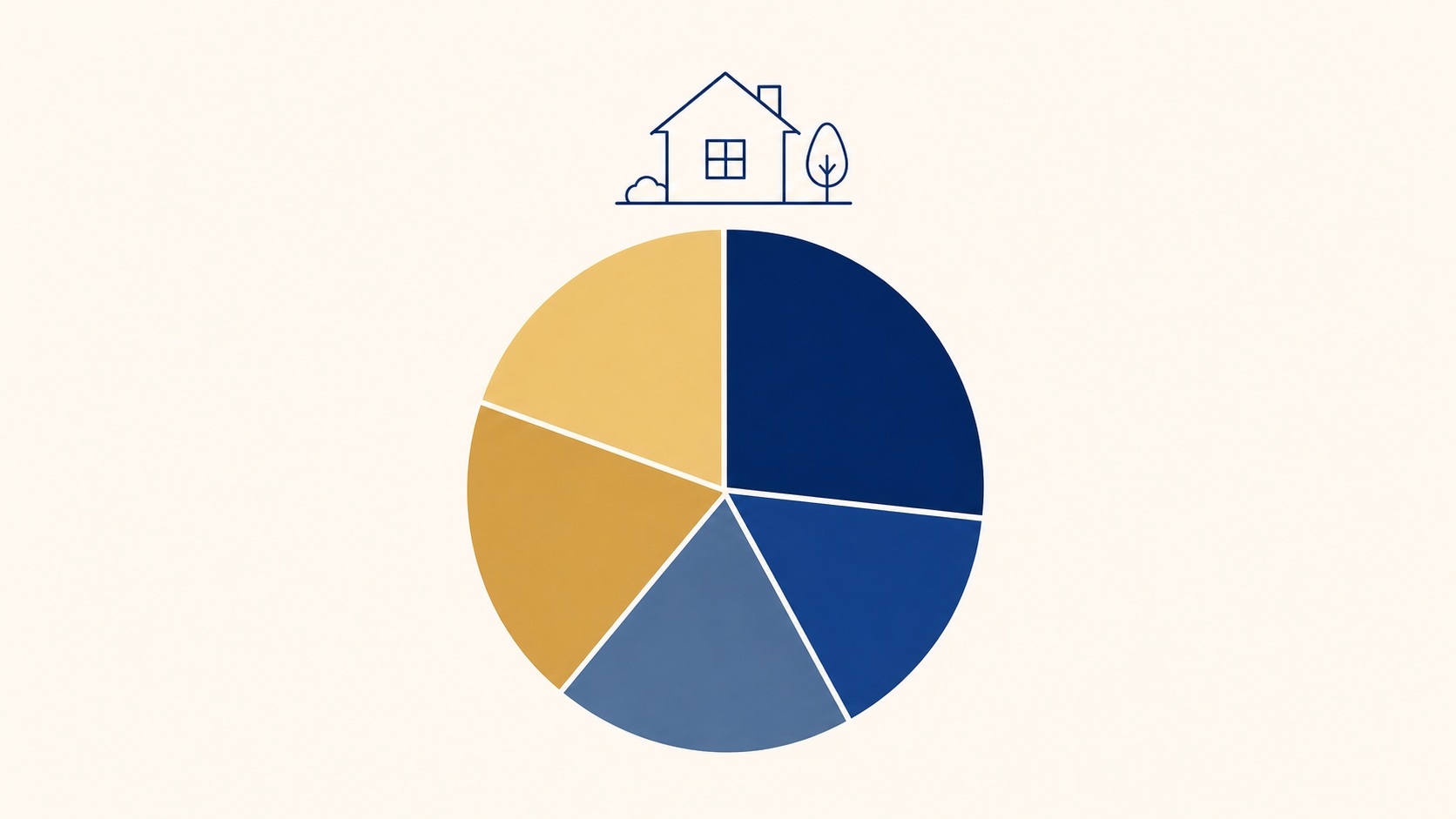
Registration tax is 7% of the purchase price — but first-time buyers can claim significant reductions through the Bëllegen Akt scheme.
Notary Fees: What You Actually Pay the Notaire
In Luxembourg, every property transaction must pass through a notary (notaire). The notary is not optional — it is a legal requirement. The notary drafts the compromis de vente (preliminary sales agreement) and the acte authentique (final deed), verifies the legal status of the property, ensures all taxes are calculated correctly, and registers the transfer with the land registry. For this service, you pay notary fees that are regulated by law and calculated on a degressive scale based on the property's value.
The notary fee structure in Luxembourg in 2026 works as follows. The fees are calculated in tranches, with each tranche attracting a different percentage rate. The rates decrease as the property value increases, meaning the effective percentage drops on higher-value properties.
| Property Value Tranche | Fee Rate |
|---|---|
| First EUR 10,000 | 1.8% |
| EUR 10,001 to EUR 30,000 | 1.2% |
| EUR 30,001 to EUR 60,000 | 0.9% |
| EUR 60,001 to EUR 150,000 | 0.72% |
| EUR 150,001 to EUR 300,000 | 0.54% |
| Above EUR 300,000 | 0.42% |
In practice, this degressive scale means that notary fees typically fall between 0.8 and 1.5 percent of the purchase price for properties in the EUR 400,000 to EUR 1,200,000 range that dominates the Luxembourg market. On a EUR 500,000 property, you can expect notary fees of approximately EUR 4,000 to EUR 5,500. On a EUR 750,000 property, approximately EUR 5,000 to EUR 7,000. On a EUR 1,000,000 property, approximately EUR 6,000 to EUR 8,500.
But here is where it gets important — and where clients often get confused. The notary fee quoted above is just the notary's honoraire (professional fee). On top of that, the notary will charge you for various disbursements and administrative costs. These include land registry search fees, official document copies, postage and courier charges, and VAT on the notary's fee itself. These disbursements typically add another EUR 1,500 to EUR 3,000 on top of the base notary fee. So when I tell clients to budget for notary costs, I tell them to expect approximately 1.0 to 1.5 percent of the purchase price all-in, including disbursements.
From what I see in practice, some notaries in Luxembourg also charge a small additional fee for handling the mortgage deed if you are financing the purchase with a bank loan. This is separate from the purchase deed fee and can add EUR 800 to EUR 2,000 depending on the loan amount. I always advise my clients to ask the notary for a detailed fee estimate (devis) before the signing, so there are no surprises on the day.
One thing worth noting: unlike in some countries, you do not get to shop around aggressively on notary fees in Luxembourg. The fee scale is set by Grand-Ducal regulation, so all notaries charge approximately the same for the same transaction. However, the disbursements can vary slightly, and the quality of service — particularly the speed of processing and the clarity of communication — varies considerably. In my experience, choosing a notary who is responsive and transparent about costs is more important than trying to save a few hundred euros on the fee itself. For guidance on the full step-by-step purchase process, including when and how to engage your notary, see our guide to the buying process in Luxembourg.
Mortgage-Related Costs: The Expenses Your Bank Does Not Highlight
If you are financing your purchase with a mortgage — and in Luxembourg, the vast majority of buyers do — there is a separate layer of costs that your bank will mention in passing but rarely emphasise. These costs are real, they are significant, and they come on top of the registration tax and notary fees. In my experience, mortgage-related costs add approximately 1.5 to 2.5 percent of the property price for a buyer taking a standard 80 to 90 percent loan.
Bank Arrangement Fee (Frais de Dossier)
Most Luxembourg banks charge a one-time arrangement fee for processing your mortgage application. This is typically called frais de dossier and ranges from EUR 300 to EUR 1,500 depending on the bank and the complexity of your application. Some banks waive this fee as part of promotional offers, particularly for first-time buyers or clients who hold their salary account with the same bank. I always encourage my clients to negotiate this fee — it is one of the few genuinely negotiable costs in the Luxembourg property buying process.
Mortgage Inscription Fee (Inscription Hypothécaire)
This is the cost that catches most buyers off guard. When a bank lends you money to buy property in Luxembourg, it takes a mortgage (hypothèque) on the property as security. This mortgage must be registered with the land registry, and the registration attracts a fee of approximately 0.5 percent of the mortgage amount. Note: this is calculated on the mortgage amount, not the property price. If you are borrowing EUR 400,000 to buy a EUR 500,000 property, the inscription fee is approximately EUR 2,000. If you are borrowing EUR 800,000 for a EUR 1,000,000 property, it is approximately EUR 4,000.
In addition to the inscription fee, there is a separate notarial deed required for the mortgage itself — the acte hypothécaire. The notary charges a fee for drafting and executing this deed, typically in the range of EUR 1,000 to EUR 2,500 depending on the loan amount. This is separate from the notary fee for the purchase deed. So yes, you are effectively paying two sets of notary fees: one for the purchase and one for the mortgage. What I always tell my clients is to factor in approximately EUR 3,000 to EUR 6,000 for the combined mortgage inscription and notarial mortgage deed costs, depending on loan size.
Mandatory Life Insurance (Assurance Solde Restant Dû)
Luxembourg banks universally require borrowers to take out remaining balance life insurance (assurance solde restant dû, or ASRD) as a condition of the mortgage. This insurance pays off the outstanding mortgage balance if the borrower dies during the loan term. The cost depends on your age, health status, smoking status, loan amount, and loan term. For a healthy, non-smoking 35-year-old borrowing EUR 500,000 over 25 years, the single premium typically falls between EUR 5,000 and EUR 12,000, or alternatively EUR 20 to EUR 50 per month if paid in instalments.
The life insurance premium is tax-deductible in Luxembourg up to certain limits, which partially offsets the cost. However, the upfront outlay can be significant, particularly if you opt to pay the single premium at closing (which gives you a lower total cost over the loan term). In my experience, the ASRD cost is the one mortgage-related expense that genuinely shocks buyers when they see the full breakdown for the first time. A EUR 10,000 insurance premium on top of everything else is a hard pill to swallow, even when you understand the logic behind it.
One tip I give every client: you are not required to take the life insurance from your mortgage bank. You can — and often should — shop around. Independent insurance brokers in Luxembourg can sometimes offer significantly better rates than the bank's in-house product, particularly for younger, healthy borrowers. Just make sure the policy meets the bank's minimum requirements before you sign.
Property Valuation Fee
Most banks require an independent property valuation before approving a mortgage. The bank wants to confirm that the property is worth at least the amount they are lending against it. This valuation is typically carried out by a bank-appointed or bank-approved expert, and the cost falls on the buyer. Expect to pay between EUR 500 and EUR 1,500 for a standard residential valuation in Luxembourg. For larger or more complex properties — rural estates, mixed-use buildings, properties with significant land — the cost can be higher.
Some banks absorb the valuation cost as part of the mortgage offer, while others pass it on directly. It is worth asking upfront. If you need detailed guidance on the mortgage process and how to secure the best rates, see our complete mortgage guide for Luxembourg in 2026.
What this means for you: When comparing mortgage offers, do not just look at the interest rate. Ask each bank for a full breakdown of all associated costs — arrangement fee, inscription fee, notarial deed cost, and their life insurance quote. The cheapest rate does not always mean the cheapest total cost.

Mortgage costs go well beyond the interest rate — inscription fees, notarial deeds, and life insurance add thousands to your total outlay.
Not Sure What Your Property Will Really Cost?
I help buyers in Luxembourg understand every euro of their purchase — from registration tax to the final moving bill. Let me give you a personalised cost breakdown before you commit.
📊 Free Consultation💬 WhatsApp DanielaMoving and Renovation Costs: The Expenses That Sneak Up on You
You have paid the registration tax, the notary, the bank, and the insurance company. You might think the spending is done. It is not. In my experience, moving and renovation costs are the category that buyers budget for last — if they budget for them at all — and they can easily add EUR 5,000 to EUR 50,000 depending on the condition of the property and how far you are relocating.
Moving Costs
A professional move within Luxembourg — say, from a two-bedroom rental in Gare to a three-bedroom apartment in Bonnevoie — typically costs between EUR 1,500 and EUR 4,000 for a full-service move including packing, transport, and unpacking. If you are moving internationally, the costs escalate significantly. A move from Brussels or Paris to Luxembourg runs EUR 3,000 to EUR 6,000. A move from further afield — London, Berlin, or beyond — can cost EUR 5,000 to EUR 15,000 or more depending on volume and logistics.
What I always advise my clients is to get three quotes from Luxembourg-based moving companies well in advance of the closing date. The Luxembourg market has a limited number of professional movers, and the best companies book up weeks in advance, particularly during the popular moving months of June through September. Waiting until the last minute almost always means paying premium rates.
Renovation and Fitting-Out Costs
Unless you are buying a brand-new, turnkey property, you should budget for at least some renovation or fitting-out work. Even properties marketed as being in excellent condition often need new paint, updated light fixtures, or minor bathroom refreshes once you actually move in and start living with the space. For a resale property in good condition, I typically advise clients to budget EUR 5,000 to EUR 15,000 for cosmetic updates — painting, flooring refresh, new curtains or blinds, and minor fixture upgrades.
For properties that need more substantial work — a kitchen replacement, bathroom renovation, or structural modifications — the costs escalate rapidly. A full kitchen renovation in Luxembourg in 2026 runs between EUR 15,000 and EUR 45,000 depending on the size and specification. A complete bathroom renovation costs EUR 8,000 to EUR 25,000. And if you are doing a full gut renovation of an older property — stripping it back to shell and rebuilding — you are looking at EUR 1,000 to EUR 2,500 per square metre in renovation costs, which on a 100-square-metre apartment could mean EUR 100,000 to EUR 250,000.
In my experience working with clients who buy older properties in areas like Esch-sur-Alzette or the northern communes, renovation costs are often the hidden expense that blows the budget. A property that seems like a bargain at EUR 450,000 in Wiltz can quickly become a EUR 600,000 project once you factor in the EUR 100,000-plus renovation needed to bring it up to modern energy efficiency and comfort standards. I always encourage buyers to get a building survey and renovation estimate before signing the compromis de vente, particularly for properties built before 2000.
Utility Connections and Transfers
Transferring or connecting utilities — electricity, gas, water, internet, and television — involves minor but cumulative costs. Most utility transfers in Luxembourg are free or involve only small administrative fees (EUR 20 to EUR 50 per utility). However, if you need a new internet installation, a gas connection to a property that was previously all-electric, or upgrades to the electrical panel, costs can run from EUR 200 to EUR 2,000 depending on the work required. These are small numbers in the context of a property purchase, but they add up.
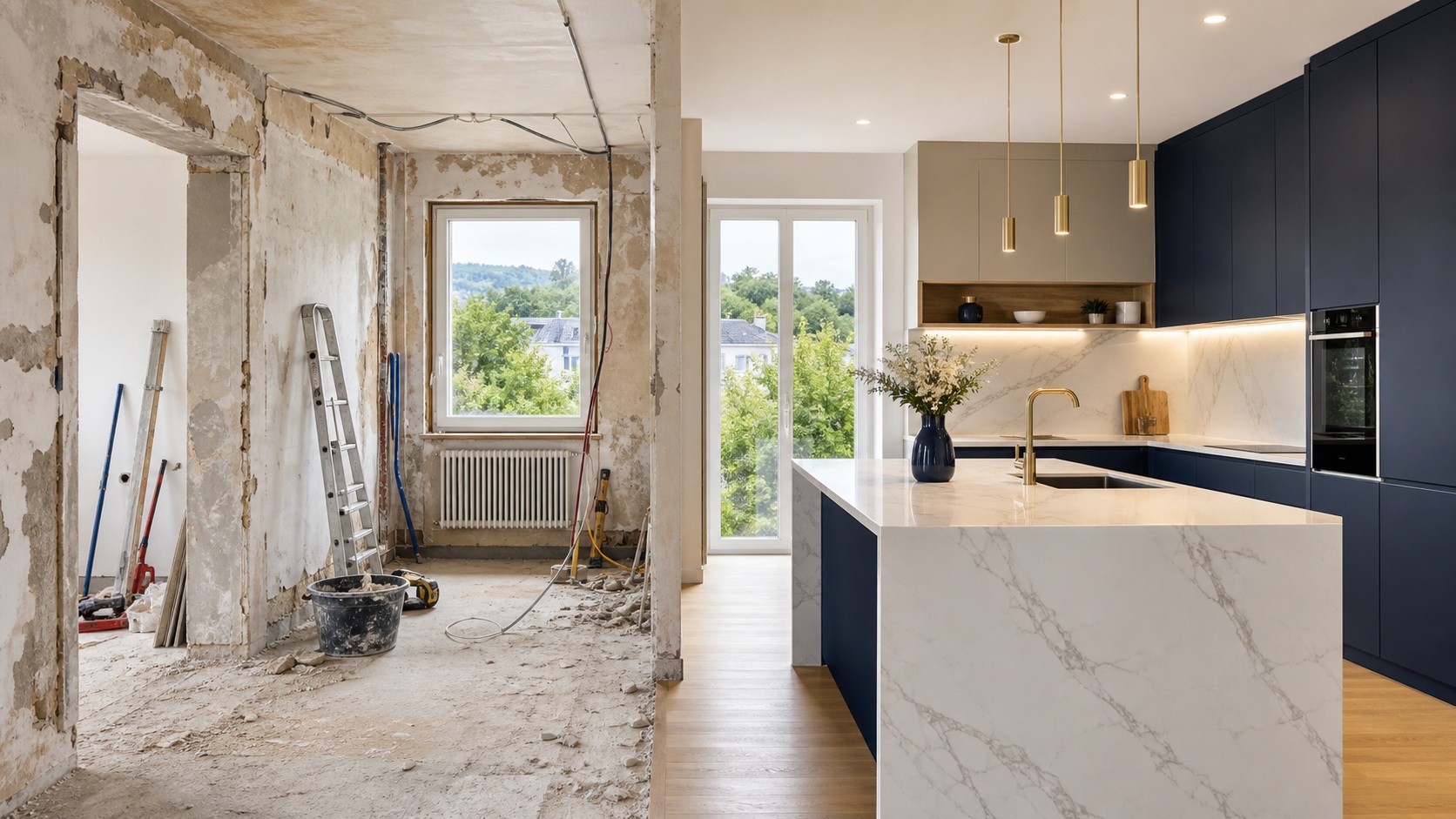
Renovation costs can range from EUR 5,000 for cosmetic updates to over EUR 100,000 for a full gut renovation of an older property.
Annual Ownership Costs: What You Pay Every Year After Purchase
The hidden costs do not stop at the point of purchase. Once you own property in Luxembourg, there is a recurring set of annual expenses that many buyers fail to factor into their long-term financial planning. From what I see in my daily work, these costs catch second-year owners off guard more often than first-year ones — because in the first year, buyers are still mentally in "spending mode" from the purchase. By the second year, they expect costs to stabilise, and then the tax bills and insurance renewals start arriving.
Property Tax (Impôt Foncier)
Luxembourg has one of the lowest property tax regimes in Europe, which is one reason so many international buyers find it attractive. The annual property tax is calculated by the commune based on the valeur unitaire (unit value) of the property, which is a cadastral value set by the tax authorities — and crucially, this value is dramatically lower than the market value. The unit value of a property worth EUR 750,000 on the open market might be assessed at only EUR 15,000 to EUR 25,000 for property tax purposes.
The commune then applies a multiplier (the taux communal) to the unit value to calculate the annual tax. Multipliers vary by commune but typically range from 200 percent to 900 percent of the unit value. In practice, annual property tax in Luxembourg for a typical residential property ranges from EUR 100 to EUR 800 per year — remarkably low by international standards. A client of mine who moved from London was paying over GBP 3,000 per year in council tax; his equivalent property tax in Luxembourg City was EUR 350. He thought there had been a mistake.
It is worth noting that there has been political discussion in Luxembourg about reforming the property tax system to bring cadastral values closer to market values. If this reform happens — and some form of it is likely in the coming years — annual property taxes could increase significantly. For now, though, property tax remains one of the genuine advantages of owning in Luxembourg.
Building Insurance (Assurance Habitation)
Building insurance is effectively mandatory if you have a mortgage (the bank will require it) and highly advisable even if you own outright. A standard building insurance policy in Luxembourg covers fire, water damage, storm damage, and civil liability. Annual premiums for a residential apartment typically range from EUR 300 to EUR 800 per year, and for a house from EUR 500 to EUR 1,500 per year, depending on the property size, construction type, and coverage level.
If you are buying an apartment in a co-ownership building (copropriété), the building insurance for the communal structure is usually included in the syndic charges (see below). However, you will still need your own contents insurance to cover your personal belongings, interior fixtures, and personal liability. This typically costs EUR 150 to EUR 400 per year.
Co-Ownership Charges (Charges de Copropriété / Syndic Fees)
If you are buying an apartment or a unit in a co-ownership building — which is the majority of residential purchases in Luxembourg City and the larger towns — you will pay monthly or quarterly co-ownership charges, commonly referred to as charges de copropriété or syndic fees. These charges cover the management and maintenance of the communal areas: hallways, stairwells, lifts, gardens, parking structures, building insurance, cleaning, and the professional manager's (syndic) fee.
In my experience, syndic charges for a typical two-bedroom apartment in Luxembourg range from EUR 200 to EUR 500 per month, depending on the building's age, the number of communal facilities, and the level of service provided. Buildings with lifts, underground parking, concierge services, or swimming pools will naturally have higher charges. Older buildings may have lower base charges but face the risk of special assessments (appels de fonds extraordinaires) for major repairs — roof replacement, facade renovation, lift modernisation — that can run into the tens of thousands per unit.
What I always tell clients who are comparing apartments is this: do not just look at the purchase price. Ask the seller or the syndic for the last three years of annual accounts and the minutes of the last three general assemblies. These documents will tell you what the building's financial health looks like, whether there are planned major works, and whether the reserve fund is adequately provisioned. A EUR 450,000 apartment with EUR 500 per month in syndic charges is not the same investment as a EUR 480,000 apartment with EUR 200 per month in syndic charges — the latter may actually be cheaper over a 10-year holding period.
| Annual Ownership Cost | Apartment (Typical) | House (Typical) | Notes |
|---|---|---|---|
| Property Tax | EUR 100 – 500 | EUR 200 – 800 | Based on cadastral value, varies by commune |
| Building Insurance | EUR 300 – 800 | EUR 500 – 1,500 | Required by mortgage lender |
| Contents Insurance | EUR 150 – 400 | EUR 200 – 500 | Covers personal belongings and interior fixtures |
| Co-ownership Charges | EUR 2,400 – 6,000/yr | N/A (unless gated community) | Covers building management, maintenance, communal insurance |
| Maintenance Reserve | EUR 500 – 1,500 | EUR 1,000 – 3,000 | Prudent budget for minor repairs and upkeep |
| Total Annual | EUR 3,450 – 9,200 | EUR 1,900 – 5,800 | Excluding mortgage payments |
What this means for you: Before buying an apartment, always request the building's financial accounts and general assembly minutes. A well-managed building with a healthy reserve fund will cost you far less in the long run than a cheap apartment in a building facing deferred maintenance.
Complete Cost Breakdown: EUR 500k, EUR 750k, and EUR 1M Properties
Now let me bring all of these costs together into comprehensive tables. These are the tables I use when walking my clients through their real budget — and they are consistently the most eye-opening part of our initial consultation. I am going to show you two scenarios for each price point: a standard buyer (no Bëllegen Akt) and a first-time buyer couple (claiming the full EUR 40,000 Bëllegen Akt credit).
Scenario 1: EUR 500,000 Property
| Cost Category | Standard Buyer | First-Time Couple (Bëllegen Akt) |
|---|---|---|
| Purchase Price | EUR 500,000 | EUR 500,000 |
| Registration Tax (7%) | EUR 35,000 | EUR 5,000 |
| Notary Fee (purchase deed + disbursements) | EUR 5,500 | EUR 5,500 |
| Mortgage Inscription Fee (0.5% of EUR 400,000 loan) | EUR 2,000 | EUR 2,000 |
| Notary Fee (mortgage deed) | EUR 1,500 | EUR 1,500 |
| Bank Arrangement Fee | EUR 500 | EUR 500 |
| Property Valuation | EUR 800 | EUR 800 |
| Life Insurance (ASRD, single premium estimate) | EUR 6,000 | EUR 6,000 |
| Moving Costs | EUR 2,500 | EUR 2,500 |
| Minor Renovation / Fitting Out | EUR 8,000 | EUR 8,000 |
| Total Acquisition Cost | EUR 561,800 | EUR 531,800 |
| Hidden Costs as % of Purchase Price | 12.4% | 6.4% |
Scenario 2: EUR 750,000 Property
| Cost Category | Standard Buyer | First-Time Couple (Bëllegen Akt) |
|---|---|---|
| Purchase Price | EUR 750,000 | EUR 750,000 |
| Registration Tax (7%) | EUR 52,500 | EUR 12,500 |
| Notary Fee (purchase deed + disbursements) | EUR 7,000 | EUR 7,000 |
| Mortgage Inscription Fee (0.5% of EUR 600,000 loan) | EUR 3,000 | EUR 3,000 |
| Notary Fee (mortgage deed) | EUR 2,000 | EUR 2,000 |
| Bank Arrangement Fee | EUR 750 | EUR 750 |
| Property Valuation | EUR 1,000 | EUR 1,000 |
| Life Insurance (ASRD, single premium estimate) | EUR 8,000 | EUR 8,000 |
| Moving Costs | EUR 3,000 | EUR 3,000 |
| Minor Renovation / Fitting Out | EUR 10,000 | EUR 10,000 |
| Total Acquisition Cost | EUR 837,250 | EUR 797,250 |
| Hidden Costs as % of Purchase Price | 11.6% | 6.3% |
Scenario 3: EUR 1,000,000 Property
| Cost Category | Standard Buyer | First-Time Couple (Bëllegen Akt) |
|---|---|---|
| Purchase Price | EUR 1,000,000 | EUR 1,000,000 |
| Registration Tax (7%) | EUR 70,000 | EUR 30,000 |
| Notary Fee (purchase deed + disbursements) | EUR 8,500 | EUR 8,500 |
| Mortgage Inscription Fee (0.5% of EUR 800,000 loan) | EUR 4,000 | EUR 4,000 |
| Notary Fee (mortgage deed) | EUR 2,500 | EUR 2,500 |
| Bank Arrangement Fee | EUR 1,000 | EUR 1,000 |
| Property Valuation | EUR 1,200 | EUR 1,200 |
| Life Insurance (ASRD, single premium estimate) | EUR 10,000 | EUR 10,000 |
| Moving Costs | EUR 3,500 | EUR 3,500 |
| Minor Renovation / Fitting Out | EUR 12,000 | EUR 12,000 |
| Total Acquisition Cost | EUR 1,112,700 | EUR 1,072,700 |
| Hidden Costs as % of Purchase Price | 11.3% | 7.3% |
The pattern is clear: for a standard buyer without the Bëllegen Akt, hidden costs add approximately 11 to 13 percent on top of the purchase price. For a first-time buyer couple claiming the full credit, that figure drops to approximately 6 to 8 percent — still significant, but a dramatic improvement. In my experience, the single most effective thing a buyer can do to reduce their total acquisition cost is to ensure they qualify for and correctly claim the Bëllegen Akt. For more on how much deposit you need alongside these costs, see our guide to deposit requirements in Luxembourg.
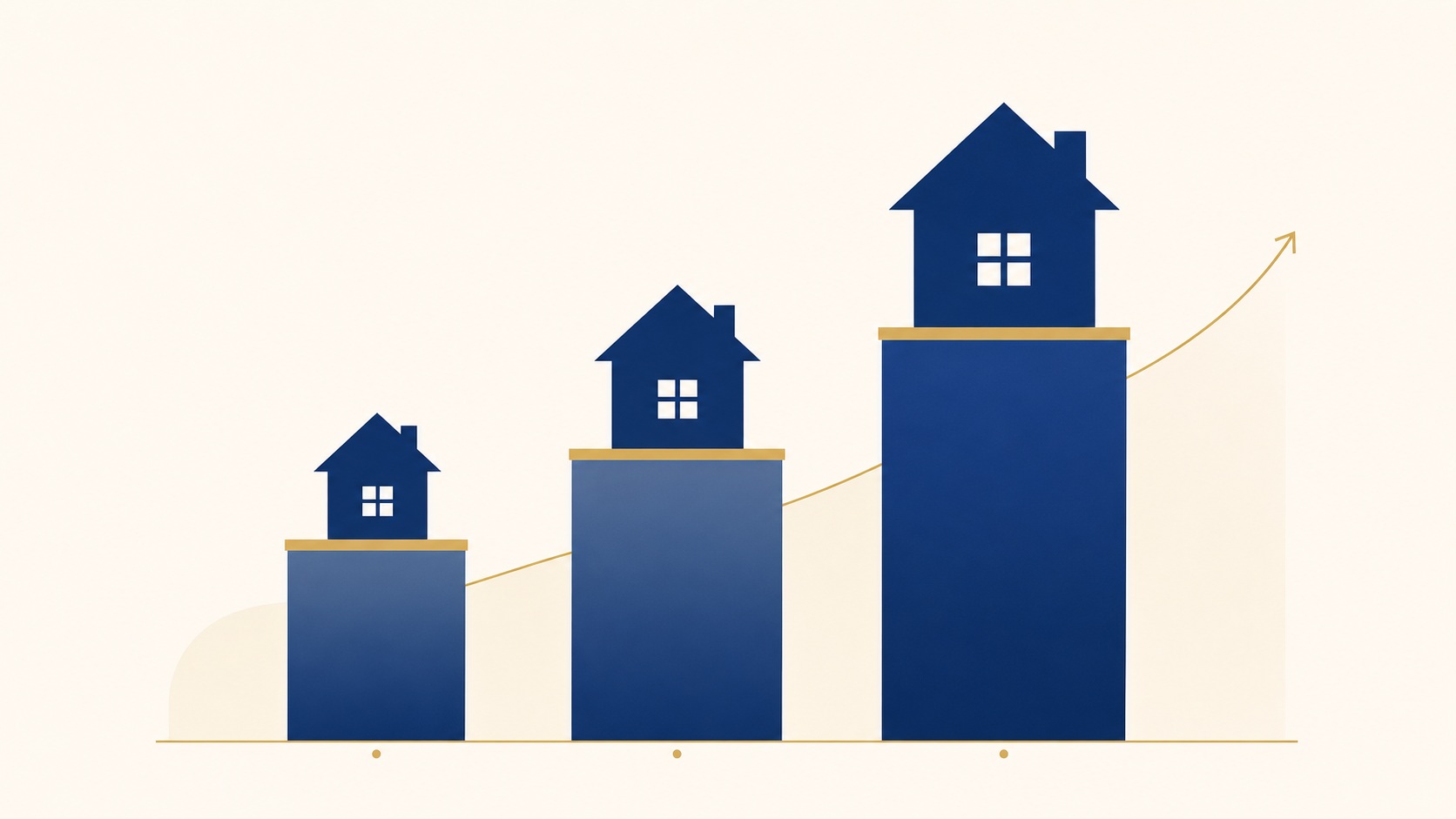
Hidden costs add 10 to 15 percent to the purchase price for standard buyers — understanding each line item is essential for accurate budgeting.
Real Examples: Clients Who Were Surprised by the True Cost
Let me share some anonymised examples from my practice that illustrate why understanding these hidden costs is so critical. These are real situations I have encountered with clients over the past two years, and each one taught me something about how buyers underestimate the total cost of purchasing in Luxembourg.
Example 1: The First-Time Buyer Who Did Not Claim the Bëllegen Akt
A young professional contacted me after purchasing a EUR 480,000 apartment in Esch-sur-Alzette. He was a first-time buyer and had qualified for the Bëllegen Akt, but neither his estate agent nor his notary had proactively mentioned the scheme. He only discovered it existed when a colleague mentioned it over lunch — three months after the closing. By then it was too late: the credit must be applied at the time of the notarial deed, not retroactively. He had overpaid his registration tax by approximately EUR 20,000. Twenty thousand euros. I still think about that case because it was entirely preventable. This is why I now make the Bëllegen Akt the very first topic in every consultation with a first-time buyer.
Example 2: The Renovation Budget That Tripled
A couple purchased a charming 1970s house in Walferdange for EUR 850,000. They budgeted EUR 30,000 for "light renovation" — painting, new kitchen worktops, bathroom refresh. When the contractor opened up the walls, they discovered inadequate insulation, outdated electrical wiring that did not meet current safety standards, and plumbing that needed complete replacement. The renovation budget ballooned to EUR 95,000. They had to go back to the bank for additional financing at a higher rate, and the project delayed their move-in by four months. What I learned from this — and what I now insist on with my clients — is that for any property built before 2000, you should commission a pre-purchase technical survey. The EUR 1,000 to EUR 2,000 cost of the survey is trivial compared to the risk of discovering major issues after you have already signed.
Example 3: The Syndic Charge Shock
A single buyer purchased a EUR 620,000 apartment in a luxury building in Kirchberg. The listing mentioned "low charges" and quoted EUR 220 per month. After moving in, she attended her first general assembly and discovered that the building was planning a major facade renovation with an estimated cost of EUR 1.2 million, to be split among 40 units — approximately EUR 30,000 per unit, payable over 24 months as a special assessment. That EUR 30,000 was not in her budget, and she had not thought to ask for the assembly minutes before purchasing. I now include a checklist item in every apartment purchase: request and review the last three years of general assembly minutes and the building's reserve fund statement before signing the compromis de vente.
What this means for you: Work with an experienced advisor who knows exactly which questions to ask and which documents to request before you commit. The cost of professional guidance is a fraction of the cost of these surprises.
Daniela's Complete Budget Checklist: How to Calculate Your True Cost
Based on everything I have covered in this article, here is the complete checklist I give to every client before they start viewing properties. I call it the "true cost" checklist because it forces you to confront the real number — not the wishful-thinking number — before you fall in love with a property you cannot actually afford.
Step 1: Determine your maximum all-in budget. This is not your maximum purchase price. This is the total amount of money you have available, including savings for the deposit, cash for acquisition costs, and your mortgage capacity. If your bank has approved you for a EUR 600,000 loan and you have EUR 120,000 in savings, your all-in budget is EUR 720,000.
Step 2: Subtract acquisition costs to find your maximum purchase price. For a standard buyer, subtract 12 to 15 percent from your all-in budget. For a first-time buyer couple with the Bëllegen Akt, subtract 7 to 10 percent. So if your all-in budget is EUR 720,000 and you are a standard buyer, your maximum purchase price is approximately EUR 626,000 to EUR 643,000. If you are a first-time couple, it is approximately EUR 655,000 to EUR 673,000.
Step 3: Build your cost breakdown line by line. For every property you seriously consider, create a personalised version of the tables in this article. Plug in the actual purchase price, confirm the registration tax (and whether the Bëllegen Akt applies), get a notary fee estimate, calculate the mortgage inscription based on your actual loan amount, get life insurance quotes, and budget for moving and renovation based on the specific property's condition.
Step 4: Add a contingency buffer. I always recommend a contingency of at least 3 to 5 percent of the purchase price for unexpected costs — renovation surprises, delays that require extended rental overlap, currency conversion costs for international buyers, or simply the cost of furnishing your new home. On a EUR 600,000 property, that is EUR 18,000 to EUR 30,000 in contingency.
Step 5: Stress-test your monthly budget. Once you have the total acquisition cost, model your monthly outgoings: mortgage payment, syndic charges, building insurance, contents insurance, property tax (monthly equivalent), utilities, and the maintenance reserve. Make sure you can sustain this monthly burden comfortably, including in a scenario where interest rates rise by 1 to 2 percentage points at your next rate review.
Here is the quick-reference version of the checklist.
| Checklist Item | Estimated Cost Range | When It Is Due |
|---|---|---|
| Registration Tax (droits d'enregistrement) | 0 – 7% of purchase price | At signing of acte authentique |
| Notary Fee (purchase deed) | 0.8 – 1.5% of purchase price | At signing of acte authentique |
| Mortgage Inscription | ~0.5% of loan amount | At mortgage registration |
| Notary Fee (mortgage deed) | EUR 1,000 – 2,500 | At mortgage registration |
| Bank Arrangement Fee | EUR 300 – 1,500 | At mortgage closing |
| Property Valuation | EUR 500 – 1,500 | Before mortgage approval |
| Life Insurance (ASRD) | EUR 5,000 – 15,000 (single premium) | Before mortgage drawdown |
| Moving Costs | EUR 1,500 – 6,000 | At move-in |
| Renovation / Fitting Out | EUR 5,000 – 50,000+ | After move-in (or before) |
| Contingency Buffer | 3 – 5% of purchase price | Reserved throughout process |
Want a Personalised Cost Breakdown for Your Budget?
Every buyer's situation is different. I will calculate your exact acquisition costs — registration tax, notary fees, mortgage costs, and everything else — so you know precisely what you can afford before you start viewing.
📊 Free Consultation💬 WhatsApp DanielaStrategies to Reduce Your Acquisition Costs
Now that you understand every cost involved, let me share the strategies I use with my clients to minimise the total bill. Not every cost is fixed — there are genuine opportunities to save if you know where to look.
1. Maximise the Bëllegen Akt. This is the single biggest saving available. If you are buying as a couple and both qualify as first-time buyers, ensure both names are on the deed. The difference between a single buyer's EUR 20,000 credit and a couple's EUR 40,000 credit is enormous. If one partner has previously owned property but the other has not, structure the ownership to maximise the available credit (your notary can advise on this).
2. Negotiate the bank arrangement fee. Many banks will waive or reduce the frais de dossier if you negotiate, particularly if you bring your salary account, savings, and insurance business to the same bank. I have seen clients save EUR 500 to EUR 1,000 simply by asking.
3. Shop around for life insurance. Do not automatically accept the bank's in-house ASRD product. Independent brokers often offer lower premiums, particularly for younger, healthy, non-smoking borrowers. The savings can be EUR 2,000 to EUR 5,000 over the life of the loan.
4. Consider new-build (VEFA) purchases. When you buy a property off-plan (vente en l'état futur d'achèvement, or VEFA), the registration tax is calculated differently. The 7 percent registration tax applies only to the land portion of the price, while the construction portion is subject to 3 percent VAT (super-reduced rate for principal residences) instead. This can result in significant savings compared to buying an equivalent resale property. For example, on a EUR 600,000 VEFA apartment where the land represents EUR 180,000 and the construction EUR 420,000, the registration tax would be EUR 12,600 (7 percent of EUR 180,000) plus EUR 12,600 in VAT (3 percent of EUR 420,000), for a total of EUR 25,200 — compared to EUR 42,000 at 7 percent on a resale at the same price.
5. Request a pre-purchase technical survey. Spending EUR 1,000 to EUR 2,000 on a professional building survey before signing can save you from tens of thousands in unexpected renovation costs. This is especially important for properties built before 2000.
6. Time your move strategically. Moving companies in Luxembourg charge premium rates during summer months (June to September) and at month-end. If you have flexibility on your move-in date, scheduling for a mid-month slot in October or November can save you 20 to 30 percent on moving costs.
7. Review the syndic accounts before buying an apartment. Ask the seller or the syndic for the building's annual accounts and general assembly minutes. If a major special assessment is imminent, you can either negotiate a price reduction to cover your share or walk away from a building with deferred maintenance problems.
New-Build vs. Resale: How Hidden Costs Differ
The cost structure differs meaningfully depending on whether you buy a new-build (VEFA) property or a resale property. In my experience, many buyers focus exclusively on the listing price without understanding how the tax treatment changes the total cost equation.
As I mentioned above, new-build purchases benefit from the split tax treatment: 7 percent registration tax on the land portion only, plus 3 percent super-reduced VAT on the construction portion (for principal residences). This typically results in a total tax burden of 3.5 to 5 percent of the total price, compared to 7 percent on a resale. However, new builds come with their own additional costs that partially offset this advantage.
| Cost Factor | New-Build (VEFA) | Resale Property |
|---|---|---|
| Registration Tax | 7% on land only | 7% on full price |
| VAT on Construction | 3% (principal residence) or 17% | N/A (included in price) |
| Effective Total Tax | ~3.5 – 5% of total price | 7% of purchase price |
| Renovation Needed | None (turnkey) | EUR 5,000 – 50,000+ |
| Kitchen Installation | Often not included (EUR 10,000 – 30,000) | Usually included |
| Customisation / Options | EUR 5,000 – 20,000 (upgrades) | N/A |
| Delivery Delay Risk | Yes (extended rental costs) | No (immediate occupancy) |
One cost that catches VEFA buyers off guard is the kitchen. Many new-build apartments in Luxembourg are delivered without a kitchen — or with only basic connections and no cabinets, appliances, or worktops. A fitted kitchen in Luxembourg typically costs EUR 10,000 to EUR 30,000, and this cost is on top of the purchase price. Always confirm with the developer exactly what is included in the quoted price and what you will need to fit out yourself. Similarly, VEFA contracts often include a list of optional upgrades — higher-specification flooring, premium bathroom fixtures, additional electrical points — that can add EUR 5,000 to EUR 20,000 to the final cost if you choose them.
From what I see in the market, the net cost advantage of new-build over resale depends heavily on the specific property. The tax saving on a VEFA can be EUR 15,000 to EUR 30,000, but if you need to install a kitchen and pay for upgrades, a significant portion of that saving is consumed. The real advantage of new-build is that you eliminate renovation risk and get a property with modern energy efficiency standards, a 10-year structural guarantee (garantie décennale), and typically lower running costs. For many of my clients, that peace of mind is worth as much as the tax saving itself.
Additional Costs for Buy-to-Let Investors
If you are buying property in Luxembourg as an investment rather than a principal residence, the cost structure shifts in several important ways. First, you do not qualify for the Bëllegen Akt, so you pay the full 7 percent registration tax with no credit. Second, the 3 percent super-reduced VAT rate on new-build construction does not apply to investment properties — you pay the standard 17 percent VAT, which dramatically changes the economics of VEFA purchases for investors.
Additionally, investors face ongoing costs that owner-occupiers do not. Property management fees, if you use a professional manager, typically run 5 to 10 percent of gross rental income plus VAT. Rental income is taxable at your marginal income tax rate, and you must file an annual tax return declaring your rental profits. You should also budget for void periods (typically 2 to 4 weeks per year on average), tenant wear-and-tear repairs, and periodic refurbishment between tenancies.
In my experience, many first-time investors underestimate the impact of these costs on their net yield. A property generating EUR 2,000 per month in gross rent looks attractive — until you deduct the mortgage payment, syndic charges, insurance, management fees, tax, and maintenance, at which point the net cash flow may be very slim or even negative in the early years. I always advise investor clients to build a detailed cash flow model before purchasing, factoring in every cost line I have described in this article plus the investor-specific costs above. For a thorough analysis of the best investment areas, see our guide to the best areas to buy property in Luxembourg in 2026.
Frequently Asked Questions: Hidden Costs of Buying Property in Luxembourg
How much should I budget on top of the purchase price for acquisition costs in Luxembourg?
As a general rule, budget 10 to 15 percent of the purchase price for total acquisition costs if you are a standard buyer, or 6 to 10 percent if you are a first-time buyer couple claiming the Bëllegen Akt. This covers registration tax, notary fees, mortgage costs, life insurance, moving, and minor renovation. I always recommend erring on the higher end of these ranges and keeping a contingency buffer for unexpected expenses.
What is the Bëllegen Akt and how much can it save me?
The Bëllegen Akt is a Luxembourg tax credit scheme for first-time buyers purchasing a principal residence. It provides a credit of up to EUR 20,000 per buyer (EUR 40,000 for a couple) against the 6 percent registration duty. For a couple buying a EUR 500,000 property, this can reduce the registration tax from EUR 35,000 to just EUR 5,000 — a saving of EUR 30,000. To qualify, you must not previously have owned residential property, and you must occupy the property as your main residence for at least two years.
Are notary fees negotiable in Luxembourg?
The notary's professional fee (honoraire) is regulated by Grand-Ducal regulation and is not negotiable — all notaries charge the same scale. However, the disbursements and administrative charges that the notary passes on can vary slightly between firms. In practice, the total notary cost for a given transaction will be very similar regardless of which notary you choose. My advice is to choose your notary based on responsiveness, communication quality, and expertise in the type of property you are buying, rather than trying to save on fees.
Do I need life insurance to get a mortgage in Luxembourg?
Yes. All Luxembourg banks require remaining balance life insurance (assurance solde restant dû) as a condition of the mortgage. The cost depends on your age, health, and loan amount, but typically ranges from EUR 5,000 to EUR 15,000 as a single premium for a standard residential mortgage. You are not required to take the insurance from your mortgage bank — shopping around with independent brokers can save you thousands of euros.
What annual costs should I expect after buying property in Luxembourg?
For an apartment, expect to pay EUR 3,500 to EUR 9,000 per year in total recurring costs, including property tax (EUR 100 to EUR 500), building and contents insurance (EUR 450 to EUR 1,200), syndic charges (EUR 2,400 to EUR 6,000), and a maintenance reserve. For a house, annual costs typically range from EUR 1,900 to EUR 5,800, with no syndic charges but generally higher insurance and maintenance costs. These figures exclude mortgage payments.
Is it cheaper to buy new-build or resale in Luxembourg?
New-build (VEFA) properties benefit from a lower effective tax rate — typically 3.5 to 5 percent of the total price compared to 7 percent for resale. However, new builds often require you to install a kitchen (EUR 10,000 to EUR 30,000) and may involve paid upgrades and options. Resale properties include the kitchen but may need renovation. The net cost difference depends on the specific property. In my experience, the tax saving on new-build typically ranges from EUR 15,000 to EUR 30,000, but kitchen and upgrade costs can consume a significant portion of this. The main advantage of new-build is reduced renovation risk and modern energy efficiency.
Final Thoughts: Knowledge Is the Best Investment Protection
If there is one message I want you to take away from this article, it is this: the purchase price is only the beginning. In my years of helping buyers navigate the Luxembourg property market, the clients who have the smoothest, least stressful purchases are invariably the ones who understood the full cost picture before they started viewing properties. They did not fall in love with a home they could not actually afford once all the hidden costs were added. They did not scramble for an extra EUR 40,000 at the notary's office. They did not discover a EUR 30,000 special assessment three months after moving in.
The hidden costs of buying property in Luxembourg are not actually hidden — they are just poorly communicated. Registration tax, notary fees, mortgage costs, life insurance, moving expenses, renovation budgets, and annual ownership charges are all predictable, calculable, and manageable if you plan for them from the beginning. The total additional cost of 10 to 15 percent above the purchase price is significant, but it is not a surprise if you know it is coming.
What I always tell my clients is to start with the true cost, not the listing price. Build your budget from the total outward, subtract the acquisition costs to find your maximum purchase price, and then — and only then — start viewing properties in your real price range. This discipline is the foundation of a successful property purchase in Luxembourg.
If you would like help calculating your personalised cost breakdown, understanding whether you qualify for the Bëllegen Akt, or simply navigating the financial complexity of buying in Luxembourg, I am here to help. Every client I work with receives a detailed, line-by-line cost estimate before we start the search, so there are never any surprises. That is the way property buying should work — and it is the way I have built my practice.
Ready to Buy in Luxembourg? Let Me Show You the Real Numbers
I will give you a complete, personalised cost breakdown — registration tax, notary fees, mortgage costs, insurance, and everything in between — so you know exactly what your purchase will cost before you commit to a single viewing.
📊 Free Consultation💬 WhatsApp DanielaThis article was written by Daniela Pelliccia, real estate expert in Luxembourg, and is regularly updated to reflect current tax rates, notary fee scales, and market conditions. Last updated: April 2026. The information provided is for general guidance only and does not constitute legal or financial advice. For advice specific to your situation, please contact me directly.