The complete, honest guide to deposit requirements, total cash needed, first-time buyer advantages, 100% financing options, and real strategies to get on the Luxembourg property ladder faster — from someone who helps buyers navigate this every single week.
Whether you are a first-time buyer staring at Luxembourg property prices wondering how you will ever save enough, a cross-border worker trying to figure out which rules apply to you, or a seasoned investor calculating your next move — this guide breaks down every euro you need, every shortcut that exists, and every mistake to avoid when it comes to your property deposit in Luxembourg.
Let me start with the question I hear more than almost any other: “Daniela, how much cash do I actually need to buy in Luxembourg?” The answer is never as simple as people hope. The standard rule you will read everywhere says 20% of the purchase price. But in my experience working with hundreds of buyers across Luxembourg, the reality is far more nuanced — and often far more achievable — than that headline number suggests.
The truth is that some of my clients have purchased properties with zero deposit. Others have needed 30% or more. The amount you need depends on a complex interaction between your buyer profile, the type of property, which bank you approach, whether you qualify for Luxembourg’s generous first-time buyer incentives, and how creatively you structure your financing. Understanding these variables is the difference between spending another three years saving and getting into the market this year.
In this guide, I am going to walk you through every aspect of deposit requirements in Luxembourg for 2026. I will give you real numbers, real scenarios, and the practical advice I give my own clients. If you want the broader picture on mortgage rates and borrowing capacity, pair this with our complete mortgage guide for Luxembourg 2026. And if you are still weighing whether now is the right time to buy at all, read our 2026 market analysis first. Let us get into the numbers.
The Standard 20% Deposit Rule — What It Really Means

Understanding deposit requirements is the critical first step to making your Luxembourg property purchase a reality
The CSSF (Commission de Surveillance du Secteur Financier), Luxembourg’s financial regulator, issues guidelines to banks on how much they can lend relative to a property’s value. For the standard buyer purchasing a primary residence, the guideline sets a maximum loan-to-value (LTV) ratio of 80%. In plain terms, this means the bank will lend you up to 80% of the property’s purchase price, and you need to provide the remaining 20% as your deposit — also called your down payment or apport personnel.
On a property priced at EUR 600,000, a 20% deposit means EUR 120,000 in cash. On a EUR 800,000 property, that jumps to EUR 160,000. And on a million-euro home — which is not unusual in Luxembourg City’s better neighbourhoods — you are looking at EUR 200,000 before you even think about notary fees, bank charges, or moving costs.
These are big numbers, and they are the reason many potential buyers feel locked out of the Luxembourg market. But here is what I always tell my clients: the 20% figure is a guideline, not an absolute rule. It is the starting point for conversation, not the final word. Banks have flexibility, and the actual deposit you need depends heavily on your specific profile. First-time buyers, in particular, have access to significantly better terms — which I will explain in detail below.
It is also worth understanding why banks want a deposit in the first place. The deposit serves as a safety buffer for the bank. If property values decline and you default on your mortgage, the bank needs to be confident it can recover its money by selling the property. A 20% deposit means that property values would need to fall by more than 20% before the bank faces a loss. In Luxembourg, where property values have historically been extremely resilient — even the 2023-2024 correction only saw prices dip around 10-15% from peak before stabilising — banks view the market as relatively safe, which is why many are willing to be flexible on deposit requirements for the right borrower.
What this means for you: Do not assume you need 20% saved before you can even start looking. Many of my clients have purchased with 10% or even less. The key is understanding which banks offer flexibility and how to present the strongest possible application.
First-Time Buyer vs Repeat Buyer — A Completely Different Playing Field
One of the most important distinctions in the Luxembourg property market is whether you are classified as a first-time buyer (primo-accédant) or a repeat buyer. This single factor can change your deposit requirement by tens of thousands of euros, and it affects far more than just how much the bank will lend you.
What Counts as a First-Time Buyer in Luxembourg?
In Luxembourg, you are considered a first-time buyer if you do not currently own any residential property that serves as your primary residence. This is an important nuance — if you previously owned a property but sold it before purchasing in Luxembourg, you may still qualify as a first-time buyer under certain conditions. If you own property in another country that is rented out (not your primary residence), you may also still qualify. The exact determination can vary between banks, so it is worth discussing your specific situation with a mortgage advisor.
First-Time Buyer Advantages
First-time buyers in Luxembourg benefit from two major advantages that dramatically reduce the cash needed to purchase:
1. Higher LTV Ratios (Up to 100%) — While the CSSF guideline for standard buyers is 80% LTV, first-time buyers can access LTV ratios of up to 100%. This means some first-time buyers can purchase with zero deposit on the property price itself. In practice, most banks are comfortable offering 90% LTV to first-time buyers with stable employment and good income, and several will go to 100% for exceptionally strong profiles. The bank still needs to assess your ability to service the loan, but the deposit barrier is significantly lower.
2. The Bëllegen Akt Tax Credit — This is one of the most valuable financial advantages available to Luxembourg property buyers, and I will dedicate an entire section to it below because it is that important. In short, the Bëllegen Akt can save you up to EUR 40,000 (EUR 20,000 per buyer) on registration taxes, which directly reduces the cash you need at closing.
Repeat Buyer Reality
If you already own a property (even in another country), the picture changes substantially. Repeat buyers face the standard 80% LTV guideline, meaning a 20% minimum deposit. For investment properties — buy-to-let or second homes — banks typically require 20-30% down, with some insisting on 25% or more. You also do not benefit from the Bëllegen Akt tax credit, which means higher registration taxes at closing.
However, repeat buyers often have equity in their existing property, which can be used as collateral or released through refinancing to fund the deposit on the new purchase. This is a strategy I help many of my investment clients implement, and it can be very effective. For a deeper understanding of investment property strategies, see our Luxembourg investment strategy guide.
Deposit Requirements by Buyer Type
| Buyer Type | Maximum LTV | Minimum Deposit | Bëllegen Akt Eligible? | Notes |
|---|---|---|---|---|
| First-time buyer (strong profile) | Up to 100% | 0% | Yes | CDI contract, good income, clean credit |
| First-time buyer (standard profile) | 85–90% | 10–15% | Yes | Stable employment, moderate savings |
| Repeat buyer (primary residence) | 80% | 20% | No | Standard CSSF guideline applies |
| Investor (buy-to-let) | 70–80% | 20–30% | No | Bank dependent; rental income partly counted |
| Second home / holiday property | 70–80% | 20–30% | No | Stricter conditions than primary residence |
| Non-resident buyer | 70–80% | 20–30% | No (unless relocating) | Depends on residency plans and income source |
Bank Requirements by Profile — What Banks Actually Look For
When I sit down with a client to discuss their mortgage strategy, the first thing I assess is their profile from a bank’s perspective. Banks do not just look at how much deposit you have — they evaluate your entire financial picture to determine the risk of lending to you. Understanding what banks prioritise helps you present the strongest possible case and potentially negotiate a lower deposit requirement.
The Key Factors Banks Evaluate
Employment Type and Stability: A CDI (contrat à durée indéterminée) — a permanent contract — is the gold standard for Luxembourg banks. If you have been in your CDI role for at least 12 months (ideally past your probation period), banks view you very favourably. CDD (fixed-term) contracts, freelance income, and self-employment make things more difficult, though not impossible. Some banks will consider CDD workers who can demonstrate consistent contract renewals over several years.
Income Level and Debt-to-Income Ratio: Luxembourg banks typically cap your total monthly debt obligations (including the new mortgage) at 33-40% of your net monthly income. A higher income gives you more borrowing capacity, but the ratio matters more than the absolute number. If you earn EUR 6,000 net per month and have no other debts, a bank could approve monthly mortgage payments of up to EUR 2,000-2,400. For a detailed breakdown of borrowing capacity, see our mortgage guide.
Existing Savings and Financial Behaviour: Banks love to see consistent saving behaviour. Even if your total savings are modest, a track record of putting money aside each month demonstrates financial discipline. What I always tell my clients is that banks are lending you money for 20-30 years — they want to see evidence that you manage money responsibly. Having three months of chaotic bank statements with overdrafts and gambling transactions is a red flag, regardless of your income level.
Credit History: Luxembourg does not have a centralised credit score system like the FICO system in the United States. However, banks will check for any negative entries with the Centrale des crédits aux particuliers (managed by the Banque centrale du Luxembourg). Previous loan defaults, missed payments, or county court judgments from other countries can all impact your application. If you are new to Luxembourg, banks may request credit references from your previous country of residence.
Residency Status: Luxembourg residents with a stable employment contract get the most favourable treatment. Cross-border workers (frontaliers) from France, Belgium, and Germany can also access Luxembourg mortgages, though some banks are more frontalier-friendly than others. Non-EU nationals on work permits may face additional scrutiny, particularly if their permit is tied to a specific employer.
What this means for you: Before approaching banks, clean up your financial profile. Close unused credit cards, pay off small debts, build a consistent savings track record for at least 6 months, and ensure your bank statements look clean. These steps can literally save you tens of thousands of euros in deposit requirements.
The Bëllegen Akt — Luxembourg’s Most Powerful First-Time Buyer Benefit
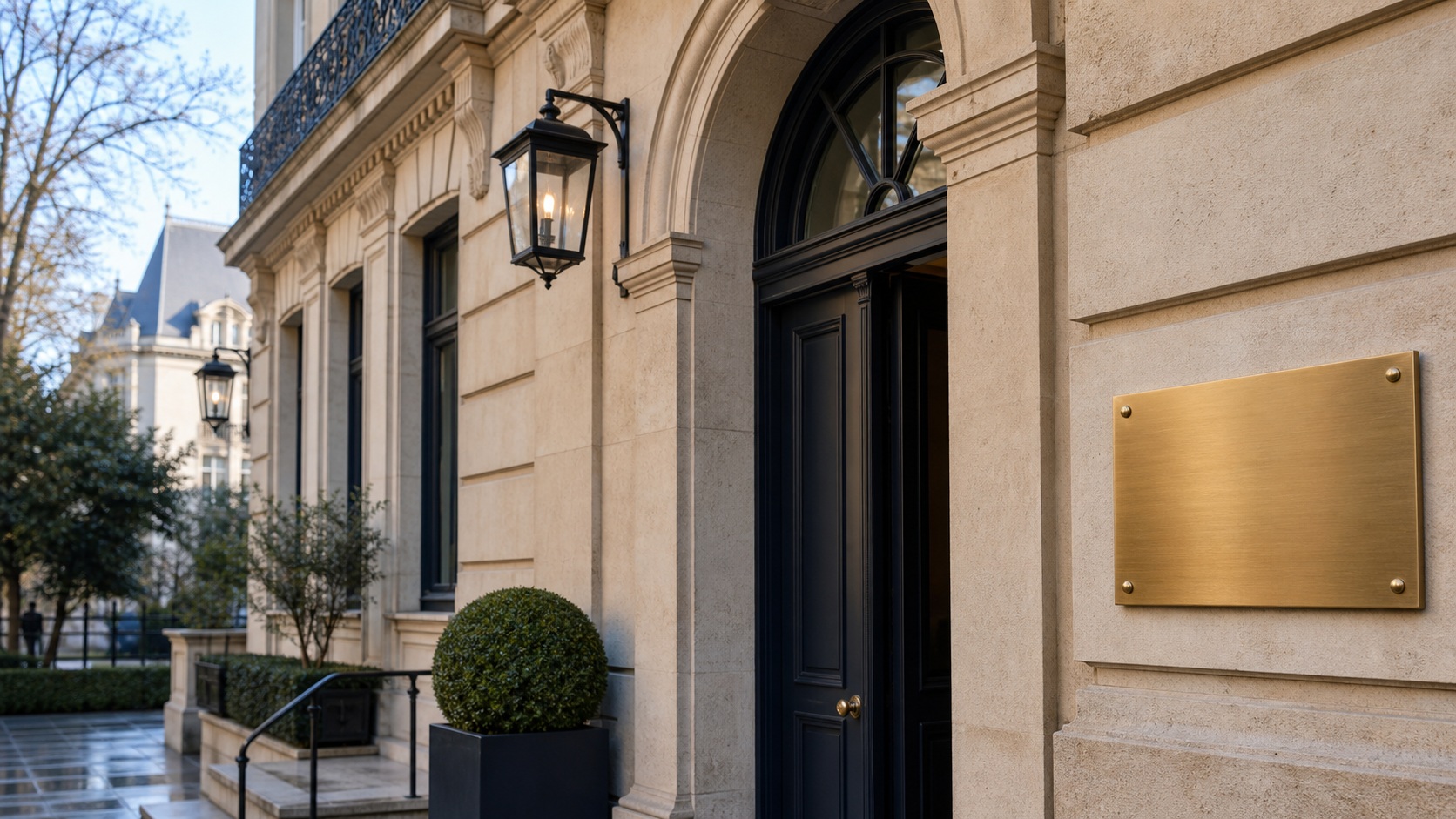
The Bëllegen Akt can save first-time buyers up to EUR 40,000 on registration taxes — one of Luxembourg’s most generous property incentives
If you are a first-time buyer in Luxembourg, the Bëllegen Akt (also written Bëllegen Acte) is arguably the single most valuable financial tool at your disposal. It is a tax credit that reduces the registration duty you pay when purchasing your primary residence, and it can save you up to EUR 20,000 per buyer — meaning a couple buying together can save up to EUR 40,000.
How the Bëllegen Akt Works
When you buy property in Luxembourg, you are required to pay registration duties (droits d’enregistrement) of 6% on the property’s purchase price, plus a 1% transcription tax — a total of 7%. On a EUR 600,000 property, that is EUR 42,000 in tax alone. The Bëllegen Akt provides a tax credit of up to EUR 20,000 per individual buyer against this registration duty. For a single buyer, this reduces your registration tax bill by EUR 20,000. For a couple buying jointly, the combined credit of EUR 40,000 can effectively eliminate the registration duty entirely on properties up to a certain value.
To illustrate with a concrete example: if a couple buys a EUR 600,000 apartment, the 7% registration and transcription duties would total EUR 42,000. With the Bëllegen Akt credit of EUR 40,000 (EUR 20,000 each), they would pay only EUR 2,000 in registration taxes instead of EUR 42,000. That is a saving of EUR 40,000 — money that can instead go toward furniture, renovations, or simply remain in your savings as a safety buffer.
Eligibility Conditions
The Bëllegen Akt is available to you if you meet these conditions: the property must become your primary residence (habitation principale), you must actually move in within a reasonable timeframe (typically within two years of purchase), and you must not already own another residential property that serves as your primary residence. You do not need to be a Luxembourg national — the benefit is available to all residents and even non-residents who plan to make Luxembourg their primary residence.
What many people do not realise is that the Bëllegen Akt is a lifetime benefit. You can only use it once. So if you used it on a previous property purchase in Luxembourg, it is no longer available to you, even if you have since sold that property. This is why I strongly advise first-time buyers to use it wisely — ideally on a property you intend to keep for several years, maximising the value of the credit.
Bëllegen Akt Savings by Property Price
| Property Price | Registration Duty (7%) | Bëllegen Akt Credit (Single) | Bëllegen Akt Credit (Couple) | Net Tax Payable (Couple) |
|---|---|---|---|---|
| EUR 400,000 | EUR 28,000 | EUR 20,000 | EUR 28,000 | EUR 0 |
| EUR 500,000 | EUR 35,000 | EUR 20,000 | EUR 35,000 | EUR 0 |
| EUR 600,000 | EUR 42,000 | EUR 20,000 | EUR 40,000 | EUR 2,000 |
| EUR 800,000 | EUR 56,000 | EUR 20,000 | EUR 40,000 | EUR 16,000 |
| EUR 1,000,000 | EUR 70,000 | EUR 20,000 | EUR 40,000 | EUR 30,000 |
Note: The Bëllegen Akt credit is capped at EUR 20,000 per buyer and cannot exceed the actual registration duty owed. For properties under approximately EUR 570,000, a couple’s combined credit may fully cover the duty.
Not Sure How Much Deposit You Need?
Every buyer’s situation is different. Let me assess your profile and tell you exactly how much cash you need — and where you might be able to save. Free, no-obligation consultation.
💬 WhatsApp Daniela 📊 Free Property Valuation100% Financing in Luxembourg — Is It Really Possible?
Yes, 100% financing is possible in Luxembourg, but it comes with conditions. Let me be direct about what is realistic and what is marketing fantasy. Some banks in Luxembourg do offer 100% LTV mortgages to first-time buyers, meaning they will lend you the full purchase price of the property with no deposit required. However, “no deposit” does not mean “no cash needed” — you will still need funds to cover notary fees, bank arrangement charges, and other acquisition costs (more on this in the total cash needed section below).
Which Banks Offer 100% Financing in 2026?
Several Luxembourg banks have 100% LTV products or will consider applications on a case-by-case basis. The availability changes frequently based on market conditions and individual bank policies, so I always recommend checking current offerings at the time of your application. As of early 2026, the banks most commonly associated with higher LTV lending for first-time buyers include Spuerkeess (BCEE), BIL (Banque Internationale à Luxembourg), BGL BNP Paribas, and Raiffeisen. Spuerkeess, as the state-owned savings bank, has historically been the most flexible on LTV for first-time buyers, though their rates may not always be the most competitive.
Conditions for 100% Financing
To qualify for 100% financing, you typically need to tick several boxes simultaneously: you must be a first-time buyer purchasing your primary residence, hold a CDI (permanent employment contract) in Luxembourg or with a Luxembourg-based employer, have passed your probation period, demonstrate a clean credit history, show a debt-to-income ratio comfortably below 33-35% even with the full mortgage payment, and ideally have some savings — even if you are not using them as a deposit, banks want to see that you have financial reserves.
In my experience, the borrowers who successfully secure 100% financing are typically young professionals working in Luxembourg’s financial sector, EU institutions, or major corporates like Amazon, Ferrero, or the Big Four accounting firms. These borrowers have stable, well-paid jobs, strong career trajectories, and the kind of employer reputation that gives banks confidence. If you are self-employed, on a CDD, or have irregular income, 100% financing is much harder to obtain — though not impossible with the right approach and the right bank.
The Trade-Off of 100% Financing
There is no free lunch. Banks that offer 100% financing typically charge a higher interest rate — expect a premium of 0.15-0.40% compared to the rate you would get with a 20% deposit. On a EUR 600,000 mortgage over 25 years, a 0.30% rate premium costs you approximately EUR 28,000 more in total interest. You may also face stricter conditions on other aspects of the loan, such as a requirement for more comprehensive life insurance, limitations on early repayment, or a shorter maximum term. I always walk my clients through this trade-off calculation so they can make an informed decision about whether to wait and save more deposit or proceed with 100% financing now.
What this means for you: If you are a well-qualified first-time buyer and property prices are rising, the cost of waiting to save a deposit may exceed the extra interest you pay on 100% financing. Run the numbers both ways — or ask me to do it for you.
Deposit Requirements by Property Value — Real Numbers for 2026
Let me lay out the concrete numbers that matter. The table below shows the minimum deposit amounts at different LTV ratios across the most common property price ranges in Luxembourg in 2026. I have included the ranges from 100% LTV (zero deposit, first-time buyer only) through to 80% LTV (standard requirement) and 70% LTV (investment property scenario).
Deposit Amount by Property Price and LTV Ratio
| Property Price | 100% LTV (0% Deposit) | 90% LTV (10% Deposit) | 85% LTV (15% Deposit) | 80% LTV (20% Deposit) | 70% LTV (30% Deposit) |
|---|---|---|---|---|---|
| EUR 400,000 | EUR 0 | EUR 40,000 | EUR 60,000 | EUR 80,000 | EUR 120,000 |
| EUR 600,000 | EUR 0 | EUR 60,000 | EUR 90,000 | EUR 120,000 | EUR 180,000 |
| EUR 800,000 | EUR 0 | EUR 80,000 | EUR 120,000 | EUR 160,000 | EUR 240,000 |
| EUR 1,000,000 | EUR 0 | EUR 100,000 | EUR 150,000 | EUR 200,000 | EUR 300,000 |
These figures represent the deposit only — the amount you need to bridge the gap between what the bank will lend and the property price. But as I always warn my clients, the deposit is only part of the story. You also need to budget for acquisition costs, which typically add another 7-10% on top of the property price. Let me break those down.
Beyond the Deposit — The Additional Costs You Must Budget For
This is where many first-time buyers get caught off guard. You have saved your deposit, you have found the perfect property, and then you discover that you need another EUR 30,000-70,000 or more to actually complete the purchase. Understanding these additional costs upfront is essential to avoid nasty surprises at the notary’s office. For a full walkthrough of the entire purchase process, including when each cost is due, see our step-by-step buying guide.
Registration Duty (Droits d’enregistrement) — 6%
This is the main tax you pay when buying property in Luxembourg. It is calculated at 6% of the property’s purchase price and is paid at the time of the notarial deed. As discussed above, the Bëllegen Akt credit can significantly reduce or eliminate this cost for first-time buyers. For repeat buyers, this is a substantial expense — EUR 36,000 on a EUR 600,000 property.
Transcription Tax — 1%
On top of the registration duty, there is a 1% transcription tax (droit de transcription) that covers the cost of registering the property transfer in the official land registry. This brings the total tax to 7% of the purchase price. The Bëllegen Akt credit can also be applied against this tax.
Notary Fees — 0.8-1.5%
The notary’s fee covers the cost of preparing and authenticating the sale deed (acte notarié). In Luxembourg, all property transactions must go through a notary. The fee is regulated and follows a sliding scale based on the property price. For a property in the EUR 500,000-800,000 range, expect notary fees of approximately EUR 5,000-10,000. These are non-negotiable — the rate is set by law.
Mortgage Deed Costs — 0.3-0.5%
If you are taking out a mortgage (which most buyers are), there is a separate notarial deed for the mortgage itself. This involves additional notary and registration fees, typically amounting to 0.3-0.5% of the loan amount. On a EUR 500,000 mortgage, this is approximately EUR 1,500-2,500.
Bank Arrangement Fee (Frais de dossier) — EUR 300-1,500
Most banks charge a one-time arrangement fee for processing your mortgage application. This varies between banks but typically falls in the EUR 300-1,500 range. Some banks waive this fee as part of a promotional offer or to attract your business — it is always worth negotiating.
Insurance — Variable
Banks require you to take out at least two types of insurance: remaining balance insurance (assurance solde restant dû), which pays off the mortgage if you die, and property insurance (assurance habitation), which covers fire, flooding, and other damage. The cost of remaining balance insurance depends on your age, health, loan amount, and term. For a healthy 35-year-old borrowing EUR 500,000 over 25 years, expect annual premiums of roughly EUR 800-1,500. Some banks include this in the monthly mortgage payment; others require it separately. Property insurance typically costs EUR 300-600 per year for an apartment, more for a house.
Total Cash Needed — The Real Numbers
Here is the table that every buyer in Luxembourg needs to see. It shows the total cash you need to have available at the time of purchase, combining the deposit with all acquisition costs. I have calculated two scenarios for each property price: a first-time buyer couple (using the Bëllegen Akt and 90% LTV) and a repeat buyer (no Bëllegen Akt, 80% LTV).
| Cost Component | EUR 400k Property | EUR 600k Property | EUR 800k Property | EUR 1M Property |
|---|---|---|---|---|
| First-Time Buyer Couple (90% LTV + Bëllegen Akt) | ||||
| Deposit (10%) | EUR 40,000 | EUR 60,000 | EUR 80,000 | EUR 100,000 |
| Registration + transcription (7%) | EUR 28,000 | EUR 42,000 | EUR 56,000 | EUR 70,000 |
| Bëllegen Akt credit (couple) | -EUR 28,000 | -EUR 40,000 | -EUR 40,000 | -EUR 40,000 |
| Notary fees (est.) | EUR 4,500 | EUR 6,500 | EUR 8,500 | EUR 10,500 |
| Mortgage deed + bank fees | EUR 2,500 | EUR 3,500 | EUR 4,500 | EUR 5,500 |
| TOTAL CASH NEEDED | EUR 47,000 | EUR 72,000 | EUR 109,000 | EUR 146,000 |
| Repeat Buyer (80% LTV, No Bëllegen Akt) | ||||
| Deposit (20%) | EUR 80,000 | EUR 120,000 | EUR 160,000 | EUR 200,000 |
| Registration + transcription (7%) | EUR 28,000 | EUR 42,000 | EUR 56,000 | EUR 70,000 |
| Notary fees (est.) | EUR 4,500 | EUR 6,500 | EUR 8,500 | EUR 10,500 |
| Mortgage deed + bank fees | EUR 2,000 | EUR 3,000 | EUR 4,000 | EUR 5,000 |
| TOTAL CASH NEEDED | EUR 114,500 | EUR 171,500 | EUR 228,500 | EUR 285,500 |
The difference between these two scenarios is striking. A first-time buyer couple purchasing a EUR 600,000 apartment needs approximately EUR 72,000 in total cash, compared to EUR 171,500 for a repeat buyer — a gap of nearly EUR 100,000. This is the combined effect of a lower deposit requirement and the Bëllegen Akt tax credit. It is why I always emphasise to first-time buyers: you are in a much stronger position than you think.
Deposit Sources and Family Gift Rules — Where Can Your Deposit Come From?

Family gifts are one of the most common sources of deposit funds in Luxembourg — but they must be properly documented
Banks care not only about how much deposit you have, but where it comes from. This is partly due to anti-money laundering (AML) regulations and partly because different deposit sources signal different things about your financial stability. Here are the main deposit sources that Luxembourg banks accept, and what you need to know about each.
Personal Savings
The most straightforward deposit source. Banks love to see a consistent savings pattern over time — monthly deposits into a savings or investment account that demonstrate you have been building your deposit systematically. If your savings are spread across multiple accounts or countries, consolidate them into one or two accounts well before your mortgage application. Banks will ask for 3-6 months of bank statements to verify the source and trajectory of your savings.
Family Gifts (Don Manuel)
Family gifts are one of the most common deposit sources I see in Luxembourg, particularly among younger first-time buyers. Parents, grandparents, or other family members contributing to a deposit is perfectly normal and fully accepted by Luxembourg banks — but it must be properly documented.
What banks require for gift funds: a signed declaration from the gift giver confirming that the money is a gift (not a loan) and does not need to be repaid, proof of the gift giver’s identity and financial capacity to make the gift, and evidence of the transfer (bank statements showing the money moving from the giver to the receiver). In Luxembourg, a “don manuel” (manual gift) of movable assets such as cash does not require a notarial deed, though formalising it can provide additional legal protection for both parties.
Tax implications of gifts in Luxembourg: Luxembourg has inheritance and gift tax, but the rates depend on the relationship between the giver and the receiver. Gifts between parents and children (direct line) are taxed at a preferential rate, starting at 1.8% for amounts up to a certain threshold. Between siblings, the rate is higher, and between unrelated parties, higher still. However, “don manuel” gifts that are not formally registered are technically not subject to gift tax in Luxembourg — though they may become subject to inheritance tax if the giver dies within a certain period. I always recommend my clients consult with a tax advisor on this, as the rules can be nuanced.
Employer Loans or Advances
Some Luxembourg employers, particularly in the financial sector and EU institutions, offer housing loans or salary advances to help employees with property purchases. These are typically offered at preferential rates or interest-free. However, banks will usually count an employer loan as part of your total debt, which reduces your borrowing capacity. The net benefit depends on the terms of the employer loan and how the bank treats it in their debt-to-income calculation.
Sale of Existing Assets
Funds from selling investments (stocks, bonds, crypto, other property) are perfectly acceptable as a deposit source, provided you can document the sale and the transfer of funds into your bank account. If you are selling property in another country to fund your Luxembourg purchase, be mindful of timing — the sale of your existing property may not align perfectly with the closing date of your Luxembourg purchase, and you may need bridge financing.
Retirement or Pension Fund Withdrawals
In some cases, it is possible to draw on pension or retirement savings to fund a property deposit. This depends heavily on the type of pension scheme and the country it is based in. For example, Swiss second-pillar pension funds (for cross-border workers who previously worked in Switzerland) allow withdrawals for primary residence purchases. Similarly, some company pension schemes offer early access for housing purposes. This is highly case-specific — consult both your pension provider and a financial advisor before making any withdrawals.
What this means for you: Start organising your deposit documentation early. If family members are contributing, get the gift declaration letter prepared well in advance. If your savings are in multiple countries, begin consolidating. Clean, well-documented deposit funds speed up the mortgage approval process significantly.
Cross-Border Workers — Special Considerations for Frontaliers
Luxembourg’s workforce includes approximately 220,000 cross-border workers (frontaliers) who commute daily from France, Belgium, and Germany. If you are a frontalier considering buying property in Luxembourg — or if you work in Luxembourg but are buying in one of the border regions — there are specific considerations that affect your deposit requirements and financing options.
Buying in Luxembourg as a Frontalier
Frontaliers can absolutely buy property in Luxembourg and access Luxembourg mortgages. Most major Luxembourg banks are experienced with frontalier clients. However, some banks may be slightly more conservative with LTV ratios for non-resident buyers. Where a Luxembourg resident might qualify for 90-100% LTV as a first-time buyer, a frontalier buying the same property might be offered 80-90% LTV. The reasoning is that if you do not live in Luxembourg, the bank perceives marginally higher risk — though this is not universal, and some banks treat frontaliers identically to residents.
An important factor is whether you plan to make Luxembourg your primary residence. If you are a frontalier buying in Luxembourg specifically to relocate and make it your primary home, you may qualify as a first-time buyer and access the Bëllegen Akt tax credit — which can save you up to EUR 40,000 as a couple. However, if you are buying as an investment while continuing to live in France, Belgium, or Germany, you will be treated as an investor and face standard LTV and tax requirements.
Buying in the Border Region with a Luxembourg Salary
Many frontaliers choose to buy in the border regions of France (Thionville, Metz), Belgium (Arlon), or Germany (Trier) where property prices are significantly lower than in Luxembourg itself. In this case, you would typically take your mortgage from a bank in the country where the property is located, using your Luxembourg salary as income. Luxembourg salaries are generally much higher than local salaries in these border regions, which means you often have very strong borrowing capacity relative to local property prices. This can make it easier to secure favourable LTV terms and lower deposit requirements.
What I always tell my frontalier clients is to carefully weigh the total cost of ownership, including the commute cost, tax implications (your tax situation changes dramatically depending on where you live), and the long-term capital appreciation potential. Luxembourg property has historically appreciated much more strongly than property in the surrounding border regions. For a comprehensive comparison of Luxembourg’s best areas, see our areas guide.
Cross-Border Worker? Let Me Help You Navigate the Options
As a frontalier, you have unique advantages and challenges. I work with cross-border buyers every week and can help you find the most cost-effective path to ownership — whether you are buying in Luxembourg or in the border region.
💬 WhatsApp Daniela 🏠 Find Your PropertyHow to Save Faster for a Property Deposit in Luxembourg
If you are still building your deposit, here are the strategies I recommend to my clients who want to accelerate their timeline from “saving” to “buying”. Luxembourg’s high salaries actually make it one of the best places in Europe to save for a property deposit — if you are disciplined about it.
1. Set Up a Dedicated Housing Savings Account
Luxembourg offers a specific housing savings scheme (épargne-logement) through the state savings bank Spuerkeess and other institutions. These accounts offer a state premium (prime d’épargne) on top of your own contributions, effectively giving you free money toward your deposit. The conditions and premium amounts change periodically, so check the current terms, but historically the premium has been worth up to EUR 672 per year for a single person and more for a couple. Beyond the premium, having a dedicated housing savings account demonstrates to banks that you are serious and financially organised.
2. Leverage Luxembourg’s Tax Deductions
Luxembourg offers generous tax deductions on various savings products, including life insurance premiums (up to EUR 672 per year deductible under certain conditions), supplementary pension contributions, and housing savings contributions. By maximising these deductions, you reduce your tax bill, effectively freeing up more disposable income to save. Work with a tax advisor to ensure you are taking advantage of every deduction available to you.
3. Reduce Housing Costs Temporarily
If you are renting in Luxembourg City, your housing costs may be consuming 30-40% of your income. Consider temporarily relocating to a cheaper area — Esch-sur-Alzette, Dudelange, or even the border region — while you build your deposit. A couple saving EUR 500-800 per month in reduced rent can accumulate an additional EUR 12,000-19,000 in just two years. That might not sound transformative, but it could be the difference between a 10% and a 15% deposit, or between needing family help and being self-sufficient.
4. Consider the 50/30/20 Budget Rule (Luxembourg Adjusted)
The standard personal finance advice is to allocate 50% of income to needs, 30% to wants, and 20% to savings. In Luxembourg, with higher salaries but also higher living costs, I recommend adjusting this to 45/25/30 during your deposit-saving phase. If you earn EUR 5,500 net per month (roughly the Luxembourg median for dual-income households), targeting EUR 1,650 per month in savings means you could accumulate EUR 40,000 in deposit savings in just over two years — enough for a 10% deposit on a EUR 400,000 property.
5. Do Not Overlook VEFA Purchases
Buying off-plan (VEFA — Vente en l’État Futur d’Achèvement) in Luxembourg offers a unique advantage for deposit building: you sign the purchase agreement and secure the price now, but the payments are staggered over the construction period (typically 18-24 months). This gives you more time to accumulate funds. The initial payment on a VEFA purchase is typically 5% at signing, with subsequent payments linked to construction milestones. This structure can make it much more manageable for buyers who do not yet have their full deposit ready.
Real Client Scenarios — Different Deposit Strategies That Worked

Every buyer’s path to homeownership in Luxembourg is unique — these real scenarios show different strategies that work
To bring all of this together, let me share some real scenarios from my work helping clients buy in Luxembourg. Names are changed for privacy, but the numbers and strategies are genuine.
Scenario 1: Maria and Thomas — First-Time Buyers, 100% Financing
Profile: Both aged 31, working in Luxembourg’s financial sector. Combined net monthly income of EUR 9,500. Both on CDI contracts, past probation. No existing debts. Savings of EUR 25,000 (not much relative to property prices, but demonstrating financial discipline).
Property: A two-bedroom apartment in Gasperich, priced at EUR 550,000.
Strategy: We applied for 100% financing at Spuerkeess, using their strong employment profiles and clean financials. The bank approved a 100% LTV mortgage at 3.20% fixed over 25 years (a slight premium for the higher LTV). The Bëllegen Akt credit of EUR 38,500 (combined) nearly wiped out the 7% registration and transcription duties of EUR 38,500. Their EUR 25,000 in savings comfortably covered the remaining notary fees (approximately EUR 6,000), mortgage deed costs (approximately EUR 2,500), and bank arrangement fee (EUR 750), with a healthy buffer left over for moving costs and minor furnishing.
Total cash used: Approximately EUR 10,000 (the Bëllegen Akt credit covered the taxes). They kept EUR 15,000 as an emergency reserve.
Scenario 2: Pierre — Single First-Time Buyer, 10% Deposit
Profile: Aged 34, IT consultant, net monthly income of EUR 5,800. CDI contract with a major Luxembourg employer for 3 years. Savings of EUR 55,000, plus EUR 20,000 gift from parents.
Property: A one-bedroom apartment in Bonnevoie, priced at EUR 420,000.
Strategy: Pierre qualified for 90% LTV at BIL, requiring a EUR 42,000 deposit. The Bëllegen Akt credit of EUR 20,000 (single buyer) reduced his 7% registration duties from EUR 29,400 to EUR 9,400. His total cash outlay was: EUR 42,000 (deposit) + EUR 9,400 (net taxes) + EUR 5,000 (notary fees) + EUR 2,000 (mortgage deed and bank fees) = approximately EUR 58,400. With EUR 75,000 available (EUR 55,000 savings + EUR 20,000 family gift), Pierre had EUR 16,600 left as a reserve. We ensured the family gift was properly documented with a signed declaration letter, which the bank accepted without issue.
Total cash used: Approximately EUR 58,400.
Scenario 3: Katarina and David — Repeat Buyers, Investment Property
Profile: Both in their 40s, already owning a primary residence in Luxembourg (purchased in 2018). Combined net monthly income of EUR 14,000. Significant equity in their existing property, which had appreciated from EUR 520,000 to approximately EUR 680,000 since purchase.
Property: A buy-to-let apartment in Esch-sur-Alzette, priced at EUR 380,000.
Strategy: As repeat buyers purchasing an investment property, they faced 75% LTV (the bank’s policy for buy-to-let), requiring a EUR 95,000 deposit. No Bëllegen Akt credit was available. Total cash needed was approximately EUR 95,000 (deposit) + EUR 26,600 (7% taxes) + EUR 4,500 (notary fees) + EUR 2,000 (other costs) = EUR 128,100. Rather than using cash savings, we refinanced their existing mortgage, releasing approximately EUR 130,000 in equity from their primary residence (which now had more than 50% equity due to price appreciation and years of mortgage payments). This allowed them to purchase the investment property without touching their cash savings.
Total cash used: EUR 0 out of pocket (funded entirely by equity release from existing property).
Scenario 4: Amira — Frontalier from France, Buying in Luxembourg
Profile: Aged 29, working in Luxembourg but living in Thionville, France. Net monthly income of EUR 4,200. CDD (fixed-term) contract, renewed three times over four years. Savings of EUR 35,000. Parents willing to gift EUR 30,000.
Property: A studio apartment in Belval, priced at EUR 310,000, for relocation to Luxembourg (primary residence).
Strategy: Amira’s CDD status was the main challenge. We targeted banks known to be more flexible with CDD workers who can demonstrate contract continuity. BGL BNP Paribas approved an 85% LTV mortgage, requiring a EUR 46,500 deposit. Since she was relocating to Luxembourg as her primary residence, the Bëllegen Akt credit of EUR 20,000 (single buyer) reduced her 7% taxes from EUR 21,700 to EUR 1,700. Total cash needed: EUR 46,500 (deposit) + EUR 1,700 (net taxes) + EUR 3,500 (notary and other costs) = approximately EUR 51,700. With EUR 65,000 available (EUR 35,000 savings + EUR 30,000 gift), she had a comfortable margin.
Total cash used: Approximately EUR 51,700.
These scenarios illustrate a key point: there is no single “right” deposit amount. The best strategy depends entirely on your individual profile, goals, and resources. What I always tell my clients is that the goal is to get into the market in the most financially efficient way possible — not to wait until you have a perfect 20% deposit when alternative strategies are available to you now.
Comparison: Different Buyer Scenarios at a Glance
To summarise the wide range of deposit situations you might face in Luxembourg, here is a side-by-side comparison of the most common buyer scenarios for a EUR 600,000 property.
| Scenario | LTV | Deposit | Bëllegen Akt | Taxes Paid | Other Costs | Total Cash Needed |
|---|---|---|---|---|---|---|
| First-time couple, 100% LTV | 100% | EUR 0 | -EUR 40,000 | EUR 2,000 | EUR 10,000 | EUR 12,000 |
| First-time couple, 90% LTV | 90% | EUR 60,000 | -EUR 40,000 | EUR 2,000 | EUR 10,000 | EUR 72,000 |
| First-time single, 90% LTV | 90% | EUR 60,000 | -EUR 20,000 | EUR 22,000 | EUR 10,000 | EUR 92,000 |
| Repeat buyer, 80% LTV | 80% | EUR 120,000 | — | EUR 42,000 | EUR 10,000 | EUR 172,000 |
| Investor (buy-to-let), 75% LTV | 75% | EUR 150,000 | — | EUR 42,000 | EUR 10,000 | EUR 202,000 |
The range is enormous: from EUR 12,000 for a first-time couple with 100% financing and Bëllegen Akt to EUR 202,000 for an investor buying the same property. Understanding exactly which category you fall into — and whether there are strategies to shift you into a more favourable one — is where expert guidance makes a real, measurable difference.
Frequently Asked Questions About Property Deposits in Luxembourg
What is the minimum deposit to buy property in Luxembourg in 2026?
The absolute minimum deposit is 0% (100% financing), which is available to first-time buyers with strong profiles — stable CDI employment, good income, clean credit history, and purchasing a primary residence. However, even with 100% financing, you still need cash for acquisition costs (notary fees, registration taxes net of Bëllegen Akt credit, bank fees) which typically amount to EUR 10,000-30,000 depending on the property price and your Bëllegen Akt eligibility. For standard buyers who are not first-time purchasers, the CSSF guideline is a 20% deposit, and for investment properties, banks typically require 20-30%. In practice, the most common deposit for a first-time buyer in Luxembourg is between 10% and 15%.
Can I use a family gift as my deposit for a Luxembourg property?
Yes, Luxembourg banks readily accept family gifts as a deposit source. This is extremely common, particularly among younger first-time buyers. The key requirement is proper documentation: you need a signed declaration from the gift giver confirming the money is a gift and not a loan, proof of the giver’s identity and financial capacity, and bank statements showing the transfer. In Luxembourg, a “don manuel” (manual gift of cash) does not require a notarial deed, though formalising it provides additional legal protection. Be aware of potential gift tax implications — gifts between parents and children are taxed at a preferential rate starting at 1.8%, though informal cash gifts may not trigger immediate tax obligations. I always recommend consulting a tax advisor for your specific situation.
How much does the Bëllegen Akt save me on my property purchase?
The Bëllegen Akt provides a tax credit of up to EUR 20,000 per buyer against the 7% registration and transcription duties. A couple buying together can therefore save up to EUR 40,000. On a EUR 500,000 property, a couple’s Bëllegen Akt credit of EUR 35,000 (which is the full 7% registration duty) means they pay zero in registration taxes. On a EUR 600,000 property, the EUR 42,000 in duties is reduced by EUR 40,000 to just EUR 2,000. The benefit is available to first-time buyers purchasing a primary residence in Luxembourg and is a one-time, lifetime benefit. It is one of the most generous first-time buyer incentives in Europe and can materially reduce the total cash you need for your purchase.
Is it better to wait and save a larger deposit or buy now with a smaller one?
This depends on your specific circumstances, but in most cases I advise clients to buy sooner rather than later in Luxembourg. The reason is simple maths: if property prices appreciate by even 3-4% per year (which is conservative by Luxembourg’s historical standards), waiting two years to save an extra EUR 30,000 in deposit may cost you more in increased property prices than the interest premium you pay on a higher LTV mortgage. For example, a EUR 600,000 property appreciating at 3.5% per year would cost EUR 642,700 two years later — an increase of EUR 42,700. If you could have bought with a smaller deposit today, the extra interest cost of a higher LTV mortgage would typically be EUR 15,000-25,000 over the full loan term, which is less than the price increase. Of course, this calculation changes if you believe property prices will decline. But in Luxembourg’s market, where structural undersupply persists, waiting has historically been more costly than buying.
Can a cross-border worker get 100% financing for a Luxembourg property?
It is possible but more challenging than for Luxembourg residents. Cross-border workers (frontaliers) can access Luxembourg mortgages, and some banks will offer up to 100% LTV for first-time buyers who are relocating to Luxembourg and making the property their primary residence. However, if you are buying as an investment while continuing to live in France, Belgium, or Germany, you will be treated as a non-resident investor, and the maximum LTV is typically 70-80%. Banks that are particularly frontalier-friendly include BGL BNP Paribas, Spuerkeess, and BIL. I recommend approaching multiple banks, as policies vary significantly. A frontalier with a strong CDI contract, high income, and clean financial history can often negotiate very competitive terms.
What happens to my deposit if the property sale falls through?
In Luxembourg, when you sign the compromis de vente (preliminary sales agreement), you typically pay a deposit of 10% of the purchase price to the notary, held in escrow. If the sale falls through due to a reason covered by a suspensive clause in the contract — most commonly the failure to obtain mortgage financing within the agreed timeframe — your deposit is returned in full. If you withdraw from the sale for reasons not covered by a suspensive clause, you may forfeit the 10% deposit. This is why it is absolutely critical to include appropriate suspensive clauses (conditions suspensives) in your compromis de vente, particularly the clause for mortgage approval. I help all my clients negotiate these protective clauses. For full details on the buying process and contract protections, see our step-by-step buying guide.
Conclusion: Your Deposit Is Not the Barrier You Think It Is
If there is one message I hope you take away from this guide, it is this: the deposit is the most overestimated barrier to buying property in Luxembourg. Yes, Luxembourg is expensive. Yes, the numbers can look daunting on paper. But the combination of generous first-time buyer incentives (up to 100% LTV financing and up to EUR 40,000 in Bëllegen Akt tax credits), flexible bank policies, and multiple strategies for assembling a deposit means that buying is far more accessible than most people realise.
The clients who succeed are not necessarily the ones with the biggest bank accounts. They are the ones who understand their options, present the strongest possible profile to banks, take advantage of every incentive available, and — crucially — take action rather than waiting for perfect conditions that may never arrive.
In my years helping buyers navigate the Luxembourg property market, I have seen first-time buyers purchase with as little as EUR 10,000 in personal savings. I have seen families use creative combinations of savings, family gifts, and employer loans to assemble their deposit. I have seen investors leverage equity from existing properties to acquire new ones without touching their cash. Every situation is unique, and every situation has a solution — you just need to know where to look.
If you are ready to explore your options, whether you are a first-time buyer wondering if you have enough to get started or an experienced investor planning your next acquisition, I am here to help. I will assess your profile, calculate your exact cash requirements, compare the best bank offers available to you, and guide you through every step of the process. Your first consultation is always free and comes with no obligation.
For more comprehensive guidance on the Luxembourg property market, explore the rest of our guide series: 2026 Market Analysis | Mortgage Guide | Buying Process | Investment Strategy | Best Areas Guide | Rent vs Buy
Ready to Find Out Exactly How Much You Need?
I will calculate your exact deposit requirements, identify the best banks for your profile, and show you the fastest path to property ownership in Luxembourg. No obligation, no pressure — just honest, expert advice.
📊 Free Property Valuation 🏠 Find Your Property 💬 WhatsApp DanielaSources: CSSF (Commission de Surveillance du Secteur Financier), Administration de l’Enregistrement, des Domaines et de la TVA, Chambre Immobilière du Grand-Duché de Luxembourg, Observatoire de l’Habitat, Spuerkeess (BCEE), BIL, BGL BNP Paribas. All figures are indicative as of early 2026 and may vary by bank and individual circumstances. This article is for informational purposes only and does not constitute financial or legal advice. Always consult with your bank, a qualified financial advisor, and a notary before making property purchase decisions.