If you are considering a buy-to-let investment in Luxembourg, the single most important question you can ask yourself is this: where should I buy to maximise my rental return? It sounds simple, but the answer is far more nuanced than most investors realise. Luxembourg is a small country with enormous variation in property prices, rent levels, tenant demand, and vacancy risk. Two apartments purchased on the same day for the same price in different communes can deliver wildly different yields over a ten-year holding period. In this guide, I am going to share everything I have learned about rental yields across Luxembourg's most promising investment areas in 2026 — the real numbers, the hidden costs, and the strategies that separate profitable portfolios from underperforming ones.
I have been advising property investors in Luxembourg for years, and one pattern comes up again and again: buyers fixate on headline prices or gross yield percentages without truly understanding what drives net rental income. They buy in a prestige neighbourhood because it feels safe, only to discover that their annual return barely covers maintenance costs. Or they chase the cheapest square-metre price in a commune with high vacancy risk and difficult tenant profiles. Getting rental yield right means understanding the full picture — purchase price, achievable rents, vacancy rates, management costs, tax implications, and long-term capital growth potential. That is exactly what we will cover here.
My goal with this article is to give you the same level of detail I share with my private clients during investment consultations. Whether you are buying your first rental property or expanding an existing portfolio, you will find actionable data and real-world insights drawn from actual transactions in Luxembourg's 2026 market. For broader context on the market, you may also want to read our complete 2026 market analysis.
Understanding Rental Yield: How to Calculate Your Real Return
Before we dive into specific areas, let us make sure you know exactly how to calculate rental yield — because this is where most investors make their first mistake. There are two numbers you need to understand, and only one of them tells you the truth about your investment performance.
Gross Rental Yield
Gross rental yield is the simplest calculation. It takes your total annual rental income and divides it by the purchase price of the property. The result, expressed as a percentage, gives you a quick snapshot of how productive your capital is. Here is the formula:
Gross Yield = (Annual Rental Income ÷ Purchase Price) × 100
Example: You purchase a two-bedroom apartment in Esch-sur-Alzette for EUR 420,000. You rent it out for EUR 1,700 per month, which gives you EUR 20,400 in annual rental income. Your gross yield is:
EUR 20,400 ÷ EUR 420,000 × 100 = 4.86% gross yield
This number is useful for quick comparisons between properties, but it tells you nothing about your actual profit. It ignores every cost associated with owning and managing the property. And in Luxembourg, those costs are significant.
Net Rental Yield
Net rental yield is the number that actually hits your bank account. It deducts all the real costs of ownership from your rental income and factors in the true total cost of acquiring the property. Here is the formula:
Net Yield = ((Annual Rental Income − Annual Costs) ÷ (Purchase Price + Acquisition Costs)) × 100
Example using the same Esch-sur-Alzette apartment:
- Annual rental income: EUR 20,400
- Annual costs breakdown:
- Condominium charges (owner share): EUR 1,800/year
- Property tax (impôt foncier): EUR 250/year
- Insurance (PNO — propriétaire non occupant): EUR 350/year
- Maintenance reserve (1% of property value): EUR 4,200/year
- Vacancy provision (4 weeks/year): EUR 1,570/year
- Management fee (if using agency, 8% of rent): EUR 1,632/year
- Total annual costs: EUR 9,802
- Net annual income: EUR 20,400 − EUR 9,802 = EUR 10,598
- Acquisition costs (registration duty 7% + notary ~1.5%): EUR 35,700
- Total invested: EUR 420,000 + EUR 35,700 = EUR 455,700
EUR 10,598 ÷ EUR 455,700 × 100 = 2.33% net yield
Notice the difference? The gross yield was 4.86%, but the net yield is 2.33%. That gap of over 2.5 percentage points is real money — roughly EUR 10,000 per year that never reaches your pocket. This is why I always insist that my clients calculate net yield before making any purchase decision.
What this means for you: A property advertising a 5% gross yield may deliver only 2.5-3.5% net. Run the full numbers before committing capital, and always include a vacancy provision — even in high-demand areas.

Understanding the difference between gross and net yield is the foundation of successful buy-to-let investing in Luxembourg
Top 5 Areas for Rental Yield in Luxembourg (2026)
After analysing hundreds of transactions and tracking rental performance across the Grand Duchy, I have identified five areas that consistently deliver the strongest rental yields for buy-to-let investors in 2026. These are not just the cheapest places to buy — they are areas where the combination of purchase price, achievable rents, tenant demand, and vacancy risk creates genuinely attractive investment returns. Let me walk you through each one in detail.
1. Esch-sur-Alzette — Gross Yield: 4.5% to 5.8%
Esch-sur-Alzette is, in my professional opinion, the single best area for rental yield in Luxembourg in 2026. The country's second-largest city has undergone a dramatic transformation over the past decade. The University of Luxembourg campus in nearby Belval has created a permanent pool of student and young professional tenants. Major urban renewal projects have modernised the town centre. The tram extension connecting Esch to Luxembourg City is advancing, and when completed, it will further boost both rental demand and property values.
What makes Esch so attractive for investors is the gap between purchase prices and achievable rents. Entry prices remain 35-40% below Luxembourg City, yet rents have been climbing steadily as the area attracts more professionals. A two-bedroom apartment that costs EUR 380,000-450,000 in Esch would cost EUR 650,000-800,000 in Kirchberg or Belair — but the rent difference is only 20-25%. This compression of the price-to-rent ratio is exactly what drives superior yields.
| Property Type | Avg Purchase Price | Monthly Rent | Gross Yield | Est. Net Yield |
|---|---|---|---|---|
| Studio (25-35 sqm) | EUR 220,000-270,000 | EUR 1,050-1,250 | 5.2-5.8% | 3.3-3.8% |
| 1-bedroom (45-55 sqm) | EUR 310,000-380,000 | EUR 1,350-1,550 | 4.7-5.3% | 3.0-3.5% |
| 2-bedroom (65-80 sqm) | EUR 390,000-480,000 | EUR 1,600-1,850 | 4.5-5.0% | 2.8-3.3% |
Tenant profile: Esch attracts a diverse tenant base — university staff and researchers at Belval, young professionals working in the financial sector who commute to the capital, cross-border workers from France, and a growing number of families who have been priced out of Luxembourg City. This diversity is a strength because it reduces concentration risk. You are never reliant on a single employer or demographic.
Vacancy rate: Currently estimated at 2.5-3.5% in Esch for well-located apartments. This is slightly higher than Luxembourg City centre (1.5-2.5%) but still very low by European standards. Studios and one-bedrooms near the Belval campus experience near-zero vacancy.
Capital growth outlook: Moderate to strong. Esch is benefiting from significant infrastructure investment and improving perception. I expect 3-5% annual appreciation over the next five years, potentially higher if the tram extension is completed on schedule. This means your total return (yield plus capital growth) could reach 7-9% annually.
From my portfolio: One of my clients purchased a 55-square-metre one-bedroom apartment in Esch town centre in early 2025 for EUR 340,000. After light renovation costing EUR 12,000, we placed a tenant at EUR 1,480 per month within three weeks. That is a gross yield of 5.04% on the all-in cost. The tenant is a researcher at the University of Luxembourg on a four-year contract — excellent stability.
2. Dudelange — Gross Yield: 4.2% to 5.0%
Dudelange is Luxembourg's fourth-largest commune and sits at the southern tip of the country, bordering France. It has historically been one of the more affordable areas in Luxembourg, but in recent years it has attracted growing attention from both owner-occupiers and investors. The reason is straightforward: Dudelange offers a quality of life that significantly exceeds what its price tag might suggest. The town has excellent schools, green spaces, a vibrant cultural scene, and increasingly good transport connections including bus links and proximity to the A3 and A13 motorways.
For yield-focused investors, Dudelange is appealing because purchase prices remain 40-45% below the national capital while rents have risen steadily as the town attracts more young families and cross-border professionals. The rental market here is primarily driven by families who need two or three-bedroom apartments, which means you can achieve strong rents on larger units where the yield per square metre remains competitive.
| Property Type | Avg Purchase Price | Monthly Rent | Gross Yield | Est. Net Yield |
|---|---|---|---|---|
| Studio (25-35 sqm) | EUR 200,000-240,000 | EUR 950-1,100 | 4.8-5.0% | 3.0-3.3% |
| 1-bedroom (45-55 sqm) | EUR 280,000-340,000 | EUR 1,200-1,400 | 4.5-4.8% | 2.8-3.1% |
| 2-bedroom (65-80 sqm) | EUR 360,000-430,000 | EUR 1,450-1,650 | 4.2-4.7% | 2.6-3.0% |
Tenant profile: Predominantly young families and couples, many of whom are cross-border workers from France who prefer to live in Luxembourg for quality-of-life reasons. There is also a growing segment of single professionals attracted by the affordability. Tenant quality is generally good, and turnover rates are lower than in student-heavy areas because families tend to stay longer.
Vacancy rate: Approximately 3.0-4.0%. Dudelange's vacancy rate is slightly higher than Esch because the commune is less centrally located, but it remains manageable. Two-bedroom apartments intended for families typically experience shorter vacancy periods than studios.
Capital growth outlook: Moderate. Dudelange is not at the top of the capital appreciation rankings, but it benefits from the overall supply-demand imbalance in Luxembourg. I estimate 2.5-4% annual appreciation. For investors who prioritise reliable cash flow over capital gains, Dudelange is a strong fit.
From my portfolio: I helped a client build a small portfolio of three apartments in Dudelange over 2024-2025 — two one-bedrooms and a two-bedroom, all purchased for under EUR 1.1 million total. The combined gross yield across the portfolio is 4.6%, and vacancy has been minimal. The client is a cross-border worker from Thionville who manages the properties herself, keeping net yields strong by avoiding agency fees.
3. Differdange — Gross Yield: 4.5% to 5.5%
Differdange consistently delivers some of the highest rental yields in all of Luxembourg, and there is a simple reason why: it has the lowest average purchase prices of any major commune combined with rents that are only marginally below those in more expensive areas. The town, Luxembourg's third-largest, has a rich industrial heritage and is undergoing a gradual transformation. New residential developments, improved public transport, and the proximity to the Belval campus are slowly changing its profile.
I will be honest with you: Differdange is not the most glamorous investment location in Luxembourg. It does not have the prestige of Kirchberg or the buzz of Bonnevoie. But if you are investing for yield — if your priority is maximising the percentage return on your capital — Differdange deserves serious consideration. The numbers speak for themselves.
| Property Type | Avg Purchase Price | Monthly Rent | Gross Yield | Est. Net Yield |
|---|---|---|---|---|
| Studio (25-35 sqm) | EUR 175,000-220,000 | EUR 900-1,100 | 5.2-5.5% | 3.3-3.7% |
| 1-bedroom (45-55 sqm) | EUR 260,000-320,000 | EUR 1,200-1,400 | 4.8-5.3% | 3.0-3.5% |
| 2-bedroom (65-80 sqm) | EUR 340,000-410,000 | EUR 1,400-1,600 | 4.5-5.0% | 2.7-3.2% |
Tenant profile: Differdange's tenant base is heavily weighted toward working-class and lower-middle-income households, including cross-border workers, service industry employees, and young professionals at the start of their careers. This means two things for investors: first, demand for affordable rental housing is very strong; second, you need to be realistic about the type and condition of property that will attract reliable tenants. Well-maintained, modern apartments in Differdange rent quickly and retain tenants well.
Vacancy rate: Approximately 3.0-4.5%. The vacancy rate in Differdange is slightly higher than Esch-sur-Alzette, partly because some older housing stock struggles to attract tenants. If you invest in newer or recently renovated properties, your actual vacancy experience will be significantly better than the commune average.
Capital growth outlook: Moderate. Differdange is not a capital-growth play — you buy here for yield. Historical appreciation has been in the 2-3.5% range annually. However, the ongoing urban development and transport improvements could push this higher over the next five to seven years. Your total return (yield plus growth) should comfortably reach 7-8% annually.
What this means for you: If monthly cash flow is your priority — for example, if you want rental income to cover mortgage payments from day one — the southern communes are where you should focus your search.

Luxembourg's southern communes — Esch-sur-Alzette, Differdange, and Dudelange — offer the highest rental yields in the country
4. Bonnevoie (Luxembourg City) — Gross Yield: 3.8% to 4.3%
Bonnevoie occupies a unique position in the Luxembourg investment landscape. It sits within Luxembourg City itself — meaning you benefit from the capital's prestige, transport infrastructure, and deep tenant pool — yet its purchase prices are meaningfully lower than premium neighbourhoods like Belair, Limpertsberg, or Kirchberg. This creates a sweet spot where you can achieve both reasonable rental yields and solid capital appreciation. For investors who want balance rather than extremes, Bonnevoie is often the smartest choice.
The neighbourhood has changed dramatically over the past decade. What was once considered a working-class area has evolved into one of the most vibrant, multicultural, and desirable neighbourhoods in the city. Young professionals, artists, and international workers have been drawn by the mix of independent restaurants, shops, and the neighbourhood's authentic character. The Gare Centrale is within walking distance, providing excellent train and bus connections across the country.
| Property Type | Avg Purchase Price | Monthly Rent | Gross Yield | Est. Net Yield |
|---|---|---|---|---|
| Studio (25-35 sqm) | EUR 280,000-340,000 | EUR 1,150-1,350 | 4.0-4.3% | 2.5-2.8% |
| 1-bedroom (45-55 sqm) | EUR 380,000-460,000 | EUR 1,500-1,700 | 3.9-4.2% | 2.4-2.7% |
| 2-bedroom (65-80 sqm) | EUR 500,000-620,000 | EUR 1,800-2,050 | 3.8-4.0% | 2.3-2.5% |
Tenant profile: Bonnevoie attracts a cosmopolitan mix of tenants: young professionals working in the financial sector, EU institution employees, creative industry workers, and international expats. The tenant quality is generally excellent — high incomes, stable employment, and a preference for well-maintained properties. These tenants are willing to pay a premium for location and quality, which supports strong rents.
Vacancy rate: Very low at 1.5-2.5%. Being within Luxembourg City means Bonnevoie benefits from the capital's structural undersupply. Well-presented apartments in good condition rarely sit vacant for more than two to three weeks between tenants.
Capital growth outlook: Strong at 4-6% annually. Bonnevoie is still in the gentrification curve, meaning it has room to appreciate further relative to established premium neighbourhoods. The ongoing development of the Gare area and broader southern Luxembourg City will continue to lift values. This is where the real advantage lies — you capture reasonable yield today while the capital value of your property grows at rates that match or exceed the national average.
From my portfolio: I consider Bonnevoie one of the most undervalued investment areas in greater Luxembourg City. A client of mine purchased a 70-square-metre two-bedroom apartment near Rue de Bonnevoie for EUR 520,000 in mid-2025. After a EUR 15,000 cosmetic refresh — new kitchen fronts, fresh paint, modern lighting — we placed a tenant at EUR 1,950 per month. That is a gross yield of 4.37% on total cost, with strong capital appreciation on top. In Kirchberg, the same investment would have returned 2.8-3.0% gross.
5. Ettelbruck — Gross Yield: 4.0% to 4.8%
Ettelbruck is the gateway to northern Luxembourg and serves as the regional capital of the Nordstad area. For investors willing to look beyond the south, Ettelbruck offers an interesting combination of low entry prices, decent rents, and improving infrastructure. The town is a commercial and administrative hub for the entire north of the country, which gives it a stable economic base that smaller rural communes lack.
The Luxembourg government's decentralisation strategy is gradually shifting jobs and services away from the capital toward regional centres like Ettelbruck. This policy direction, combined with planned rail improvements that will reduce travel time to Luxembourg City, creates a positive trajectory for both rental demand and property values. Ettelbruck is also the site of several new residential developments, some of which offer VEFA opportunities with favourable tax treatment for investors.
| Property Type | Avg Purchase Price | Monthly Rent | Gross Yield | Est. Net Yield |
|---|---|---|---|---|
| Studio (25-35 sqm) | EUR 185,000-230,000 | EUR 900-1,050 | 4.5-4.8% | 2.8-3.1% |
| 1-bedroom (45-55 sqm) | EUR 270,000-330,000 | EUR 1,150-1,350 | 4.3-4.7% | 2.6-3.0% |
| 2-bedroom (65-80 sqm) | EUR 340,000-420,000 | EUR 1,400-1,600 | 4.0-4.5% | 2.4-2.8% |
Tenant profile: Ettelbruck's tenant base includes public sector employees (the town houses several government offices), healthcare workers at the regional hospital, retail and service workers, and families who prefer the quieter lifestyle of the north. There is also a segment of cross-border workers from Belgium and Germany. Tenant stability tends to be high because the northern lifestyle appeals to people who are planning to stay long-term.
Vacancy rate: Approximately 3.5-5.0%. The vacancy rate in Ettelbruck is higher than in Luxembourg City or the southern communes, reflecting the smaller and less liquid rental market. However, for well-maintained properties priced competitively, vacancy periods are typically short. The key risk to manage is overpricing your rental — in a smaller market, tenants are more price-sensitive.
Capital growth outlook: Moderate at 2.5-4% annually. Ettelbruck will benefit from the Nordstad development project, which aims to create a more integrated urban area combining Ettelbruck, Diekirch, and surrounding communes. If this vision is realised over the next decade, capital growth could accelerate. For now, Ettelbruck is primarily a yield play with modest but steady appreciation.
What this means for you: If your investment budget is tight but you want to enter the Luxembourg property market, the north is where to start. Build equity and experience with a lower-risk, lower-capital first investment, then scale from there.
Want to Know Which Area Fits Your Investment Profile?
Every investor has different goals, risk tolerance, and capital availability. Let me help you identify the best area and property type for your specific situation — no obligation, just honest expert advice.
💬 WhatsApp Daniela 📊 Free Property ValuationComplete Rental Yield Comparison Across Luxembourg (2026)
To give you the fullest possible picture, here is a comprehensive yield comparison across all major areas in Luxembourg. This table covers both the high-yield areas discussed above and the premium city locations that many investors also consider. Use it as a quick reference when evaluating different investment opportunities.
| Area | Avg Price/sqm | Avg Rent (2-bed) | Gross Yield | Net Yield | Capital Growth | Total Return |
|---|---|---|---|---|---|---|
| Differdange | EUR 5,200-5,800 | EUR 1,400-1,600 | 4.5-5.5% | 2.7-3.5% | 2.0-3.5% | 7.0-8.5% |
| Esch-sur-Alzette | EUR 5,800-6,500 | EUR 1,600-1,850 | 4.5-5.8% | 2.8-3.8% | 3.0-5.0% | 7.5-9.0% |
| Dudelange | EUR 5,400-6,000 | EUR 1,450-1,650 | 4.2-5.0% | 2.6-3.3% | 2.5-4.0% | 6.7-8.0% |
| Ettelbruck | EUR 5,000-5,800 | EUR 1,400-1,600 | 4.0-4.8% | 2.4-3.1% | 2.5-4.0% | 6.5-7.8% |
| Bonnevoie | EUR 7,800-8,600 | EUR 1,800-2,050 | 3.8-4.3% | 2.3-2.8% | 4.0-6.0% | 7.8-9.0% |
| Belval | EUR 6,500-7,200 | EUR 1,650-1,850 | 3.8-4.2% | 2.3-2.7% | 3.5-5.0% | 7.3-8.5% |
| Gasperich | EUR 9,000-10,000 | EUR 2,000-2,200 | 2.9-3.2% | 1.8-2.2% | 5.0-6.0% | 7.9-8.5% |
| Kirchberg | EUR 10,200-11,500 | EUR 2,100-2,400 | 2.6-3.0% | 1.5-2.0% | 5.0-7.0% | 7.6-8.5% |
| Belair / Limpertsberg | EUR 11,000-13,000 | EUR 2,300-2,700 | 2.4-2.8% | 1.3-1.8% | 4.5-6.0% | 7.0-8.0% |
| Luxembourg Centre | EUR 11,500-14,000 | EUR 2,400-2,800 | 2.3-2.6% | 1.2-1.7% | 4.0-5.5% | 6.3-7.5% |
Notice something interesting in this table. The total return column is remarkably consistent across almost all areas — most fall within a 7-9% range. What changes is the composition of that return. In Differdange and Esch, most of your return comes from rental yield. In Kirchberg and Gasperich, most comes from capital appreciation. This is a fundamental insight for building your investment strategy: the market tends to equalise total returns across areas, but the mix between income and growth varies dramatically.
This is also why Bonnevoie stands out as a best-of-both-worlds option. It delivers a respectable yield (3.8-4.3%) while also capturing strong capital growth (4-6%). If I had to recommend a single area for an investor who wants to buy one property and hold it for ten years, Bonnevoie would be at the top of my list. For a deeper analysis of all Luxembourg neighbourhoods, see our complete areas guide.
How Property Type Affects Your Rental Yield
The area you choose is critical, but the type of property you buy within that area has an equally significant impact on your yield. In my experience, many investors overlook this factor — they focus on location and price but do not think carefully enough about which unit type will maximise their return.
Studios: Highest Yield, Highest Management
Studios consistently deliver the highest gross yields in Luxembourg, typically 0.5-1.0 percentage points above two-bedroom apartments in the same area. The reason is straightforward: the price per square metre decreases as property size increases, but the rent per square metre increases for smaller units. Tenants pay a premium for self-contained living space, even if it is compact.
However, studios come with trade-offs. Tenant turnover is higher because studio renters are often in transitional life phases — students, young professionals, or people who have recently relocated. Higher turnover means more vacancy days, more cleaning and repair costs between tenants, and more administrative work. If you are self-managing, studios demand more of your time.
One-Bedroom Apartments: The Sweet Spot
For most buy-to-let investors in Luxembourg, one-bedroom apartments represent the optimal balance. They deliver yields that are only marginally below studios — typically 0.2-0.5 percentage points less — while attracting more stable tenants who stay longer. The tenant profile for one-bedrooms is predominantly young professionals and couples, many of whom are on multi-year employment contracts with Luxembourg's financial institutions or EU bodies.
One-bedrooms also tend to have lower per-unit management costs and shorter vacancy periods between tenants. In my portfolio analysis, one-bedroom apartments in areas like Esch-sur-Alzette and Bonnevoie achieve the best risk-adjusted returns of any property type.
Two-Bedroom Apartments: Stability and Family Demand
Two-bedroom apartments attract families, couples planning to start families, and professionals who want a home office. These tenants are among the most stable in the rental market — average tenancy duration for two-bedroom apartments in Luxembourg is 3-5 years, compared to 1.5-2.5 years for studios. The downside is that gross yields are typically the lowest of the three types, reflecting higher purchase prices relative to achievable rents.
| Property Type | Avg Gross Yield (High-Yield Areas) | Avg Tenant Duration | Turnover Cost/Year | Management Intensity |
|---|---|---|---|---|
| Studio | 4.8-5.8% | 1.5-2.5 years | EUR 800-1,200 | High |
| 1-Bedroom | 4.3-5.3% | 2.0-3.5 years | EUR 600-900 | Medium |
| 2-Bedroom | 4.0-5.0% | 3.0-5.0 years | EUR 400-700 | Low |
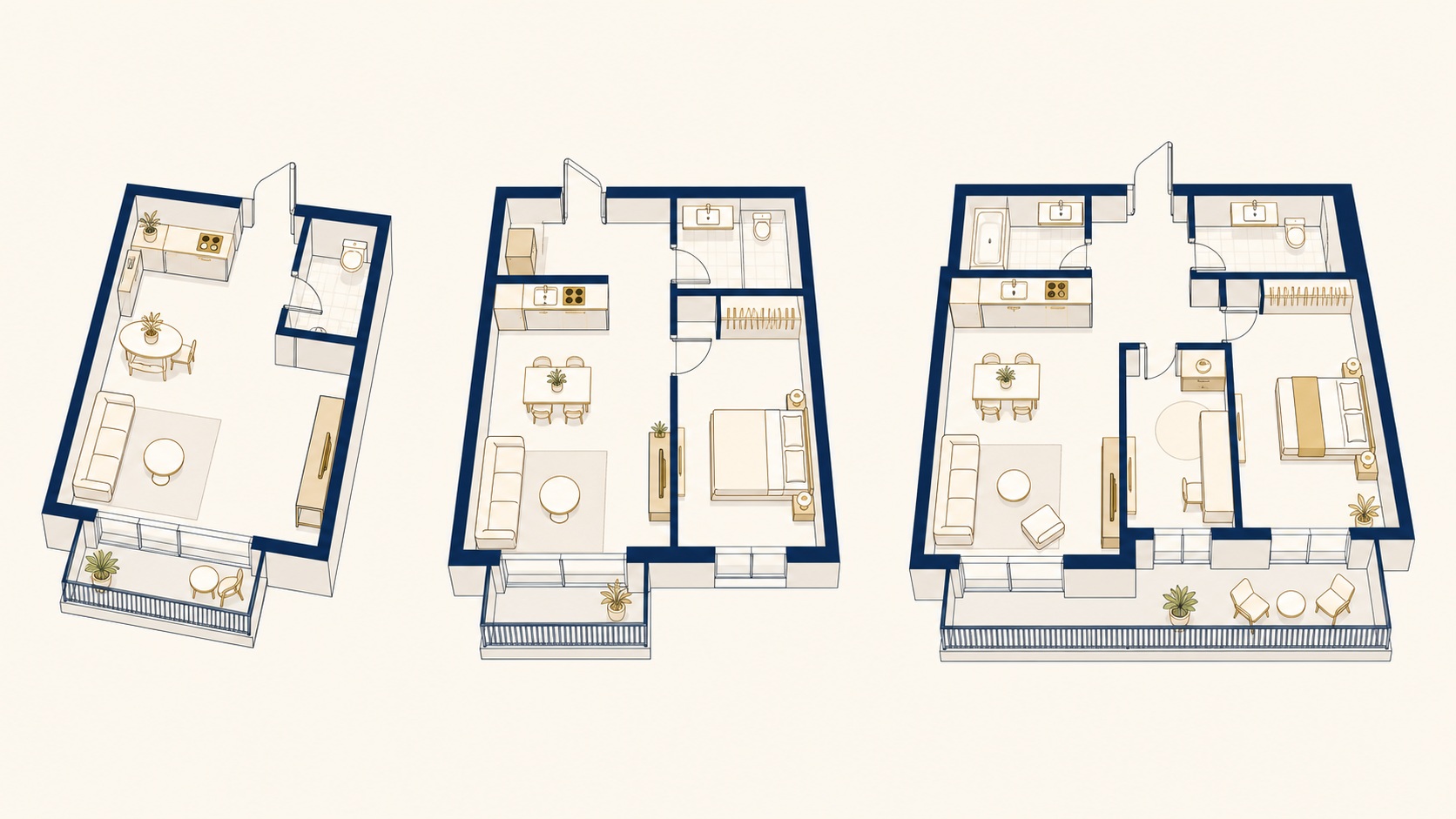
Property type significantly affects rental yield — studios deliver the highest percentage return but require more active management
Furnished vs Unfurnished Rental Yields in Luxembourg
One of the most common questions I receive from investors is whether furnishing a rental property is worth it. The answer depends on your target area, tenant profile, and willingness to manage the additional complexity. Let me break it down with real numbers.
The Furnished Premium
In Luxembourg, furnished apartments typically command a rental premium of 15-25% over unfurnished equivalents. This premium is driven by the large expat population — professionals who relocate to Luxembourg for work and do not want the hassle or expense of buying furniture for what may be a two or three-year posting. The furnished premium is strongest in central locations (Kirchberg, Belair, Gasperich) where the concentration of international professionals is highest, and more modest in areas like Differdange or Ettelbruck where the tenant base is more locally rooted.
| Scenario | Unfurnished | Furnished | Difference |
|---|---|---|---|
| Monthly rent (1-bed, Bonnevoie) | EUR 1,600 | EUR 1,950 | +21.9% |
| Monthly rent (studio, Esch) | EUR 1,100 | EUR 1,300 | +18.2% |
| Monthly rent (2-bed, Kirchberg) | EUR 2,200 | EUR 2,750 | +25.0% |
| Furnishing cost (1-bed, quality) | N/A | EUR 8,000-15,000 | One-time cost |
| Furniture replacement reserve | N/A | EUR 1,000-2,000/year | Ongoing cost |
The maths: For a one-bedroom apartment in Bonnevoie, furnishing adds approximately EUR 350 per month in rent (EUR 4,200/year). If you spend EUR 12,000 on quality furnishing and budget EUR 1,500/year for replacement, your net additional income from furnishing is roughly EUR 2,700/year. That means you recover your furnishing investment in about 4.5 years. After that, the furnished premium goes almost entirely to your bottom line.
My recommendation: Furnishing makes the most financial sense for studios and one-bedrooms in central locations or areas with high expat traffic (Bonnevoie, Gasperich, Kirchberg, Esch near Belval). For two-bedroom apartments targeting families, or properties in areas like Ettelbruck and Differdange where tenants prefer to bring their own furniture, the unfurnished route is usually better.
What this means for you: Consider furnishing as a yield-enhancement strategy for studios and one-beds in expat-heavy areas. For larger units or local-market areas, unfurnished keeps things simpler and often delivers comparable net returns.
Factors That Affect Rental Yield in Luxembourg
Understanding the external factors that influence your yield is just as important as choosing the right area. Luxembourg's rental market has specific dynamics that can either enhance or erode your returns. Here are the most important factors to consider.
Vacancy Rates and Tenant Demand
Luxembourg's overall residential vacancy rate is among the lowest in Europe — estimated at just 2-4% nationally. This is exceptional and is a direct consequence of the country's chronic housing undersupply. However, vacancy rates vary significantly by area and property type. City-centre apartments rarely sit empty for more than two weeks, while properties in rural northern communes may take four to six weeks to fill. Every week of vacancy costs you roughly 2% of annual rental income. If your property sits vacant for six weeks instead of two, that is an 8% hit to your gross income — which can easily turn a 5% gross yield into a 4.6% reality.
Property Condition and Energy Performance
The energy performance certificate (certificat de performance énergétique, or CPE) is increasingly important in Luxembourg's rental market. Properties with poor energy ratings (F, G, or H) face growing resistance from tenants who are aware of the high heating costs. By contrast, properties rated A or B command a premium and attract tenants more quickly. From a yield perspective, investing in a property with a good energy rating — or budgeting for energy improvements — can improve your net yield by reducing vacancy and supporting higher rents.
Management Costs
How you manage your property has a direct impact on your net yield. There are three approaches:
- Self-management: You handle everything yourself — tenant sourcing, lease management, maintenance coordination, rent collection. Cost: effectively zero, though your time has value. Best for investors who live in or near Luxembourg and own one to three properties.
- Partial management: You use an agency for tenant sourcing and lease setup (typically one month's rent as fee) but handle ongoing management yourself. Cost: roughly 3-5% of annual rent amortised over a two-year tenancy.
- Full management: A property management agency handles everything. Cost: typically 8-10% of gross rental income, plus tenant-sourcing fees. This reduces your net yield by approximately 1.0-1.5 percentage points but frees your time entirely.
In my experience, full management makes sense for investors who own properties in Luxembourg but live abroad, or those with large portfolios (five or more units) who want to scale without the management burden. For a single investment property where you live nearby, self-management is almost always worth the effort.
Condominium Charges
This is a cost that catches many first-time investors by surprise. Condominium charges (charges de copropriété) in Luxembourg can vary enormously depending on the building's age, facilities, and management. A modern building with a lift, underground parking, communal garden, and concierge can have monthly charges of EUR 300-500, while an older walk-up might charge EUR 100-150. These charges come directly out of your rental income and can significantly impact net yield.
When evaluating a property, always request the last three years of condominium accounts. Look for the annual charge trend — rising charges in older buildings can signal upcoming major works (roof, facade, heating system) that may require special assessments from owners. I have seen cases where a EUR 15,000 special assessment for building renovation wiped out two full years of rental profit.
Buy-to-Let Strategy: Building a Yield-Focused Portfolio
Knowing which areas deliver the best yields is essential, but a successful buy-to-let strategy in Luxembourg requires more than just picking the right postcode. Here is how I advise my clients to approach portfolio construction.
Strategy 1: The Yield Maximiser
This strategy prioritises monthly cash flow above all else. You buy in high-yield areas (Differdange, Esch, Dudelange) and target smaller units (studios and one-bedrooms) that deliver the highest percentage returns. The goal is to generate positive cash flow from day one, even after mortgage payments.
Typical portfolio: Three to four studios or one-bedrooms in Esch-sur-Alzette and Differdange, purchased for EUR 250,000-350,000 each. Total investment: EUR 900,000-1,200,000 with combined gross yield of 4.8-5.5%.
Pros: Immediate or near-immediate positive cash flow. Multiple units diversify tenant risk. Lower capital requirement per unit allows faster portfolio growth.
Cons: Higher management intensity. More modest capital appreciation. Potentially higher turnover costs.
Strategy 2: The Balanced Approach
This strategy seeks a middle ground between yield and capital growth. You buy in areas like Bonnevoie, Belval, or Esch (better locations within the commune) and target one or two-bedroom apartments. The yield is moderate, but you also capture meaningful capital appreciation.
Typical portfolio: Two one-bedroom or two-bedroom apartments — one in Bonnevoie (EUR 450,000-550,000) and one in Esch-sur-Alzette (EUR 350,000-450,000). Total investment: EUR 800,000-1,000,000 with combined gross yield of 4.0-4.5%.
Pros: Good balance of income and growth. Lower management intensity. Stronger tenant quality. Better resale potential.
Cons: Cash flow may be neutral or slightly negative in early years. Higher capital requirement per unit.
Strategy 3: The Growth Play
This strategy accepts lower yields in exchange for maximum capital appreciation. You buy in prime city locations (Kirchberg, Gasperich, Belair) or emerging areas with major development potential (Hollerich, Belval). The rental income covers most of the carrying costs, but the real return comes from the property's rising value.
Typical portfolio: One premium two-bedroom apartment in Gasperich or Kirchberg at EUR 700,000-900,000. Gross yield of 2.8-3.2% but capital growth potential of 5-7% annually.
Pros: Strongest capital appreciation. Premium tenant quality. Lowest management burden. Easiest exit (resale).
Cons: Likely negative cash flow for the first several years. High capital requirement. All risk concentrated in a single asset.
What this means for you: Before buying your first investment property, define your goals clearly. Do you need cash flow now? Are you building long-term wealth? Your answer shapes everything — the area, the property type, the financing structure, and the management approach.
Ready to Build Your Buy-to-Let Portfolio?
Whether you are a first-time investor or scaling an existing portfolio, I can help you find the right properties in the right areas to match your financial goals. Let us talk about your investment strategy.
💬 WhatsApp Daniela 📊 Investment ConsultationTax Implications for Landlords in Luxembourg
Tax considerations play a major role in your net rental yield. Luxembourg's tax system for landlords is complex but offers genuine opportunities for optimisation. Here is what every property investor needs to understand.
How Rental Income Is Taxed
Rental income in Luxembourg is classified as revenus provenant de la location de biens (income from property rental). It is added to your overall taxable income and taxed at your marginal rate, which can reach up to 42% for high earners (plus the solidarity surcharge of 7-9% on the tax amount, bringing the effective top rate to approximately 45.78%).
However, the critical point is that you are taxed on net rental income, not gross. You can deduct a wide range of expenses from your rental income before calculating tax:
- Mortgage interest: Fully deductible against rental income. In the early years of a mortgage, interest payments are substantial and can dramatically reduce your taxable rental income.
- Building depreciation (amortissement): You can depreciate the building value (not land) at 2% per year for standard properties, or up to 6% for the first six years of newly constructed buildings (then reverting to 2%). This is a paper expense that reduces your tax liability without costing you anything.
- Maintenance and repairs: All reasonable maintenance costs are deductible in the year they are incurred.
- Insurance premiums: Fully deductible.
- Property tax (impôt foncier): Deductible.
- Management fees: If you use a property management agency, these fees are fully deductible.
- Professional fees: Accountant, legal, and advisory fees related to your rental property are deductible.
- Condominium charges: The owner's share of condominium charges is deductible.
Real-World Tax Calculation Example
Let us use a practical example to show how deductions affect your actual tax burden:
| Item | Amount (EUR) |
|---|---|
| Annual gross rental income | 20,400 |
| Less: Mortgage interest (Year 1) | (11,200) |
| Less: Building depreciation (2% of EUR 350,000) | (7,000) |
| Less: Insurance | (350) |
| Less: Property tax | (250) |
| Less: Maintenance reserve | (1,500) |
| Less: Condominium charges (owner share) | (1,800) |
| Taxable rental income | (1,700) |
In this example, the investor's taxable rental income is actually negative — a loss of EUR 1,700. This loss can be offset against other income (such as salary), reducing overall tax liability. This is a common outcome in the early years of property investment when mortgage interest is at its highest, and it is one of the key tax advantages of buy-to-let investment in Luxembourg.
As years pass and mortgage interest decreases, your taxable rental income will increase. But by that point, rents will also have risen, and the accelerated depreciation available for new builds (6% for the first six years) provides a significant tax shield during the critical early period.
Capital Gains Tax on Sale
When you eventually sell an investment property, capital gains tax applies. The rate depends on how long you have held the property:
- Held less than 2 years: The gain is taxed as regular income at your marginal rate (up to ~45.78%).
- Held more than 2 years: Only half the gain is taxed, and it is added to your income at your marginal rate. There is also an allowance of EUR 50,000 per person (EUR 100,000 for a couple) every 10 years.
- Primary residence exemption: If you lived in the property as your primary residence for the majority of the ownership period, the gain may be fully exempt.
This is another reason why long-term holding is advantageous in Luxembourg — the tax burden on sale decreases significantly after two years and becomes even more favourable when combined with the EUR 50,000 allowance. For detailed information on purchase costs and mortgage structures, see our comprehensive mortgage guide.
Capital Growth vs Yield: The Trade-Off Every Investor Must Understand
Throughout this guide, I have repeatedly referenced the tension between rental yield and capital growth. This is perhaps the most important strategic concept in Luxembourg property investment, and it deserves its own focused analysis.
In simple terms: areas with the highest rental yields tend to have the lowest capital appreciation, and vice versa. This is not accidental — it is a market mechanism. When an area's property prices rise faster (capital growth), the purchase price increases relative to rents, compressing the yield. When an area's prices are stable or rising slowly, the rent-to-price ratio stays high, maintaining strong yields.
Here is how this plays out across Luxembourg in 2026:
| Investment Style | Best Areas | Gross Yield | Capital Growth | Total Return |
|---|---|---|---|---|
| Yield-focused | Differdange, Esch, Dudelange | 4.5-5.8% | 2.0-4.0% | 6.5-9.0% |
| Balanced | Bonnevoie, Belval, Ettelbruck | 3.8-4.8% | 3.0-5.5% | 7.0-9.5% |
| Growth-focused | Kirchberg, Gasperich, Belair | 2.4-3.2% | 5.0-7.0% | 7.4-9.5% |
The insight that surprises most investors is that total returns are remarkably similar across strategies. The market is reasonably efficient — it prices in expected growth. Where you have a genuine edge is in your specific circumstances: do you need cash flow today (choose yield), or can you afford to wait for capital appreciation (choose growth)? Are you nearing retirement and need income (yield), or are you 30 years old with a long horizon (growth)?
What I tell my clients: do not chase yield or growth in isolation. Define what success looks like for you personally, and build a portfolio that matches your life stage, financial needs, and risk tolerance. The best return is the one that helps you achieve your actual goals. For a broader view of how property fits into your financial strategy, see our complete investment strategy guide.
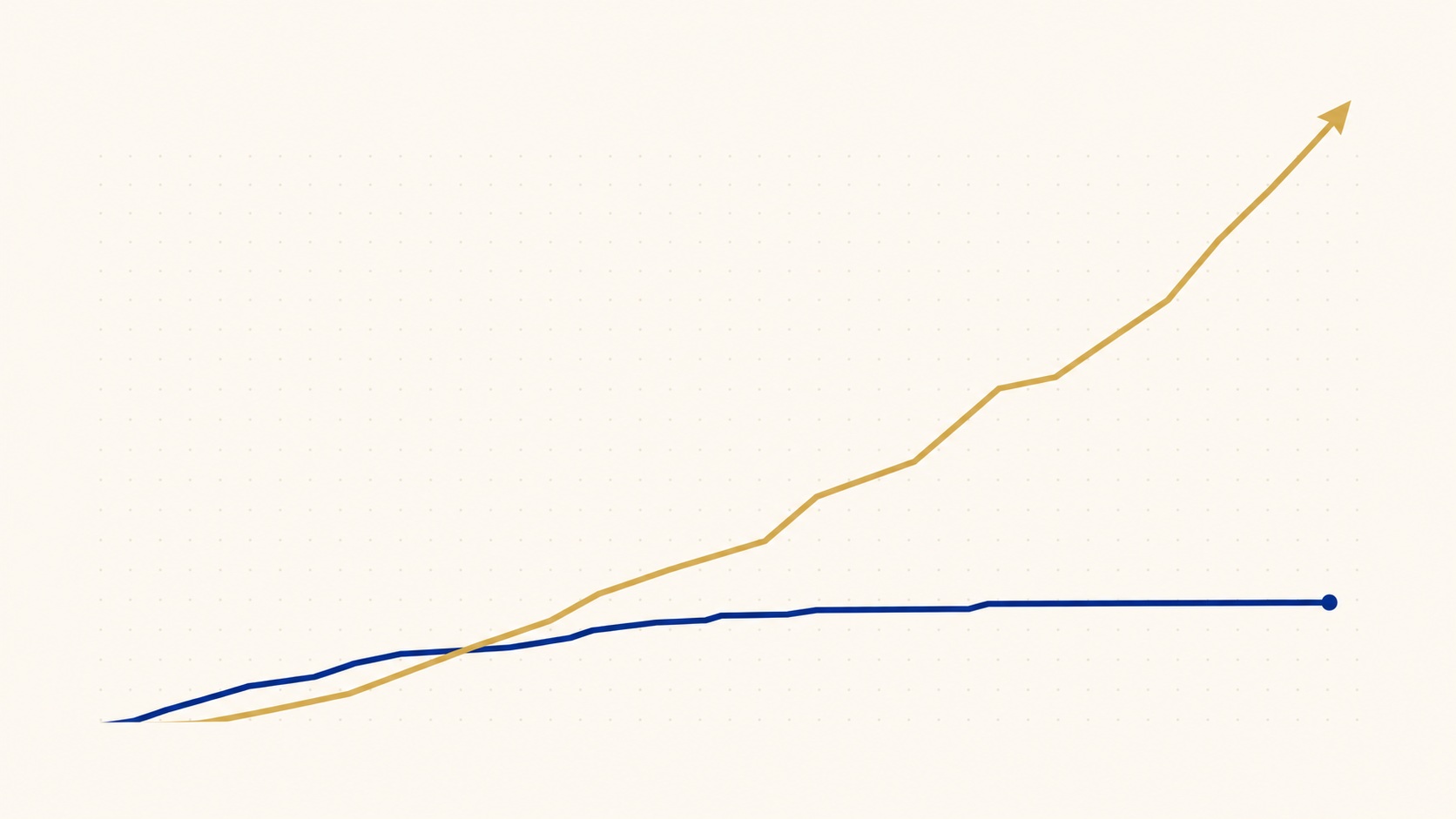
The yield versus growth trade-off: high-yield areas in the south, high-growth areas in the city centre, and balanced areas in between
Real Portfolio Examples from My Experience
Theory is important, but nothing illustrates rental yield dynamics better than real-world examples. Here are three investment scenarios based on portfolios I have helped build for clients in Luxembourg. Names and minor details have been changed for privacy, but the numbers reflect actual market conditions.
Portfolio A: The Cash Flow Investor
Client profile: Cross-border worker from Metz, France. Wanted immediate positive cash flow to supplement income. Budget: EUR 400,000 total investment capital.
What we bought: Two one-bedroom apartments in Differdange — one for EUR 285,000 (52 sqm, renovated) and one for EUR 275,000 (48 sqm, good condition). Total acquisition cost including fees: approximately EUR 608,000. Client financed 75% with a 15-year fixed-rate mortgage at 3.15%.
Results after 12 months: Combined monthly rent: EUR 2,650. Monthly mortgage payments: EUR 2,980. Monthly costs (charges, insurance, reserves): EUR 420. Monthly cash flow: approximately -EUR 750 before tax deductions. However, after tax deductions (mortgage interest + depreciation), the client's effective annual cost is approximately EUR 2,800 — less than EUR 250 per month to own two properties with a combined market value of EUR 570,000+ and growing.
Portfolio B: The Balanced Investor
Client profile: Young Luxembourg-based professional couple. Primary goal: long-term wealth building. Budget: EUR 200,000 equity.
What we bought: One two-bedroom apartment in Bonnevoie for EUR 540,000 (72 sqm, well-located near Gare). Total acquisition cost: approximately EUR 586,000. Financed with 20-year fixed mortgage at 3.05%, 80% loan-to-value.
Results after 18 months: Monthly rent: EUR 1,920. Monthly mortgage payment: EUR 2,550. Monthly cash flow: approximately -EUR 900 before tax benefits. But the property has appreciated by an estimated 5.2% (approximately EUR 28,000 in value gain), and the tax deductions reduce the effective annual cost to roughly EUR 4,200. Net wealth increase in 18 months: approximately EUR 34,000 (EUR 28,000 appreciation + EUR 10,800 mortgage principal paydown - EUR 4,200 net cost). That represents a 17% return on the EUR 200,000 invested equity in just 18 months.
Portfolio C: The Multi-Unit Yield Hunter
Client profile: Experienced investor based in Belgium. Wanted to diversify into Luxembourg with multiple high-yield units. Budget: EUR 600,000 equity.
What we bought: Four studios across Esch-sur-Alzette and Dudelange, purchased over eight months for a combined EUR 920,000. Total acquisition cost: approximately EUR 1,000,000. Financed with 70% loan-to-value across two banks.
Results after 24 months: Combined monthly rent: EUR 4,450. Combined monthly mortgage: EUR 3,680. Monthly costs: EUR 680. Monthly cash flow: approximately +EUR 90 (positive from month one after a brief vacancy period). Gross portfolio yield: 5.8%. The investor uses partial management (agency handles tenant sourcing, self-manages ongoing). All four units have been continuously occupied for the past 14 months.
These examples illustrate a critical point: the right strategy depends entirely on the individual. Portfolio A and C prioritise cash flow, while Portfolio B prioritises wealth building. All three are performing well because they were designed around the client's specific goals and circumstances.
Frequently Asked Questions About Rental Yield in Luxembourg
What is a good rental yield in Luxembourg in 2026?
A good gross rental yield in Luxembourg in 2026 ranges from 3.5% to 5.5%, depending on the area and property type. In high-yield areas like Esch-sur-Alzette, Differdange, and Dudelange, studios can achieve gross yields of 5.0-5.8%, while two-bedroom apartments typically deliver 4.2-5.0%. In premium city locations like Kirchberg or Belair, gross yields are lower at 2.4-3.0%, but capital appreciation is stronger. A net yield above 3.0% is considered excellent in the Luxembourg context. Remember that total return — yield plus capital appreciation — is the number that matters most for long-term investors, and this typically ranges from 7-9% across most areas.
Which Luxembourg area has the highest rental yield?
In 2026, the highest rental yields in Luxembourg are found in the southern communes, particularly Differdange (4.5-5.5% gross), Esch-sur-Alzette (4.5-5.8% gross), and Dudelange (4.2-5.0% gross). In the north, Ettelbruck also offers strong yields of 4.0-4.8% gross. These areas benefit from lower purchase prices relative to achievable rents, creating a favourable price-to-rent ratio. Studios in Differdange and Esch can achieve the highest individual yields, sometimes exceeding 5.5% gross. However, investors should also consider vacancy risk, tenant quality, and capital growth potential alongside headline yield figures.
Is it better to invest in Luxembourg City or the southern communes?
It depends on your investment goals. Luxembourg City offers lower rental yields (2.4-4.3% gross) but stronger capital appreciation (4-7% annually) and the lowest vacancy rates (1.5-2.5%). The southern communes — Esch-sur-Alzette, Differdange, Dudelange — deliver higher rental yields (4.2-5.8% gross) but more modest capital growth (2-5% annually) and slightly higher vacancy (2.5-4.5%). Total returns are remarkably similar across both options, typically 7-9% per year. If you need cash flow, the south is better. If you are building long-term wealth and can absorb short-term negative cash flow, the city may be more appropriate. Bonnevoie within Luxembourg City offers an attractive middle ground with decent yields and strong appreciation.
How much does property management cost in Luxembourg and is it worth it?
Full property management in Luxembourg typically costs 8-10% of gross rental income, which reduces your net yield by approximately 1.0-1.5 percentage points. On a property renting for EUR 1,500 per month, that is EUR 1,440-1,800 per year. Additionally, most agencies charge a tenant-sourcing fee equivalent to one month's rent when placing a new tenant. Whether it is worth it depends on your situation. If you live outside Luxembourg or have a large portfolio, professional management is almost essential and the cost is justified by the time saved and the quality of service. If you own one or two properties and live locally, self-management is straightforward and keeps more money in your pocket. Some investors use a hybrid approach — agency for tenant sourcing, self-management for ongoing tasks — which costs roughly 3-5% of annual rent.
Should I furnish my Luxembourg rental property for higher yield?
Furnishing can boost your gross yield by 15-25% on the rent, which typically translates to an additional 1.0-1.5 percentage points on your gross yield. However, the net benefit is smaller once you account for the initial furnishing cost (EUR 8,000-15,000 for a one-bedroom), ongoing replacement costs (EUR 1,000-2,000/year), and potentially higher tenant turnover. Furnished rentals work best for studios and one-bedrooms in areas with high expat or international professional traffic — Bonnevoie, Kirchberg, Gasperich, and Esch near Belval. For two-bedroom apartments targeting families, or properties in more locally oriented areas like Ettelbruck or Differdange, unfurnished is usually the better choice. The furnished premium typically pays back the initial investment in 3-5 years.
How are rental property taxes calculated in Luxembourg?
Rental income in Luxembourg is taxed at your marginal income tax rate, which can reach up to approximately 45.78% (including the solidarity surcharge). However, you can deduct extensive expenses from your gross rental income: mortgage interest (often the largest deduction), building depreciation (2% per year standard, up to 6% for new builds in the first six years), insurance, property tax, maintenance, condominium charges, and management fees. In practice, these deductions — particularly mortgage interest and depreciation — can reduce your taxable rental income to zero or even create a loss that offsets other income. Capital gains on sale are taxed at your marginal rate if sold within two years, but only half the gain is taxed if held longer than two years, with a EUR 50,000 individual allowance every 10 years. Always consult a Luxembourg tax advisor to optimise your structure.
Conclusion: Your Rental Yield Strategy for Luxembourg in 2026
Luxembourg's rental market in 2026 offers genuine opportunities for investors who do their homework. The key findings from this analysis are clear:
- Esch-sur-Alzette delivers the best combination of yield and growth potential, with gross yields of 4.5-5.8% and improving capital appreciation as the town continues its transformation.
- Differdange offers the highest raw yields in Luxembourg (up to 5.5% gross) and the lowest entry prices, making it ideal for cash-flow-focused investors.
- Dudelange provides a stable, family-oriented rental market with yields of 4.2-5.0% and solid long-term tenants.
- Bonnevoie is the standout choice for balanced investors, delivering reasonable yields (3.8-4.3%) within Luxembourg City while capturing strong capital growth.
- Ettelbruck rounds out the top five with accessible entry prices and yields of 4.0-4.8%, benefiting from government decentralisation.
The overarching lesson is this: Luxembourg's property market rewards informed, patient investors. Whether you prioritise monthly cash flow or long-term capital growth, the fundamentals are in your favour — a growing population, chronic housing undersupply, the highest incomes in Europe, and a stable legal and regulatory environment. The question is not whether to invest, but how to invest strategically to match your personal goals.
In my experience advising property investors in Luxembourg, the clients who achieve the best results are those who start with a clear understanding of what they want, choose areas and property types based on data rather than emotion, calculate net yields honestly, and think in terms of a five to ten-year horizon. If you take away one thing from this guide, let it be this: run the real numbers, not the headline numbers. Your investment decisions should be based on net yield after all costs, not the gross figure that looks attractive in a listing.
I hope this guide has given you the clarity and confidence to make your next investment decision. If you would like personalised advice on which areas and properties best match your investment profile, I am here to help. You can reach me directly — no obligation, just honest, expert guidance from someone who knows this market inside out. For a deeper understanding of the buying process, see our step-by-step buying guide, or compare renting versus buying with our rent versus buy analysis.
Find the Best Rental Yield Property for Your Budget
From your first buy-to-let investment to a multi-unit portfolio — Daniela is here to guide you to the highest-yielding opportunities in Luxembourg. Reach out today for a free, no-obligation conversation about your investment goals.
💬 WhatsApp Daniela 📈 Free Property Valuation 📊 Investment ConsultationSources: STATEC, Observatoire de l'Habitat, BCL (Banque Centrale du Luxembourg), Chambre Immobilière du Grand-Duché de Luxembourg, atHome.lu market data. Data reflects market conditions and estimates as of Q1 2026. All yield, appreciation, and return figures are estimates based on historical data and current market trends; actual results may vary. This article is for informational purposes and does not constitute financial or tax advice. Please consult a qualified professional for personalised investment and tax guidance.