The Luxembourg property market in 2026 is calmer than during the 2021–2022 boom: according to STATEC, prices of residential property were 2.2% lower in the second quarter of 2026 than a year earlier, and 1.1% higher than in the previous quarter. Well-priced properties in good condition do find buyers. So when a homeowner's apartment in Belair, house in Hesperange or townhouse in Limpertsberg has been on the market for six months without a single serious offer, the question writes itself: why does this property refuse to sell?
Stalled listings rarely have a mysterious cause. They usually have a structural one, and most of the time it is one of the nine patterns in this guide. None of them is theoretical: each is a recurring, practical cause of stalled listings in this market. If your property has been on the market longer than is normal for its segment, or if you are preparing to list and want to avoid the most common traps, this article is the conversation I would have with you over coffee.
- The nine structural reasons properties stall in the Luxembourg market in 2026
- The three-week launch window and why it makes or breaks every listing
- How energy class disclosures and co-ownership red flags quietly destroy offers
- A typical Luxembourg stalled-listing pattern — and how it gets unstuck
- A six-question diagnostic to assess your own property
- The concrete steps to revive a stale listing without burning your reservation price
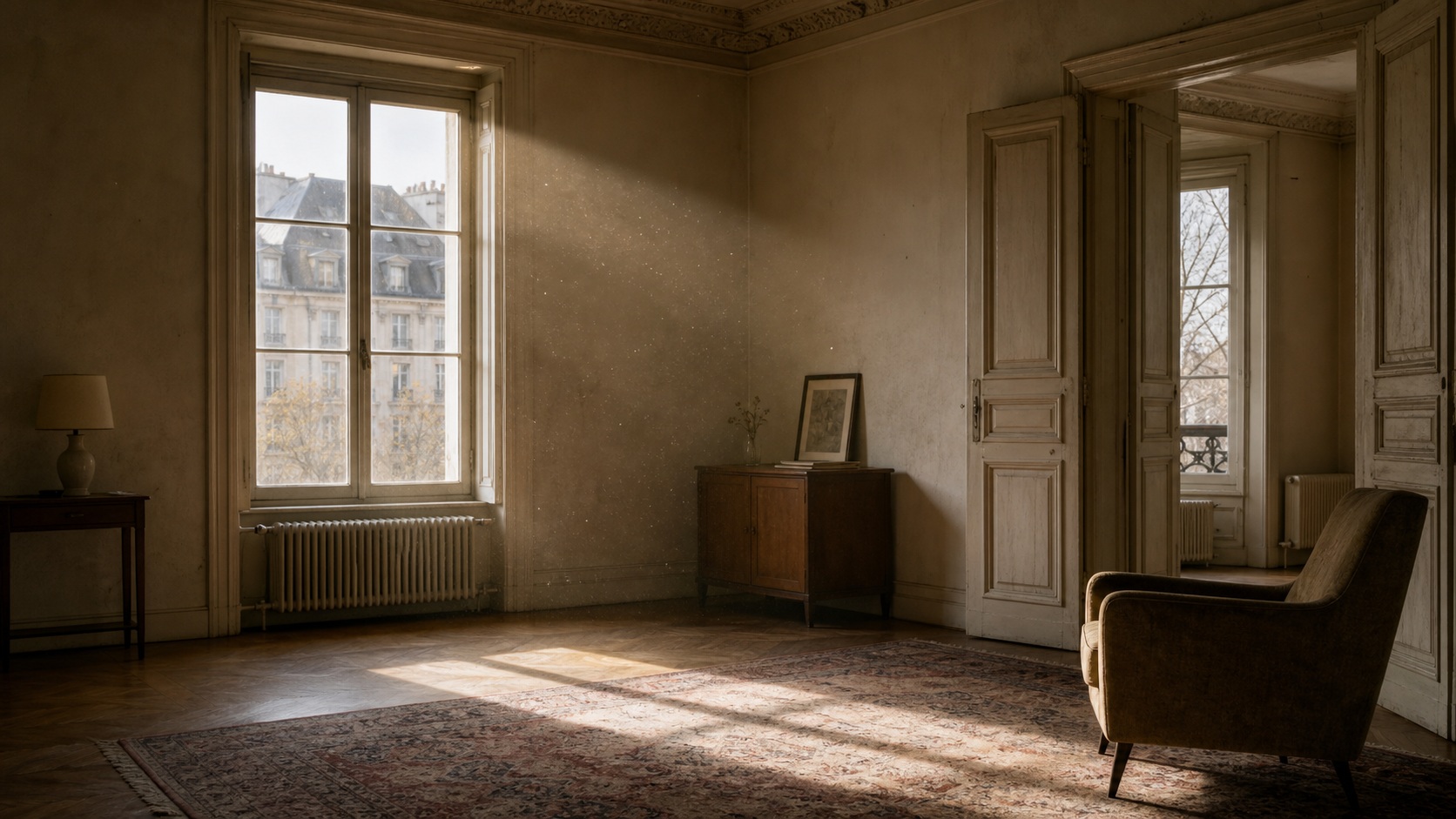
What "Not Selling" Actually Means in the Luxembourg Market
Before diagnosing causes, it helps to be honest about what "not selling" looks like. Luxembourg is not a market where every property finds a buyer in three weeks, and it never has been. A well-located, well-priced apartment usually sells faster than a family house in a less central commune, and atypical properties (large plots, period houses needing renovation, unusual layouts) can legitimately take several months even when everything else is right.
So when I say a property is "stalled", I mean something specific: it has been on the market substantially longer than comparable properties, new visits have become rare, and either no offers are coming in or the offers received are clearly below what comparable properties are selling for. That combination (long time on market, fading visits, weak or absent offers) is the signature of a structural problem, not bad luck. The good news is that structural problems can be diagnosed and corrected.
Reason 1: Overpricing at Launch — The Three-Week Window That Decides Everything
This is the single biggest reason properties don't sell in Luxembourg, and it is also the most preventable. The first three weeks of any listing are by far the most important. In those weeks, motivated buyers who have been monitoring the portals for months — saved searches, daily email alerts from athome.lu and immotop.lu — see your property appear for the first time. If your price triggers their internal "overpriced" alarm in that window, you do not just lose those buyers for today. You lose them permanently, because they mentally file your listing under "the seller is being unrealistic" and stop watching it.
A common pattern in Luxembourg is a seller anchoring to the highest asking price they can find for a vaguely comparable property on athome.lu, adding a premium because "mine is nicer", and listing well above the price the property will eventually achieve. By the time they reduce the price weeks later, the buyers who would have paid the corrected price have often bought something else. The property then needs a deeper reduction to attract new buyers, and the seller can end up with a lower net price than if they had priced accurately on day one.
The fix is simple in concept and rigorous in execution: price the property at fair market value in week one, supported by actual transaction data — not portal asking prices — for comparable properties within 500 metres in the last six months. A written professional valuation is the cleanest way to anchor this number, and the notary fees calculator can help you model what a realistic buyer's total budget looks like.

Reason 2: Photography That Quietly Disqualifies Your Listing
The Luxembourg portals show your property as a small thumbnail in a long results list. Buyers scan screens full of thumbnails in seconds. If your first photograph does not communicate quality, space, and light within that fraction of a second, the buyer does not click through. They do not pause to consider whether your property might be wonderful despite the bad photo. They simply move to the next thumbnail.
Three photography failures come up again and again: phone photos taken in poor light (everything looks small and yellow), photos showing too much furniture and clutter (the buyer cannot read the space), and photos of unimportant angles (a corner of the kitchen instead of the living room with its main feature). Each of these filters out exactly the buyers who would have loved the property in person, which is why professional photography is one of the most useful things a seller can pay for.
A professional property shoot including a floor plan is a modest cost compared with the price of a Luxembourg home; ask a few photographers for a quote. On a sale of several hundred thousand euros, it is one of the highest-return investments a seller can make.
Reason 3: Wrong Language Mix for Your Target Buyer
Luxembourg's buyer pool is multilingual in a way few other markets are. A typical Luxembourg City apartment will attract serious enquiries from French-speaking buyers (frontaliers and Luxembourg residents alike), English-speaking expats (EU officials, financial sector professionals), Portuguese-speaking long-term residents, Italian-speaking community members, and German-speaking cross-border buyers. A listing written only in French — or worse, only in English with awkward grammar — silently filters out entire buyer segments.
A frequent mistake is private sellers writing the listing themselves in their best French, then "translating" it to English with a machine translation tool. The English version reads stiffly to native speakers, and the property looks less professional than the agency-listed competition. A properly written EN/FR listing pair (or EN/FR/IT for properties likely to attract Italian buyers) costs little and usually pays back in additional qualified enquiries.
Reason 4: Energy Class Disclosures That Stop Buyers Mid-Visit
The certificat de performance énergétique (CPE / Energieausweis) has become a much more decisive factor in Luxembourg buyer behaviour over the past three years. Buyers — particularly younger buyers and those financing with banks attentive to "green mortgage" criteria — now actively avoid properties below class D unless the discount reflects the renovation burden they would inherit. A class F or G property listed at a class C price is very hard to sell: the buyer who would pay for the location and the layout will not also pay for the energy renovation.
What I see in practice is sellers either not having a valid CPE at listing (which itself signals problems and disqualifies serious buyers) or having a CPE in the F–H range and pricing as if the energy class did not exist. Both are silent killers. The solution is either to reflect the energy class honestly in the asking price, or to invest in the renovation before listing — insulation and window upgrades can improve the energy class; check with an energy adviser which works make sense and which Klimabonus aids apply before deciding. The article Energy Class and Property Value in Luxembourg covers the price-impact math in detail.
Reason 5: Layout-vs-Price Mismatch
Some properties have a structural mismatch between what they offer and what their price implies. A two-bedroom apartment priced at the level where most of the same building's three-bedrooms transact. A house with a tiny garden priced at the level of comparable houses with proper outdoor space. A duplex with awkward circulation priced as if the layout were intuitive. These mismatches are not visible to the seller — they know and love the property and the trade-offs are invisible to them — but they are immediately visible to a comparison-shopping buyer with seven other tabs open in their browser.
A balanced market is brutal to layout-vs-price mismatches because buyers have alternatives. In the seller-favouring market of 2021, a mismatched listing might still attract an offer from a buyer scared of missing out. In 2026, the buyer simply books a viewing at the better-matched comparable down the street.
Reason 6: Co-Ownership Red Flags (Syndic + Charges + AGM Minutes)
For apartments and co-ownership properties, the documents a buyer requests during due diligence (syndic accounts, recent general-meeting minutes, technical reports, planned major works, charge history) often contain red flags that quietly kill deals. The most common: large upcoming works on the building (roof, facade, lift) that will mean significant special contributions for owners. Buyers who discover this mid-process either walk away or revise their offer down by the future expense. Both outcomes are preventable if the seller acknowledges the situation upfront and prices accordingly.
What I often see is sellers either unaware of pending major works (because they have not read the last two AGM minutes carefully) or aware but hoping the buyer will not discover them. Both approaches end the same way: the buyer's lawyer or notary surfaces the issue at compromis stage, and the deal collapses or gets renegotiated downward. Transparent disclosure with appropriate pricing is faster, cleaner, and usually less expensive in the end.
Reason 7: Bad Listing Timing for the Luxembourg Calendar
Luxembourg has seasonal patterns that private sellers often underestimate. Buyer activity is usually lower in late December, in late July and August (schools closed, many residents away) and around long holiday weekends. Properties listed in those weeks lose part of their first, most valuable weeks of visibility, and by the time activity picks up again the listing is no longer "new" on the portal feeds.
This does not mean you cannot list in August; sometimes life requires it. But if your timing is flexible, launching outside the quiet periods avoids losing your first weeks of visibility.
Reason 8: Visit Mistakes That Silently Sink Offers
Even when the pricing, photography, language, energy class, and timing are all right, a property can still fail to convert visits into offers because of how the visits themselves are run. What I see most often: sellers talking too much (the buyer cannot imagine the space as their own when the seller narrates every memory), sellers being defensive about flaws (every "yes but" creates doubt rather than reassurance), sellers volunteering price negotiability too early ("we are open to offers" within the first minute tells the buyer the asking price is fictional), and visits at the wrong time of day for the property's strengths (showing a south-facing apartment in late afternoon when the light is gone).
A well-run visit takes its time, lets the property speak for itself with little narration, presents flaws honestly but in context, and ends with a clear next step. These are skills that come with practice, which private sellers rarely have.
Reason 9: Stale Listing Decay — The Silent Compounding Damage
Every week a property sits on athome.lu and immotop.lu without selling, two things happen quietly. First, the listing drops down the portal's relevance rankings — newer listings get promoted above it. Second, returning visitors to the portal who saw it three months ago and four months ago now mentally categorise it as "the property nobody wants." This category is sticky. Even after a substantial price reduction, many buyers will assume the property must have something wrong with it that is not visible on the portal — otherwise it would have sold.
The longer a listing stays stale, the deeper the eventual reduction needs to be to overcome this perception. For example, an apartment that could have sold at a fair price in its first weeks may end up selling noticeably lower many months later — not because the market moved, but because the listing itself has become poisoned. This is why my counsel is always: if your listing is genuinely stalling, intervene early. Either reduce the price meaningfully, refresh the listing (new photos, rewritten copy, new launch), or switch your marketing approach entirely. Waiting another month "to see what happens" is almost always the most expensive choice.

A Typical Pattern: How a Stalled Luxembourg Apartment Gets Unstuck
The pattern typically looks like this. A beautifully renovated apartment in one of Luxembourg's most desirable neighbourhoods, in a building with healthy syndic accounts and a good energy rating, has been on the market for months. The seller has already reduced the price, and the listing now receives roughly one visit per fortnight, all polite, all without follow-up offers. On paper, a property like this should sell in eight weeks.
The diagnosis in cases like this usually reveals several reinforcing problems. First, the original price sits well above where genuinely comparable properties have been clearing — for example because the seller anchored a two-bedroom to a three-bedroom comparable. Second, the listing photography was taken on a phone with the curtains half-closed, making a genuinely bright apartment look small and dim. Third, after months on the portals, the listing carries the "stale" stigma that cosmetic reductions have not addressed.
The intervention follows from the diagnosis: new professional photography, listing copy properly written in EN/FR/IT, a relaunch price that reflects genuine market value (not chasing buyers downward), and a relaunch timed to a strong window such as mid-January. Done this way, a relaunch gives the property a genuine second chance with buyers. The seller usually nets less than if the property had been priced accurately from the start — but more than by continuing a trajectory of slow reductions.
The 6-Question Diagnostic: Is Your Listing Stalled?
- Has the property been on the market longer than 90 days without an accepted offer?
- Has the rate of new visits dropped below one visit every two weeks?
- Have you received zero offers, or only offers more than 10% below asking?
- Have you reduced the asking price twice or more without a meaningful change in activity?
- Does the listing photography reflect the property's true quality, light and space?
- Does your asking price reflect actual recent transaction data for genuinely comparable properties — not portal asking prices?
If you answered "yes" to questions 1–4 and "no" or "uncertain" to questions 5–6, your listing is structurally stalled and another month of waiting will almost certainly cost you net money. A free professional valuation is the cleanest starting point to understand where the property genuinely sits in the current market.
How to Revive a Stalled Listing Without Burning Your Reservation Price
The instinct of most stalled-listing sellers is either to wait longer (almost always wrong) or to slash the price aggressively (sometimes necessary, but rarely sufficient on its own). The disciplined revival sequence I recommend has four steps:
- Withdraw the listing from the portals for at least 30 days. This breaks the "stale" stigma and lets the listing return as genuinely new.
- Diagnose the primary cause honestly — overpricing, photography, energy class, layout-vs-price, co-ownership red flag, or visit execution.
- Address the primary cause materially — not cosmetically. New professional photography, a new energy assessment, a rewritten listing in three languages, a renovation commitment, or a price reset to genuine market value.
- Relaunch in a strong listing window (mid-January to early April, or mid-September to mid-November) with the discipline of a brand-new listing — fresh photos, fresh copy, no reference to the prior listing.
If you are uncertain about which step matters most for your specific property, that is exactly the kind of diagnostic conversation I have with sellers as part of an initial valuation. Request a free valuation and I will walk you through what your property is actually worth in 2026 and what the cleanest path to a sale looks like.
Key Takeaways
- Stalled listings usually share one of nine structural causes, and overpricing at launch is one of the most common.
- The first three weeks of a listing decide everything. Buyers who pass on an overpriced listing in those weeks rarely come back, regardless of subsequent reductions.
- Energy class, co-ownership red flags, and layout-vs-price mismatches quietly disqualify properties without the seller realising why.
- Stale listings suffer compounding damage — every month of waiting deepens the eventual price reduction required to sell.
- Reviving a stalled listing requires withdrawal, honest diagnosis, material correction, and disciplined relaunch — not cosmetic price tweaks.
Frequently Asked Questions
How long should a Luxembourg property normally take to sell in 2026?
There is no official statistic on selling times in Luxembourg. Well-located, well-priced properties in good condition generally sell faster than atypical ones (large plots, period houses, unusual layouts), which can legitimately take several months. If a property has had no serious offer for several months and visits are fading, a structural intervention is usually warranted.
Is reducing the price always the answer to a stalled listing?
No. A price reduction without addressing the underlying cause — bad photography, energy class issues, co-ownership red flags, poor visit execution — frequently fails to revive activity and simply locks in a lower eventual sale price. Diagnose the cause first; price-correct as part of an integrated revival, not in isolation.
Can I take my property off the market and re-list it later as "new"?
Yes, and for stalled listings this is often one of the most effective interventions. Withdrawing for a few weeks and relaunching with new photography and copy at a good moment of the year resets how buyers perceive the property.
Does professional photography really make that big a difference in Luxembourg?
Yes. The first photo decides whether a buyer clicks on your listing at all, and amateur photos make good properties look small and dark. Compared with the price of a Luxembourg home, a professional shoot is a modest cost and one of the highest-return investments a seller can make.
Should I list in summer or wait for autumn?
If timing is flexible, avoid listing between mid-July and mid-September. Luxembourg empties out for summer holidays, EU institutions are in recess, and buyer activity falls substantially. Mid-September to mid-November is the strongest autumn window; mid-January to early April is the strongest annual window overall.
What if my property has serious structural issues — should I disclose or hope buyers won't notice?
Disclose. Luxembourg buyers conduct increasingly thorough due diligence — surveys, notary searches, syndic reviews — and undisclosed issues virtually always surface before the acte authentique. Disclosure with appropriately adjusted pricing produces faster sales and avoids deal collapse at compromis stage.
Is six months on the market a disaster?
Not automatically — for some atypical properties it is normal. But if six months has produced zero offers and a declining visit rate, the listing is structurally stalled and continuing without intervention is almost always the most expensive choice.

Is Your Luxembourg Property Stalling? Let's Diagnose It Properly
A free, written valuation grounded in actual transaction data is the cleanest starting point for unsticking a stalled listing — and for understanding what your property is genuinely worth in the current Luxembourg market.
WhatsApp Daniela Get My Free Valuation
Multilingual support in English, French, and Italian. Affiliated with RE/MAX One.
Conclusion
A balanced Luxembourg market does not sell every property. It sells well-priced, well-presented, honestly-marketed properties — and it is patient with the rest. If your listing has stalled, the answer is almost never "wait longer." The answer is almost always to diagnose the structural cause honestly, correct it materially, and relaunch with discipline. The longer you wait, the more expensive the eventual correction becomes. If you want a clear, professional assessment of why your specific property has not sold and what the cleanest path forward looks like, the conversation costs nothing and the clarity is genuine.
Request a Free Luxembourg Property Valuation · Explore Seller Services