It is one of the most common questions I hear from clients looking to buy property in Luxembourg: "Daniela, should I buy new or old?" On the surface it seems like a simple preference — shiny and modern versus charming and established. But in Luxembourg in 2026, the answer involves far more than aesthetics. It involves a 4 percentage point difference in transaction taxes, energy performance ratings that can swing your monthly costs by EUR 200 or more, warranty protections that last a decade, renovation budgets that regularly double, and resale dynamics that differ fundamentally between the two categories. Getting this decision right can save you tens of thousands of euros over a ten-year holding period. Getting it wrong can trap you in a property that costs more to own than it cost to buy.
I have helped hundreds of clients in Luxembourg navigate this exact decision. Some walked in absolutely certain they wanted a VEFA apartment in a brand-new residence, only to realise that an older property in a prime location served their goals far better. Others were fixated on a charming 1920s townhouse, only to discover that the renovation costs would have bought them a new build outright. There is no universal right answer — but there is a right answer for your specific situation, and this guide will help you find it.
In this article I will walk you through every dimension of the new build versus old property decision in Luxembourg as it stands in 2026: the financial differences (taxes, prices, hidden costs), the practical differences (energy, warranty, availability, customisation), the investment differences (yield, appreciation, liquidity), and the lifestyle differences (location, character, space). I will share real client scenarios, provide detailed comparison tables, explain the VEFA process step by step, and give you a five-question decision framework you can apply to your own situation today. If you want the broader market context first, start with our complete 2026 Luxembourg market analysis. Otherwise, let us dive in.
Advantages of Buying a New Build in Luxembourg
New construction in Luxembourg — whether purchased off-plan through the VEFA system (Vente en l'Etat Futur d'Achevement) or as a completed new residence — offers a set of advantages that are particularly compelling in the 2026 regulatory and financial environment. Let me walk through each one in detail.
1. Reduced TVA at 3% Instead of 7% Registration Tax
This is the single biggest financial advantage of buying new in Luxembourg, and it is one that many buyers underestimate. When you purchase a new-build property (VEFA or recently completed), you pay a 3% TVA (value-added tax) on the construction portion of the price. On an old property, you pay 7% registration tax (droits d'enregistrement) on the full purchase price. The difference is enormous.
Let me illustrate with a concrete example. Consider two apartments, both priced at EUR 700,000. For the new build, assuming the land component is EUR 200,000 and the construction component is EUR 500,000, you pay 3% TVA on the construction (EUR 15,000) plus registration fees on the land portion (approximately EUR 14,000), for a total transaction cost of approximately EUR 29,000. For the old property at the same price, you pay 7% registration tax on the full EUR 700,000, which is EUR 49,000, plus notary fees of approximately EUR 7,000, for a total of approximately EUR 56,000. That is a difference of roughly EUR 27,000 — money that stays in your pocket or goes toward furnishing, renovating, or simply reducing your mortgage.
In 2026, the Luxembourg government has maintained this favourable TVA rate as part of its ongoing effort to stimulate new construction and address the housing supply shortage. There have been periodic discussions about adjusting the rate, but as of Q1 2026, the 3% super-reduced rate remains firmly in place for residential new builds up to a ceiling of EUR 50,000 in TVA benefit per buyer. For a detailed breakdown of how the tax structure affects your total purchase cost, consult our 2026 mortgage and financing guide.
2. Ten-Year Decennial Warranty (Garantie Decennale)
Every new-build property in Luxembourg comes with a garantie decennale — a ten-year structural warranty that covers the builder and developer against major defects. This includes structural integrity (foundations, load-bearing walls, roof), waterproofing, and any defect that renders the property unfit for its intended use. Additionally, a two-year warranty (garantie biennale) covers all equipment and finishes — plumbing, electrical systems, heating, flooring, and so on.
In practical terms, this means that for the first decade of ownership, you are protected against the most expensive categories of repair. A cracked foundation, a leaking roof, a defective heating system — all covered. For an old property, you have no such protection. If the roof starts leaking six months after purchase, that is your problem and your expense. I have seen clients face EUR 30,000 to EUR 80,000 in unexpected structural repairs on older properties within the first few years of ownership. The warranty alone can justify a significant premium for new construction.
3. Superior Energy Efficiency (Class A or B)
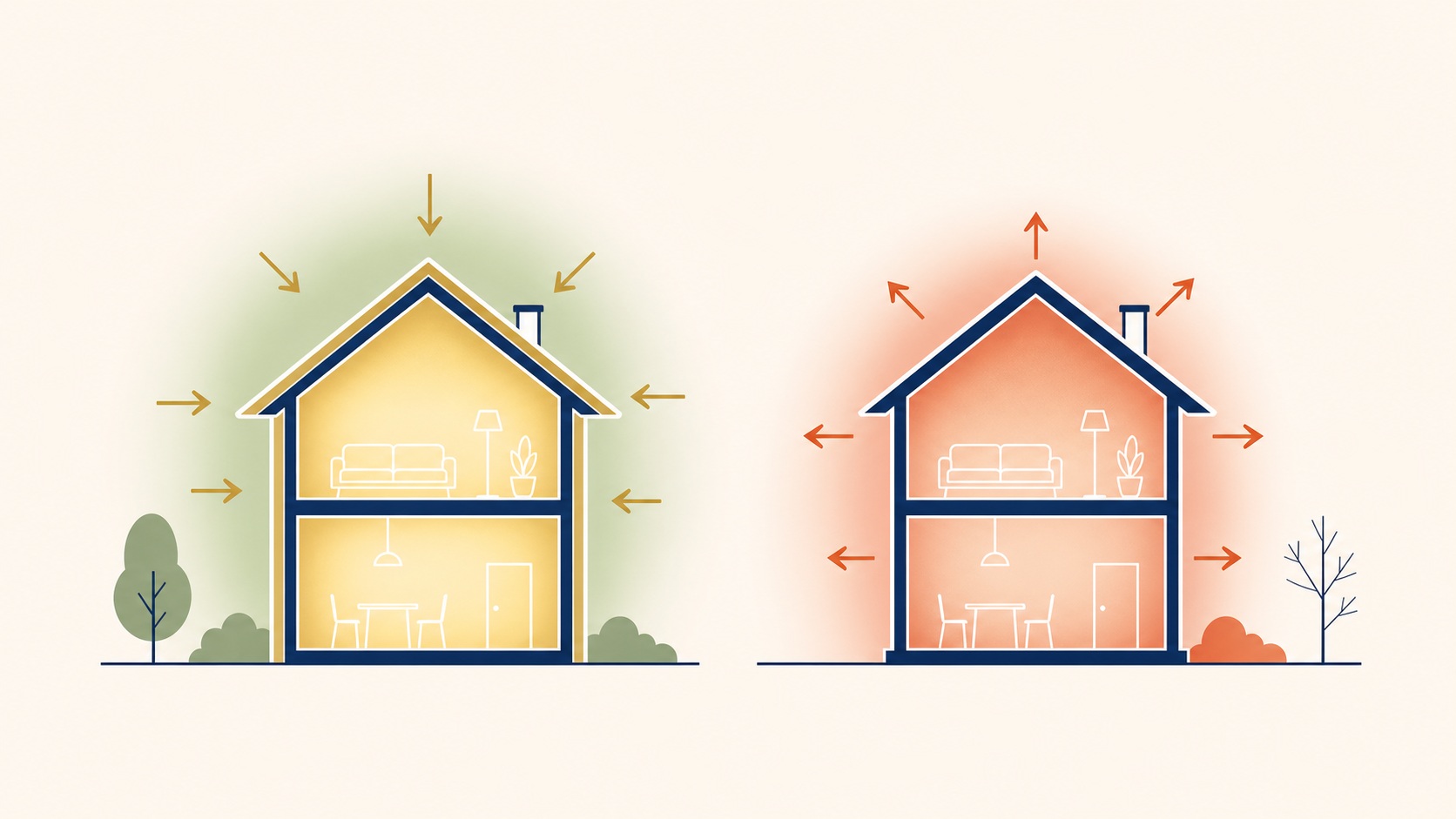
All new-build properties in Luxembourg in 2026 must comply with current building regulations, which effectively mandate an energy performance rating of Class A or B. This means triple-glazed windows, high-performance insulation, heat pump or solar thermal heating systems, controlled ventilation with heat recovery, and in many cases photovoltaic panels. The result is dramatically lower energy costs.
A typical 80-square-metre Class A apartment has monthly energy costs of approximately EUR 60 to 100. A comparable Class D or E apartment — common in buildings from the 1980s and 1990s — costs EUR 200 to 350 per month to heat and power. Over a ten-year period, that difference of EUR 150 to 250 per month adds up to EUR 18,000 to 30,000. In an era of rising energy costs and tightening environmental regulations, the energy class of your property is not just a comfort issue — it is a financial asset that directly affects both your running costs and your resale value.
4. Customisation and Modern Layout
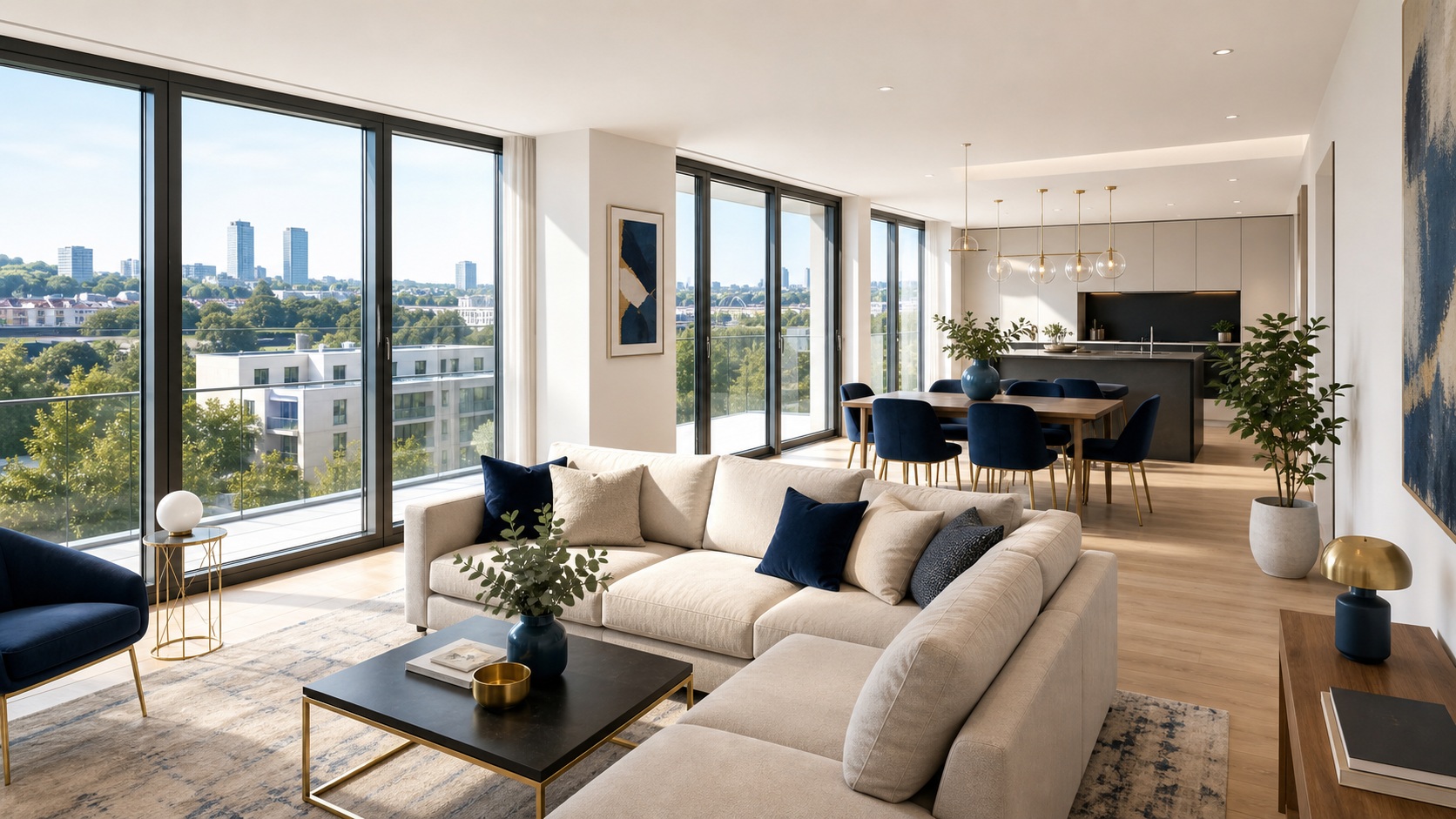
When you buy off-plan through VEFA, you typically have the opportunity to customise finishes, sometimes floor layouts, kitchen configurations, bathroom specifications, and flooring materials. You start with a blank canvas rather than inheriting someone else's taste. Modern new builds also feature contemporary open-plan layouts, larger windows, better sound insulation between units, and amenities like underground parking, bike storage, and common gardens that older buildings rarely offer.
What this means for you: If minimising risk, transaction costs, and ongoing expenses is your priority, new construction offers a compelling package. However, these advantages come at a higher price per square metre — which is exactly what we need to weigh against the benefits of older properties.
Advantages of Buying an Old Property in Luxembourg
Despite the impressive financial and practical case for new builds, older properties remain the backbone of the Luxembourg market — and for very good reasons. In my experience, some of the smartest purchases I have seen clients make were older properties in prime locations that offered value no new build could match. Here is why.
1. Lower Price per Square Metre
This is the most straightforward advantage. Across Luxembourg, existing (old) properties trade at a discount of approximately 15 to 25 percent per square metre compared with new builds in the same area. In Luxembourg City, an existing apartment averages around EUR 9,200 per square metre versus EUR 10,800 for a new build — a difference of roughly 17 percent. In the South, the gap is similar: EUR 5,700 versus EUR 6,600 per square metre.
What does this mean in practical terms? On an 80-square-metre apartment in Luxembourg City, the difference is approximately EUR 128,000. That is not a rounding error — it is money that can fund a complete renovation, cover two years of mortgage payments, or simply give you access to a neighbourhood that would be beyond your budget in a new build. For buyers who are constrained by budget rather than preference, older properties open doors that new construction keeps firmly shut.
2. Established, Prime Locations
New-build developments tend to be concentrated in specific zones: Kirchberg, Gasperich (Cloche d'Or), Belval, and various peripheral communes where large plots of development land are available. Older properties, by contrast, are found in the heart of Luxembourg's most desirable and established neighbourhoods — Belair, Limpertsberg, the Gare quarter, Bonnevoie, central Esch-sur-Alzette, and the historic cores of towns throughout the country.
These locations have something that no amount of new construction can replicate: mature infrastructure, established schools, diverse shops and restaurants, tree-lined streets, and a sense of community that takes decades to develop. If your priority is living in the centre of things — walking to work, walking to restaurants, walking to your children's school — an older property in a prime location will almost always beat a new build on the urban periphery. For a detailed area-by-area guide to Luxembourg's most desirable locations, see our guide to the best areas to buy property in Luxembourg in 2026.
3. Character, Space, and Garden Access
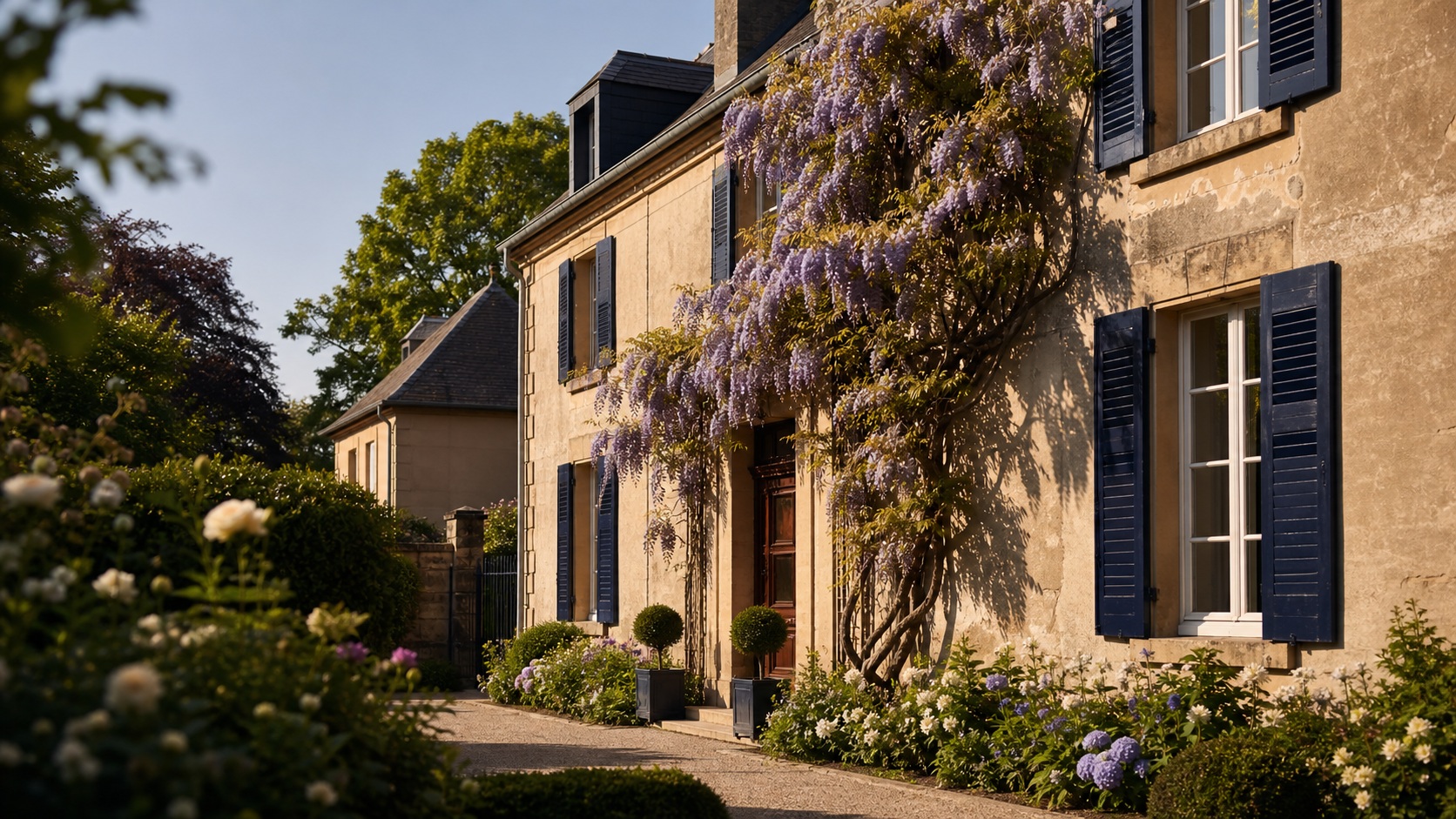
Older properties in Luxembourg — particularly houses and maisons de maitre from the early twentieth century — offer architectural character, generous room proportions, high ceilings, ornate detailing, and garden space that modern construction simply does not replicate. A 1930s townhouse in Belair with its original parquet floors, moulded ceilings, and 200-square-metre garden has a quality of living that no contemporary apartment can match, regardless of how many smart-home features it includes.
Even older apartments tend to have larger rooms, more storage, and more generous hallways than their modern equivalents, where developers optimise every square metre to maximise the number of units per building. If space and character matter to you, older stock has a natural advantage.
4. Immediate Availability
When you buy an old property, you can typically move in within two to three months of signing the compromis de vente — the time it takes to complete due diligence, secure the mortgage, and sign the acte de vente at the notary. A VEFA purchase, by contrast, can require waiting 18 to 36 months for the building to be completed. During that waiting period, you are paying rent on your current accommodation while also making staged payments on the new property. For buyers who need a home now — relocating for a job, growing out of their current space, moving to Luxembourg from abroad — the immediacy of an existing property is a significant practical advantage. For the full step-by-step process of buying an existing property, see our buying process guide.
What this means for you: If you value location, space, and character — or if your budget is tight and you need to maximise square metres per euro — old properties deserve serious consideration. The key is to factor in renovation and energy upgrade costs before concluding that the lower sticker price represents genuine savings.
VEFA Explained: How Off-Plan Buying Works in Luxembourg
VEFA — Vente en l'Etat Futur d'Achevement — is the legal framework governing the purchase of property that has not yet been built or is under construction. It is the standard mechanism for buying new-build apartments and houses in Luxembourg, and it comes with specific protections and obligations for both buyer and developer. If you are considering a new build, understanding the VEFA process is essential.
Step 1: Reservation Agreement (Contrat de Reservation)
The process begins with a reservation agreement, in which you select a specific unit from the developer's plans and pay a reservation deposit — typically 2 to 5 percent of the purchase price. This deposit is held in escrow and is refundable under certain conditions (such as failure to secure financing within the stipulated period). The reservation agreement fixes the price, the specifications, and the estimated delivery date.
Step 2: Signing the VEFA Contract at the Notary
Within a few months of the reservation, you sign the formal VEFA contract (acte de vente en l'etat futur d'achevement) before a Luxembourg notary. This contract is far more detailed than the reservation and includes the complete technical specifications, the payment schedule linked to construction milestones, the delivery date (with penalties for delays), and the warranty provisions. At this stage, the property is legally yours — you are the owner of a property that does not yet exist, with the developer obligated to build it according to the agreed specifications.
Step 3: Staged Payments Linked to Construction Progress
Unlike a standard property purchase where you pay the full price at signing, VEFA involves staged payments that correspond to specific construction milestones. The typical Luxembourg VEFA payment schedule is:
| Construction Stage | Percentage Due | What This Covers |
|---|---|---|
| Signing of VEFA contract | Up to 5% | Initial deposit, administrative costs |
| Foundation completion | Up to 30% cumulative | Groundwork, foundations, basement structure |
| Structural completion (gros oeuvre) | Up to 55% cumulative | Walls, floors, roof structure |
| Roof and weatherproofing (hors d'eau/hors d'air) | Up to 70% cumulative | Roof sealed, windows installed, building weathertight |
| Interior finishes completion | Up to 95% cumulative | Plumbing, electrical, flooring, painting, kitchen, bathrooms |
| Delivery and handover (reception) | 100% | Final 5% retained until inspection confirms specifications met |
Step 4: Construction Phase Monitoring
During construction, you have the right to visit the site at reasonable intervals to verify progress. Many developers provide regular progress reports and photographs. I always recommend that my clients hire an independent surveyor (expert immobilier) to inspect the property at key milestones — particularly at the structural completion and pre-delivery stages. This typically costs EUR 1,500 to 3,000 but can identify issues early when they are still the developer's responsibility to fix.
Step 5: Pre-Delivery Inspection and Handover
Before the final payment, you conduct a formal inspection (reception provisoire) of the completed property. This is your opportunity to identify any defects, incomplete work, or deviations from the specifications. You create a written list of reservations (liste des reserves), and the developer is obligated to rectify all items on this list before or shortly after handover. Only once all reserves are addressed do you make the final payment and receive the keys.
Step 6: Post-Delivery Warranties
After handover, the warranty clock starts: one year for minor cosmetic defects (garantie de parfait achevement), two years for equipment and installations (garantie biennale), and ten years for structural elements (garantie decennale). These warranties give VEFA buyers a level of protection that is simply unavailable with old property purchases.
For the full step-by-step process of buying any property in Luxembourg — including the legal, financial, and administrative stages — see our complete buying guide.
What this means for you: If you choose VEFA, budget for the waiting period (continued rent plus staged payments), hire an independent surveyor, and read every line of the contract before signing. The protections are excellent — but only if you actively exercise them.
Price Comparison: New Build vs Old Property Across Major Areas
Numbers speak louder than generalisations. The following table compares average prices per square metre for new-build versus existing properties across Luxembourg's major areas in Q1 2026. These figures are based on recent transaction data and developer pricing for current projects.
| Area | New Build (EUR/sqm) | Old Property (EUR/sqm) | Premium for New (%) | Difference on 80 sqm (EUR) |
|---|---|---|---|---|
| Kirchberg | 12,500 | 10,800 | +16% | 136,000 |
| Belair / Limpertsberg | 11,200 | 9,800 | +14% | 112,000 |
| Gasperich (Cloche d'Or) | 10,200 | 8,900 | +15% | 104,000 |
| Bonnevoie / Gare | 9,500 | 8,300 | +14% | 96,000 |
| Esch-sur-Alzette / Belval | 6,800 | 5,900 | +15% | 72,000 |
| Bettembourg | 7,200 | 6,200 | +16% | 80,000 |
| Ettelbruck | 5,800 | 5,000 | +16% | 64,000 |
| Wiltz / Northern towns | 4,800 | 4,000 | +20% | 64,000 |
Several patterns emerge from this data. The new-build premium is remarkably consistent across Luxembourg, ranging from 14 to 20 percent depending on the area. In absolute terms, the premium ranges from EUR 64,000 in the North to EUR 136,000 in Kirchberg for an 80-square-metre apartment. However — and this is the critical point — the new-build premium must be weighed against the tax savings (3% TVA versus 7% registration tax), the lower energy costs, and the warranty protection. When you net out these advantages, the effective premium is significantly lower than the sticker-price comparison suggests.
For comprehensive neighbourhood-level pricing data, see our complete guide to property prices per square metre across Luxembourg.
Energy Class Impact: What A, B, C, and D Mean for Your Costs and Resale Value
Energy performance has become one of the most important variables in Luxembourg property valuation, and it is the area where new builds have their most decisive advantage over older stock. Luxembourg uses a dual rating system: an energy efficiency rating (measuring the building envelope and heating system) and a thermal insulation rating. Both are expressed on a scale from A (best) to I (worst). Here is what each class means in practical, financial terms.
| Energy Class | Typical Building Age | Monthly Energy Cost (80 sqm) | Price Impact vs Class A | Annual CO2 Emissions (kg) |
|---|---|---|---|---|
| Class A | New builds (2017+) | EUR 60 – 100 | Benchmark | 500 – 800 |
| Class B | Recent new builds, renovated stock | EUR 90 – 140 | -5 to -8% | 800 – 1,200 |
| Class C | 2000s builds, partial renovations | EUR 130 – 200 | -10 to -15% | 1,200 – 1,800 |
| Class D | 1990s builds | EUR 180 – 280 | -15 to -22% | 1,800 – 2,500 |
| Class E-F | 1970s-1980s builds | EUR 250 – 380 | -20 to -30% | 2,500 – 4,000 |
| Class G-I | Pre-1970s, unrenovated | EUR 350 – 500+ | -25 to -40% | 4,000 – 7,000+ |
The financial implications are stark. Over a ten-year holding period, a Class D property costs approximately EUR 15,000 to 22,000 more in energy bills than a Class A property of the same size. A Class F or G property costs EUR 25,000 to 45,000 more. These are not theoretical numbers — they are cash flowing out of your bank account every month.
The resale impact is equally significant. In 2026, Luxembourg buyers are increasingly energy-conscious, driven by both financial awareness and tightening regulations. Properties with poor energy ratings spend longer on the market, attract fewer offers, and sell at measurably lower prices. I have seen Class E and F properties sit on the market for six months or more while comparable Class A and B units sell within weeks. The energy class premium is not a trend — it is a structural shift in how the market values property.
For old property buyers, the critical question is: can you upgrade the energy class cost-effectively? The answer depends on the property type and starting point. Upgrading a Class D apartment to Class B might cost EUR 30,000 to 60,000 (new windows, insulation, heating system). Upgrading a Class G house to Class B could cost EUR 80,000 to 150,000 or more. These numbers must be factored into your total cost analysis when comparing old versus new.
Tax Differences: 2026 Incentives for New Builds vs Renovation Credits
Luxembourg's tax system in 2026 treats new builds and old properties quite differently, and understanding these differences is essential for an accurate cost comparison. Here is a comprehensive breakdown.
New Build Tax Advantages
Super-reduced TVA rate (3%): As discussed above, new-build purchases benefit from a 3% TVA rate on the construction portion, capped at a maximum benefit of EUR 50,000 per buyer. For a couple buying jointly, this effectively means up to EUR 100,000 in TVA savings. This is the most significant tax advantage available to property buyers in Luxembourg.
Belval credit: Buyers purchasing in designated development zones (including parts of Belval and other priority development areas) may qualify for additional purchase incentives from the commune, though these vary by location and are subject to change.
No amortissement provision for owner-occupiers: Note that the tax deductibility of mortgage interest and capital repayments applies equally to new and old properties for owner-occupiers, so this is not a differentiating factor.
Old Property Tax Advantages and Renovation Credits
Energy renovation tax credit (credit d'impot): Homeowners who undertake energy renovations on existing properties can claim a tax credit of up to EUR 10,000 per person (EUR 20,000 per couple) for qualifying energy improvement works. This includes insulation, window replacement, heating system upgrades, and solar panel installations. The credit is claimed over the year the work is completed and can be carried forward if it exceeds the tax liability.
Subsidies from myenergy: Luxembourg's national energy agency (myenergy) offers subsidies for energy renovations that can cover 30 to 50 percent of the cost of specific improvements, subject to caps. For example, exterior wall insulation may be subsidised up to EUR 100 per square metre, new windows up to EUR 150 per square metre of window surface, and heat pump installations up to EUR 6,000 to 8,000 depending on the system type.
PRIMe House programme: The PRIMe House programme provides financial assistance for both energy renovation and the construction of sustainable housing. For renovations, the subsidies can be substantial — potentially EUR 15,000 to 30,000 for a comprehensive energy renovation of a house, depending on the scope and the energy class improvement achieved.
Comparative Tax and Incentive Summary
| Tax / Incentive | New Build | Old Property |
|---|---|---|
| Transaction tax | 3% TVA on construction (up to EUR 50,000 benefit/person) | 7% registration tax on full price |
| Notary fees | ~1.0 – 1.5% of purchase price | ~1.0 – 1.5% of purchase price |
| Energy renovation credit | Not applicable (already efficient) | Up to EUR 10,000/person tax credit |
| myenergy subsidies | Available for solar/renewable installations | Available for insulation, windows, heating upgrades |
| PRIMe House | Available for sustainable new construction | Available for energy renovation (EUR 15,000 – 30,000) |
| Mortgage interest deduction | Yes (same as old) | Yes (same as new) |
| Net tax advantage on EUR 700,000 purchase | ~EUR 20,000 – 30,000 savings vs old | Up to EUR 30,000 – 50,000 in renovation subsidies/credits |
The bottom line is that the tax system favours new builds at the point of purchase (lower transaction taxes) and favours old property buyers who renovate (renovation credits and subsidies). For a buyer who plans to purchase an older property and invest in a comprehensive energy renovation, the combined subsidies and tax credits can significantly offset the higher registration tax. But the renovation must actually be done — and done well — to capture these benefits.
Not Sure Which Tax Advantages Apply to Your Situation?
The new-vs-old tax calculation depends on your specific purchase price, property type, and renovation plans. Let me run the numbers for your scenario and show you the true cost of each option — including all taxes, subsidies, and hidden costs.
WhatsApp Daniela Get a Free ComparisonRenovation Costs for Old Properties in Luxembourg: What to Budget
If you are considering buying an older property, the renovation budget is the variable that can make or break your investment case. I have worked with clients whose renovations came in on budget and transformed a mediocre property into a prime asset, and I have worked with clients whose renovations spiralled to twice the original estimate. The difference almost always comes down to planning, realistic budgeting, and the right professional team.
Here are realistic renovation cost ranges for Luxembourg in 2026, based on my experience and current contractor pricing.
| Renovation Type | Cost per sqm (EUR) | 80 sqm Apartment | 150 sqm House | What Is Included |
|---|---|---|---|---|
| Cosmetic refresh | 300 – 600 | 24,000 – 48,000 | 45,000 – 90,000 | Paint, flooring, kitchen/bathroom surface updates, lighting |
| Mid-range renovation | 800 – 1,400 | 64,000 – 112,000 | 120,000 – 210,000 | New kitchen, new bathrooms, updated electrical, new flooring, painting |
| Full renovation | 1,200 – 2,000 | 96,000 – 160,000 | 180,000 – 300,000 | Complete gut renovation: new layout, plumbing, electrical, insulation, windows, kitchen, bathrooms |
| Energy-focused renovation | 500 – 1,000 | 40,000 – 80,000 | 75,000 – 150,000 | Exterior insulation, new windows, heat pump, ventilation system, solar panels |
Hidden Costs That Catch Buyers Off Guard
In my experience, the biggest renovation cost surprises in Luxembourg come from the following sources:
Asbestos removal: Properties built between 1950 and 1990 frequently contain asbestos in floor tiles, insulation, pipe lagging, and roofing materials. Professional asbestos removal in Luxembourg costs EUR 50 to 150 per square metre of affected area, and it is legally required before renovation work can begin. I have seen asbestos removal alone add EUR 15,000 to 40,000 to a renovation budget.
Structural issues discovered during demolition: Once you start opening walls and floors, you may discover problems that were not visible during the purchase inspection — water damage, inadequate foundations, corroded plumbing, or non-compliant electrical wiring. Budget a contingency of at least 15 to 20 percent above your renovation estimate to cover these surprises.
Permit and compliance costs: Depending on the scope of renovation, you may need a building permit (autorisation de construire) from the commune, which involves architectural plans, structural calculations, and energy performance assessments. These professional fees typically add EUR 5,000 to 15,000 to the project cost.
Extended timeline costs: Renovations in Luxembourg routinely take longer than planned. A six-month project becomes nine months; a twelve-month project becomes eighteen months. During this extended period, you are paying rent elsewhere, paying mortgage interest on the property, and not generating any rental income. Every additional month of delay costs EUR 2,000 to 5,000 depending on your specific financial situation.
Hidden Costs of Both Options: The Full Picture
Both new builds and old properties come with costs beyond the purchase price that buyers frequently overlook. Here is a comprehensive comparison of the hidden costs associated with each option.
| Hidden Cost | New Build | Old Property |
|---|---|---|
| Rent during waiting period | EUR 1,500 – 2,500/month x 18-36 months = EUR 27,000 – 90,000 | Minimal (move in within 2-3 months) |
| Finishing costs beyond standard spec | EUR 10,000 – 30,000 (upgraded kitchen, flooring, lighting) | Variable (may be habitable as-is) |
| Energy costs (annual, 80 sqm) | EUR 720 – 1,200 | EUR 2,200 – 4,500 (Class D-F) |
| Common charges (monthly) | EUR 150 – 250 | EUR 250 – 450 |
| Major repairs (first 10 years) | Covered by warranty | EUR 10,000 – 50,000 (roof, heating, plumbing) |
| Renovation needs | None (brand new) | EUR 24,000 – 300,000 depending on scope |
| Developer delay risk | 3-12 months delay is common | No delay risk |
The hidden costs of new builds are front-loaded (waiting period rent, finishing upgrades) while the hidden costs of old properties are ongoing (higher energy, higher maintenance, eventual renovation). For a buyer with a long holding period of ten years or more, the new build's lower ongoing costs often compensate for the higher purchase price. For a buyer who plans to hold for five years or less, the old property's lower entry cost may be more advantageous since the ongoing cost differential has less time to accumulate.
What this means for you: Always calculate the ten-year total cost of ownership, not just the sticker price. Include transaction taxes, energy costs, common charges, likely renovation needs, and the rent you will pay during any VEFA waiting period.
For Investors: Yield vs Appreciation — Which Option Wins?
If you are buying property in Luxembourg as an investment, the new-versus-old decision takes on a different dimension. The two primary return drivers — rental yield and capital appreciation — behave differently for each property type.
Rental Yield Comparison
In the Luxembourg market in 2026, gross rental yields typically fall within the following ranges:
| Property Type | Gross Yield Range | Why |
|---|---|---|
| New build apartment (city) | 2.8% – 3.5% | Higher purchase price, premium rents but not proportionally higher |
| Old apartment, good condition (city) | 3.5% – 4.5% | Lower purchase price, rents close to new-build levels in good locations |
| New build apartment (South/North) | 3.5% – 4.2% | Lower prices improve yield; strong demand from students/young professionals |
| Old apartment, renovated (South/North) | 4.0% – 5.5% | Lowest entry price, stable rents, highest yield potential |
The pattern is clear: older properties in good condition deliver higher gross yields because their lower purchase price is not offset by proportionally lower rents. A tenant in Bonnevoie pays roughly the same rent for a well-maintained 1990s apartment as for a new build — but the investor's purchase price may be EUR 100,000 less. That difference goes straight to the yield.
However, net yield — after accounting for common charges, maintenance reserves, vacancy, and management costs — narrows the gap. New builds have lower common charges, lower maintenance, and tend to attract tenants more quickly (lower vacancy), all of which improve the net yield relative to the gross figure. When I run the numbers for my investor clients, the net yield difference between new and old typically narrows to 0.5 to 1.0 percentage points.
Capital Appreciation Comparison
Capital appreciation is where the picture becomes more nuanced. New builds benefit from the ongoing trend toward energy-efficient housing — as regulations tighten and buyer preferences shift, Class A properties will hold their value better than ageing, inefficient stock. However, new builds also face "first-year depreciation" similar to a new car: the moment you move in, the property is no longer "new," and the premium buyers pay for brand-new construction begins to erode.
Old properties in prime locations, by contrast, benefit from the fundamental scarcity of land in Luxembourg's most desirable areas. There are only so many apartments in Belair, only so many townhouses in central Limpertsberg. As demand grows (driven by population growth and continued economic expansion), these properties appreciate on the back of location value that cannot be replicated. In my experience, the strongest long-term capital appreciation in Luxembourg has consistently come from well-maintained older properties in prime locations — not from new builds on the urban periphery.
For a deeper analysis of investment strategies in Luxembourg, including yield optimisation and portfolio construction, see our investment strategy guide.
For Families and Owner-Occupiers: Space, Location, and Schools
If you are buying to live in the property — especially with a family — the new-versus-old decision is less about yield calculations and more about the quality of daily life. Let me share what I see families typically prioritise and how each option serves those priorities.
Space and Layout
Families need space, and in Luxembourg's expensive market, every square metre counts. As we have established, old properties offer 15 to 25 percent more square metres per euro. For a family on a EUR 800,000 budget, that difference can mean the third bedroom that turns a "might work for now" apartment into a "this is our home for the next decade" apartment. Older houses are particularly attractive for families — they come with gardens, garages, storage, and room proportions that modern builds rarely match.
On the other hand, new-build layouts are designed for contemporary family life: open-plan kitchen-living areas, en-suite bathrooms, practical storage solutions, and accessible design. Older properties often have compartmentalised layouts with small kitchens separated from living areas, narrow hallways, and bathrooms that feel cramped by modern standards. If layout matters more than total square footage, new builds have an advantage.
Location and Schools
For families with school-age children, proximity to the right school can be the deciding factor. Luxembourg's most established schools — both public and international — tend to be located in the older, more central parts of the city and surrounding towns. The European School in Kirchberg, the International School in Belair/Strassen, and the French School in Luxembourg City are all surrounded primarily by older residential stock. If school proximity is non-negotiable, you may find that old properties in these areas serve your needs far better than a new build in a peripheral development zone.
I worked with a family last year who had their hearts set on a new build in Gasperich. They loved the modern amenities and the energy efficiency. But when they mapped the school run — their two children attended the International School near Belair — they realised they would be spending 45 minutes each way in morning traffic. We pivoted to a 1990s three-bedroom apartment in Strassen, ten minutes from the school, with a garden and EUR 80,000 left over for a thorough renovation. Six months later, they told me it was the best decision they had made.
Safety and Peace of Mind
For families, the warranty protection of a new build provides genuine peace of mind. No parent wants to deal with a failing heating system in January or a leaking roof during exam season. The ten-year structural warranty means that for the first decade of family life in your new home, the building itself is someone else's responsibility. That peace of mind has real value, even if it is hard to quantify in a spreadsheet.
Real Client Scenarios: Comparing Both Options Side by Side
Let me share two real client scenarios from 2025-2026 that illustrate how the new-versus-old decision played out in practice. Names and some details have been changed for privacy.
Scenario 1: The Young Professional Couple — Chose New Build
Marc and Sophie, both in their early 30s, relocated to Luxembourg from Brussels for work in the financial sector. Budget: EUR 650,000. No children yet but planning within two to three years. Both working in Kirchberg.
Option A (old): A 1992-built two-bedroom apartment of 72 square metres in Bonnevoie. Listed at EUR 580,000 (EUR 8,056/sqm). Energy class D. Registration tax: EUR 40,600. Estimated energy costs: EUR 220/month. Needed a new kitchen and bathroom: estimated EUR 45,000. Total cost year one: approximately EUR 665,600.
Option B (new build, chosen): A VEFA two-bedroom apartment of 68 square metres in Kirchberg. Price: EUR 850,000 (EUR 12,500/sqm). Energy class A. TVA at 3%: approximately EUR 19,500 (on construction portion). Estimated energy costs: EUR 75/month. No renovation needed. Delivery in 22 months. Total cost year one (including 22 months of rent at EUR 1,800): approximately EUR 909,100.
On paper, the new build looked dramatically more expensive. But Marc and Sophie valued three things: the five-minute walk to work (saving EUR 400/month in transport costs and 90 minutes daily), the warranty (no renovation risk), and the energy class A rating (future-proofing for resale). When we calculated the ten-year total cost of ownership — including energy, transport savings, and the avoided renovation — the gap narrowed to approximately EUR 95,000. Given their combined income of EUR 180,000 and the lifestyle benefits, they chose the new build and have not looked back.
Scenario 2: The Investor — Chose Old Property
Thomas, a seasoned Luxembourg-based investor in his 50s with three existing rental properties, was looking to add a fourth. Budget: EUR 500,000. Goal: maximum yield with minimal management hassle.
Option A (new build): A VEFA one-bedroom apartment of 52 square metres in Belval. Price: EUR 390,000 (EUR 7,500/sqm). Expected rent: EUR 1,250/month. Gross yield: 3.8%. Delivery in 24 months (no rental income during this period).
Option B (old, chosen): A 2001-built two-bedroom apartment of 75 square metres in Esch-sur-Alzette centre. Price: EUR 420,000 (EUR 5,600/sqm). Energy class C. Already tenanted at EUR 1,550/month. Gross yield: 4.4%. Immediate cash flow. Registration tax: EUR 29,400. Needed minor updates (new kitchen worktop, repainted): EUR 8,000.
Thomas chose the old property because it offered three advantages that matter most to experienced investors: immediate cash flow (no 24-month vacancy), higher yield, and a proven rental track record (the existing tenant had been in place for four years and wanted to stay). The Class C energy rating was acceptable for his holding period, and the minor cosmetic updates kept the property competitive in the rental market. Over five years, Thomas estimated the old property would generate approximately EUR 35,000 more in net rental income than the new build, primarily because of the two-year head start on rent collection.
Want a Personalised New vs Old Comparison for Your Budget?
I will run the numbers for your specific situation — budget, location preference, investment goals, family needs — and show you exactly which option delivers the best outcome. Free consultation, no obligation.
WhatsApp Daniela Get My Free AnalysisDecision Framework: 5 Questions to Determine Which Is Right for You
After years of helping clients navigate this decision, I have distilled the analysis into five questions. Your answers will point clearly toward new build or old property — and sometimes toward a third option you had not considered.
Question 1: What is your timeline?
If you need to move within 3 months: Old property. VEFA waiting periods of 18 to 36 months make new builds impractical for urgent moves. No amount of financial advantage compensates for not having a roof over your head when you need one.
If you can wait 2+ years: New build becomes viable. The waiting period is a nuisance, not a dealbreaker, and you can lock in today's prices for a property that will be worth more when delivered.
Question 2: What is your budget flexibility?
If your budget is tight (stretching to the maximum): Old property. The 15 to 25 percent lower price per square metre gives you more space and better locations for the same money. Just budget a realistic contingency for renovation (minimum 10 percent of purchase price).
If your budget has breathing room: New build. You can absorb the premium and benefit from lower ongoing costs, tax savings, and warranty protection.
Question 3: What is your risk tolerance for renovation?
If you are risk-averse or have no renovation experience: New build. Renovations in Luxembourg are expensive, slow, and unpredictable. If the thought of managing contractors, dealing with permits, and absorbing budget overruns fills you with dread, a new build eliminates that entire category of stress.
If you are comfortable managing a project: Old property with renovation can deliver exceptional value. The combination of a lower purchase price, renovation subsidies, and a customised result can beat a new build on both cost and satisfaction — but only if you go in with eyes open and realistic expectations.
Question 4: How long do you plan to hold the property?
If holding for 5 years or less: Old property in a prime location typically offers better short-term returns. You avoid the VEFA waiting period, benefit from location-driven appreciation, and can sell a property with character that appeals to a wide buyer pool.
If holding for 10+ years: New build. The energy efficiency advantage, lower maintenance costs, and warranty protection compound over time. A decade from now, a Class A property built in 2026 will be far more desirable than a 1980s apartment that has aged another decade.
Question 5: What matters most — location or condition?
If location is non-negotiable: Old property. The best locations in Luxembourg are already built up. If you must live in Belair, central Limpertsberg, or the heart of Echternach, your options are overwhelmingly existing stock.
If modern condition is non-negotiable: New build. No renovation, however skillful, fully replicates the quality and consistency of a well-built new property. If you want triple glazing, a heat pump, perfect sound insulation, and a ten-year warranty with no compromises, only new construction delivers that.
What this means for you: Answer these five questions honestly before you start viewing properties. They will save you weeks of looking at the wrong type of property and help you focus your search on options that genuinely match your situation.
Frequently Asked Questions: New Build vs Old Property in Luxembourg
1. Is it cheaper to buy a new build or an old property in Luxembourg in 2026?
In terms of purchase price per square metre, old properties are typically 15 to 25 percent cheaper than new builds in the same area. However, new builds benefit from a 3% TVA rate (versus 7% registration tax on old properties), which can save EUR 20,000 to 30,000 on transaction costs. When you factor in lower energy costs, warranty protection, and avoided renovation expenses, the true cost difference over a ten-year period is significantly smaller than the sticker-price gap. For a precise comparison based on your budget and target area, contact me for a free personalised analysis.
2. What does VEFA mean and how does it work in Luxembourg?
VEFA stands for Vente en l'Etat Futur d'Achevement — the legal framework for buying property off-plan (before or during construction). You sign a contract at the notary, make staged payments as construction progresses, and receive the property upon completion. VEFA purchases are protected by a ten-year structural warranty, a two-year equipment warranty, and strict regulations governing the payment schedule and delivery timeline. The process typically takes 18 to 36 months from contract to handover. For a complete step-by-step guide, see the VEFA section above and our buying process guide.
3. What are the tax advantages of buying a new build in Luxembourg?
The primary tax advantage is the super-reduced TVA rate of 3% on the construction portion of a new-build purchase, compared with 7% registration tax (droits d'enregistrement) on old properties. For a single buyer, the TVA benefit is capped at EUR 50,000; for a couple, effectively EUR 100,000. On a EUR 700,000 purchase, this typically saves EUR 20,000 to 30,000 compared with buying old. Additionally, new builds automatically comply with current energy regulations, avoiding future costs associated with mandatory energy upgrades. For renovation buyers, Luxembourg offers tax credits of up to EUR 10,000 per person for energy improvements and substantial subsidies through the PRIMe House and myenergy programmes.
4. How much does it cost to renovate an old apartment in Luxembourg?
Renovation costs in Luxembourg in 2026 range from EUR 300 to 600 per square metre for a cosmetic refresh (paint, flooring, surface updates) to EUR 1,200 to 2,000 per square metre for a full gut renovation (new layout, plumbing, electrical, insulation, kitchen, bathrooms). For a typical 80-square-metre apartment, that means EUR 24,000 to 48,000 for cosmetic work and EUR 96,000 to 160,000 for a complete renovation. Always add a 15 to 20 percent contingency for unexpected issues like asbestos removal, structural problems, or permit requirements. Energy renovation subsidies from myenergy and the PRIMe House programme can offset 30 to 50 percent of energy-specific improvement costs.
5. Which option is better for property investment in Luxembourg — new or old?
For yield-focused investors, older properties in good condition and established locations typically deliver higher gross yields (3.5 to 5.5 percent) compared with new builds (2.8 to 4.2 percent), primarily because the lower purchase price produces a more favourable rent-to-price ratio. Old properties also offer immediate cash flow with no VEFA waiting period. For capital appreciation, the picture is more nuanced: new builds benefit from the trend toward energy-efficient housing, while old properties in prime locations benefit from land scarcity and established demand. The best choice depends on your investment horizon, risk tolerance, and whether you prioritise income or growth. For a tailored investment analysis, see our investment strategy guide.
6. What energy class should I look for when buying an old property in Luxembourg?
Ideally, look for Class C or better. Class C properties (typically 2000s builds or well-renovated older stock) offer a reasonable balance of affordability and efficiency, with monthly energy costs of EUR 130 to 200 for an 80-square-metre apartment. Class D is acceptable if the price reflects a significant discount and you plan to invest in energy upgrades. Avoid Class E or below unless you are committed to a comprehensive energy renovation — the running costs are high (EUR 250 to 500/month), the resale discount is severe (20 to 40 percent versus Class A), and future regulations may impose mandatory upgrade requirements. Always check the energy performance certificate before making an offer, and factor the cost of upgrading to at least Class C into your total budget if the property falls below that threshold.
Conclusion: Making the Right Choice in 2026
The new build versus old property decision in Luxembourg is not a question with a single correct answer. It is a decision that depends on who you are, what you need, and where you are going. Both options have genuine, substantial advantages — and both have costs and risks that are easy to underestimate if you do not look carefully.
Here is what I believe after years of helping clients on both sides of this decision.
Buy new if you value energy efficiency, warranty protection, and low ongoing costs; if you can afford the premium and the waiting period; if you are a long-term holder; and if location flexibility allows you to consider developing areas like Kirchberg, Gasperich, or Belval.
Buy old if you value prime location, character, and more space per euro; if your budget is tighter and you need to maximise square metres; if you need to move quickly; and if you are comfortable managing a renovation or buying a well-maintained property that needs minimal work.
Consider buying old and renovating if you want the best of both worlds — a prime location with modern energy efficiency and finishes. This path requires the most expertise, the most patience, and the most realistic budgeting, but it can deliver exceptional results. The combination of a discounted purchase price, renovation subsidies, and a tailored living space is hard to beat for the right buyer with the right team.
Whatever you choose, do not make this decision alone. The financial, legal, and practical dimensions are too complex and too consequential to navigate without professional guidance. I have helped clients in every category — first-time buyers, growing families, seasoned investors, relocating professionals — and the right advice at the right moment has saved many of them tens of thousands of euros and months of stress.
If you are ready to start the conversation, I am here.
Ready to Decide? Let Me Help You Choose the Right Property
Whether you are leaning toward new build or old property, I will give you a clear, personalised comparison based on your budget, location, timeline, and goals. Free consultation — the only thing you will invest is 20 minutes of your time.
Free Property Analysis Search Properties WhatsApp DanielaFurther Reading
Explore more expert guides to help you navigate the Luxembourg property market with confidence:
- Is 2026 a Good Time to Buy Property in Luxembourg? Complete Market Analysis
- Buying Property in Luxembourg: Step-by-Step Guide
- Mortgage Guide Luxembourg 2026: Rates, Banks, and Strategies
- Property Investment in Luxembourg: Strategy Guide for 2026
- Best Areas to Buy Property in Luxembourg in 2026
- Luxembourg Property Prices per Square Metre by Area (2026 Update)