Here is something most buyers in Luxembourg never hear from their agent: you almost always have more negotiating power than you think. In my years of helping clients buy property across Luxembourg, I have seen first-hand how the right negotiation strategy can save anywhere from EUR 15,000 on a modest apartment in Differdange to over EUR 80,000 on a premium house in Belair. The difference between buyers who pay asking price and buyers who negotiate successfully is not luck or aggression. It is preparation, data, timing, and knowing exactly how far you can push without losing the deal.
This guide is the most comprehensive negotiation resource you will find for the Luxembourg property market in 2026. I am going to walk you through every aspect of the negotiation process: how to read current market conditions to determine your leverage, eight proven strategies I use with my own clients, the psychology of sellers, the specific role of the compromis de vente in shaping your negotiation, timing tactics, what to negotiate beyond price, the mistakes I see expats make repeatedly, and real stories from clients who saved tens of thousands of euros by negotiating intelligently. Whether you are a first-time buyer feeling intimidated by the process or a seasoned investor looking for an edge, this article gives you actionable, Luxembourg-specific tactics that work.
Before we dive in, a word on context. If you are not yet familiar with the broader market picture, I recommend reading my complete 2026 Luxembourg market analysis first. Understanding whether you are buying in a rising or cooling market changes everything about how you approach negotiation. And if you are still in the early stages of your search, my step-by-step buying guide will ensure you understand the full process before you sit down at the negotiating table.
Understanding Your Negotiation Leverage in 2026
The first rule of property negotiation is this: your leverage is determined by the market, not by your desire to pay less. In a seller's market with more buyers than properties, your negotiating power is limited. In a buyer's market with excess supply and motivated sellers, you can push harder. In 2026, the Luxembourg market is somewhere in between, and the crucial detail is that conditions vary dramatically by area, property type, and price bracket.
Let me explain what I mean. Luxembourg experienced a significant correction in 2023, when prices dropped by roughly 10 to 14 percent nationally following the sharp interest rate rises of 2022. Since then, the market has recovered unevenly. Luxembourg City and its immediate suburbs have bounced back strongly, with some prime neighbourhoods like Kirchberg and Belair already exceeding their 2022 peaks. Meanwhile, secondary towns in the North, parts of the East, and certain segments of the South remain softer, with higher inventory levels and longer days on market. This uneven recovery is precisely what creates negotiation opportunities.
In practical terms, here is what I am seeing across different areas in Q1 2026:
| Area / Segment | Market Condition | Typical Negotiation Margin | Buyer Leverage |
|---|---|---|---|
| Kirchberg, Belair, Limpertsberg | Seller's market | 1 - 3% | Low |
| Gasperich, Bonnevoie, Gare | Balanced | 3 - 5% | Moderate |
| Esch-sur-Alzette, Bettembourg | Balanced to buyer-leaning | 4 - 6% | Moderate to high |
| Differdange, Dudelange | Buyer's market | 5 - 8% | High |
| Northern towns (Ettelbruck, Diekirch, Wiltz) | Buyer's market | 5 - 8% | High |
| Eastern communes (Echternach, Grevenmacher) | Buyer-leaning | 4 - 7% | Moderate to high |
| New-build apartments (any area) | Varies by developer | 1 - 3% | Low (but extras negotiable) |
| Resale properties 90+ days on market | Motivated seller | 6 - 10% | High |
The numbers in this table are not theoretical. They come from real transactions I have been involved in over the past 12 months. Notice the spread: in Kirchberg, you might negotiate one to three percent off the asking price, which on a EUR 900,000 apartment translates to EUR 9,000 to 27,000. In Wiltz, negotiating eight percent off a EUR 350,000 house saves you EUR 28,000. The percentage sounds smaller in the capital, but the absolute savings can be comparable or even larger because the base price is so much higher.
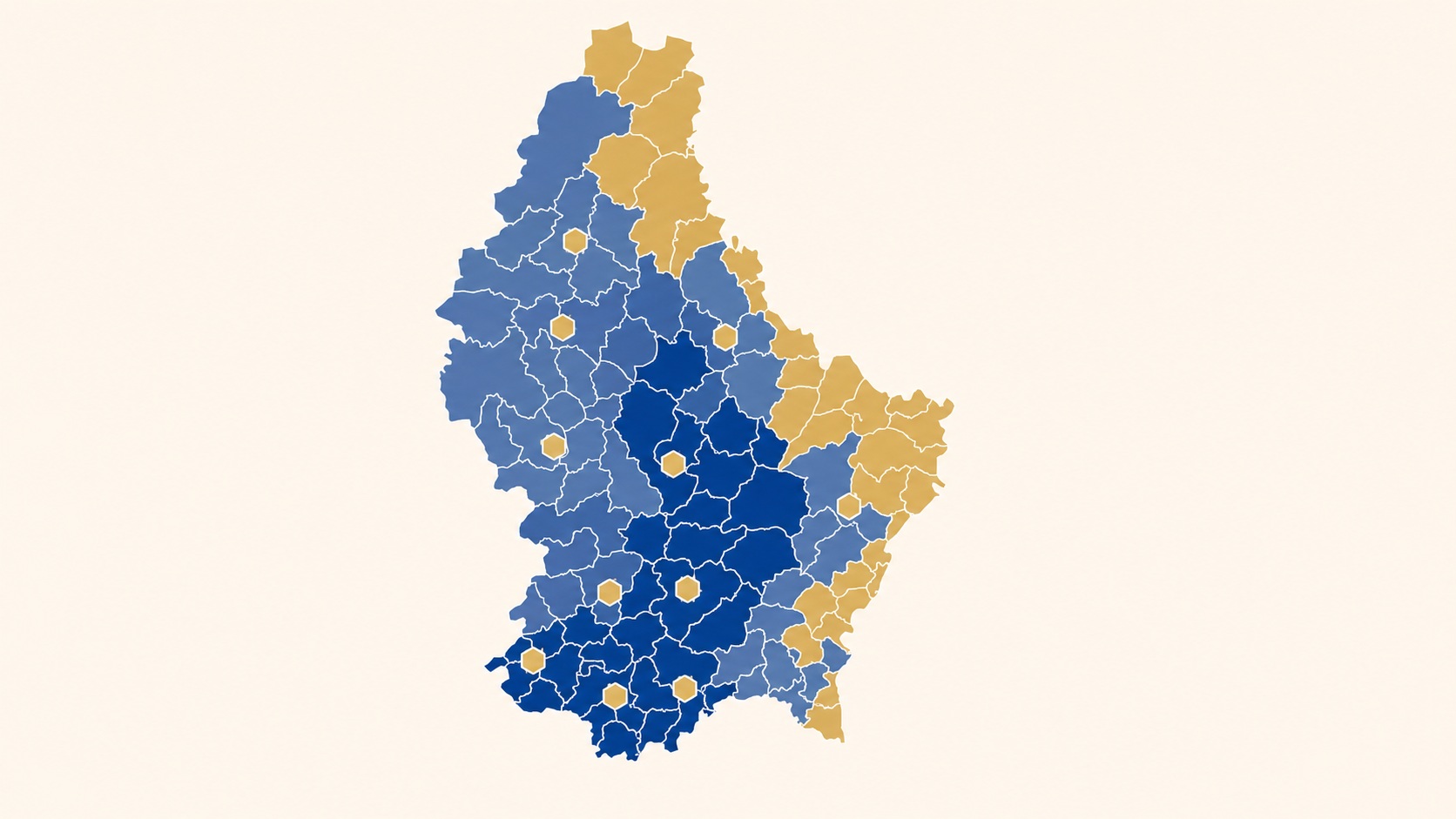
What this means for you: Before making any offer, determine which category your target property falls into. A property in Kirchberg that listed yesterday requires a completely different approach than a house in Ettelbruck that has been listed for four months.
When to Negotiate: Timing Strategies That Work
Timing is one of the most underestimated factors in property negotiation. Many buyers think negotiation starts when they make an offer. In reality, it starts long before that, and the when of your offer can matter as much as the how much. Let me share the timing strategies I use with my own clients.
Seasonal Timing
Luxembourg's property market has a clear seasonal rhythm, and understanding it gives you an edge. The busiest months are March through June and September through November. These are the periods when most properties come to market and when competition among buyers is highest. If you are trying to negotiate, buying during peak season means more competing offers and less seller motivation to discount.
The quieter months, December through February and July through August, are when I see the best negotiation outcomes. Properties that are listed during the summer holidays or the Christmas period are often listed by sellers who need to sell rather than sellers who are testing the market. A property that goes on the market in late November and is still listed in mid-January has a seller who is likely getting anxious. That anxiety is your leverage.
One client of mine, a Portuguese family relocating to Luxembourg for work, specifically waited until late January to make offers. They identified three properties they liked in Esch-sur-Alzette during the autumn, monitored them through December, and then made an offer on the one that had not sold by mid-January. They offered 7 percent below asking and ultimately settled at 5.5 percent below, saving them EUR 27,500 on a EUR 500,000 apartment. That saving came not from aggressive tactics but from patient timing.
Days on Market: The Most Powerful Indicator
If I could give you a single data point to guide your negotiation strategy, it would be this: how many days has the property been on the market? In Luxembourg in 2026, the average days on market for a successful sale varies by area:
| Area | Average Days on Market (2026) | Negotiation Signal |
|---|---|---|
| Luxembourg City (prime) | 25 - 40 days | Over 50 days = seller may be flexible |
| Luxembourg City (secondary) | 35 - 55 days | Over 70 days = strong leverage |
| South (Esch, Bettembourg) | 45 - 70 days | Over 90 days = significant leverage |
| North (Ettelbruck, Diekirch, Wiltz) | 60 - 100 days | Over 120 days = highly motivated seller |
| East (Echternach, Grevenmacher) | 55 - 85 days | Over 100 days = strong leverage |
When a property has been on the market significantly longer than the area average, it tells you one of three things: the price is too high, there is an issue with the property that is putting buyers off, or the seller's expectations are unrealistic. In all three cases, you have leverage. The seller is already aware that their property is not generating the interest they expected, and every additional week of carrying costs, mortgage payments, and maintenance chips away at their resistance to a lower offer.
Seller Motivation Events
Beyond seasonal timing and days on market, specific life events create negotiation windows that you should know how to recognise. Divorce, job relocation, inheritance, and financial difficulty are the four most common motivators for a quick sale in Luxembourg. I am not suggesting you exploit anyone's hardship. But understanding motivation helps you craft an offer that meets both parties' needs.
For example, an inherited property being sold by heirs who live abroad is one of the most negotiable scenarios in the Luxembourg market. The heirs typically want a clean, fast transaction. They may not have an emotional attachment to the property, and they may not know the current market value as well as a local owner would. In these situations, a fair but below-asking offer accompanied by a commitment to a quick closing timeline can be very attractive.
How do you identify seller motivation? Sometimes the listing itself gives clues: phrases like "available immediately," "price reduced," or "motivated seller" are obvious. But more often, the information comes through conversation between agents. This is one of the many reasons why working with a well-connected local agent makes a difference. I often learn about seller circumstances through my network before they become public knowledge, and I use that information ethically to help my clients make well-timed, well-calibrated offers.
What this means for you: Monitor properties for weeks before offering. Patience is not passivity; it is strategy. The longer a property sits, the more your leverage grows.
8 Proven Negotiation Strategies for the Luxembourg Market
Over the years, I have developed and refined a set of negotiation strategies that consistently produce results for my clients in Luxembourg. These are not generic tips from a real estate textbook. They are Luxembourg-specific tactics that account for the local market structure, the legal framework, the cultural norms, and the types of sellers you encounter here. Let me walk you through each one.

Strategy 1: Lead with Data, Not Emotion
The single most effective thing you can do in any property negotiation is anchor your offer in data. When you tell a seller or their agent, "I would like to pay less," that is a wish. When you tell them, "Comparable properties in this neighbourhood have sold at EUR 7,200 per square metre over the past six months, while this property is listed at EUR 8,100 per square metre, and here are three recent sales to prove it," that is a negotiation.
In Luxembourg, the data sources you need are the Observatoire de l'Habitat (which publishes quarterly price indices by commune), the Administration de l'Enregistrement (which records all notarised transactions), and current listings on atHome.lu, Immotop.lu, and agency websites. I compile this data for my clients before every offer, creating a comparable sales analysis that shows exactly where the asking price sits relative to recent transactions.
Let me give you a real example. Last year, a client of mine was interested in a two-bedroom apartment in Bonnevoie listed at EUR 625,000 (approximately EUR 8,330 per square metre for a 75-square-metre unit). I pulled six comparable sales from the previous nine months in the same neighbourhood. The average transaction price was EUR 7,850 per square metre. We presented this data alongside our offer of EUR 590,000 (EUR 7,867 per square metre), framing it not as a lowball bid but as a market-aligned offer. The seller countered at EUR 610,000, and we ultimately closed at EUR 602,000, saving my client EUR 23,000. The data did the heavy lifting.
For detailed price per square metre data across every area in Luxembourg, refer to my complete guide to property prices per square metre. That data becomes your most powerful negotiation tool.
Strategy 2: Get Pre-Approved Before You Negotiate
Nothing weakens your negotiating position faster than not having your financing confirmed. A seller who receives two offers, one from a buyer with a pre-approved mortgage and one from a buyer who still needs to "check with the bank," will almost always prefer the pre-approved buyer, even if that offer is slightly lower. Pre-approval signals seriousness, reduces the risk of the deal falling through, and allows for a faster closing timeline, all of which are valuable to sellers.
In Luxembourg, getting pre-approved typically takes one to two weeks with most banks. I recommend approaching at least two banks to compare terms. The banks you want to talk to are Spuerkeess (BCEE), BIL, BGL BNP Paribas, ING Luxembourg, and Raiffeisen. Each has slightly different criteria, and the rates can vary by 0.2 to 0.5 percentage points, which over a 25-year mortgage on a EUR 600,000 loan translates to a significant difference in total cost.
When you present your offer, include your pre-approval letter. I have seen this single document change the dynamic of a negotiation entirely. The seller and their agent immediately take you more seriously, and it removes one of their main objections to accepting a lower price: the fear that the deal will collapse at the financing stage.
Strategy 3: Use the Property's Weaknesses as Leverage
Every property has imperfections, and identifying them gives you concrete, defensible reasons to offer below asking price. In Luxembourg, the most common leverage points are:
Energy performance class: A property rated D, E, or below will require significant investment to meet increasingly strict energy regulations. In 2026, the cost of upgrading from an E-rated to a B-rated apartment can range from EUR 25,000 to EUR 60,000 depending on the scope of work. If the asking price does not reflect this future cost, you have a legitimate basis for a lower offer.
No parking space: In Luxembourg City, an interior parking space is valued at approximately EUR 40,000 to EUR 60,000. If the property you are buying lacks parking, that is a quantifiable disadvantage compared with similar properties that include it.
Ground floor or north-facing orientation: Properties on higher floors and with south or west-facing exposure consistently sell at a premium. Ground-floor apartments in Luxembourg typically sell at a 5 to 10 percent discount compared with equivalent units on upper floors in the same building.
Needed renovations: Kitchen and bathroom renovations in Luxembourg are expensive. A full kitchen renovation costs EUR 15,000 to EUR 35,000, and a bathroom EUR 8,000 to EUR 20,000. If these spaces are outdated, you can factor the renovation cost into your offer price. For a comprehensive look at these costs, see my guide to hidden costs when buying property in Luxembourg.
The key is to present these points factually, not as complaints. You are not saying "this apartment is terrible." You are saying "accounting for the EUR 35,000 energy upgrade and the EUR 40,000 parking deficit, the effective cost of this property at asking price is EUR 75,000 above comparable units. Our offer reflects these adjustments."
Strategy 4: Make a Strong but Fair First Offer
Your first offer sets the tone for the entire negotiation. Too low, and you insult the seller and risk them refusing to engage. Too high, and you leave money on the table. The sweet spot, in my experience, is an offer that is 5 to 8 percent below asking price in a balanced market, 3 to 5 percent below in a seller's market, and 8 to 12 percent below in a buyer's market or for properties that have been listed for a long time.
But the number alone is not enough. How you frame the offer matters enormously. I always advise my clients to accompany their offer with three things: a brief personal letter explaining why they want the property (sellers are human beings who care about who will live in their former home), the comparable sales data that justifies the offer, and evidence of financial readiness (pre-approval letter).
I had a client last autumn who was bidding on a three-bedroom house in Strassen listed at EUR 1,250,000. She was competing against two other buyers. Her offer was actually the second-highest at EUR 1,180,000. But she included a heartfelt letter about raising her two children in the neighbourhood and a detailed pre-approval showing she could close within six weeks. The seller accepted her offer over the higher one because he felt confident the deal would close and because, in his words, "she reminded me of my own family when we bought this house." Never underestimate the human element.
Strategy 5: Negotiate Extras, Not Just Price
When a seller is firm on price, shift the negotiation to what is included in the sale. In Luxembourg, the following items are commonly negotiable beyond the headline price:
Furniture and appliances: Built-in wardrobes, kitchen appliances, washing machines, and sometimes furniture can be included in the sale at no additional cost or at a fraction of their replacement value. I routinely negotiate EUR 3,000 to EUR 8,000 worth of inclusions on top of the price discount.
Parking spaces or storage units: In apartment buildings, parking spaces and cave (storage rooms) are often sold separately. If the seller owns a parking space valued at EUR 50,000, negotiating its inclusion at EUR 35,000 as part of the deal is effectively a EUR 15,000 saving.
Renovation credits: Instead of a lower price, you can ask the seller to credit you an agreed sum at closing to cover specific repairs or upgrades. This can sometimes be easier for a seller to accept psychologically because the headline sale price stays higher, which may matter for their ego or for their own mortgage situation.
Timeline flexibility: Offering the seller a longer or shorter occupancy period can have real value. A seller who needs three extra months to find their next home may accept a lower offer in exchange for a delayed closing. Conversely, a seller who needs to close quickly may accept less for the certainty of a fast timeline.
Strategy 6: Use the Compromis de Vente Strategically
The compromis de vente (preliminary sales agreement) is the binding contract between buyer and seller in Luxembourg, signed before the final acte notarie (notarial deed). What many buyers do not realise is that the negotiation does not end when you agree on a price. The terms of the compromis de vente are themselves negotiable and can significantly affect the total cost and risk of the transaction.
Key compromis de vente terms to negotiate include:
Suspensive conditions (conditions suspensives): These are clauses that allow you to withdraw from the deal without penalty if certain conditions are not met. The most common is a financing condition giving you 30 to 45 days to secure your mortgage. I always negotiate the longest possible period for my clients. If the bank needs more time, you want to have it contractually protected.
Deposit amount: The standard deposit in Luxembourg is 10 percent of the sale price, held in escrow by the notary. In some cases, you can negotiate this down to 5 percent, which preserves your cash flow during the transition period.
Completion timeline: The standard period between signing the compromis and the acte notarie is three to four months. You can negotiate a shorter or longer period depending on your needs and the seller's.
Defects and warranties: For resale properties, the compromis typically includes a clause about visible defects. You can negotiate additional protections, particularly regarding hidden defects (vices caches), which the seller is legally obliged to disclose but which can be a source of post-sale disputes if not properly addressed in the contract.
Understanding these terms and knowing how to use them strategically is where having a knowledgeable agent and a good notary makes all the difference. If you are not familiar with the buying process, read my step-by-step guide to buying property in Luxembourg before entering any negotiation.
Strategy 7: Create Competitive Pressure (Ethically)
One of the most effective negotiation tactics is letting the seller know, without being dishonest, that you have other options. In Luxembourg's market, this is often genuinely true. If you are looking at properties in a particular area and price range, you will likely be considering multiple options simultaneously. Mentioning this to the seller's agent is not manipulation; it is transparency that creates healthy urgency.
The way I frame this for my clients is: "We are interested in this property, and we are also considering two other apartments in the same area that are priced more competitively. We would prefer to buy this one because of [specific genuine reason], but the asking price would need to come closer to what the market data shows." This approach is honest, respectful, and effective. It tells the seller that you are a serious buyer with alternatives, which naturally motivates them to engage constructively with your offer.
Strategy 8: Know When to Walk Away
This is perhaps the most powerful strategy of all, and it is the one that requires the most discipline. Before you enter any negotiation, set your absolute maximum price. Write it down. Tell your agent. And if the negotiation reaches a point where the seller will not meet you within your range, be prepared to walk away.
Walking away is difficult because by the time you are negotiating, you have likely invested weeks of searching, multiple viewings, emotional attachment, and mental energy into this specific property. But I have seen too many clients overpay by EUR 20,000 to EUR 50,000 because they could not bring themselves to walk away. In Luxembourg, where properties in any given segment come to market regularly, there will always be another opportunity.
I will also tell you a secret from the other side of the table: some of the best deals I have secured for clients came after they walked away. The seller called back two weeks later, ready to accept the original offer. Walking away, when done calmly and professionally, is the ultimate signal that you are not desperate. And desperation is the enemy of good negotiation.
Want Me to Negotiate Your Next Property Purchase?
I use these exact strategies every day to save my clients thousands of euros. Whether you have already found a property or you are just starting your search, I can help you negotiate the best possible deal. Contact me for a free, no-obligation consultation.
WhatsApp Daniela Free Property ConsultationWhat NOT to Do When Negotiating Property in Luxembourg
Knowing what to do is only half the equation. Knowing what NOT to do is equally important, and I see the same mistakes repeated over and over, especially by expat buyers who are new to the Luxembourg market. Here are the errors that cost buyers money, deals, or both.
Mistake 1: Lowballing Without Justification
Offering 15 or 20 percent below asking price without any data or rationale to support it is the fastest way to kill a negotiation before it starts. In Luxembourg, where the real estate community is small and agents talk to each other, developing a reputation as an unreasonable buyer can actually harm your future negotiations. Sellers and their agents will take your offers less seriously if word gets around that you waste people's time with unsupported lowball bids.
There is a difference between a bold but justified offer (8 percent below asking with comparable sales data and a clear rationale) and a lowball (15 percent below asking because "you never know"). The first earns respect and starts a conversation. The second earns a rejected call and a closed door.
Mistake 2: Revealing Your Maximum Budget
Never, under any circumstances, tell the seller or their agent what your maximum budget is. I am astonished at how often buyers volunteer this information during viewings. "We have been approved for up to EUR 700,000" is effectively telling the seller that you are willing to pay EUR 700,000. Your pre-approval letter should confirm that you are financially qualified, but it does not need to state your maximum amount. I advise my clients to keep this number between themselves and their own agent.
Mistake 3: Negotiating Without a Condition Suspensive
Some buyers, eager to make their offer more attractive, waive the financing condition (condition suspensive) in the compromis de vente. This is extremely risky. If your mortgage is subsequently refused, you lose your deposit, typically 10 percent of the purchase price. On a EUR 600,000 property, that is EUR 60,000 gone. I have seen this happen, and it is devastating. Unless you are a cash buyer, always include a financing condition. A good negotiation gets you a better price; a reckless one can cost you everything.
Mistake 4: Ignoring the Total Cost of Ownership
Negotiating the purchase price down by EUR 15,000 feels like a win. But if you overlook the fact that the property has EUR 400 per month in common charges, a D-rated energy certificate that will cost EUR 40,000 to upgrade, and no parking (forcing you to rent a space at EUR 200 per month), your "savings" evaporate quickly. Always negotiate with total cost of ownership in mind, not just the headline price. For a full breakdown of these costs, see my guide to hidden costs when buying property in Luxembourg.
Mistake 5: Being Rude or Adversarial
Luxembourg is a small country. The real estate market is even smaller. Being rude, aggressive, or dishonest during a negotiation burns bridges that may matter later. I have had situations where a seller rejected a fair offer simply because the buyer was arrogant during viewings. Conversely, I have seen sellers accept slightly lower offers from buyers they liked and trusted. Professionalism and respect cost nothing and can save you thousands.
Mistake 6: Trying to Negotiate a Hot Property
If a well-priced property in Limpertsberg has received four offers within its first week on the market, submitting a lowball offer "to see what happens" will get you nowhere. In competitive situations, you need to recognise that the best strategy may be to offer at or near asking price, compete on terms (faster closing, fewer conditions), or accept that this particular property is not the one where you will negotiate a discount. There are always other opportunities where your negotiation skills will have more impact.
What this means for you: Approach every negotiation as a professional conversation, not a battle. Your goal is a fair deal that both sides feel good about, not a "win" that leaves the seller resentful and potentially uncooperative during the closing process.
Understanding Seller Psychology in Luxembourg
To negotiate effectively, you need to understand what is going on in the seller's mind. Luxembourg sellers are not a monolithic group, they have different motivations, emotional attachments, financial situations, and expectations. Understanding these psychology patterns helps you calibrate your approach for maximum effectiveness.
The Emotionally Attached Owner
This is the most common seller type in Luxembourg, particularly for houses and apartments that have been owner-occupied for many years. These sellers have raised families in the property, renovated it with their own hands, and formed deep emotional connections to the space. They often overprice their property by 5 to 15 percent because their emotional valuation exceeds the market valuation.
With emotionally attached sellers, aggressive negotiation backfires. They will reject a lowball offer not because it is financially irrational but because it feels like an insult to their home and, by extension, to their life. The correct approach is empathy combined with data. Acknowledge the quality of their home. Compliment specific features genuinely. Then present your offer as a fair reflection of current market conditions, not as a judgment of their property's worth.
I once helped a client buy a beautiful maison de maitre in Mersch from an elderly couple who had lived there for 40 years. Their asking price was approximately 12 percent above market. My client's first instinct was to offer 15 percent below. I advised a different approach: we visited twice, took time to hear the couple's stories about the house, wrote a personal letter explaining my client's plans to preserve the garden and the period features, and then offered 7 percent below asking with the data to support it. The couple countered at 4 percent below, and we closed there. Was it the lowest possible price? Maybe not. But it was a smooth transaction with cooperative sellers who left the property in excellent condition and even left behind the antique light fixtures as a gift.
The Investor Seller
Investor sellers are purely numbers-driven. They bought the property as an investment, and they will sell it when the numbers make sense. With these sellers, emotional appeals are irrelevant. What matters is speed, certainty, and a clean transaction. Investor sellers often have multiple properties and are experienced negotiators themselves. They respect buyers who come prepared with data and a clear, professional offer.
With investor sellers, your strongest tools are comparable sales data, a pre-approved mortgage, and a willingness to close quickly. They calculate their return on investment to the decimal point, and they will accept a lower price if it means closing two months sooner, because time is money in their calculation.
The Forced Seller
Divorce, job loss, inheritance disputes, debt, relocation. These are the situations that create forced sellers, and forced sellers are the most negotiable. They need to sell, not just want to sell. Their timeline is often fixed by external factors (a court order, a job start date, a loan repayment deadline), and they will prioritise certainty of sale over price optimisation.
With forced sellers, the ethical approach is to make a fair offer that acknowledges their situation without exploiting it. Offering 15 percent below market to someone going through a divorce is not negotiation; it is predatory. But offering 5 to 7 percent below asking with a fast, clean, condition-light deal is genuinely helpful to someone who needs certainty. In my experience, forced sellers who feel fairly treated become some of the most cooperative parties in the transaction process.
The Testing-the-Market Seller
This seller is not really committed to selling. They have listed their property to see what offers come in, often at a premium price. If they get their aspirational price, they will sell. If not, they will happily stay put. These sellers are the hardest to negotiate with because they have no pressure to accept anything below their target.
My advice with testing-the-market sellers: do not waste your time and emotional energy. Make one well-justified offer. If they reject it and will not counter, move on. These sellers often come back to market six to twelve months later, sometimes at a lower price, after reality has adjusted their expectations.
What this means for you: Before making an offer, spend time understanding who you are negotiating with. Ask your agent about the seller's circumstances. The same offer, presented differently to different seller types, can yield completely different outcomes.
The Negotiation Timeline: From First Offer to Compromis de Vente
Understanding the typical timeline of a property negotiation in Luxembourg helps you plan your strategy and manage your expectations. Here is what the process looks like from the moment you decide to make an offer to the moment you sign the compromis de vente.
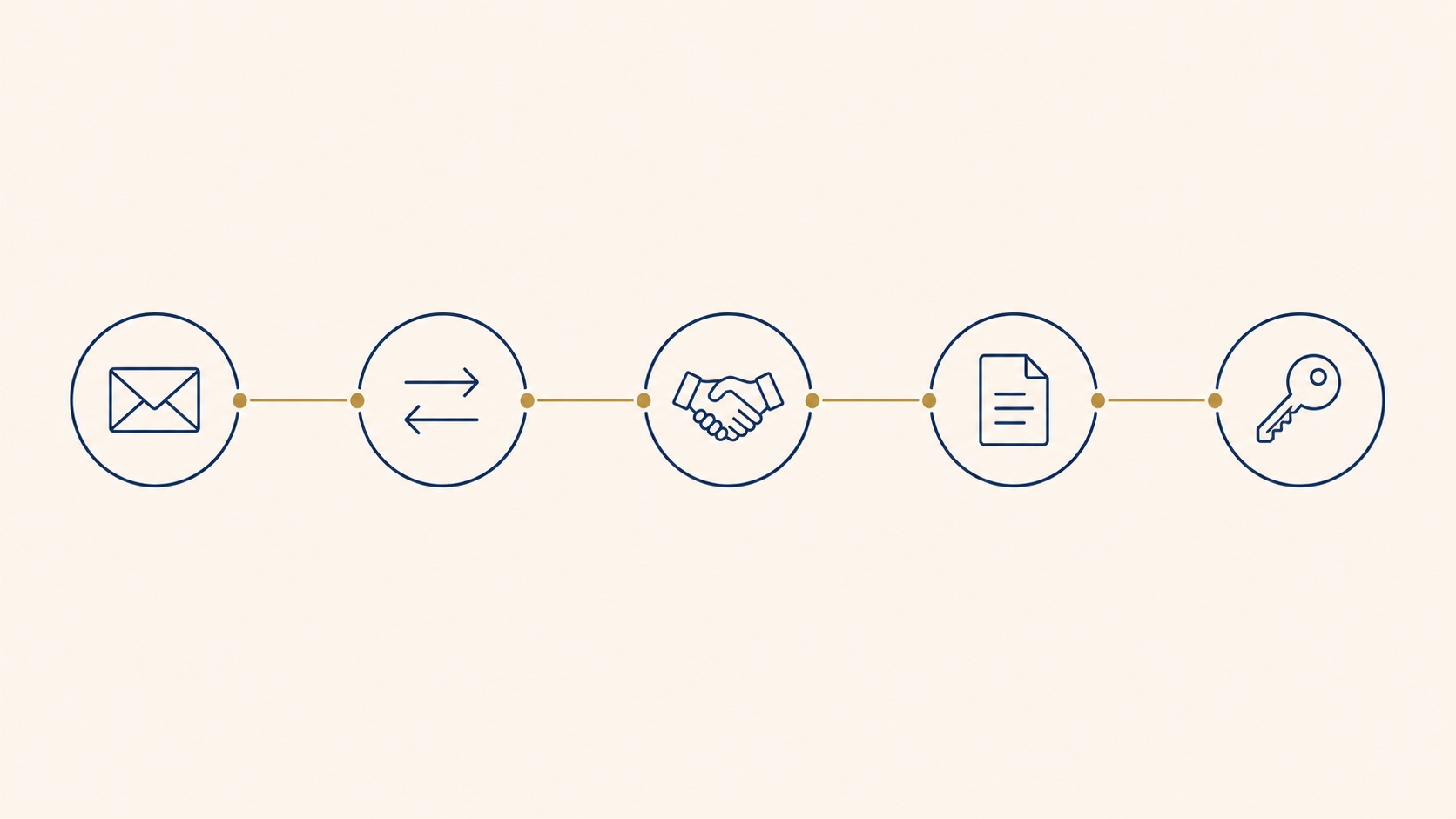
Week 1: Preparation (Before the Offer)
This is the most important phase, and most buyers skip it entirely. Before you make any offer, you should have completed the following: gathered comparable sales data for the area, checked the property's days on market, researched the seller's circumstances (through your agent), obtained mortgage pre-approval, identified the property's weaknesses and quantified their cost, and set your walk-away price.
In my practice, I spend two to three days on this preparation for each client before we submit any offer. The investment in preparation pays for itself many times over in negotiation outcomes.
Week 2: The First Offer
Your first offer should be submitted in writing, either through your agent to the seller's agent or, in the case of a direct sale, through a formal offer letter. In Luxembourg, verbal offers are common but carry no legal weight. I always recommend a written offer because it demonstrates seriousness and creates a paper trail.
The offer should specify: the proposed purchase price, the key conditions (financing, timeline), what is included (parking, storage, furniture), your financing status, and your preferred timeline for the compromis de vente. Attach your pre-approval letter and, if you have one, a brief personal letter to the seller.
Week 2-3: Counter-Offers and Negotiation
Most sellers in Luxembourg do not accept the first offer, and most do not reject it outright either. The typical response is a counter-offer, and there may be two to three rounds of counter-offers before you reach agreement or decide to part ways. In my experience, the average negotiation involves 2.5 rounds of offers and counter-offers and takes 10 to 18 days from first offer to verbal agreement.
During this phase, patience is your ally. Do not rush to accept a counter-offer immediately. Take 24 to 48 hours to consider each counter. This signals that you are deliberate and not desperate, and it gives you time to reconsider your strategy at each stage.
Week 3-4: Verbal Agreement and Compromis Preparation
Once you and the seller agree on terms verbally, both parties instruct their notaries (in Luxembourg, buyer and seller each typically choose their own notary) to prepare the compromis de vente. This document codifies the agreed price, conditions, timeline, and all other terms. Reviewing the compromis is a critical step. I always recommend that my clients read every clause carefully and ask their notary to explain anything they do not understand.
The compromis preparation typically takes one to two weeks. During this time, do not assume the deal is done. Until the compromis is signed by both parties, the seller is free to accept a higher offer from another buyer. This is why speed matters once you have a verbal agreement. Push for the compromis to be drafted and signed as quickly as possible.
Week 4-5: Compromis de Vente Signing
The signing of the compromis de vente is the moment the deal becomes binding. From this point, both buyer and seller are legally committed (subject to any suspensive conditions). The standard deposit of 10 percent is paid into the notary's escrow account. The financing condition clock starts ticking (typically 30 to 45 days).
After the compromis is signed, the final step is the acte notarie, usually three to four months later, when the property formally changes hands and you receive the keys. For a complete walkthrough of this process, see my step-by-step buying guide for Luxembourg.
| Phase | Typical Duration | Key Actions |
|---|---|---|
| Preparation | 3 - 7 days | Gather data, pre-approval, identify property weaknesses, set walk-away price |
| First offer | 1 - 2 days | Submit written offer with data, pre-approval, personal letter |
| Counter-offers | 10 - 18 days | 2-3 rounds of negotiation, 24-48 hours between each round |
| Compromis preparation | 7 - 14 days | Notaries draft document, review all clauses, negotiate terms |
| Compromis signing | 1 - 3 days | Sign, pay 10% deposit, financing condition begins |
| Total: offer to binding contract | 3 - 6 weeks | Varies by seller responsiveness and complexity |
How a Local Agent Strengthens Your Negotiating Position
I am going to be direct here: hiring a good local agent is the single most impactful thing you can do to improve your negotiation outcome. And I say this not just because I am an agent, but because I have seen the difference it makes from both sides of the table.
Here is what a knowledgeable local agent brings to your negotiation that you cannot replicate on your own:
Market intelligence: I know what properties in every neighbourhood have actually sold for, not just what they were listed at. Listing prices and transaction prices are often very different, and the gap between them is precisely the information you need to calibrate your offer. This data comes from years of transactions, relationships with notaries, and access to professional databases that buyers cannot access directly.
Agent-to-agent relationships: In Luxembourg, the agent representing the seller and the agent representing the buyer often have a professional relationship. This relationship is enormously valuable in negotiation because it allows for informal conversations about price expectations, seller flexibility, and competing offers that would never happen in a direct buyer-to-seller interaction. When I call a colleague and say, "My client is serious, pre-approved, and ready to move. What does your seller really need?" I get information that no buyer would ever get on their own.
Emotional buffer: Negotiation is emotional, especially when you are buying the home where you plan to raise your family or build your future. An agent acts as a buffer between your emotions and the negotiation process. When a counter-offer comes back higher than you hoped, I can advise you calmly and strategically because I am not the one who has been dreaming about that kitchen or that garden. This emotional distance leads to better decisions.
Multilingual advantage: Luxembourg's property market operates in French, Luxembourgish, German, and English. Many listings, legal documents, and seller interactions happen in French. As someone who works fluently across all four languages, I ensure that nothing is lost in translation, literally or figuratively, during your negotiation.
Negotiation experience: I negotiate property deals regularly. Most buyers negotiate a property purchase once or twice in their lifetime. The experience gap is enormous. I have encountered every seller type, every objection, every tactic, and every scenario. This experience allows me to anticipate the seller's moves and respond strategically rather than reactively.
Let me share one more client story that illustrates this. A British couple relocating to Luxembourg were interested in a three-bedroom apartment in Gasperich listed at EUR 785,000. They had been trying to negotiate directly with the seller's agent and had gotten nowhere, stuck at a counter-offer of EUR 770,000 when they wanted to pay EUR 740,000. They came to me frustrated. I reviewed the listing, pulled comparable sales showing a fair value of EUR 720,000 to EUR 745,000, and discovered through my network that the seller had already purchased a new property and needed to close within eight weeks. I contacted the seller's agent, presented the data, emphasised my clients' pre-approval and willingness to close within six weeks, and offered EUR 735,000. We closed at EUR 742,000, saving my clients EUR 43,000 compared with the asking price and EUR 28,000 compared with what they had been stuck at negotiating on their own.
Ready to Negotiate with an Expert on Your Side?
Do not leave thousands of euros on the table. Whether you have already found a property or you are just starting to look, I will make sure you get the best possible deal in the Luxembourg market. Reach out today for a free consultation.
WhatsApp Daniela Free ConsultationReal Client Stories: Successful Negotiations in Luxembourg
Numbers and strategies are useful, but real stories bring them to life. Here are four anonymised but genuine negotiation outcomes from my recent client work, each illustrating a different strategy in action.
Case 1: The Patient Buyer in Esch-sur-Alzette
My client, a single professional from Italy working in the financial sector, was looking for a two-bedroom apartment in Esch-sur-Alzette with a budget of EUR 480,000. She identified a 78-square-metre apartment listed at EUR 510,000 (EUR 6,538/sqm). The property had been on the market for 67 days, well above the area average of 45 to 70 days. The energy rating was D, and the kitchen was original from 2008.
Strategy used: Data-driven offer combined with weakness identification. We calculated the cost of an energy upgrade (approximately EUR 30,000) and a kitchen renovation (approximately EUR 18,000), gathered three comparable sales at EUR 5,900 to EUR 6,200/sqm, and submitted an offer of EUR 465,000 (EUR 5,962/sqm) with a detailed justification document.
Outcome: After two rounds of counter-offers over 14 days, we closed at EUR 478,000, a discount of EUR 32,000 (6.3 percent) from asking price. My client spent EUR 25,000 on the kitchen renovation and now has a property worth approximately EUR 510,000 on the open market with the updated kitchen and improved energy performance plan.
Case 2: The Family in Strassen
A Luxembourg-based family with two children was upgrading from an apartment to a house. They found a four-bedroom semi-detached house in Strassen listed at EUR 1,380,000. The property was beautifully maintained but the sellers, a retired couple, were emotionally attached and had been on the market for only three weeks.
Strategy used: Empathy-first approach with strong personal presentation. Rather than leading with a discount, we led with a personal letter from the family, including a mention of their children and their plans for the garden. The offer was EUR 1,310,000 (5.1 percent below asking), presented alongside a pre-approval letter showing same-day financing capability.
Outcome: The sellers counter-offered at EUR 1,355,000. We came back at EUR 1,330,000 with a commitment to maintain the rose garden the wife had cultivated for 25 years. They accepted. The family saved EUR 50,000 from asking price, and the sellers left happy, knowing their home was going to a family that would cherish it.
Case 3: The Investor in Bonnevoie
An experienced buy-to-let investor wanted a one-bedroom apartment in Bonnevoie for rental yield. He identified a 52-square-metre apartment listed at EUR 430,000 (EUR 8,269/sqm). The property was being sold by another investor who owned four units in the same building. The apartment had been on the market for 41 days.
Strategy used: Speed and certainty. We made a cash offer of EUR 398,000 (7.4 percent below asking) with no financing condition, a two-week closing commitment, and the offer to buy a second unit in the same building at a portfolio discount if the first deal went through. The investor seller, focused on numbers and speed, responded immediately.
Outcome: Closed at EUR 405,000 on the first apartment (5.8 percent discount) and subsequently purchased the second apartment at EUR 395,000 (from an asking price of EUR 425,000). Total savings across both properties: EUR 55,000.
Case 4: The Expat Who Almost Overpaid
An American couple, new to Luxembourg and unfamiliar with the market, had fallen in love with a three-bedroom apartment in Limpertsberg listed at EUR 920,000. They were ready to offer asking price because, by their US standards, the property seemed reasonably priced. They came to me for a second opinion before making the offer.
Strategy used: Market reality check plus data-driven counter-strategy. I showed them that comparable apartments in Limpertsberg had transacted at EUR 9,400 to EUR 10,200/sqm over the past six months. At 88 square metres, the asking price equated to EUR 10,455/sqm, at the very top of the range. I recommended an offer of EUR 870,000 (EUR 9,886/sqm), positioning them in the middle of the comparable range.
Outcome: After negotiation, they purchased at EUR 885,000, saving EUR 35,000 from what they would have paid without professional guidance. More importantly, they did not overpay in a market they did not yet understand. They have since referred two colleagues to me, both of whom I have helped purchase properties in Luxembourg.
Negotiation Margins by Property Type
Not all properties are equally negotiable. The type of property you are buying significantly affects how much room there is to negotiate. Here is a breakdown based on what I see in the Luxembourg market in 2026.
| Property Type | Typical Negotiation Margin | Why | Best Strategy |
|---|---|---|---|
| New-build apartment (off-plan) | 1 - 3% | Developers set fixed price lists; margins are thin | Negotiate extras: upgraded finishes, parking, storage, furniture package |
| New-build apartment (completed, unsold) | 3 - 6% | Developer carrying costs create pressure to sell remaining units | Offer quick closing; buy last remaining units for bulk discount |
| Resale apartment (under 5 years old) | 3 - 5% | Modern condition limits weakness arguments; seller may still owe mortgage | Use comparable new-build prices as ceiling; highlight any emerging maintenance |
| Resale apartment (10+ years old) | 5 - 8% | Energy upgrades, renovation needs, and dated interiors create leverage | Quantify all renovation costs and present as part of offer justification |
| Detached house | 5 - 10% | Higher price points mean fewer buyers; unique properties are harder to price | Commission an independent valuation; use unique defects as leverage |
| Semi-detached / terraced house | 4 - 7% | More comparables available; mid-range price point has more buyers | Use direct comparable sales from the same street or development |
| Land plots | 3 - 8% | Scarce supply but high holding costs for sellers; zoning complexities | Research zoning restrictions; use buildability limitations as leverage |
The most important insight from this table is that resale properties, especially older ones, offer the most negotiation room. This is because they have quantifiable imperfections that give you concrete reasons to offer below asking. New-build properties, by contrast, are harder to negotiate on price but offer significant scope for negotiating extras that can be worth thousands of euros. For a broader understanding of how pricing works across all these categories, see my complete guide to property prices per square metre in Luxembourg.
Frequently Asked Questions About Negotiating Property Prices in Luxembourg
1. How much can I realistically negotiate off the asking price in Luxembourg?
In 2026, the realistic negotiation range is 3 to 8 percent off the asking price, depending on the area, property type, days on market, and seller motivation. In prime Luxembourg City neighbourhoods with low inventory, expect 1 to 3 percent. In secondary towns and for older properties that have been listed for 90 or more days, 5 to 8 percent is realistic. In exceptional circumstances (distressed sellers, properties with significant issues), discounts of 10 percent or more are possible but uncommon.
2. Is it normal to negotiate property prices in Luxembourg, or is it considered rude?
Negotiation is completely normal and expected in the Luxembourg property market. Sellers and their agents anticipate receiving offers below asking price, and most listing prices include a small negotiation buffer (typically 3 to 5 percent above the seller's true target price). The key is to negotiate respectfully and with data to support your position. What is considered rude is submitting an unreasonably low offer without any justification. As long as your offer is within a reasonable range and accompanied by a clear rationale, negotiation is a standard and respected part of the process.
3. Should I negotiate directly with the seller or use an agent?
I strongly recommend using an experienced local agent. Direct negotiation puts you at a disadvantage in several ways: you lack access to comparable transaction data, you miss out on agent-to-agent intelligence about the seller's circumstances, you bear the full emotional weight of the negotiation, and you may miss technical details in the compromis de vente that could cost you money. An agent's commission is typically paid by the seller in Luxembourg, so as a buyer, you receive professional representation at no direct cost. There is simply no rational reason to negotiate alone.
4. What happens if my offer is rejected? Can I make another one?
Yes, absolutely. A rejected offer is not the end of the conversation. In Luxembourg, it is common for there to be two to three rounds of offers and counter-offers before reaching agreement. If your first offer is rejected, ask the seller's agent for feedback on why, and whether the seller would be willing to counter. If the seller counter-offers, you can accept, reject, or make a revised offer of your own. The only scenario where a rejected offer truly ends the conversation is if the seller explicitly states they will not negotiate further and will not counter. Even then, you can reach out again after a few weeks if the property has not sold.
5. Can I negotiate the price of a new-build apartment from a developer?
Price negotiation on new-build apartments is limited because developers set price lists based on construction costs and margin targets. However, you can negotiate on extras, which can be equally valuable: upgraded kitchen appliances (worth EUR 3,000 to EUR 8,000), higher-quality flooring or bathroom finishes, inclusion of a parking space or storage unit, furniture packages, or delayed payment schedules. Developers are most flexible when they have unsold units in a nearly completed or completed project, because each unsold unit represents carrying costs and investor pressure. In these cases, discounts of 3 to 6 percent on the headline price may also be achievable.
6. How do I know if a property is overpriced before I start negotiating?
The most reliable method is to compare the property's asking price per square metre with recent transaction prices (not listing prices) for comparable properties in the same area. You can find aggregate data through the Observatoire de l'Habitat and the STATEC housing price index. For property-level comparisons, you need an agent with access to professional databases and transaction records. I provide this analysis free of charge for all my clients. Other red flags that suggest overpricing include: the property has been on the market significantly longer than the area average, the price has been reduced one or more times since listing, there is no energy performance certificate displayed (suggesting the seller may be hiding a poor rating), and the listing photos are professional but the property description lacks specific details about condition or recent upgrades. For detailed price benchmarks by area, consult my property prices per square metre guide.
Conclusion: Negotiation Is a Skill, and It Pays Off
If there is one thing I want you to take away from this guide, it is this: negotiation in the Luxembourg property market is not about being aggressive or clever. It is about being prepared, patient, and professional. The buyers who save the most money are not the ones who ask for the biggest discounts. They are the ones who do their homework, understand the market conditions, respect the seller's position, and present well-justified offers at the right time.
In my experience helping hundreds of clients buy property across Luxembourg, the average negotiation saving is between EUR 20,000 and EUR 50,000. That is not a trivial amount. It is a year's worth of mortgage payments, a complete kitchen renovation, or a significant contribution to your children's education fund. And it is money that stays in your pocket simply because you approached the process strategically rather than emotionally.
Let me leave you with my three golden rules of property negotiation in Luxembourg:
First, always lead with data. Comparable sales, price per square metre analysis, days on market, energy class, and renovation costs. Data transforms a negotiation from a battle of wills into a professional conversation about fair value.
Second, understand who you are negotiating with. A retired couple selling their family home of 30 years requires a fundamentally different approach than an investor liquidating a portfolio property. Read the situation before you make the offer.
Third, know your limits and be willing to walk away. The most powerful position in any negotiation is genuine willingness to say no. There will always be another property. There will not always be another EUR 30,000.
If you are preparing to buy property in Luxembourg and want an expert negotiator in your corner, I would be happy to help. Whether you have already found a property and need help crafting the right offer, or you are just beginning your search and want guidance from the start, my goal is always the same: to help you get the best possible property at the best possible price.
Let Me Help You Negotiate Your Luxembourg Property Purchase
From market analysis to offer strategy to compromis de vente review, I handle every aspect of the negotiation process so you can focus on finding the right home. Start with a free, no-obligation conversation.
WhatsApp Daniela Free Property Consultation Search PropertiesFurther Reading
Explore more expert guides to strengthen your position in the Luxembourg property market:
- Is 2026 a Good Time to Buy Property in Luxembourg? Complete Market Analysis
- Best Areas to Buy Property in Luxembourg in 2026
- Buying Property in Luxembourg: Step-by-Step Guide
- Hidden Costs When Buying Property in Luxembourg
- Luxembourg Property Prices per Square Metre by Area (2026 Update)
- Mortgage Guide Luxembourg 2026: Rates, Banks, and Strategies