When I moved to Luxembourg over a decade ago, I remember the overwhelming mix of excitement and confusion that comes with searching for a home in a country you do not fully know yet. The language you hear on the street shifts every few hundred metres — Luxembourgish in the bakery, French in the supermarket, Portuguese at the construction site, English in the office tower. The school system has tracks you have never heard of. The commune you have been told is "close to everything" turns out to be a 45-minute bus ride from your office during rush hour. I went through all of it myself, and that experience is exactly why I built a practice that specialises in helping expats navigate Luxembourg's property market. In 2026, roughly 47 percent of Luxembourg's population is foreign-born. That is not a footnote — it is the defining characteristic of the housing market. And yet, the vast majority of property guides written about Luxembourg treat every buyer as though they have lived here for 30 years. This one does not.
This guide is written specifically for you: the expat professional, the trailing spouse, the family that just received a relocation package, or the couple who have been renting in Kirchberg for three years and are finally ready to buy. I will walk you through the six best areas in Luxembourg for expats to buy property in 2026, with detailed analysis of each neighbourhood's expat community, international school access, public transport connections, English-language services, and price ranges. You will find data tables, commute analyses, real client stories, and practical tips that I have developed through years of helping people just like you find the right home in this remarkable country.
If you want the broader market context before we dive into area-specific analysis, I recommend reading our complete guide to the best areas to buy property in Luxembourg in 2026. For a step-by-step walkthrough of the entire purchase process — from first search to notary signing — see our buying process guide. Otherwise, let us get straight into what matters most when you are an expat choosing where to put down roots.
Why Expat Property Needs Are Fundamentally Different from Local Buyer Needs
Before we look at specific areas, I want to address something that most property guides get wrong: the assumption that all buyers want the same things. In my experience helping hundreds of expat families buy property in Luxembourg, the priorities of an international buyer are systematically different from those of a Luxembourgish buyer, and understanding those differences is the key to making the right area choice.
A local Luxembourgish buyer typically grew up here, speaks the three national languages fluently, has children enrolled in the public school system, and has extended family nearby. Their search is shaped by proximity to parents, familiarity with specific communes, and an intuitive understanding of which villages are "desirable" and which are not. They do not need to worry about finding an English-speaking doctor, and they know exactly which bus route gets them to work.
An expat buyer faces a completely different reality. Here are the factors that I see drive the area decision for most of my international clients:
International school proximity. This is the number one factor for expat families with children. Luxembourg has outstanding international schools — the European School Luxembourg I and II, the International School of Luxembourg (ISL), St George's International School, the Lycee Michel Lucius international track, and several others. But these schools are not evenly distributed across the country. They cluster in specific areas, and proximity to the right school often determines the entire property search.
English-language accessibility. While Luxembourg is officially trilingual (Luxembourgish, French, German), English has become the de facto working language in the financial sector, EU institutions, and many multinational companies. However, daily life — shopping, dealing with the commune, navigating healthcare — still runs largely in French or Luxembourgish in many areas. Expats who do not speak French fluently tend to be much happier in areas where English is widely spoken in shops, restaurants, and by neighbours.
Commute to major employment hubs. The three largest concentrations of expat employers in Luxembourg are Kirchberg (EU institutions, major banks, Big Four firms), Cloche d'Or/Gasperich (PWC, Deloitte, Amazon, many corporate headquarters), and the city centre/Gare area (financial services, government). An expat's commute to one of these three hubs fundamentally shapes which areas make sense.
Community and social integration. Moving to a new country is isolating. The areas that work best for expats are those with established international communities, English-language social clubs, international parent networks, and a general openness to newcomers. A beautiful village in the north might offer incredible value, but if you are the only English-speaking family in a commune of 2,000, the social isolation can be difficult.
Resale liquidity to an international buyer pool. Many expats are not certain they will stay in Luxembourg permanently. Their property purchase needs to account for the possibility that they will sell in five to seven years. Areas with large expat populations tend to have more liquid resale markets for international buyers, which provides an important safety net.
What this means for you: Do not choose your area based solely on price per square metre. A neighbourhood that scores well on all five expat factors will deliver a better quality of life and a safer investment than a cheaper area that scores poorly on three of them.
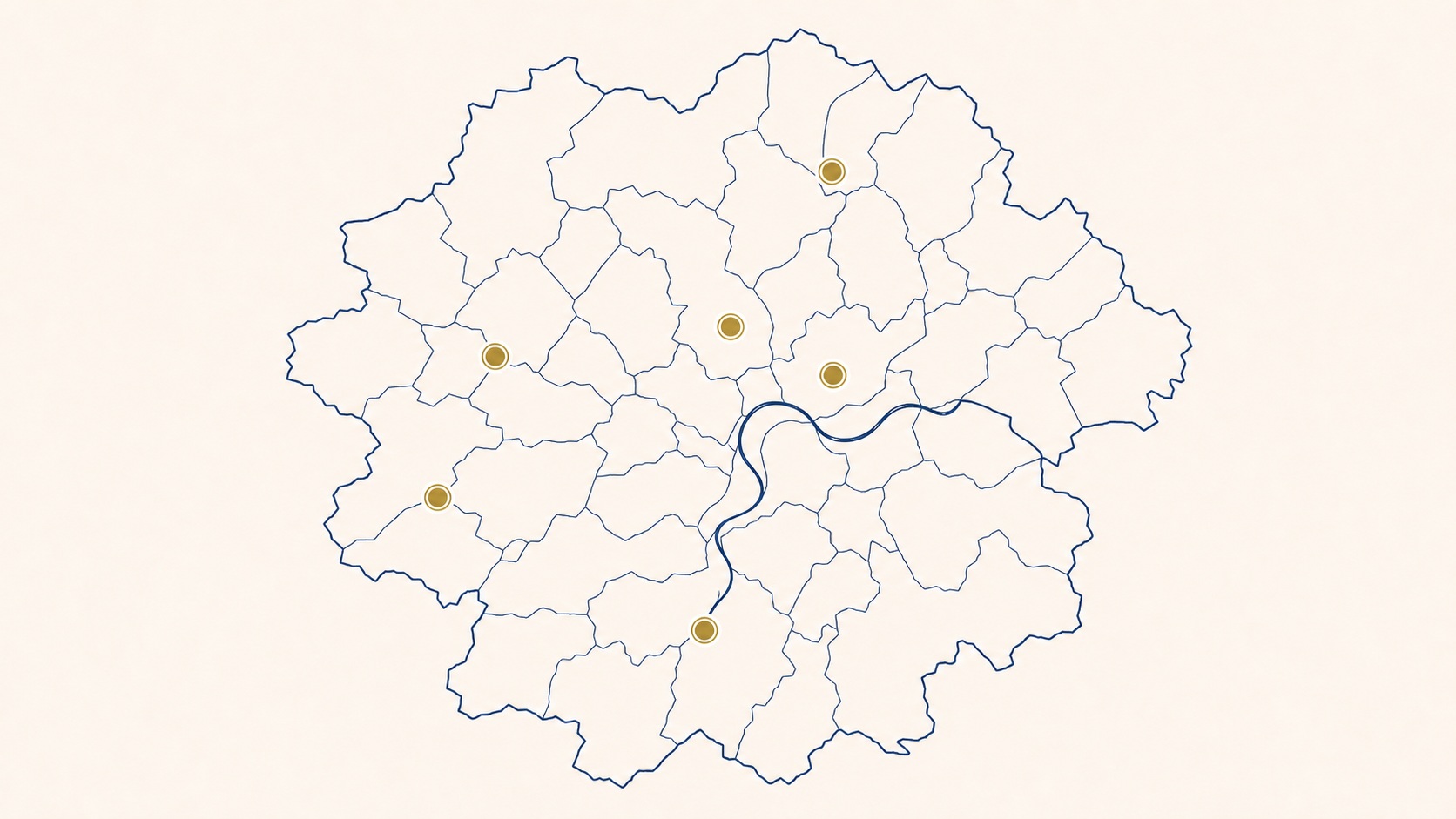
The Top 6 Areas for Expats to Buy Property in Luxembourg in 2026
Based on my work with expat clients over the past decade, these are the six areas I recommend most frequently — and the reasons differ for each. I have ordered them not by price or prestige, but by the breadth of expat needs they serve. Let us go through each one in detail.
1. Belair — Premium Central Living for International Professionals
If I had to choose a single neighbourhood that best represents the expat property experience in Luxembourg, it would be Belair. This is the neighbourhood where diplomats, senior EU officials, international lawyers, and financial executives have been buying and renting for decades. Walking through Belair on a weekday morning, you will hear English, French, and a half-dozen other languages in the space of a single street. It is, in every sense, Luxembourg's most cosmopolitan residential quarter.
Why expats love Belair. The neighbourhood is quiet, green, and elegant — tree-lined avenues, well-maintained period buildings, embassy residences, and a handful of excellent independent restaurants and shops along the Rue de Belair. The Parc de Merl is a genuine oasis within walking distance, and the city centre is a 10-minute walk. For parents, Belair's proximity to both the International School of Luxembourg (ISL) in Merl — a five-minute drive — and the European School Luxembourg I on Boulevard Konrad Adenauer makes it the natural home for international families.
Price range. Belair is among the most expensive neighbourhoods in Luxembourg. In Q1 2026, apartments in Belair range from EUR 10,500 to 12,000 per square metre. A two-bedroom apartment of 80 square metres will cost between EUR 840,000 and EUR 960,000. Houses are rare and start above EUR 2 million. For a detailed breakdown of price per square metre across all Luxembourg neighbourhoods, see our complete price guide.
Expat community. Belair has one of the highest concentrations of foreign nationals in Luxembourg City — I estimate that over 60 percent of residents are non-Luxembourgish. The mix is genuinely international: British, American, Scandinavian, Indian, Japanese, and many others. English is widely understood in local shops and restaurants, and several medical practices in the area have English-speaking staff.
Transport. Belair is a 12-minute bus ride to Kirchberg and a 10-minute drive to Cloche d'Or. The neighbourhood does not have direct tram access (the tram runs through Limpertsberg and the city centre), but bus connections on lines 5 and 18 are frequent and reliable. Many Belair residents cycle to work in the city centre using the excellent Velo'h bike-sharing system.
Schools nearby. ISL in Merl (5 minutes by car), European School Luxembourg I (10 minutes), St George's International School in Hamm (12 minutes), Lycee Michel Lucius international section (8 minutes). Belair offers the best overall school access of any neighbourhood in Luxembourg.
Lifestyle. Upscale but understated. Weekly farmers' market, excellent bakeries, proximity to the Philharmonie and Grand Theatre, quiet residential streets for evening walks. This is not a nightlife neighbourhood — it is a neighbourhood for people who have moved past that phase and want quality, calm, and convenience.
A client story. In 2025, I helped a British-Indian couple — both working in asset management in Kirchberg — purchase a three-bedroom apartment in Belair for EUR 1,050,000 (approximately EUR 10,700/sqm for 98 square metres). They had been renting in Kirchberg for four years but wanted a neighbourhood with more character and a stronger sense of community for their two school-age children. The children enrolled at ISL, which is a seven-minute school-bus ride from their front door. Six months after the purchase, both told me it was the best decision they had made since moving to Luxembourg. The neighbourhood feels like home in a way Kirchberg never did, the wife told me.
2. Limpertsberg — The Family-Friendly Intellectual Quarter
Limpertsberg is Belair's more accessible, slightly younger cousin. Where Belair is embassy residences and quiet avenues, Limpertsberg is cafe terraces, the twice-weekly market in Place de la Constitution du Limpertsberg, and a lively mix of young professionals, academics, and established families. The atmosphere is more vibrant and less rarefied, which appeals to many expats who want cosmopolitan living without the formal feel of the diplomatic quarter.
Why expats love Limpertsberg. Three things set Limpertsberg apart for international buyers. First, the tram. The Luxtram line runs directly through Limpertsberg, connecting it to Kirchberg in under 10 minutes and to the Gare Centrale in about 8 minutes. For expats who commute to Kirchberg, this is transformative — no car needed, no parking hassle, just a quiet, modern tram ride to the office. Second, the social infrastructure. Limpertsberg has a concentration of language schools, yoga studios, co-working spaces, and international-friendly cafes that naturally become meeting points for the expat community. Third, the food. From the Saturday market's organic producers to the diverse restaurant scene along Allée Scheffer, Limpertsberg is arguably the best eating neighbourhood in the country.
Price range. EUR 9,800 to 11,500 per square metre in Q1 2026. A two-bedroom apartment of 75 square metres will cost between EUR 735,000 and EUR 862,500. Limpertsberg is expensive, but it is 5 to 15 percent cheaper than Belair for comparable quality, which makes it a more accessible entry point to premium city living.
Expat community. Very strong. The former University of Luxembourg campus was here, and while the university has moved to Belval, the academic and international character of the neighbourhood persists. I estimate that 50 to 55 percent of Limpertsberg residents are foreign nationals. The expat mix skews slightly younger than Belair — more couples in their 30s and early 40s, more dual-income households without children or with young children.
Transport. Excellent. The tram is the headline, but Limpertsberg also has strong bus connections and easy cycling routes to the city centre and Kirchberg. Commute to Kirchberg: 8 to 12 minutes by tram. Commute to Cloche d'Or: 15 to 20 minutes by car or 25 minutes by bus.
Schools nearby. European School Luxembourg I (8 minutes), Lycee Michel Lucius international section (5 minutes walk), ISL in Merl (12 minutes by car). The Fieldgen international section is also within walking distance.
Lifestyle. Vibrant village-within-the-city. The Limpertsberg market on Wednesday and Saturday mornings is a social institution — many expats tell me it is where they made their first Luxembourg friends. The neighbourhood has an active Facebook community group and several English-language parent networks. For families with young children, the Parc Tony Neuman and the playground at Place Dargent are daily gathering spots.
A client story. A French-American couple I worked with in early 2026 — she works at a Big Four firm in Kirchberg, he is a freelance writer — purchased a two-bedroom apartment with a small terrace in Limpertsberg for EUR 795,000 (approximately EUR 10,200/sqm for 78 square metres). Their main criteria were tram access, walkable daily life, and a neighbourhood where they could build a social circle quickly. After three months, they told me they had already been invited to two dinner parties by neighbours they met at the market. That kind of organic social integration is what makes Limpertsberg special for expats.
What this means for you: If your office is in Kirchberg and your lifestyle priorities are walkability, social connection, and a vibrant neighbourhood feel, Limpertsberg should be at the top of your shortlist.
3. Gasperich / Cloche d'Or — Modern Corporate Living
Gasperich, and specifically the Cloche d'Or development, is Luxembourg's newest urban quarter and the one that has grown most rapidly in the past five years. If Belair is old Luxembourg and Limpertsberg is bohemian Luxembourg, Cloche d'Or is corporate Luxembourg — gleaming glass towers, the massive Cloche d'Or shopping centre, PwC and Deloitte headquarters, Amazon's Luxembourg office, and row after row of brand-new residential buildings with underground parking and concierge services.
Why expats love Gasperich/Cloche d'Or. For expats who work in the Cloche d'Or business district — and there are thousands of them — living here means a five-minute walk to the office. That is not a commute; that is a lifestyle. The area is purpose-built for the kind of modern, convenience-driven life that many expats are used to from cities like London, Singapore, or Dubai. Everything is new, everything works, and the Cloche d'Or shopping centre provides a one-stop solution for groceries (Auchan), fashion, dining, a cinema, and even a medical centre — all under one roof and all operating comfortably in English and French.
Price range. EUR 9,500 to 10,500 per square metre in Q1 2026. Because almost all stock in Cloche d'Or is new-build (post-2018), there are no bargain-priced older buildings to bring the average down. A two-bedroom apartment of 75 square metres costs EUR 712,500 to 787,500. The quality of finishes is generally high, and most buildings include underground parking as standard.
Expat community. Extremely high. Cloche d'Or was essentially built by and for the international corporate community. I estimate that 65 to 70 percent of residents are foreign nationals, making it the most internationally dominated neighbourhood in Luxembourg. The common languages in daily life are English and French, with very little Luxembourgish spoken outside the commune administration.
Transport. The planned tram extension to Cloche d'Or is the area's most anticipated infrastructure development — it is expected to be operational by 2028, which will connect Cloche d'Or directly to Kirchberg via the city centre. Currently, bus connections are good but not outstanding, and many residents rely on cars. The A6 motorway is immediately accessible, making commutes to Kirchberg (12 minutes by car) and the airport (8 minutes) straightforward.
Schools nearby. The European School Luxembourg II in Bertrange/Mamer is the closest international school, at approximately 10 minutes by car. ISL in Merl is 12 minutes. The Lycee Vauban (French curriculum international school) is 8 minutes. For expats who work in Cloche d'Or and have children at the European School II, the Bertrange-Gasperich axis is particularly convenient.
Lifestyle. Modern, efficient, and somewhat impersonal. I tell my clients honestly: Cloche d'Or is excellent for convenience but lacks the neighbourhood character of Belair or Limpertsberg. You will not find artisan bakeries or charming squares here. What you will find is a Pilates studio, a sushi restaurant, a dry cleaner, and a parking space — all within 200 metres of your front door. For busy professionals who value time efficiency above atmosphere, it works brilliantly. For those who want to feel rooted in a neighbourhood with history and character, it may feel soulless.
A client story. I recently helped an Indian couple — both partners at a consulting firm in Cloche d'Or — purchase a three-bedroom new-build apartment for EUR 875,000 (approximately EUR 9,700/sqm for 90 square metres) with two parking spaces included. They had been renting in the same area and wanted to buy for financial reasons. Their criteria were simple: maximum five minutes' walk to the office, new construction, good energy rating, and enough space for their two young children and a live-in au pair. Cloche d'Or delivered on every point. They told me they barely use their car on weekdays now — everything they need is within walking distance.
4. Bertrange — The Suburban Family Choice
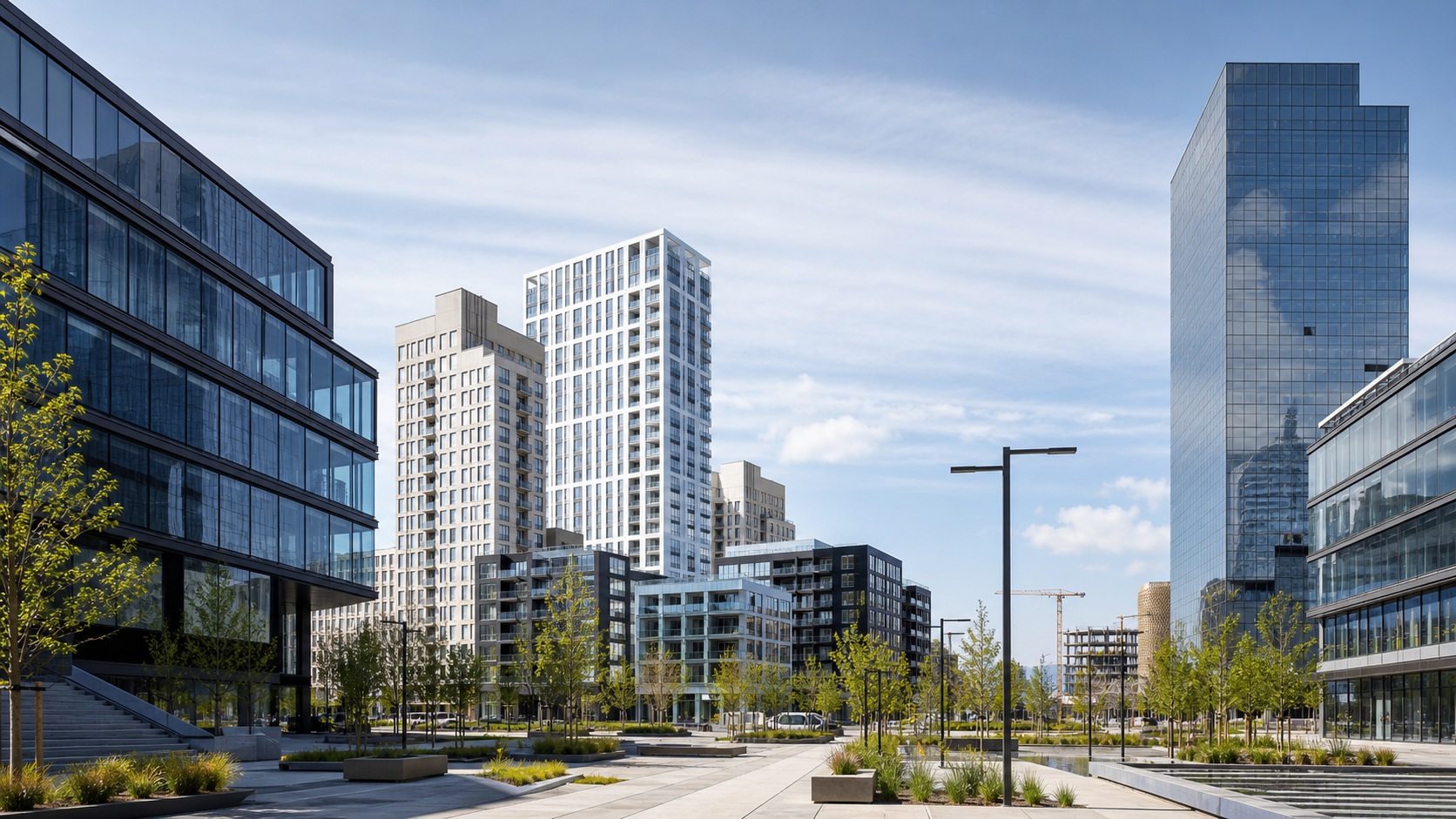
When expat families outgrow their city apartment and start looking for a house with a garden, Bertrange is often the first name I suggest. This commune of approximately 8,500 residents sits directly west of Luxembourg City, bordering Strassen and Mamer, and offers a suburban quality of life that is rare this close to the capital. You get tree-lined streets, detached houses with gardens, a genuine village centre with a church and a primary school, and a sense of community that denser urban neighbourhoods cannot replicate.
Why expats love Bertrange. Bertrange is the answer to a question I hear constantly from expat parents: "Where can we buy a house with a garden and still be 15 minutes from the office?" The commune sits at the intersection of convenience and calm. The Belle Etoile shopping centre — one of Luxembourg's largest — is right on Bertrange's border, providing supermarkets, electronics, fashion, and restaurants. The European School Luxembourg II in neighbouring Mamer is just minutes away, making Bertrange the default residential choice for families with children at that school. And the commute to Luxembourg City — whether by car, bus, or the planned tram extension — is fast and predictable.
Price range. EUR 8,500 to 10,000 per square metre in Q1 2026. Houses in Bertrange are significantly more expensive in total — a four-bedroom house with a garden typically starts at EUR 1.5 million and can exceed EUR 2.5 million for larger properties. Apartments range from EUR 637,500 to EUR 750,000 for a 75-square-metre unit. While these are premium suburban prices, they are 10 to 20 percent below comparable properties inside Luxembourg City.
Expat community. Strong but more mixed than Cloche d'Or or Belair. Approximately 45 to 50 percent of Bertrange's population is foreign-born, with particularly strong French, Belgian, Portuguese, and British communities. The International Bazaar held annually in Bertrange is a community institution, and several English-language parent groups organise regular social events.
Transport. Good road connections — the A6 motorway gives direct access to Kirchberg (15 minutes) and Cloche d'Or (8 minutes). Bus lines 206 and 208 connect Bertrange to Luxembourg City centre. The future tram extension is planned to reach Bertrange, which would significantly enhance public transport access. Cycling to the city centre is feasible via designated bike paths (approximately 20 minutes to the Gare).
Schools nearby. European School Luxembourg II in Mamer (5 minutes by car), ISL in Merl (10 minutes), St George's International School (15 minutes). Several excellent creches and maisons relais operate in Bertrange, and the commune's public primary school has a strong reputation. For families whose children attend the European School II, Bertrange is the single most convenient residential commune.
Lifestyle. Suburban family life at its best. Gardens where children can play, quiet streets for cycling, a village-centre bakery that everyone knows by name, and weekend barbecues with neighbours. Bertrange attracts expat families who have decided they are staying in Luxembourg for the medium to long term and want to invest in a genuine home rather than a transient apartment. The social life revolves around school gates, sports clubs, and neighbourhood gatherings.
A client story. In late 2025, I helped a Belgian-Australian family — he works at an EU institution in Kirchberg, she runs an online business from home — purchase a four-bedroom house with a garden in Bertrange for EUR 1.85 million. They had been renting a three-bedroom apartment in Limpertsberg and wanted their three children (ages 4, 7, and 10) to have outdoor space. The eldest two are enrolled at the European School II, which is a six-minute drive from the new house. The father's commute to Kirchberg increased from 10 minutes to 18 minutes — a trade-off he described as "completely worth it for the look on the kids' faces when they saw the garden."
Looking for the Right Area as an Expat in Luxembourg?
I specialise in helping expat families and professionals find the right neighbourhood, the right property, and the right price. Every search starts with understanding your specific needs — school, commute, community, budget. Let us talk.
WhatsApp Daniela Free Property Consultation5. Strassen — Best Value Near the City
Strassen is the area I recommend most frequently to expats who want proximity to Luxembourg City without paying full city prices. This commune of approximately 10,000 residents borders Luxembourg City to the west, sitting between Bertrange and the city's Belair and Merl neighbourhoods. In many ways, Strassen feels like an extension of Luxembourg City — the border is invisible if you are walking or driving through — but the commune's administrative separation means slightly lower property prices and a different tax structure that can work in a buyer's favour.
Why expats love Strassen. Value. Strassen offers essentially the same quality of life as the western neighbourhoods of Luxembourg City — the same access to shops, restaurants, schools, and transport — at prices that are 10 to 20 percent lower. The Route d'Arlon, which runs through Strassen, is one of Luxembourg's main commercial arteries, lined with restaurants, car dealerships, furniture shops, and service businesses. The Centre Commercial Strassen provides everyday shopping needs. And the commune is investing heavily in sports and recreational infrastructure, with an excellent sports complex and swimming pool.
Price range. EUR 8,000 to 9,500 per square metre in Q1 2026. A two-bedroom apartment of 75 square metres will cost between EUR 600,000 and EUR 712,500. Houses with gardens range from EUR 1.2 million for older properties to EUR 2 million and above for newer builds. Compared with neighbouring Belair (EUR 10,500-12,000/sqm), the saving is substantial — on a 90-square-metre apartment, you could save EUR 180,000 to EUR 225,000 simply by crossing the commune boundary.
Expat community. Moderate to strong. Approximately 40 to 45 percent of Strassen residents are foreign nationals. The community is less visibly international than Belair or Cloche d'Or, but there is a solid base of expat families, particularly those with children at ISL (which is a 5-minute drive away in Merl) or the European School II (10 minutes). English is understood in most shops and restaurants along the Route d'Arlon, though French remains the dominant commercial language.
Transport. Good road connections — the Route d'Arlon provides a direct axis to the city centre, and the A6 motorway entrance is nearby. Bus lines 208 and several others connect Strassen to the Gare Centrale in 12 to 15 minutes. The planned tram extension will eventually serve Strassen. Cycling to the city centre is practical (approximately 15 minutes). Commute to Kirchberg: 15 to 20 minutes by car, 20 to 25 minutes by bus.
Schools nearby. ISL in Merl (5 minutes), European School Luxembourg II in Mamer (8 minutes), Lycee Michel Lucius international section (12 minutes). Strassen sits in the sweet spot between the two main clusters of international schools, giving families flexibility.
Lifestyle. Practical suburban comfort. Strassen does not have the architectural charm of Belair or the cafe culture of Limpertsberg, but it offers a clean, well-maintained living environment with excellent amenities. The sports complex and swimming pool are popular with families, and the commune organises regular community events. For expats who prioritise value and convenience over neighbourhood prestige, Strassen delivers exceptionally well.
A client story. One of my favourite recent transactions involved a young German-Brazilian couple — both working in tech — who were first-time buyers with a budget of EUR 650,000. They initially focused on Luxembourg City but could not find anything larger than a one-bedroom at that price. I suggested Strassen, and we found a two-bedroom apartment of 78 square metres with a balcony and a parking space for EUR 640,000 (approximately EUR 8,200/sqm). The apartment is an 8-minute bus ride from the Gare and a 5-minute bike ride from ISL, where they plan to enrol their future children. They told me they would never have discovered Strassen on their own — it is the kind of commune that does not appear in expat Facebook groups or relocation brochures, but it quietly delivers everything you need.
6. Walferdange — The Green Commuter Option
Walferdange is the dark horse of this list — a commune that most relocation guides overlook entirely but that I have been recommending to selected clients for years. Situated directly north of Luxembourg City, Walferdange is a green, hilly, residential commune of approximately 8,000 residents with its own train station, a strong sense of community, and property prices that are meaningfully below the capital. It is the area I recommend for expats who want space, nature, and a village atmosphere while maintaining a practical commute to the city.
Why expats love Walferdange. Space and green. Walferdange sits in the Alzette valley, surrounded by forests and hiking trails. The commune includes the beautiful Helmsange and Bereldange areas, where you can find houses with substantial gardens at prices that would be impossible just a few kilometres south inside the city limits. The University of Luxembourg's Belval campus may have moved, but the Walferdange campus still hosts research facilities, lending an academic character to the area. The train station provides direct connections to Luxembourg Gare in approximately 8 to 10 minutes — one of the fastest rail commutes in the country.
Price range. EUR 7,500 to 9,000 per square metre in Q1 2026. A two-bedroom apartment of 75 square metres will cost between EUR 562,500 and EUR 675,000. Houses range from EUR 1.0 million to 1.8 million depending on size and condition. Compared with the city proper, Walferdange offers 15 to 25 percent savings — enough to upgrade from an apartment to a house, or from two bedrooms to three.
Expat community. Moderate. Approximately 35 to 40 percent of Walferdange residents are foreign nationals — lower than the city neighbourhoods but growing. The expat community here tends to be families who have been in Luxembourg for several years and have made a deliberate choice to trade urban buzz for green space. There are active English-speaking parent groups linked to the local schools, and the commune's annual fete and Christmas market are well-attended community events.
Transport. The train is Walferdange's great advantage. The CFL train from Walferdange to Luxembourg Gare takes 8 to 10 minutes and runs every 15 minutes during rush hour. From the Gare, tram connections reach Kirchberg in a further 15 minutes, making the total commute to Kirchberg approximately 25 to 30 minutes — competitive with living in some parts of Luxembourg City itself. Remember that all public transport in Luxembourg is free, so this commute costs nothing.
Schools nearby. Walferdange does not have an international school within the commune itself, which is an important consideration. The nearest international options are the European School Luxembourg I (15 minutes by car), ISL in Merl (18 minutes), and the Lycee Michel Lucius (12 minutes). For families with children at the European School I, the train-plus-bus combination makes this commute manageable but not as convenient as living in Limpertsberg or Belair.
Lifestyle. Green, quiet, and community-oriented. Walking trails through the forests start from the edge of the village. The local sports clubs (football, tennis, athletics) are active and welcoming. Weekend life revolves around hiking, cycling, and family activities in the surrounding nature. For expats who come from countries where having a garden and access to nature is the norm — Scandinavians, Australians, Americans from suburban backgrounds — Walferdange feels intuitively right in a way that a city apartment never does.
A client story. I worked with a Norwegian couple — both researchers at a European institution — who had spent three years in a one-bedroom apartment in Kirchberg and were feeling trapped. They wanted a house, a garden, and the ability to go for a run in the forest without driving somewhere first. Their budget was EUR 1.1 million, which would have purchased a very modest house without a garden in Belair. In Walferdange, we found a renovated four-bedroom house with a 350-square-metre garden for EUR 1.05 million. The husband takes the train to the Gare each morning and the tram to Kirchberg — door to door, it takes 28 minutes. He told me it takes exactly the same time as his old commute by bus from his Kirchberg apartment, except now he starts the day with a coffee in his garden instead of a crowded bus stop.
What this means for you: If your office is in the city centre or Kirchberg and you can tolerate a 25 to 30-minute door-to-door commute, Walferdange gives you dramatically more space and nature for your money than any city neighbourhood.
Expat Area Comparison: The Complete Table
The following table brings together the key data points for all six areas, making it easy to compare at a glance. I have included the factors that matter most to my expat clients: price, commute, school access, English-language environment, and the size of the international community.
| Area | Price (EUR/sqm) | Commute to Kirchberg | Commute to Cloche d'Or | Nearest Int'l School | Expat % | English Accessibility |
|---|---|---|---|---|---|---|
| Belair | 10,500 – 12,000 | 12 min (bus) | 10 min (car) | ISL (5 min) | 60%+ | Very High |
| Limpertsberg | 9,800 – 11,500 | 8 – 12 min (tram) | 15 – 20 min (car) | Euro School I (8 min) | 50 – 55% | High |
| Gasperich / Cloche d'Or | 9,500 – 10,500 | 12 min (car) | 5 min (walk) | Euro School II (10 min) | 65 – 70% | Very High |
| Bertrange | 8,500 – 10,000 | 15 min (car) | 8 min (car) | Euro School II (5 min) | 45 – 50% | Moderate-High |
| Strassen | 8,000 – 9,500 | 15 – 20 min (car/bus) | 10 min (car) | ISL (5 min) | 40 – 45% | Moderate |
| Walferdange | 7,500 – 9,000 | 25 – 30 min (train+tram) | 20 min (car) | Euro School I (15 min) | 35 – 40% | Moderate |
Reading this table, a clear pattern emerges: there is a direct trade-off between price, international community density, and commute time. The most expensive areas (Belair, Limpertsberg) offer the highest expat concentrations and the shortest commutes. The most affordable (Strassen, Walferdange) require slightly longer commutes and have smaller expat communities but deliver significantly more space for the money. There is no single "best" area — there is only the best area for your specific combination of priorities.
International Schools and Language Considerations: A Practical Guide
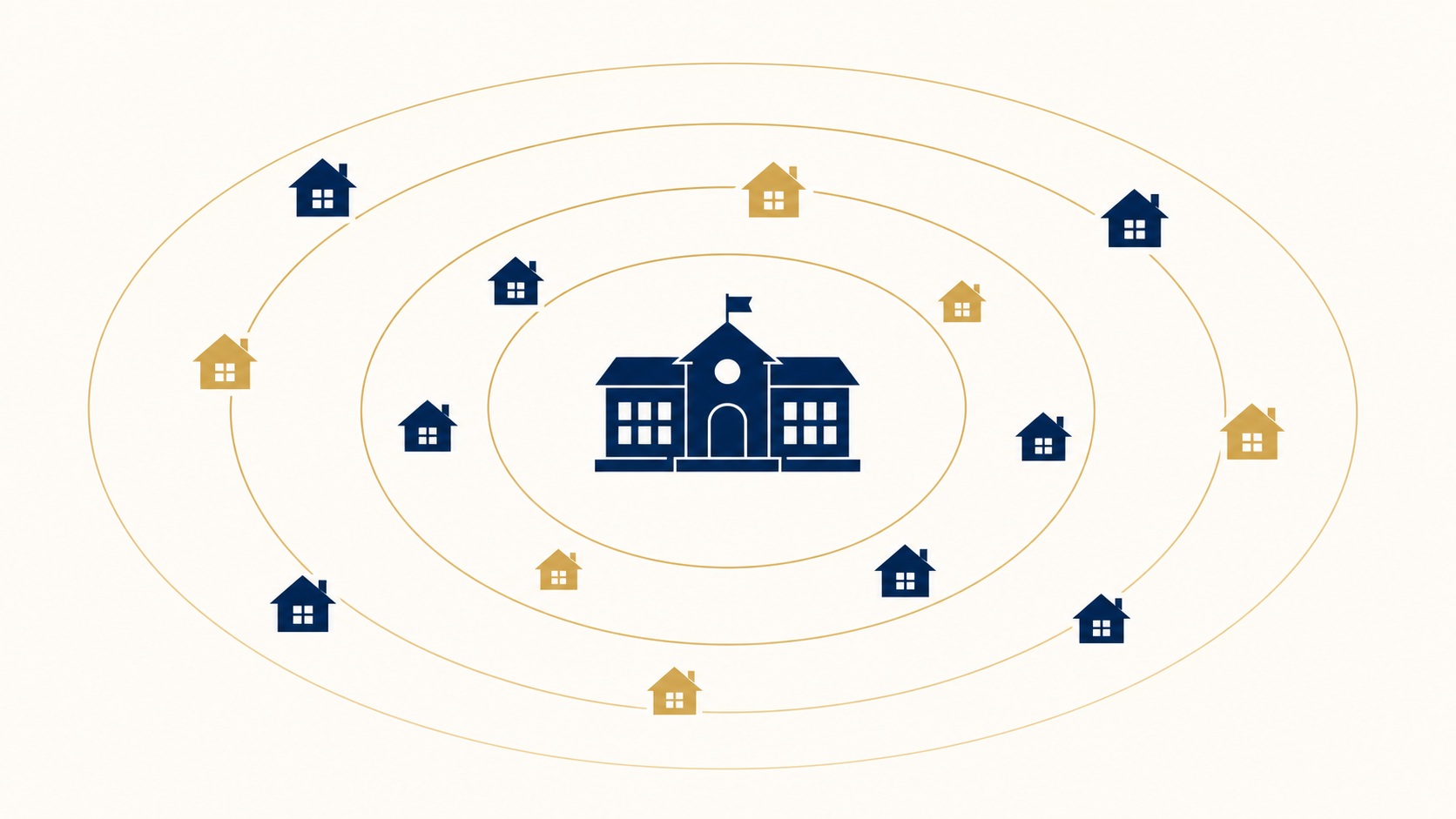
The international school question deserves its own section, because it shapes more expat property decisions than any other single factor. In my experience, once a family has decided which school their children will attend, the property search narrows immediately to two or three viable communes. Here is an overview of the major international school options in Luxembourg and the areas that work best for each.
International Schools in Luxembourg: Location and Area Compatibility
| School | Location | Curriculum | Best Residential Areas | Annual Fees (2026) |
|---|---|---|---|---|
| European School Lux I | Kirchberg | European Baccalaureate | Limpertsberg, Belair, Walferdange | Free (EU staff) / EUR 5,500-7,500 |
| European School Lux II | Bertrange/Mamer | European Baccalaureate | Bertrange, Strassen, Gasperich | Free (EU staff) / EUR 5,500-7,500 |
| ISL (International School of Luxembourg) | Merl | IB (International Baccalaureate) | Belair, Strassen, Merl, Bertrange | EUR 18,000 – 28,000 |
| St George's International School | Hamm | British/IB | Belair, Limpertsberg, Bonnevoie | EUR 15,000 – 25,000 |
| Lycee Michel Lucius (Int'l Section) | Limpertsberg | Luxembourg/International | Limpertsberg, Belair, Eich | Free (public school) |
| Lycee Vauban | Gasperich | French (AEFE) | Gasperich, Bonnevoie, Bertrange | EUR 6,000 – 8,500 |
Where English Is Most Spoken in Daily Life
This is a question I get from almost every expat client, particularly those arriving from the UK, the US, Australia, or India. The honest answer is that English has become remarkably widespread in Luxembourg, but the degree to which you can function in English day-to-day varies significantly by area.
Highest English accessibility: Kirchberg, Cloche d'Or/Gasperich, Belair, and Limpertsberg. In these areas, you can conduct most daily transactions — shopping, restaurants, doctor's appointments, even interactions with your real estate agent and notary — in English. The expat density is high enough that English has become a de facto lingua franca in many settings.
Good English accessibility: Bertrange, Strassen, Bonnevoie, and the Gare area. English is understood and accepted in most commercial settings, though French is the default. You may encounter situations — particularly in commune administration offices, at the commune school, or with tradespeople — where French or Luxembourgish is necessary.
Limited English accessibility: Walferdange, Sandweiler, Hesperange, and most suburbs and villages outside the immediate city orbit. English is spoken by many residents personally, but commercial and administrative interactions typically default to French, German, or Luxembourgish. If you do not speak French, living in these areas requires more effort to navigate daily life.
My practical advice to all my expat clients is this: regardless of where you buy, start learning French. Even basic conversational French will dramatically improve your quality of life, your social integration, and your ability to deal with administrative matters. Luxembourg is generous to English speakers compared with most European countries, but French remains the dominant language of daily commerce and administration throughout most of the country.
Commute Analysis: Getting to Work from Each Area
Commute time is one of the top three factors in every expat property decision I facilitate. Luxembourg is a small country, but traffic congestion — particularly during the morning rush between 7:30 and 9:00 — can make a 10-kilometre drive feel like 30 minutes. Understanding realistic commute times, including during rush hour, is essential for making the right area choice.
Commute Times to Major Employment Hubs (Rush Hour Estimates, Q1 2026)
| From | To Kirchberg | To Cloche d'Or | To City Centre/Gare | To Luxembourg Airport | Best Transport Mode |
|---|---|---|---|---|---|
| Belair | 12 – 18 min | 8 – 12 min | 5 – 10 min | 12 – 15 min | Bus / bike |
| Limpertsberg | 8 – 12 min | 15 – 22 min | 6 – 10 min | 15 – 18 min | Tram |
| Gasperich / Cloche d'Or | 12 – 18 min | 0 – 5 min | 8 – 12 min | 8 – 10 min | Car / bus |
| Bertrange | 15 – 22 min | 8 – 12 min | 12 – 18 min | 15 – 20 min | Car / bus |
| Strassen | 15 – 22 min | 10 – 15 min | 10 – 15 min | 15 – 18 min | Car / bus |
| Walferdange | 25 – 32 min | 18 – 25 min | 8 – 12 min | 18 – 22 min | Train + tram |
Key insight: The tram changes everything for Kirchberg commuters. If your office is in Kirchberg, Limpertsberg's 8-to-12-minute tram commute is hard to beat. If your office is in Cloche d'Or, Gasperich and Bertrange offer near-zero commutes. And if your office is in the city centre, Walferdange's 8-to-10-minute train ride to the Gare makes it surprisingly competitive with much more expensive city neighbourhoods.
One factor that my clients consistently underestimate is parking. Kirchberg offers abundant (and often employer-subsidised) parking, which makes driving from Bertrange or Strassen practical. Cloche d'Or also has good parking infrastructure. The city centre and Gare area, however, have very limited and expensive parking, which makes public transport or cycling the only practical commute options from most areas. This is a critical consideration when choosing between car-dependent suburbs and public-transport-connected city neighbourhoods.
What this means for you: Before choosing an area, do a test commute during rush hour — both by car and by public transport. The difference might surprise you and could change your area preference entirely.
Community and Social Life for Expats
Buying a property is not just a financial transaction — it is choosing a community. In my experience, the expats who thrive in Luxembourg are those who find their people quickly, and the neighbourhood you live in plays a huge role in how easily that happens.
Belair and Limpertsberg offer the richest social infrastructure for English-speaking expats. Both neighbourhoods have established networks of international residents, English-language book clubs, running groups, wine-tasting circles, and parent communities. The AAFL (American Association of French-speaking Lands), the British Ladies Club Luxembourg, the AMCHAM Luxembourg networking events, and numerous national community organisations hold events in or near these neighbourhoods. Walking into a Limpertsberg cafe on a Saturday morning, you are likely to hear English spoken at half the tables.
Gasperich/Cloche d'Or has a different kind of social life — more corporate, more structured. Social interactions tend to revolve around workplace networks, building-level communities (many Cloche d'Or residences have shared terraces and communal spaces), and organised events at the shopping centre or nearby sports facilities. It is less organic than Limpertsberg's cafe culture, but for people who prefer structured social activities, it works well.
Bertrange and Strassen offer a family-centred social life. The main entry point for expat social connections here is the school gate. Parents at the European School II or ISL naturally form carpools, playdates, and dinner groups that become the foundation of lasting friendships. Both communes also have active sports clubs — football, tennis, swimming — that welcome international members and provide another social avenue.
Walferdange requires more effort. The international community is smaller, and social connections tend to develop through the commune's local activities — sports clubs, the annual fete, the Christmas market — rather than through established expat networks. For sociable, proactive people who are comfortable making the first move, Walferdange can be wonderfully rewarding. For those who prefer a ready-made social circle of fellow expats, the city neighbourhoods will be an easier starting point.
One resource I recommend to all my expat clients is the Internations Luxembourg community, which organises regular social events across the city. Regardless of where you buy, these events provide an easy way to meet other international residents and expand your network beyond your immediate neighbourhood.
Legal Considerations for Non-EU Expats Buying Property in Luxembourg
One of the first questions I receive from non-EU expat clients is: "Am I actually allowed to buy property in Luxembourg?" The answer is straightforward and encouraging.
There are no restrictions on foreign nationals buying property in Luxembourg. Whether you are an EU citizen, a non-EU resident, or even a non-resident, you have the same legal right to purchase property as a Luxembourgish national. There are no foreign buyer taxes, no additional stamp duties, and no restrictions on the type or number of properties you can own. This is one of Luxembourg's most attractive features for international buyers compared with countries like Switzerland, Australia, or Singapore, which impose significant restrictions on foreign property ownership.
However, there are several practical considerations that non-EU expats should be aware of:
Residence permit implications. Buying property does not automatically grant you a residence permit. If you are a non-EU national, you will need a valid residence permit before or concurrently with your purchase. The most common routes are an employment-based permit, a family reunification permit, or an investor/entrepreneur permit. Your property purchase can support a residence application (it demonstrates commitment to the country), but it is not sufficient on its own.
Mortgage access for non-EU buyers. Luxembourg banks will lend to non-EU residents, but the terms may be stricter. Banks typically require a larger deposit (25 to 30 percent versus 15 to 20 percent for EU residents), proof of stable Luxembourg-based income, and a minimum employment history in Luxembourg (usually 12 months). Some banks also require that the borrower's employment contract is not fixed-term. For a comprehensive guide to navigating the mortgage process, see our 2026 mortgage guide, and for deposit-specific strategies, see our deposit guide.
Tax considerations. All property owners in Luxembourg pay annual property tax (impot foncier), which is very low — typically EUR 100 to 500 per year for a residential property. Non-residents who own Luxembourg property may have additional tax reporting obligations in their country of tax residence. I always recommend that non-EU clients consult a cross-border tax advisor before purchasing.
Notary process. The notary process in Luxembourg is identical for all buyers regardless of nationality. All property transactions must be completed before a Luxembourg notary, who acts as a neutral party ensuring the legality of the transaction. The notary fees and registration taxes total approximately 6 to 7 percent of the purchase price for existing properties. For a detailed walkthrough of the entire notary and purchase process, see our step-by-step buying guide.
What this means for you: If you are a non-EU expat, start your mortgage pre-approval process early — at least three to four months before you plan to make an offer. The additional documentation requirements mean the approval process takes longer than for EU citizens.
What to Prioritise When Choosing an Area: My Advice to Expat Clients
After helping hundreds of expat families buy property in Luxembourg, I have developed a framework that I share with every new client during our first consultation. It is simple, practical, and it works. Here it is.
Step 1: Start with the school. If you have school-age children, identify which school they will attend before you start looking at properties. The school determines the geographic zone of your search more than any other factor. If your children will attend the European School I, focus on Limpertsberg, Belair, and Walferdange. If it is the European School II, focus on Bertrange and Strassen. If it is ISL, focus on Belair, Strassen, and Merl. This single decision eliminates 70 percent of the options and focuses your search productively.
Step 2: Map the commute. For both partners. The number one source of frustration I see among expat homeowners is a commute that looked manageable on paper but feels exhausting in practice. Do a test commute during rush hour. Factor in school drop-off if that is part of the routine. Calculate the total daily commute time for the household, not just one partner. If the total exceeds 90 minutes per day, you may want to reconsider the area.
Step 3: Assess the community fit. Visit the neighbourhood on a Saturday. Walk through the market. Have coffee at a local cafe. Talk to people. Notice whether you hear English or your native language being spoken. Check if there are notice boards with international community events. Look at the shops — are they catering to a local or international clientele? This qualitative assessment is just as important as the data tables.
Step 4: Set a realistic budget and see what it buys in three areas. Once you have two or three areas that pass the school, commute, and community tests, compare what your budget actually buys in each. A EUR 800,000 budget buys very different things in Belair versus Strassen versus Walferdange. Understanding those differences concretely — not just as price-per-square-metre numbers but as actual apartments or houses you have visited — is what leads to confident decisions.
Step 5: Think about exit strategy. Ask yourself: if I need to sell this property in five years, who is the likely buyer? In areas with high expat populations (Belair, Limpertsberg, Gasperich), the buyer pool is deep and international, which supports liquidity. In areas with lower expat populations, the buyer pool is more local, which may mean a longer selling process or a need to price more competitively.
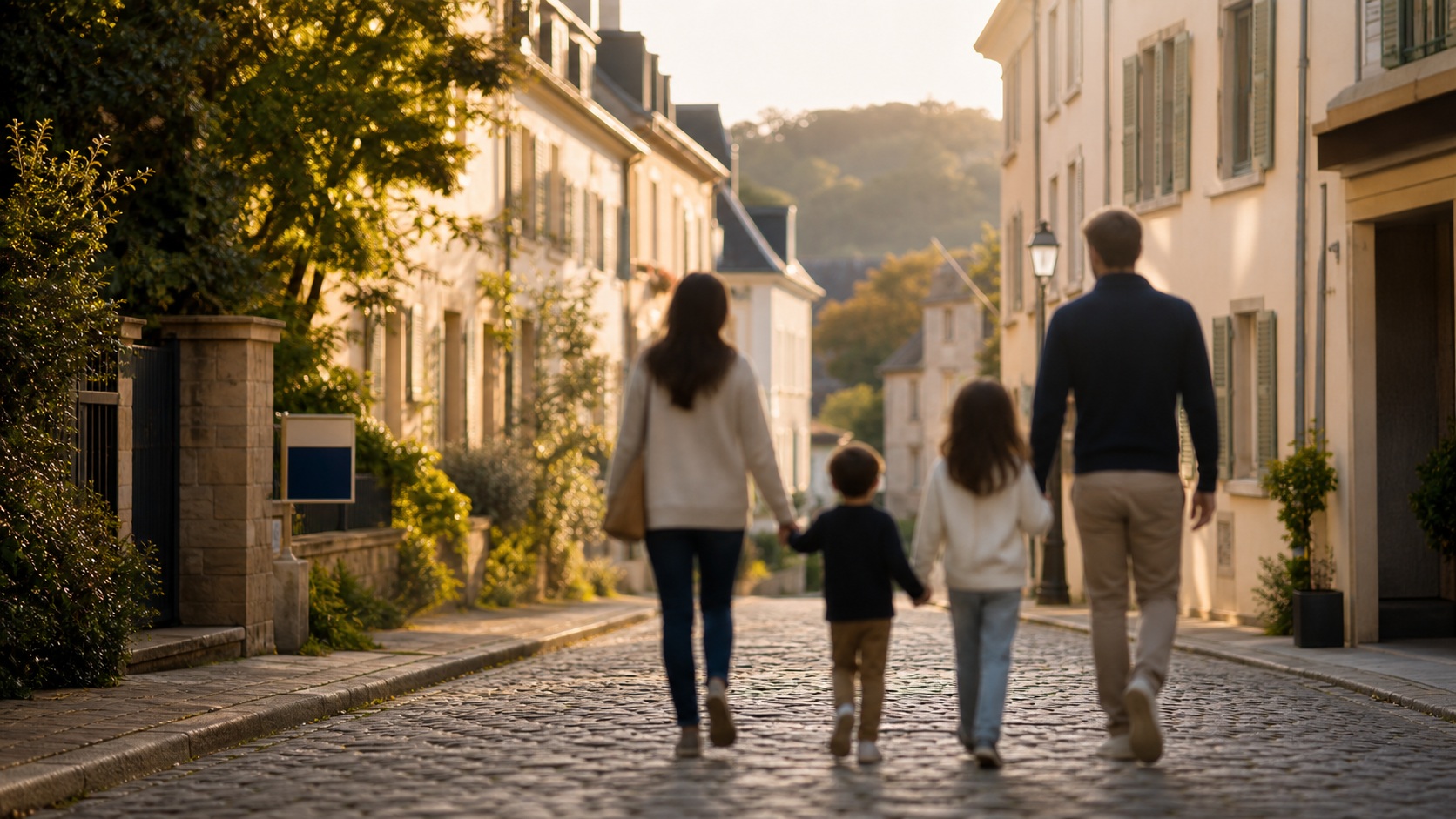
Ready to Start Your Expat Property Search?
I have helped hundreds of expat families find the right home in Luxembourg. My approach starts with understanding your school needs, commute requirements, lifestyle preferences, and budget — then matching you with the areas and properties that genuinely fit. No pressure, no generic listings, just expert advice tailored to your situation.
WhatsApp Daniela Free Property ConsultationFrequently Asked Questions: Expat Property in Luxembourg
1. Can expats buy property in Luxembourg?
Yes. Luxembourg places no restrictions on foreign nationals purchasing property. Whether you are an EU citizen or a non-EU resident, you have the same legal right to buy property as a Luxembourgish national. There are no foreign buyer taxes or surcharges. The purchase process — from making an offer through to signing at the notary — is identical for all nationalities. The main practical difference for non-EU buyers is that mortgage terms may be stricter, typically requiring a higher deposit (25-30 percent) and proof of stable Luxembourg-based income. For the full buying process, see our step-by-step guide.
2. What is the best area in Luxembourg for English-speaking expats?
For English-speaking expats, Belair and Limpertsberg offer the highest levels of English accessibility in daily life, combined with large established international communities. Gasperich/Cloche d'Or is also excellent for English speakers due to its corporate international character. In these three areas, you can conduct most daily transactions — shopping, dining, medical appointments — in English without difficulty. For a more affordable option where English is still widely understood, consider Strassen or Bertrange.
3. Which area is best for expat families with children in international schools?
It depends on which school your children attend. For the European School Luxembourg I (Kirchberg), the best residential areas are Limpertsberg (8 minutes) and Belair (10 minutes). For the European School Luxembourg II (Bertrange/Mamer), Bertrange itself (5 minutes) and Strassen (8 minutes) are ideal. For the International School of Luxembourg (ISL) in Merl, Belair (5 minutes) and Strassen (5 minutes) offer the shortest school runs. I always advise families to choose the school first, then narrow the property search to areas within a 15-minute commute of that school.
4. How much deposit do expats need to buy property in Luxembourg?
For EU citizens, Luxembourg banks typically require a minimum deposit of 15 to 20 percent of the purchase price, plus approximately 6 to 7 percent for notary fees and registration taxes. For non-EU residents, banks usually require 25 to 30 percent. On a EUR 800,000 apartment, that means a total upfront cost of EUR 168,000 to 216,000 for EU buyers, or EUR 248,000 to 296,000 for non-EU buyers. Several government programs offer support for first-time buyers, including reduced registration taxes and interest subsidies. For detailed deposit strategies, see our deposit guide.
5. Is it better to buy or rent as an expat in Luxembourg?
This depends on your time horizon. In my experience, the break-even point — where buying becomes financially advantageous over renting — is approximately three to four years in Luxembourg, assuming moderate price appreciation and current mortgage rates. If you plan to stay in Luxembourg for at least four to five years, buying is almost always the better financial decision. If you are uncertain about your tenure and may leave within two to three years, renting provides flexibility without the transaction costs. For a deeper analysis, read our 2026 market timing guide.
6. What are the ongoing costs of owning property in Luxembourg as an expat?
Ongoing costs for property owners in Luxembourg include: annual property tax (impot foncier, typically EUR 100-500/year — very low by European standards), building insurance (EUR 300-800/year depending on property type), common charges for apartments (EUR 150-400/month covering maintenance, lift, heating, etc.), and mortgage payments. There is no council tax equivalent. Energy costs depend heavily on the property's energy rating — an A-rated apartment might cost EUR 80/month in energy, while an older E-rated property could cost EUR 300/month. In total, excluding mortgage payments, expect ongoing annual costs of EUR 3,000 to 8,000 for an apartment or EUR 4,000 to 10,000 for a house.
Conclusion: Finding Your Home in Luxembourg
Buying property as an expat in Luxembourg is one of the most significant decisions you will make during your time in this country — and potentially one of the best financial decisions too. Luxembourg's property market has consistently rewarded long-term owners, its legal framework is transparent and fair to foreign buyers, and its quality of life is among the highest in Europe.
The six areas I have profiled in this guide — Belair, Limpertsberg, Gasperich/Cloche d'Or, Bertrange, Strassen, and Walferdange — represent the full spectrum of what Luxembourg offers to international buyers. From the diplomatic elegance of Belair to the green valleys of Walferdange, from the corporate efficiency of Cloche d'Or to the village warmth of Bertrange, there is an area here that fits your lifestyle, your budget, and your family's needs. The key is matching those needs to the right place, and that is what this guide — and my practice — are designed to help you do.
Let me leave you with one final thought. In my years of helping expats buy property in Luxembourg, the single biggest regret I hear is: "I wish I had bought sooner." Renting feels safe and flexible, but every month of rent in Luxembourg is a month of building someone else's equity in one of Europe's most resilient property markets. If you are reading this guide and thinking "maybe next year," I would gently encourage you to reconsider. The market rewards action. The best time to buy was three years ago. The second-best time is now.
If you are ready to start your search, or if you simply have questions about which area might be right for your situation, I am here to help. Contact me through WhatsApp or through the consultation form below. Every conversation starts with listening — I want to understand your needs before I start suggesting properties.
Start Your Luxembourg Property Journey Today
Whether you have just arrived in Luxembourg or have been renting for years and are ready to buy, I will guide you through every step — from choosing the right area to signing at the notary. Free initial consultation, no obligations.
WhatsApp Daniela Free Property Consultation Search PropertiesFurther Reading
Explore more expert guides to help you navigate the Luxembourg property market with confidence:
- Best Areas to Buy Property in Luxembourg in 2026 (Complete Guide)
- Luxembourg Property Prices per Square Metre by Area (2026 Update)
- Buying Property in Luxembourg: Step-by-Step Guide
- Mortgage Guide Luxembourg 2026: Rates, Banks, and Strategies
- How Much Deposit Do You Need to Buy Property in Luxembourg?
- Is 2026 a Good Time to Buy Property in Luxembourg?
Sources and methodology: Area characterisations, price ranges, and expat community estimates in this article are based on Daniela Pelliccia's direct experience working with expat clients across Luxembourg, supplemented by publicly available data from the Observatoire de l'Habitat, STATEC population statistics, the Administration de l'Enregistrement et des Domaines, and commune-level demographic reports. School information is based on publicly available data from each institution and may be subject to change. Commute time estimates reflect typical rush-hour conditions in Q1 2026 and may vary by route, traffic conditions, and transport mode. All price figures are indicative ranges and should not be considered formal valuations. For a personalised analysis tailored to your specific situation, please contact us for a free consultation.
Last updated: April 2026. This article is reviewed and updated quarterly to reflect the latest market data and school information.