Picking the right Luxembourg commune for investment property is one of those decisions that looks straightforward from outside the market and turns out to be substantially more nuanced once you are inside it. Yield, growth potential, tenant quality, liquidity on exit, regulatory risk, infrastructure catalysts — each of these matters, and the right area depends on which combination an individual investor is optimising for. There is no single "best area" universally; there are five areas in 2026 that consistently appear at the top of risk-adjusted ranking exercises for different investor profiles. This guide walks through those five with the honest data behind each.
After thirteen years tracking returns across the Luxembourg property market — through the speculative period of 2021–2022, the correction of 2023, and the measured recovery since — these are the five areas I would put on a shortlist for any investor entering or expanding their Luxembourg property position in 2026.
- The five Luxembourg communes offering the best risk-adjusted investment profile in 2026
- Concrete data: prices, yields, growth potential, tenant profile for each
- The investor profile that fits each area best
- The honest risks and downside scenarios for each
- How to think about portfolio diversification across these areas
How I Rank Investment Areas
My ranking framework weighs five factors equally: current gross rental yield, three-to-five-year capital growth potential, tenant demand quality (income stability, lease tenure, regulatory risk), liquidity on exit (how easy is it to sell when you want to), and structural catalysts (infrastructure, demographic, employment). The five areas below score well on at least three of the five.
Area 1: Belval and Esch Periphery
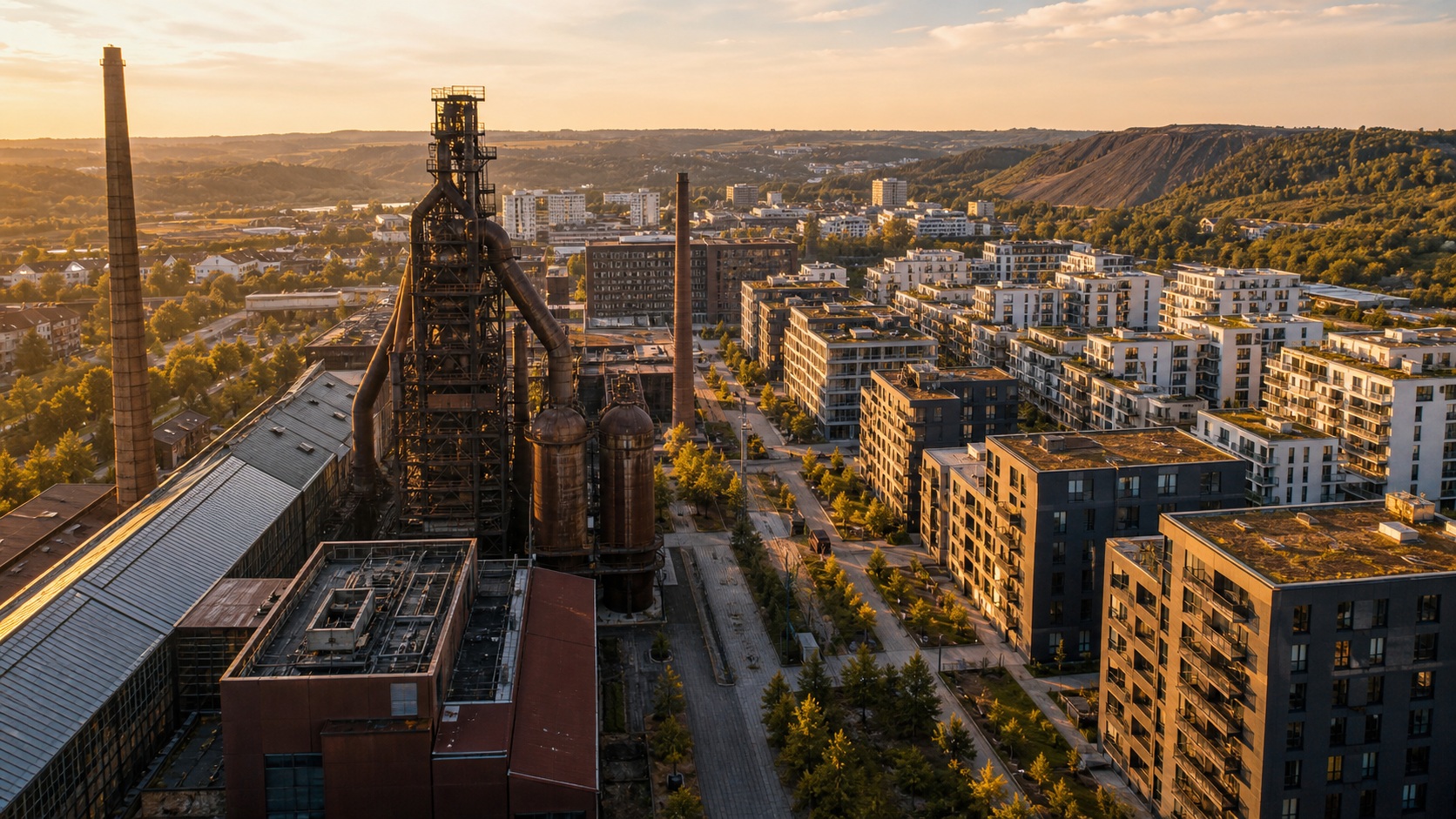
Why it ranks first: this is the strongest combined yield-plus-growth profile in the country in 2026. Gross yields of 4.2–4.8% sit at the top of the national range. The Belval campus expansion continues to drive demand from young professionals, researchers, and tech-sector employees. Price levels have risen meaningfully over three years (€5,300 to €6,500–€7,200 per sqm) but remain materially below the central Luxembourg City levels — meaning real growth runway remains.
Investor profile fit: yield-prioritising investors, particularly those wanting positive cash flow from year one. The current rent levels often cover mortgage payments and operating costs on conservatively-leveraged purchases.
Risks: the Belval thesis depends on continued university and tech-sector expansion. Any slowdown in that ecosystem would weigh on rental demand. Tram extension to Esch is still years away — when it arrives, expect another step-change in valuations, but the timeline is uncertain.
Area 2: Bonnevoie
Why it ranks second: Bonnevoie is in the middle of a structural revaluation that is not finished. The combination of tram connectivity (now reaching multiple parts of the commune), steady renovation activity, and the central Luxembourg City accessibility at meaningfully lower prices than Belair or Limpertsberg makes it one of the most asymmetric opportunities in the country. Prices have risen from €7,200 to €8,400–€8,900 per sqm over three years — and reputation lag means the genuine quality of the neighbourhood has improved faster than the market has fully priced in.
Investor profile fit: investors wanting both capital growth and solid yield (3.8–4.3% gross). The tenant profile is excellent — young professionals working in central Luxembourg City — and lease tenures tend to be 3–5 years.
Risks: the price growth has already been meaningful. The investor entering today is paying for two-thirds of the revaluation thesis to play out; the remaining one-third is the upside. A buyer in 2020 had a much better setup than a buyer in 2026.
Area 3: Cloche d'Or and Gasperich
Why it ranks third: this is the highest-conviction infrastructure-led growth story in the country. The tram has arrived, the office and commercial pipeline continues to expand, and the residential market is responding with both rising prices (€8,400 to €9,800–€10,800 per sqm over three years) and improving tenant quality. The area increasingly functions as a self-contained employment-and-housing district — which is exactly the structure that produces long-term resilient demand.
Investor profile fit: growth-focused investors with longer time horizons (5+ years). Yields are moderate (3.5–4.0% gross) but growth potential remains meaningful through 2030.
Risks: pricing is no longer cheap. Cloche d'Or has already absorbed substantial revaluation. The continued growth case depends on continued commercial development and tenant migration to the area. A slowdown in office-space expansion would weigh on the residential thesis.
Area 4: Hollerich
Why it ranks fourth: Hollerich is the central Luxembourg City redevelopment story in active progress. The area around the train station and the planned mixed-use projects connecting Hollerich to Gare and the central business district have transformed the commune from a transitional industrial-residential area to a serious destination for buyers seeking central accessibility at sub-Belair prices. Prices have risen from €7,800 to €9,200–€9,800 per sqm in three years.
Investor profile fit: investors comfortable with redevelopment dynamics and willing to bet on a transformation thesis. Yields are moderate (3.7–4.1% gross), but the upside if redevelopment continues on plan is meaningful.
Risks: redevelopment thesis depends on continued project execution by developers and municipality. The pipeline of new construction is large enough that supply could temporarily outpace demand, capping rent and price growth. Investors should specifically check construction proximity before buying — being adjacent to an active major construction site for 18–24 months can affect both rental demand and capital growth.
Area 5: Bettembourg–Roeser Corridor
Why it ranks fifth: this is the most conservative pick on the list — and that is exactly why it makes the top five. The Bettembourg–Roeser corridor offers consistent rental demand (families with school-age children, stable EU-institution and financial-sector employees), low vacancy rates (under 2%), train connectivity to Luxembourg Gare in 8–12 minutes, and pricing that has not run as hard as the central Luxembourg City hotspots. Apartment prices €5,500–€6,200 per sqm. Family houses €850,000–€1,250,000.
Investor profile fit: investors prioritising stability and long-tenure tenants over maximum growth. Yields are moderate (3.2–3.8% gross) but the operational simplicity is genuine — tenants stay 5+ years, rent collection is reliable, vacancy is rare.
Risks: lower magnitude growth than the central hotspots. An investor optimising purely for capital appreciation will probably outperform here in absolute terms but underperform in opportunity cost relative to Belval or Cloche d'Or.
The Five Areas Compared
| Area | €/sqm 2026 | Gross yield | 3-yr growth potential | Best for |
|---|---|---|---|---|
| Belval / Esch periphery | 6,500–7,200 | 4.2–4.8% | +15–20% | Yield + growth balance |
| Bonnevoie | 8,400–8,900 | 3.8–4.3% | +12–18% | Central + revaluation upside |
| Cloche d'Or / Gasperich | 9,800–10,800 | 3.5–4.0% | +10–15% | Growth-focused, long horizon |
| Hollerich | 9,200–9,800 | 3.7–4.1% | +10–15% | Redevelopment thesis |
| Bettembourg–Roeser | 5,500–6,200 | 3.2–3.8% | +8–12% | Stability + long-tenure tenants |

Portfolio Thinking Across the Five Areas
For investors building more than a single property position, the five areas above naturally cluster into three thesis groups:
- Yield-focused (Belval/Esch + Bettembourg): stable cash flow, moderate growth, lower volatility.
- Balanced (Bonnevoie): mid-yield + mid-growth, central location, broad tenant appeal.
- Growth-focused (Cloche d'Or + Hollerich): lower yield, higher growth potential, longer time horizon.
A diversified portfolio with exposure across these three groups balances cash flow, growth, and concentration risk in a way that no single-area concentration can match. For investors building beyond a first property, this kind of thinking is worth doing explicitly.
Key Takeaways
- Belval/Esch periphery leads on combined yield-plus-growth in 2026.
- Bonnevoie offers the best central-Luxembourg-City asymmetric thesis still available.
- Cloche d'Or and Hollerich are the highest-conviction infrastructure-led growth bets.
- Bettembourg–Roeser provides the most operationally simple, stable-tenant investment option.
- A portfolio across these three thesis groups outperforms any single-area concentration in most scenarios.
Frequently Asked Questions
Which area offers the highest yield in Luxembourg in 2026?
Belval, Esch-sur-Alzette periphery, and Differdange offer the strongest gross yields at 4.2–4.8%. After tax and operating costs, the net yields remain meaningfully above central Luxembourg City alternatives.
Is it too late to invest in Bonnevoie?
Not too late, but the easy asymmetry has largely played out. Prices have risen from €7,200 to €8,900 per sqm over three years. The remaining upside (12–18% over five years) is still solid but smaller than what early buyers captured.
How much capital do I need to start a Luxembourg investment portfolio?
For a first investment property in budget areas: €130,000–€180,000 cash for a €500,000–€650,000 acquisition. For central Luxembourg City: €180,000–€280,000 cash. For multi-property portfolio building, typically you need €350,000+ to acquire two properties with conservative leverage.
Should I focus on apartments or houses for investment?
Apartments are operationally simpler, easier to let, and easier to sell. Houses offer larger capital appreciation potential in family-friendly communes but require more management and have narrower tenant pools. For most investors, apartments in the five areas above are the right starting point.
What about other communes not on the list?
Hesperange, Strassen, Bertrange, Howald, and Mamer all offer solid investment profiles too — they didn't make the top five because either yields are lower or the growth thesis is less differentiated. Investors with specific reasons (proximity to schools, family connections, employer location) can certainly find good investments outside the top five.
What's the worst time horizon for these investments?
Anything under 3 years. Property transaction costs (acquisition 7–8%, resale 4–6%) make short holding periods unprofitable except in extraordinary appreciation scenarios. 5+ years is the right minimum horizon.
Can I access these areas without local market knowledge?
Theoretically yes, practically with difficulty. The texture of each commune — which streets, which buildings, which syndic accounts to verify — is the kind of detail that locally-experienced agents add value on. For most non-resident or new-to-Luxembourg investors, professional support during property selection pays for itself many times over.

Building a Luxembourg Investment Property Portfolio?
A free conversation about your specific budget, time horizon, and yield-vs-growth preferences can identify the area and property type most likely to deliver the return profile you want. No commitment, no sales pitch.
WhatsApp Daniela Investment Services
Multilingual support in English, French, and Italian. 13+ years guiding Luxembourg property investors.
Conclusion
The Luxembourg property investment landscape in 2026 offers five genuinely strong areas, each with a different combination of yield, growth, stability, and risk profile. The right choice depends on what an individual investor is optimising for. Belval for yield. Bonnevoie for balance. Cloche d'Or and Hollerich for growth. Bettembourg-Roeser for stability. The strongest portfolios diversify across these thesis groups. If you want a clear, professional read on which area fits your specific investment goals, the conversation costs nothing and the clarity is grounded in thirteen years of tracking returns across Luxembourg's investment communes.