Over the past thirteen years I have probably had four hundred conversations that begin the same way: a Luxembourg homeowner has been trying to sell their property privately, the listing has stalled, and they want to understand what went wrong. The frustrating part of these conversations — for them, not for me — is that the mistakes are remarkably predictable. The Luxembourg market is small, the buyer pool is multilingual, the legal architecture is precise, and the seasonal patterns are reliable. Private sellers who lose money on their sale almost always lose it in one of ten specific ways. Avoiding those ten ways is not glamorous, but it is the difference between a clean sale at fair market value and a six-month grind that ends with a net result tens of thousands of euros below what the property was actually worth.
This guide is the structured version of that conversation. Each of the ten mistakes below is grounded in real Luxembourg transactions I have either advised on, observed at close range, or been called in to repair. Most cost private sellers between €15,000 and €80,000 in net proceeds, depending on the property value and how long the situation was allowed to persist. None of these mistakes are theoretical, and none require professional real estate training to avoid — only the discipline to take each one seriously before you list. If you are preparing to sell privately, read this once before you decide on price, photography, or timing. If you are already mid-sale and something is not working, this is the diagnostic.
- The ten most expensive mistakes Luxembourg private sellers make, ranked by frequency and financial impact
- The exact cost of each mistake in concrete euro terms
- The fix for each one — practical, achievable, and grounded in Luxembourg market reality
- A real case study of a Gasperich seller who hit five of these mistakes simultaneously
- The single highest-leverage decision a Luxembourg private seller makes
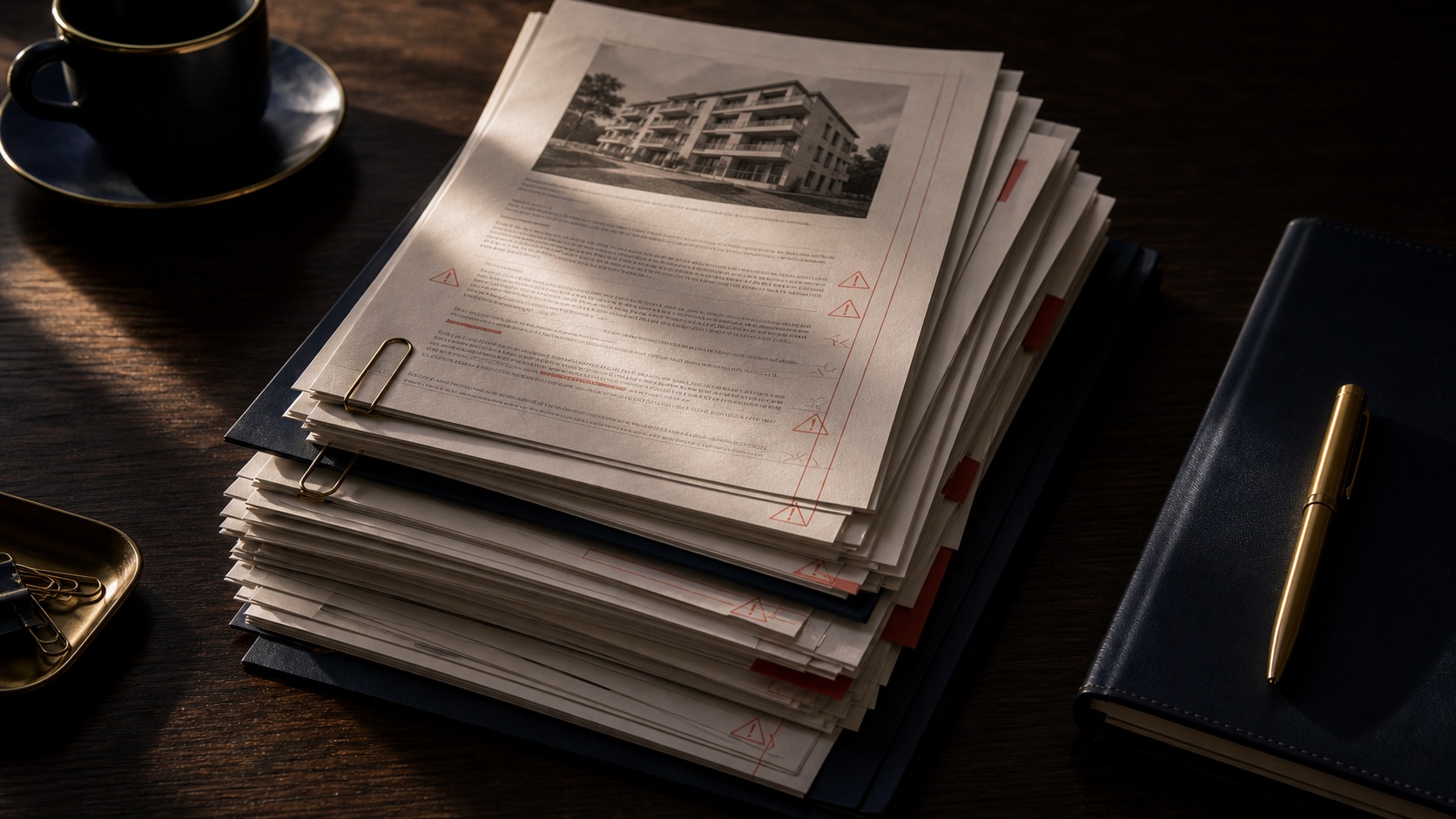
Why FSBO Mistakes in Luxembourg Are Different from Anywhere Else
Before we walk through the list, it is worth explaining why Luxembourg is a uniquely unforgiving environment for private sellers who get the basics wrong. The market is small — roughly 9,800 to 10,200 residential transactions per year nationally — which means buyer attention is concentrated and reputational stigma travels. The buyer pool is multilingual to an extreme degree: French-speaking frontaliers, English-speaking EU officials, Italian and Portuguese community buyers, German-speaking cross-border families. A listing that does not speak to all relevant segments silently filters out half its potential audience. And the legal architecture — the compromis de vente, the energy passport, the syndic disclosures, the registration tax mechanics — is specific enough that templates from other countries do not transfer cleanly. A mistake in any of these dimensions in Luxembourg costs more, in proportion to property values, than the same mistake would cost in a deeper, more anonymous market.
Mistake 1: Pricing by Emotion Instead of Data
This is the most common and the most expensive single mistake. Private sellers tend to anchor their asking price to one of three emotional reference points: what they paid for the property plus renovations and inflation; what they "need" to fund their next purchase or move; or the highest asking price they can find on athome.lu for a vaguely comparable property. None of these reference points is the same as fair market value. Fair market value is what genuinely comparable properties have actually sold for — not asked for — within 500 metres in the last six months. That number is hard to find without professional access, and the gap between emotional anchoring and market reality is routinely 15 to 25 percent on the high side.
The cost of this mistake is rarely the obvious one. Overpricing in week one does not just delay the sale; it permanently alienates the most motivated buyers (the ones who have been watching the portals for months and would have moved fast on a fair price), which means the property eventually clears at a deeper discount than it would have needed in the first place. In my experience, every euro of week-one overpricing costs roughly three euros in the final sale price. The fix is to anchor your asking price to actual recent transaction data — a free professional valuation is the cleanest way to do this — and to resist the emotional logic that has nothing to do with what your specific buyer will actually pay.
Mistake 2: Listing Without a Valid Energy Performance Certificate
The certificat de performance énergétique (CPE) is mandatory in Luxembourg at the moment of listing. Selling without one exposes you to administrative sanctions and gives the buyer recourse to renegotiate or rescind after compromis stage. Beyond the legal exposure, listing without a CPE — or with an outdated one — signals to serious buyers that the seller is not prepared. Buyers and their notaries notice this immediately, and many simply move on rather than ask. Commissioning a CPE costs roughly €300 to €500 and takes one to two weeks. There is no scenario in Luxembourg where saving this cost makes financial sense, yet I see private sellers routinely list without one and then scramble to commission it when a buyer's notary asks the question.
Mistake 3: Ignoring Co-Ownership Red Flags Before Listing
For apartments and co-ownership properties, the documentation a buyer will request — syndic accounts, the last two or three AGM minutes, the technical report on the building, the planned major works calendar, and the charge history — frequently contains red flags the seller has not noticed or has chosen not to think about. Large upcoming works (roof, facade, lift) carrying special calls of €15,000 to €50,000 within twenty-four months are the most common deal-killer. A buyer who discovers this mid-process either walks away or revises the offer down by precisely the future cost. Both outcomes are entirely preventable. The fix is to read the last two AGMs carefully before listing, surface any major-works exposure proactively, and price accordingly. Transparency at listing produces a faster sale at a slightly lower price than opacity does at compromis stage.

Mistake 4: Writing the Listing in Only One Language
A French-only or English-only Luxembourg listing routinely loses 30 to 50 percent of its potential buyer reach. The serious French-speaking buyer pool (frontaliers, Belgian buyers, Luxembourg residents) overlaps only partially with the serious English-speaking pool (EU officials, financial professionals, expatriates), and Italian-speaking buyers form their own significant segment, particularly for properties under €750,000. A listing that does not communicate naturally in at least two of these three languages — and ideally all three — is leaving qualified buyers on the table.
The cost of getting this wrong is opportunity cost: a thinner buyer pool means a longer sale and a lower clearing price. For €300 to €500, a properly written EN/FR pair (or EN/FR/IT trio) typically pays back many times over in additional qualified enquiries. Machine translation is not a substitute — buyers can tell within a sentence whether the listing was written by someone who actually speaks the language, and stilted prose signals an unprofessional seller before the buyer has even seen the property.
Mistake 5: Skipping Professional Photography
Phone photos taken in the wrong light, with too much clutter visible, of unimportant angles — this is the single fastest way to disqualify a listing on athome.lu and immotop.lu. Buyers scan dozens of thumbnails in seconds. If your first image does not communicate quality, light, and space in that fraction of a second, the buyer scrolls past without clicking. A professional Luxembourg property photographer costs €400 to €700 for a full shoot including floor plans, and properly photographed listings receive two to three times the first-week visits of amateur-photographed equivalents at the same asking price. On a €750,000 sale, this is one of the highest-return investments a seller will ever make. Skipping it to save the cost is mathematically irrational, and yet I see it routinely.
Mistake 6: No Qualification Questions Before Visits
In a market where the average property visit consumes one to two hours including preparation, follow-up, and the visit itself, the cost of allowing unqualified buyers through your front door adds up quickly. Worse, unqualified visits create a false sense of activity that can convince a private seller their pricing is correct when in fact they are simply attracting tourists. A trained agent qualifies buyers before they cross the threshold: confirmed financing, deposit available, realistic budget, decision authority in the household, defined timeline. Private sellers are often too polite to ask, too eager for activity, or simply do not know which questions matter.
The fix is to ask three questions when a visit is requested: "Has your financing been pre-approved by a Luxembourg bank?" "Is the property within your confirmed budget?" "Are you the sole decision-maker, or will others need to visit before any offer?" These questions take ninety seconds and filter out perhaps half the unqualified enquiries you would otherwise host.
Mistake 7: Using a Generic Compromis de Vente Template
The compromis de vente is where Luxembourg transactions are genuinely won or lost. A generic template states the price, the parties, and a few standard terms. A properly drafted compromis includes specific protective clauses: a clear condition suspensive for buyer financing with a defined deadline and proof requirement, a deposit-forfeiture mechanism with explicit conditions, a survey-and-defect clause that limits post-signing claims, a defined date for the acte authentique, and explicit allocation of which party pays which transaction-related fee. Without these clauses, a buyer can sign the compromis, take three months to "arrange financing," then walk away with their deposit returned because the suspensive condition was vague.
The fix is to engage a notary or real estate lawyer for compromis drafting specifically — typically €1,200 to €2,500, and the cleanest investment a private seller can make in protecting their downside. Luxembourg notaries are excellent, but they are neutral parties: their job is to register the deed legally, not to be your advocate.
Mistake 8: Bad Launch Timing
The Luxembourg property calendar has clear seasonal patterns. The strongest listing windows are mid-January to early April and mid-September to mid-November. The dead zones are late December, late July through all of August, and the week around 1 May. Properties listed in dead zones get their critical first three weeks of visibility eaten by low buyer activity, and by the time activity resumes, the listing is no longer "new" in the portal feeds. The fix is simple: if your timing is flexible, anchor your launch to a strong window. If life requires a dead-zone launch, plan a "soft launch" — listing online but not committing your real marketing budget until the strong window opens.
Mistake 9: Negotiating Reactively Instead of Strategically
Negotiation is where a lot of private sellers leak value, because the emotional dynamics of selling a home you have lived in for years are not the same dynamics you would bring to a commercial negotiation. The two most common reactive mistakes I see: telling buyers in the first minute of a visit that "we are open to offers" (which signals that the asking price is fictional and invites every buyer to start 10 to 15 percent below), and refusing the first credible offer outright instead of constructing a counter-proposal that keeps the conversation alive.
The strategic alternative is to hold the asking price during visits, take any first offer seriously enough to engage rather than dismiss it, and structure counter-proposals that move the conversation forward without ceding your reservation price. This is a learnable skill, but it is rarely natural to a first-time private seller. If the property has attracted a single credible offer, my counsel is almost always to engage with it rather than reject it.
Mistake 10: Refusing to Change Strategy When the Evidence Demands It
The final mistake — and often the most expensive — is sticking with an approach that the market has clearly told you is not working. After eight weeks with no offers and declining visit volume, the property is communicating something. The disciplined response is to diagnose what is wrong (overpricing, photography, energy class, layout-vs-price, syndic disclosure, language mix), correct it materially, and relaunch. The undisciplined response is to wait another month "to see what happens," then drop the price by 3 percent, then wait another month, then drop again. This slow-decay trajectory routinely costs Luxembourg private sellers €40,000 to €80,000 in net proceeds versus a clean diagnostic and relaunch in week eight.

A Real Case Study: A Gasperich Seller Who Hit Five of These Mistakes at Once
Let me share an anonymised example. A homeowner in Gasperich came to me last spring after six months of trying to sell a three-bedroom apartment privately. Their original asking price was €975,000, anchored to two athome.lu listings for similar apartments they had found in the same district. The listing was in French only, with phone-photographed images taken at noon with the blinds half-drawn. They had no valid CPE — the original certificate was four years out of date and the property had been refurbished since. They had received nine visits in six months and one offer at €830,000, which they had refused as "insulting." By the time they called me, the listing had been on the portals so long that it carried the unmistakable stigma of a property nobody wanted.
The diagnostic was straightforward. Genuinely comparable Gasperich three-bedrooms had been clearing at €860,000 to €890,000 in recent months — the original asking price was 10 to 13 percent above market. The single offer at €830,000 had been a fair opening bid that should have been countered, not rejected. The French-only listing had cut their buyer pool roughly in half. The phone photography was disqualifying the listing before the buyer clicked through. And the expired CPE was disqualifying serious buyers at the next stage.
The intervention: a new professional photo shoot (€600), a freshly written EN/FR/IT listing (€450), a new CPE assessment (€380), and a relaunch at €879,000 — a fair-market opening price that reflected the corrected reality. The property was withdrawn from the portals for thirty days before relaunch to break the stale-listing stigma. It received eleven visits in the first three weeks of the relaunch, two offers within a month, and sold for €868,000 seven weeks after relaunch. The seller netted €38,000 more than they would have if they had accepted the original €830,000 offer six months earlier — and avoided what would almost certainly have been another four to six months of slow-decay reductions toward an even worse outcome.
The Ten Mistakes Ranked by Financial Impact
For sellers who want to prioritise their attention, here is my honest ranking of these mistakes by the typical financial damage each one causes to a Luxembourg private sale:
| Rank | Mistake | Typical cost |
|---|---|---|
| 1 | Pricing by emotion not data | €30k–€80k |
| 2 | Refusing to change strategy | €20k–€60k |
| 3 | Generic compromis template | €15k–€50k |
| 4 | Ignoring co-ownership red flags | €10k–€40k |
| 5 | Reactive negotiation | €10k–€30k |
| 6 | One-language listing | €8k–€25k |
| 7 | No professional photography | €8k–€20k |
| 8 | No visit qualification | €5k–€15k |
| 9 | Bad launch timing | €5k–€15k |
| 10 | Missing or outdated CPE | €3k–€10k |
Notice how the top three are all about discipline rather than money — they are mistakes of judgement, not mistakes of budget. The bottom three are essentially solved by spending €1,500 to €2,000 on professional inputs. The middle four are about preparation. None of them require a real estate licence to avoid — only the willingness to take each one seriously before listing.
Key Takeaways
- The most expensive private-seller mistake is pricing by emotion rather than data — and it routinely costs €30,000 to €80,000 on a typical Luxembourg sale.
- The legal architecture of a Luxembourg sale (compromis, CPE, syndic disclosures) is precise enough that templates from other countries do not transfer cleanly.
- A multilingual listing pool is not a luxury in Luxembourg — it is the basic minimum for reaching the full buyer audience.
- Professional photography pays for itself many times over and is mathematically the cheapest input you will buy in the entire sale process.
- The single most expensive ongoing mistake is refusing to change strategy when eight weeks of evidence shows the current approach is not working.
Frequently Asked Questions
What is the single most expensive mistake a Luxembourg private seller makes?
Overpricing in week one, anchored to emotional reference points rather than actual transaction data. Every euro of week-one overpricing costs roughly three euros in the final sale price, because the most motivated buyers — those monitoring the portals — are alienated permanently and the property eventually clears at a deeper discount than fair pricing would have required.
How can I get accurate transaction data without an agent?
Luxembourg does not have a public Land Registry transaction database equivalent to those in the UK or France. The most reliable starting points are the Observatoire de l'Habitat commune-level reports, STATEC quarterly indices, and a professional valuation. A free valuation from an experienced local agent will give you genuinely comparable sold-price data — not portal asking prices.
Is it worth paying a notary to draft the compromis if I am selling privately?
Yes, unequivocally. A properly drafted compromis with protective clauses costs €1,200 to €2,500 and protects you from buyer-side risks that can cost €20,000 to €60,000 if they materialise. The standard notary deed signing fees do not include this work — it is a separate engagement and worth every euro.
How many languages should my listing be written in?
For most Luxembourg properties, English and French are the non-negotiable minimum. For properties likely to attract Italian or Portuguese community buyers — particularly properties under €800,000 in communes like Bonnevoie, Hollerich, or Esch-sur-Alzette — a third language adds material value. Properly written multilingual listings cost €300 to €500 and routinely pay back many times over.
What is the right response if my property has been on the market for 12 weeks with no offers?
Diagnose the structural cause honestly (pricing, photography, energy class, layout-vs-price, syndic disclosure, or language), correct it materially, withdraw the listing for 30 days to break the stale stigma, and relaunch in a strong window. Continuing without intervention is almost always the most expensive choice.
How much does it cost to fix all ten of these mistakes properly?
Roughly €2,000 to €3,500 in out-of-pocket costs (CPE, photography, multilingual copy, compromis drafting). For a €750,000 sale, that is 0.3 to 0.5 percent of the transaction value — a tiny insurance premium against the €30,000 to €80,000 that any one of the top three mistakes can cost a private seller.
Should I just use an agent and avoid all of this?
For some sellers, yes. For others, a hybrid model — valuation-only, marketing-only, or compromis-drafting only support — captures most of the professional value at a fraction of full commission. The right answer depends on your specific property, your time availability, and your comfort with the discipline these ten points demand.

Selling Privately? Start With the Foundation: a Professional Valuation
Mistake #1 — pricing by emotion not data — accounts for more lost euros than the other nine combined. The fix is a free, written valuation grounded in actual Luxembourg transaction data. No commitment, no sales pitch.
WhatsApp Daniela Get My Free Valuation
Multilingual support in English, French, and Italian. 13+ years in the Luxembourg market.
Conclusion
Selling a Luxembourg property privately is not glamorous and it is not for everyone — but it is achievable for the disciplined seller who treats the process with the seriousness it deserves. The ten mistakes above are predictable, preventable, and individually inexpensive to fix. Together, they are the difference between a clean sale at fair value and a six-month grind that ends below where the property should have cleared. If you want a clear, professional assessment of how your specific property stacks up against these ten dimensions — and what the cleanest sale path looks like — the conversation costs nothing and the clarity is genuine.
Request a Free Luxembourg Property Valuation · Explore Seller Services · FSBO Pros & Risks Guide