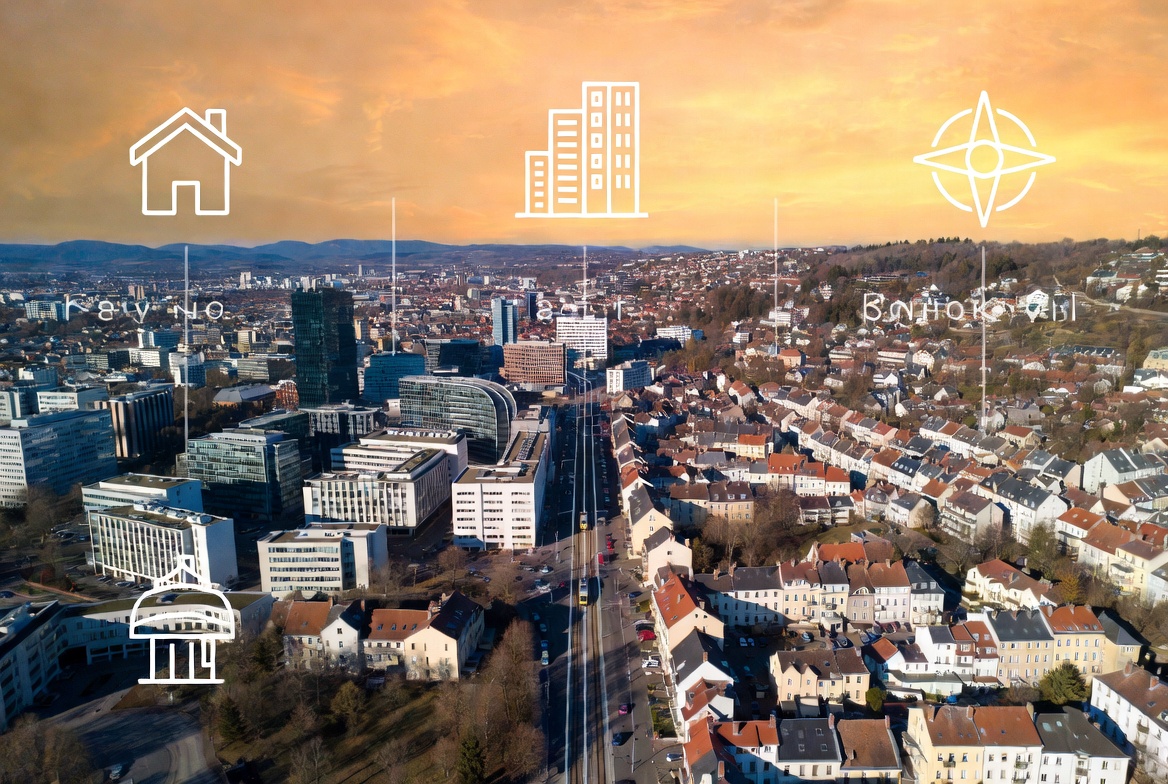
If you are thinking about buying property in Luxembourg in 2026, there is one decision that will shape your financial future more than almost anything else: where you buy. Luxembourg is a country of just 2,586 square kilometres, yet within those borders you will find neighbourhoods where prices differ by more than 100 percent per square metre, areas where rental yields can vary by three or four percentage points, and corridors where a single infrastructure project has added tens of thousands of euros to property values almost overnight. Whether you are a first-time buyer looking for your first apartment, an investor hunting for the strongest rental returns, or a family searching for the right balance of space, schools, and commute times, this guide is written specifically for you.
In this article, you will get a detailed, data-driven breakdown of the five best areas to buy property in Luxembourg in 2026. I will walk you through average prices per square metre, rental yield estimates, growth trajectories over the past six years, and the critical infrastructure developments — especially the tram expansion — that are reshaping the market right now. You will also find comparison tables, a real client example, and actionable advice you can use whether you are buying your primary residence or building a property portfolio. If you have not yet read our complete 2026 Luxembourg market analysis, I recommend starting there for the full macro picture before diving into this neighbourhood guide.
In my experience working with clients across Luxembourg, I have seen people make extraordinary returns by choosing the right neighbourhood at the right time — and I have also seen buyers leave money on the table by fixating on the wrong criteria. This guide aims to give you the clarity and confidence to make that decision wisely. Let us get into it.
Why Location Matters More Than Ever in Luxembourg in 2026
Luxembourg's property market has always been driven by location, but in 2026 the differences between neighbourhoods are more pronounced than they have been in over a decade. Three converging forces are making the "where" question more important than ever before.
First, the tram expansion is rewriting the map. The Luxembourg tram network, which opened its first section in 2017, has been progressively extended through the capital and is now influencing property values along its entire corridor. In my experience working with clients across Luxembourg, I have watched the tram turn formerly overlooked streets into prime real estate. Properties within a 500-metre radius of tram stops have consistently commanded premiums of 12 to 18 percent compared with similar properties just a kilometre away. With new extensions planned through 2028, the tram is not just a transport system — it is a property value accelerator.
Second, the post-correction market is creating divergence. After the significant price correction of 2022-2023, when Luxembourg property prices fell by an average of 14 percent nationwide, the recovery has been uneven. Some neighbourhoods have already surpassed their 2022 peaks, while others remain below. This divergence creates opportunity if you know where to look — and risk if you do not. For a deeper look at the overall market trajectory, see our complete 2026 Luxembourg market analysis.
Third, affordability pressures are pushing demand outward. With average property prices in Luxembourg City now exceeding EUR 10,000 per square metre, many buyers — especially first-time buyers and younger professionals — are increasingly looking at secondary cities and emerging neighbourhoods that offer better value. This demand shift is creating new growth hotspots that savvy buyers and investors should be watching closely.
What this means for you: Do not simply buy "in Luxembourg." Study the neighbourhood-level data, understand the infrastructure pipeline, and match the area to your specific goals — whether that is capital growth, rental yield, or lifestyle.
Bonnevoie — The Neighbourhood That Is Already Winning
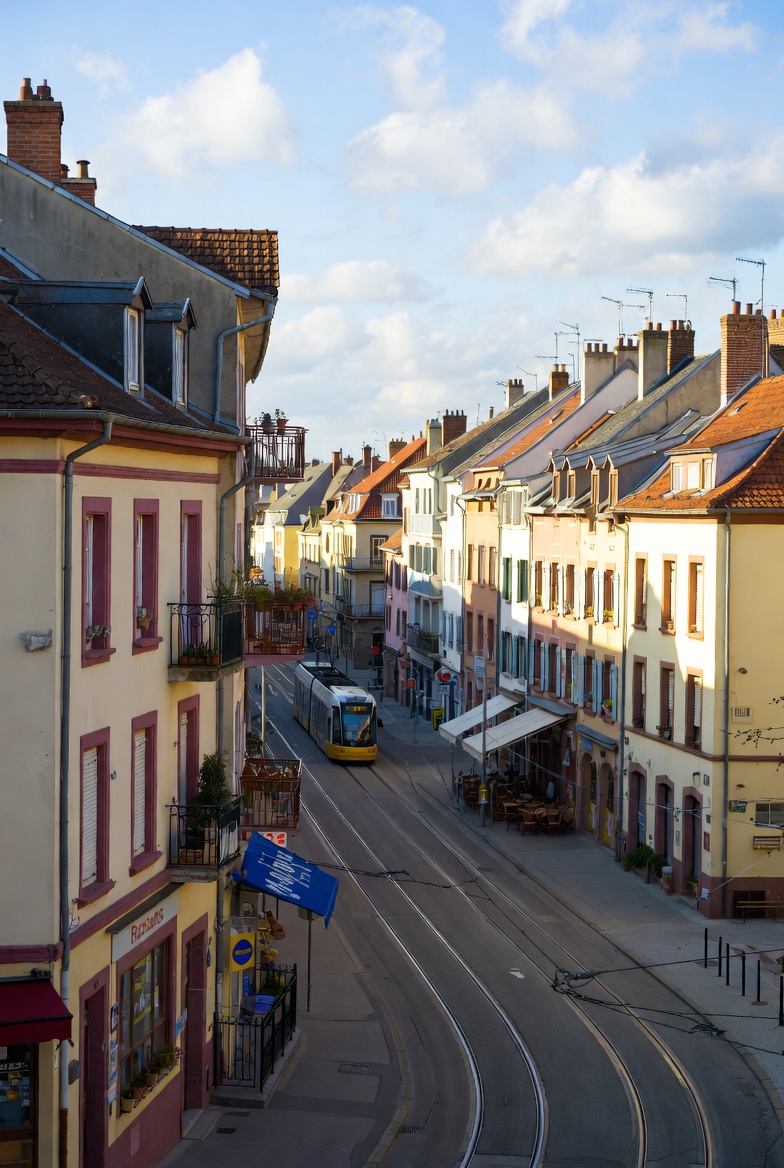
Bonnevoie — Luxembourg City's most dynamic neighbourhood, where tram connectivity meets multicultural energy
If you had to pick one neighbourhood that perfectly illustrates how location dynamics work in Luxembourg, Bonnevoie would be it. Situated just south of the Gare Centrale (Luxembourg City's main train station), Bonnevoie has transformed from a traditionally working-class, multicultural area into one of the most sought-after neighbourhoods for both owner-occupiers and investors. What I always tell my clients about this area is that Bonnevoie is where affordability meets momentum — and that combination is rare in Luxembourg City.
Why Bonnevoie Is Attracting Buyers in 2026
Tram connectivity. Bonnevoie is directly served by the tram line, which connects it to Kirchberg, the city centre, and the Gare in minutes. This has been transformative. Before the tram reached Bonnevoie, the neighbourhood was seen as "close to the station but not quite the city centre." Now, with a tram stop practically at its doorstep, residents enjoy the same connectivity as those living in far more expensive areas like Belair or Limpertsberg.
Multicultural energy and amenities. Bonnevoie has a vibrant, international character. You will find a diverse selection of restaurants, independent shops, cultural spaces, and green areas including the Parc de Bonnevoie. For expats who want to feel part of a living, breathing community rather than a sterile residential zone, Bonnevoie delivers something that newer developments often lack: genuine neighbourhood character.
Price point. With average prices hovering between EUR 8,200 and EUR 8,800 per square metre in early 2026, Bonnevoie offers a significant discount compared with premium Luxembourg City neighbourhoods like Kirchberg (EUR 11,000-13,000/sqm) or Belair (EUR 10,500-12,000/sqm). For a 75-square-metre apartment, that translates to a difference of EUR 150,000 to EUR 300,000 — money you can put toward renovations, furnishings, or simply a lower mortgage payment. If you are exploring financing options, check out our mortgage guide for the latest rates and strategies.
Rental demand. Bonnevoie's proximity to the Gare — and by extension the cross-border commuter routes — means rental demand is consistently strong. One thing that surprises most of my clients is how quickly well-located Bonnevoie apartments get rented. Typical vacancy periods are just two to three weeks for a well-priced, furnished unit, compared with four to six weeks in less central locations. Rental yields in Bonnevoie currently average between 3.8 and 4.3 percent gross, which is excellent by Luxembourg City standards.
Bonnevoie Price Evolution 2020–2026
| Year | Avg. Price/sqm (EUR) | Year-on-Year Change | Key Market Event |
|---|---|---|---|
| 2020 | 7,100 | +5.2% | Post-COVID demand surge |
| 2021 | 7,850 | +10.6% | Record low interest rates |
| 2022 | 8,400 | +7.0% | Peak before correction; tram extension opens |
| 2023 | 7,500 | -10.7% | Interest rate shock; market correction |
| 2024 | 7,800 | +4.0% | Recovery begins; ECB rate cuts |
| 2025 | 8,300 | +6.4% | Strong recovery; demand returns |
| 2026 (Q1) | 8,500 | +2.4% (projected full year: +5-7%) | Tram effect fully priced in; new builds delivered |
As the data shows, Bonnevoie has not only recovered from the 2023 correction but has surpassed its previous peak. The neighbourhood's price floor proved to be significantly higher than the city average during the downturn, largely thanks to the tram infrastructure and persistent rental demand. For investors evaluating where to allocate capital, Bonnevoie sits in a sweet spot: it is expensive enough to attract quality tenants but affordable enough to generate meaningful yield. For a broader look at whether investing in Luxembourg property makes sense for your situation, see our investment strategy guide.
What this means for you: If you are looking for a Luxembourg City address without paying Kirchberg or Belair prices, Bonnevoie should be at the top of your shortlist. Act sooner rather than later — the tram premium is still growing.
Gasperich — Luxembourg's Rising Business Hub
Gasperich, and specifically the Cloche d'Or district within it, represents the most dramatic urban transformation story in Luxembourg over the past decade. What was once an unremarkable area at the southern edge of Luxembourg City has become a gleaming mixed-use district home to some of Europe's largest employers, a major shopping centre, new residential towers, and an expanding tram connection. From what I see in the market right now, Gasperich is where corporate Luxembourg and residential aspiration intersect.
The Cloche d'Or Effect
The Cloche d'Or development has attracted the headquarters or major offices of companies including Deloitte, PwC, Amazon, and several major banks. This concentration of high-income professionals has created intense demand for nearby residential property, both for purchase and rental. The demographic profile of Gasperich tenants and buyers skews toward well-compensated professionals — typically earning above EUR 80,000 annually — who want a short commute and modern living standards.
Prices in Gasperich currently range from EUR 9,500 to EUR 10,500 per square metre, reflecting its positioning as a premium but not ultra-premium neighbourhood. New-build apartments in the latest residential towers can push above EUR 11,000 per square metre, while older stock in the broader Gasperich area can still be found closer to EUR 9,000. The price premium compared with the city-wide average is significant, but the demand fundamentals — driven by that corporate employment base — provide strong support.
Gasperich vs Luxembourg City Average Prices
| Metric | Gasperich (Cloche d'Or) | Luxembourg City Average | Difference |
|---|---|---|---|
| Avg. price/sqm (apartment) | EUR 9,800 | EUR 9,200 | +6.5% |
| Avg. price/sqm (new build) | EUR 10,800 | EUR 10,100 | +6.9% |
| Gross rental yield | 3.5 – 3.9% | 3.2 – 3.6% | +0.3 pp |
| Avg. rent (2-bed apartment) | EUR 2,350/month | EUR 2,100/month | +11.9% |
| Price growth 2024-2026 | +12.8% | +9.4% | +3.4 pp |
| Vacancy rate | ~2.1% | ~3.5% | -1.4 pp |
Who Should Consider Gasperich?
Gasperich is ideal for two buyer profiles. The first is the corporate professional who works in or near Cloche d'Or and wants to eliminate the commute entirely. The lifestyle proposition is compelling: modern apartments, excellent retail (including the Cloche d'Or shopping centre), green spaces, and a growing range of restaurants and services.
The second is the buy-to-let investor targeting the corporate rental market. Gasperich tenants tend to be reliable, high-earning professionals on multi-year contracts, which means lower turnover and fewer payment issues. The slightly lower yield compared with some outer areas is compensated by significantly lower risk and strong capital appreciation potential.
One consideration: Gasperich has a lot of new supply coming to market. Several residential projects are scheduled for delivery between 2026 and 2028, which could temporarily moderate price growth. However, the demand pipeline — driven by continued corporate expansion in Cloche d'Or — appears strong enough to absorb this supply. If you are weighing whether to buy or wait, our rent vs buy comparison can help you model the numbers.
What this means for you: If you are buying for rental income, target 1- and 2-bedroom apartments near Cloche d'Or. If buying for personal use, negotiate hard on new builds — developers with multiple units to sell may offer better terms than the listed price suggests.
Kirchberg — Premium Living, Institutional Anchor
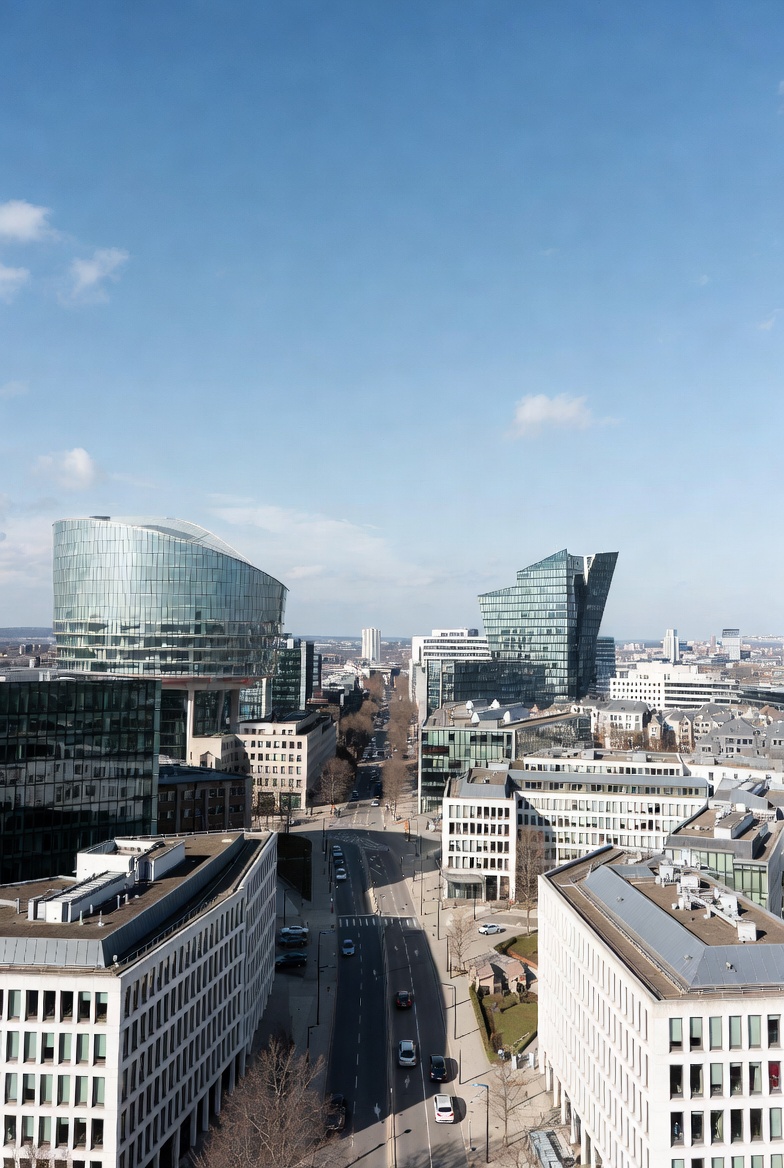
Kirchberg — Luxembourg's premium business district, home to EU institutions and the Philharmonie
Kirchberg is Luxembourg's most prestigious modern district, and in 2026 it remains the benchmark for premium property in the Grand Duchy. Home to the European Court of Justice, the European Investment Bank, the Philharmonie Luxembourg, the MUDAM contemporary art museum, and the offices of dozens of international institutions and corporations, Kirchberg is where Luxembourg's role as a European capital is most visibly manifested. The neighbourhood combines institutional gravitas with genuinely excellent living conditions, and property prices reflect that status.
Kirchberg Property Prices in 2026
Average prices in Kirchberg range from EUR 11,000 to EUR 13,000 per square metre, making it the most expensive neighbourhood covered in this guide. Luxury penthouses and top-floor units in prime buildings can exceed EUR 15,000 per square metre. Even by Luxembourg City's elevated standards, Kirchberg commands a premium of 15 to 25 percent over the city average.
What justifies these prices? Several factors working in combination:
- Institutional demand floor. The EU institutions and international organisations based in Kirchberg employ thousands of well-compensated officials, many of whom receive housing allowances that effectively set a high floor for both rents and purchase prices. This institutional anchoring provides a level of demand stability that few other neighbourhoods can match.
- Tram connectivity. Kirchberg was one of the first areas served by the tram, and the Kirchberg tram stops provide direct, traffic-free connections to the city centre, Gare Centrale, and the airport corridor. I have seen firsthand how the tram has transformed daily life in Kirchberg — what used to be a somewhat isolated plateau accessible mainly by car is now one of the best-connected districts in the country.
- Quality of built environment. Kirchberg benefits from deliberate urban planning. Wide boulevards, generous green spaces, the Parc Central, excellent cycling infrastructure, and a mix of residential, commercial, and cultural buildings create an environment that feels planned but not sterile. New residential developments in Kirchberg consistently target the upper end of the market, with high build quality and energy efficiency standards.
- Cultural and lifestyle amenities. The Philharmonie, MUDAM, the Coque sports centre, and a growing selection of restaurants and cafes give Kirchberg a lifestyle dimension that goes beyond the corporate. For families, the European School and several international schools are nearby.
Is Kirchberg a Good Investment?
From a pure rental yield perspective, Kirchberg is not the strongest choice. Gross yields typically range from 2.8 to 3.4 percent, which is below the city average and significantly below what you can achieve in Bonnevoie or the secondary cities. The entry cost is high, and the yield compression reflects the premium pricing.
However, Kirchberg excels at capital preservation and steady appreciation. During the 2023 correction, Kirchberg prices fell by only 8 to 10 percent compared with the national average of 14 percent, and the recovery was faster. For buyers who prioritise wealth preservation, low volatility, and long-term appreciation over aggressive yield, Kirchberg remains the blue-chip choice. In my experience working with clients across Luxembourg, those who buy in Kirchberg rarely regret it — the liquidity is excellent, the tenant pool is reliable, and resale demand is consistently strong.
What this means for you: Buy in Kirchberg if you are prioritising capital preservation, prestige, and a premium lifestyle. If you need stronger rental yields or have a tighter budget, the other areas in this guide will serve you better.
Esch-sur-Alzette — The Affordable Alternative With Serious Growth Potential
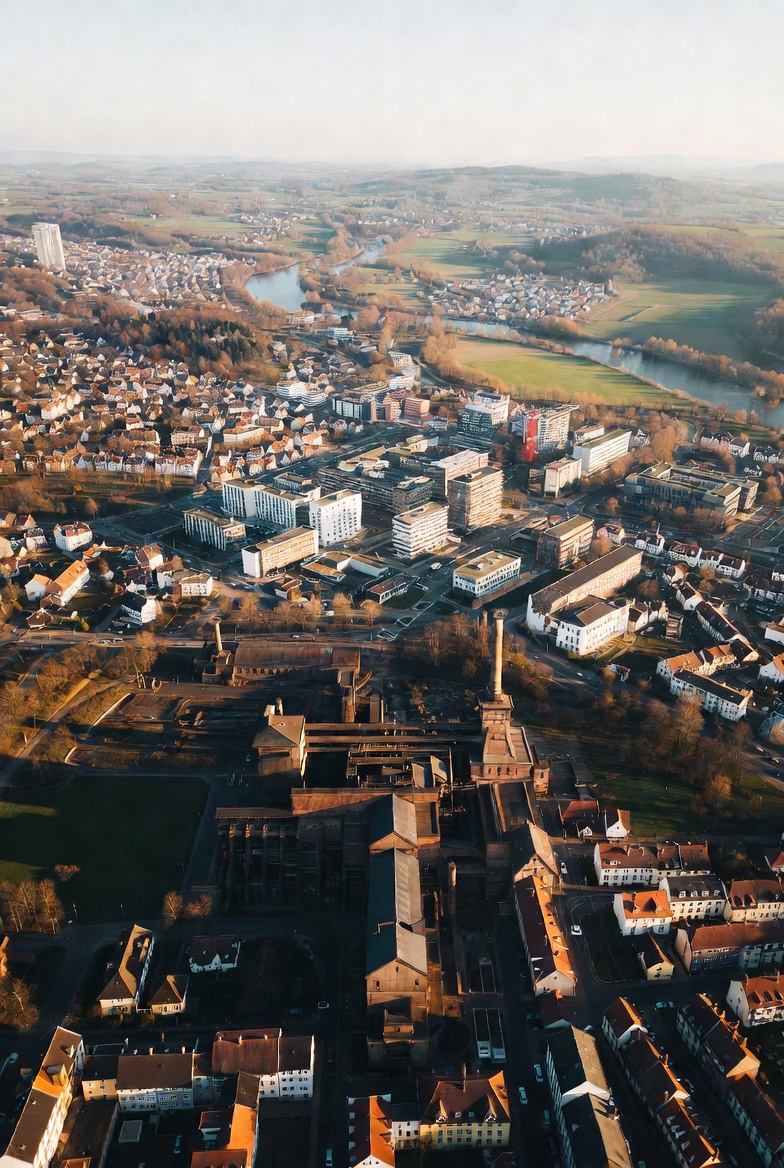
Belval, Esch-sur-Alzette — where Luxembourg's university campus meets industrial heritage and affordable new builds
If Luxembourg City's prices feel out of reach, Esch-sur-Alzette should be your first stop. As Luxembourg's second-largest city, Esch has undergone a remarkable transformation over the past decade, driven by the development of the Belval campus — home to the University of Luxembourg — and significant public and private investment in urban renewal. With average prices between EUR 5,800 and EUR 6,500 per square metre, Esch offers an entry point that is 35 to 45 percent below Luxembourg City, while still providing strong connectivity, growing amenities, and genuine upside potential.
The Belval Factor
The Belval district, built on the site of former steelworks, is one of Luxembourg's most ambitious urban development projects. The University of Luxembourg's main campus is here, bringing a steady flow of students, researchers, and academic staff. But Belval is much more than a university campus. It includes the Rockhal concert venue, a research and innovation park, residential towers, retail spaces, and public amenities. The development is still ongoing, with new phases planned through the late 2020s, which means the full impact on property values has yet to be realised.
What I always tell my clients about this area is that Esch-Belval in 2026 reminds me of what Bonnevoie looked like five to seven years ago: undervalued, undergoing transformation, and on the verge of a significant rerating. The price gap between Esch and Luxembourg City is wider than fundamentals justify, and as connectivity improves and the Belval ecosystem matures, that gap should narrow.
Esch-sur-Alzette Price Evolution 2020–2026
| Year | Avg. Price/sqm (EUR) | Year-on-Year Change | Key Development |
|---|---|---|---|
| 2020 | 5,200 | +4.8% | Belval university expansion continues |
| 2021 | 5,800 | +11.5% | Record demand; low rates drive buyers south |
| 2022 | 6,200 | +6.9% | Peak pricing; new residential projects launched |
| 2023 | 5,400 | -12.9% | Market correction hits harder outside capital |
| 2024 | 5,650 | +4.6% | Recovery begins; Belval Phase 3 breaks ground |
| 2025 | 6,050 | +7.1% | Strong recovery; student housing demand surges |
| 2026 (Q1) | 6,200 | +2.5% (projected full year: +6-9%) | Tram-train link discussions advance |
Why Investors Should Pay Attention to Esch
Esch offers something that Luxembourg City increasingly cannot: meaningful rental yields at an accessible price point. Gross rental yields in Esch currently range from 4.2 to 5.0 percent, which is significantly above the city average. The tenant base is increasingly diverse — students, young professionals, University of Luxembourg staff, and cross-border workers who prefer to live in Luxembourg rather than commute from France.
The investment case is strengthened by several pipeline developments: improved train connections to Luxembourg City (currently around 20 minutes), ongoing urban renewal in the city centre, and the potential extension of the tram network to link Esch-Belval with the Luxembourg City tram system. If this tram-train connection materialises — and current indications suggest it is a matter of when, not if — Esch property values could see a significant uplift, similar to what Bonnevoie experienced when its tram stop opened.
If you are considering Esch as part of a broader investment strategy, I recommend reading our investment strategy guide which covers portfolio diversification across Luxembourg's key areas.
What this means for you: If you have a budget of EUR 400,000-600,000 and want maximum rental income, Esch should be in your consideration set. Focus on properties near the Belval campus or the train station for the strongest rental demand.
Differdange — The Hidden Gem for Smart Investors
Differdange is Luxembourg's third-largest city, yet it rarely features in English-language property guides. That anonymity is precisely what makes it interesting for investors in 2026. With average prices between EUR 4,800 and EUR 5,500 per square metre — the lowest of any area in this guide — Differdange offers an entry point that is less than half the cost of Kirchberg and roughly 40 percent below Bonnevoie. For buyers who are willing to look beyond the obvious, Differdange presents a compelling value proposition.
What Differdange Offers
Affordability without isolation. Differdange is located in the southwest of Luxembourg, approximately 25 kilometres from Luxembourg City. The train connection provides a commute of around 30-35 minutes to the capital, which is manageable and comparable to what many professionals endure in cities like London or Paris. The town itself has a compact, walkable centre with shops, restaurants, schools, and cultural facilities including the Aciérie cultural centre.
Strong rental yields. This is where Differdange truly shines. Gross rental yields currently range from 4.5 to 5.3 percent, which are among the highest in Luxembourg. The tenant base is predominantly young professionals and families attracted by the affordability — many are people who work in Luxembourg City or Esch-sur-Alzette but cannot afford to live there. This creates consistent, reliable rental demand.
Regeneration trajectory. Differdange is benefiting from the same national investment in secondary cities that has transformed Esch. Urban renewal projects, improved public spaces, and new residential developments are gradually upgrading the town's appeal. The presence of several educational institutions and the proximity to the Belval campus add to the growth dynamic.
Who Should Buy in Differdange?
Differdange is best suited for yield-focused investors rather than those seeking rapid capital appreciation. The capital growth trajectory is positive but more modest than in Luxembourg City neighbourhoods. Where Differdange excels is in the combination of low entry cost and strong rental returns — for a total investment of EUR 350,000-450,000, you can acquire a well-located two-bedroom apartment that generates reliable monthly income. For first-time investors building a property portfolio, Differdange is an excellent starting point. If you are new to the buying process in Luxembourg, our step-by-step buying guide will walk you through every stage.
What this means for you: If you have EUR 350,000-500,000 to invest and want strong monthly rental income, Differdange deserves serious consideration. Focus on properties near the train station and town centre for the best tenant demand.
The Tram Effect — How Infrastructure Changes Everything in Luxembourg
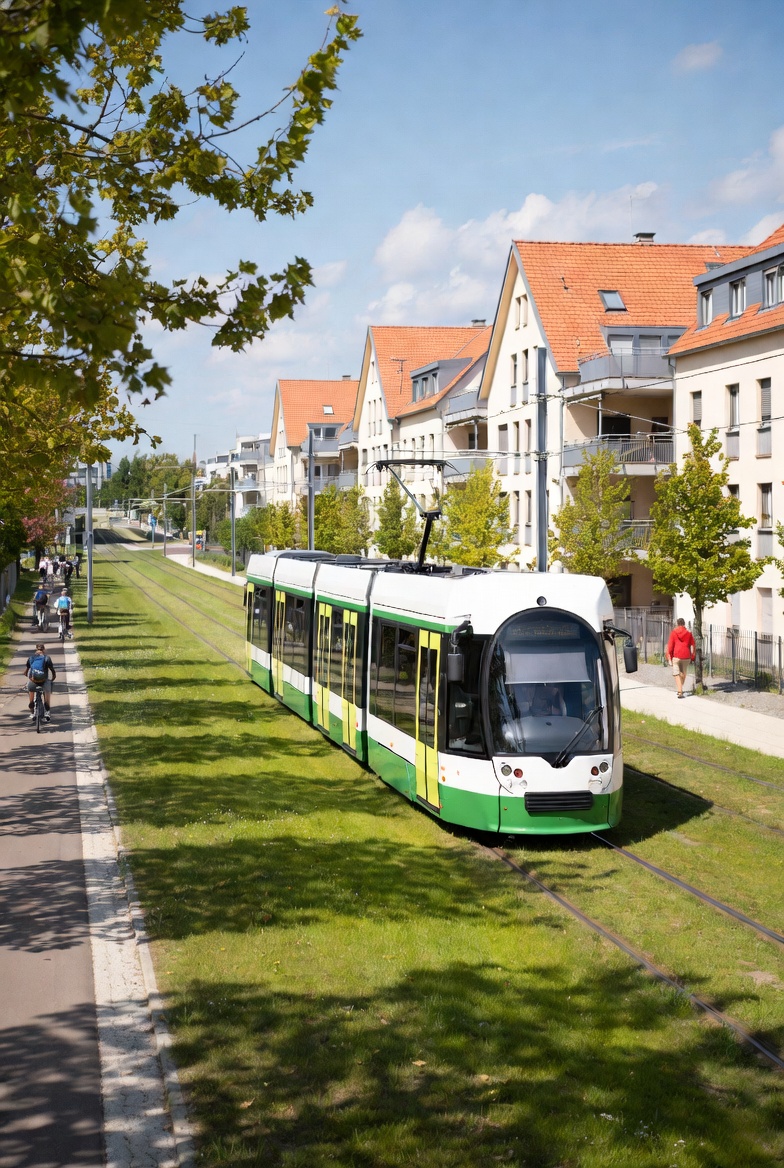
The Luxembourg tram — a property value accelerator, adding 12-18% premiums along its corridor
No discussion of Luxembourg property areas in 2026 would be complete without a dedicated analysis of the tram's impact on property values. The Luxembourg tram — known as the Luxtram — has been the single most significant infrastructure project for property markets since it launched its first section between Luxexpo and the Pont Rouge in December 2017. I have seen firsthand how the tram has transformed not just transport patterns but entire neighbourhood valuations, and the data backs up what I observe daily in the market.
Quantifying the Tram Premium
The price premium for properties located within 500 metres of a tram stop is both real and measurable. Based on transaction data from 2020 to early 2026, properties near tram stops command a premium of 12 to 18 percent compared with similar properties located more than one kilometre from the nearest stop. The premium is highest for apartments (which tend to attract more transport-dependent buyers) and somewhat lower for houses (where buyers typically have cars regardless).
The premium is not static — it develops in phases:
- Announcement phase (3-5 years before opening): Prices begin to rise as anticipation builds. Typical premium: 3-6%.
- Construction phase (1-3 years before opening): Premium accelerates despite construction disruption. Typical premium: 6-10%.
- Opening and maturation (first 2-3 years after opening): Full premium is realised as the tram proves its value. Typical premium: 12-18%.
- Established phase (3+ years after opening): Premium stabilises and becomes the new baseline. The "tram effect" is fully priced in.
Price Premium Near Tram Stops: The Data
| Distance from Tram Stop | Avg. Price/sqm (EUR) | Premium vs 1km+ Baseline | Typical Buyer Profile |
|---|---|---|---|
| 0 – 250 metres | 10,450 | +16 – 18% | Young professionals, expats without cars |
| 250 – 500 metres | 10,100 | +12 – 15% | Families, investors, owner-occupiers |
| 500 – 750 metres | 9,400 | +5 – 8% | Mixed; some premium priced in |
| 750 metres – 1 km | 9,100 | +1 – 3% | Marginal premium; walkability limit |
| 1 km+ | 8,950 | Baseline | Price-sensitive buyers, car-dependent |
Note: Prices shown are Luxembourg City averages for apartments along the current tram corridor. Actual prices vary by neighbourhood.
Future Tram Extensions: Where to Watch
The tram network is still growing. Key extensions that property buyers should monitor include:
- Extension to the airport (Findel): This connection will link the tram to Luxembourg Airport, significantly increasing the appeal of properties along the eastern corridor. Completion is expected by 2028-2029.
- Southern extension beyond Cloche d'Or: Plans to extend the tram further south could bring tram connectivity closer to Esch-sur-Alzette, though this remains in the planning phase.
- Potential Belval/Esch connection: A tram-train concept linking the Luxembourg City tram with the southern rail corridor is under study. If realised, this could be transformative for Esch and Differdange property values.
For investors, the strategic play is clear: buy in areas that are about to get tram connectivity, not areas that already have it. The biggest gains come during the announcement and construction phases, before the premium is fully priced in. One thing that surprises most of my clients is how early the tram starts affecting prices — often years before the first rail is laid.
What this means for you: When evaluating any property in Luxembourg, check its distance to the nearest current or planned tram stop. A 500-metre radius is the sweet spot. Properties in the path of future extensions represent the best opportunity to capture tram-driven appreciation before it is priced in.
Luxembourg Neighbourhood Comparison: All Five Areas at a Glance
To help you compare the five areas covered in this guide side by side, here is a comprehensive comparison table. Use this to match your priorities — whether that is price, yield, growth potential, or lifestyle — with the neighbourhood that best fits.
| Criteria | Bonnevoie | Gasperich | Kirchberg | Esch-sur-Alzette | Differdange |
|---|---|---|---|---|---|
| Avg. Price/sqm (EUR) | 8,200 – 8,800 | 9,500 – 10,500 | 11,000 – 13,000 | 5,800 – 6,500 | 4,800 – 5,500 |
| Gross Rental Yield | 3.8 – 4.3% | 3.5 – 3.9% | 2.8 – 3.4% | 4.2 – 5.0% | 4.5 – 5.3% |
| Tram Access | Direct (operational) | Direct (operational) | Direct (operational) | Planned (tram-train) | None (train only) |
| Commute to City Centre | 5-10 min (tram) | 10-15 min (tram/car) | 8-12 min (tram) | 20-25 min (train) | 30-35 min (train) |
| Capital Growth Potential (2026-2030) | Moderate-High | Moderate-High | Moderate (steady) | High | Moderate |
| Entry Cost (2-bed apt) | EUR 575,000 – 660,000 | EUR 665,000 – 790,000 | EUR 770,000 – 975,000 | EUR 405,000 – 490,000 | EUR 335,000 – 415,000 |
| Best For | First-time buyers, balanced investors | Corporate professionals, premium rentals | Wealth preservation, prestige | Growth investors, budget buyers | Yield-focused investors |
| Vacancy Rate | ~2.5% | ~2.1% | ~2.8% | ~3.0% | ~3.5% |
| Risk Level | Low-Medium | Low-Medium | Low | Medium | Medium |
| International Schools Nearby | Yes (multiple) | Yes (multiple) | Yes (European School) | Yes (growing options) | Limited |
The table makes the trade-offs clear. There is no single "best" area — the right choice depends entirely on your goals, budget, and time horizon. A first-time buyer with EUR 500,000 will have very different options than an investor with EUR 1,000,000 seeking maximum yield. If you are not sure which profile fits you best, I recommend starting with a personalised consultation where we can map your financial situation to the areas that make the most sense. You can start searching for available properties here.
Real Client Example: How Choosing the Right Area Made All the Difference
Let me share a story that illustrates why area selection matters so much. In late 2020, I worked with a couple — let us call them Marco and Sofia — who had recently relocated to Luxembourg from Italy for work in the financial sector. They had a combined budget of approximately EUR 580,000 and were initially focused on buying a one-bedroom apartment in Kirchberg, close to Marco's office at a European institution.
After reviewing the numbers together, I showed them an alternative scenario: instead of a 45-square-metre one-bedroom in Kirchberg at around EUR 12,500 per square metre (which would have consumed their entire budget with minimal space), they could purchase a 75-square-metre two-bedroom apartment in Bonnevoie at EUR 7,400 per square metre, totalling EUR 555,000. The commute difference via the tram was only seven additional minutes each way.
They took my advice and purchased in Bonnevoie in January 2021. Here is what happened:
- Purchase price (January 2021): EUR 555,000 (75 sqm at EUR 7,400/sqm)
- Estimated value (Q1 2026): EUR 637,500 (75 sqm at EUR 8,500/sqm)
- Capital appreciation: EUR 82,500 — a gain of approximately 14.9% over five years
- Additional benefit: They got a genuine two-bedroom apartment instead of a cramped one-bedroom, which became essential when their first child arrived in 2023
- If they had bought in Kirchberg: The equivalent one-bedroom would now be worth approximately EUR 630,000 (45 sqm at EUR 14,000/sqm) — a gain of EUR 50,000 or 8.6%, in a property they would have outgrown
The Bonnevoie purchase outperformed the Kirchberg alternative by nearly EUR 33,000 in absolute terms, with the added benefit of significantly more living space. Marco still commutes to Kirchberg daily via the tram in under 15 minutes. From what I see in the market right now, stories like this are becoming increasingly common — buyers who think creatively about location and listen to the data rather than the prestige factor tend to come out ahead.
This is the kind of personalised analysis I provide to every client. Your numbers, your goals, your ideal neighbourhood — let us work through it together.
Get Your Free Property Valuation
Wondering what properties in your target area are really worth? I will provide a personalised, data-backed valuation for any neighbourhood in Luxembourg — completely free, no obligation.
📊 Get Free Valuation 💬 WhatsApp DanielaWhat Expats Should Know About Luxembourg Neighbourhoods
Luxembourg is one of Europe's most international countries — nearly 48 percent of the population are foreign nationals, and in Luxembourg City that figure rises above 70 percent. If you are an expat buying property here, there are several neighbourhood-level factors that go beyond pure investment metrics and can significantly affect your day-to-day quality of life.
Language Considerations
Luxembourg has three official languages: Luxembourgish, French, and German. In practice, the language environment varies significantly by area. In Luxembourg City — and particularly in international neighbourhoods like Kirchberg, Gasperich, and Bonnevoie — English, French, and Portuguese are widely spoken, and you can navigate daily life comfortably in English or French. In Esch-sur-Alzette, French and Portuguese dominate, reflecting the city's historical demographics. In smaller towns like Differdange, Luxembourgish is more prevalent, though French is widely understood.
For expat families, the language of the local school system is a critical consideration. Luxembourg's public schools use a trilingual system (Luxembourgish, German, and French), which can be challenging for children who arrive without exposure to these languages. If this is a concern, you will want to prioritise areas with easy access to international or European schools, which primarily means Luxembourg City and its immediate surroundings.
Commute and Transport
Luxembourg has made public transport completely free since March 2020, which is a significant benefit for residents. However, commute quality varies dramatically by location. Within Luxembourg City, the tram provides a fast, reliable connection between Kirchberg, the city centre, Bonnevoie, and Gasperich. Outside the capital, the train network is the primary public transport option, with good connections to Esch-sur-Alzette (20 minutes) and Differdange (30-35 minutes).
If your workplace is in Luxembourg City and you are considering living in Esch or Differdange, test the commute during rush hour before you commit. Morning trains from the south can be crowded, though the journey itself is quick. For cross-border commuters — especially those coming from France or Belgium — living in the south of Luxembourg can actually reduce total commute time compared with living in the capital.
Schools and Families
For families with children, the school landscape should be a primary factor in neighbourhood selection. Here is a quick guide:
- Kirchberg: European School Luxembourg I is located here, serving families of EU institution employees. Several international schools are also accessible.
- Gasperich / Cloche d'Or: Good access to international schools in the south of the city. The International School of Luxembourg (ISL) in Merl is nearby.
- Bonnevoie: Multiple primary schools; secondary school options are easily reached by tram. International school access requires a short commute.
- Esch-sur-Alzette: Growing number of school options including the new European School Luxembourg II in Mamer, accessible by car. Local schools operate in the Luxembourgish system.
- Differdange: Local Luxembourgish system schools. International school access requires a commute to Luxembourg City.
Healthcare and Daily Life
Luxembourg's healthcare system is excellent throughout the country, so this is less of a differentiator between areas. However, access to specialist medical facilities, shopping, and leisure amenities does vary. Luxembourg City neighbourhoods (Kirchberg, Bonnevoie, Gasperich) offer the widest range of services. Esch-sur-Alzette has a good hospital and growing retail options. Differdange has basic amenities but you may need to travel for specialist services or larger shopping needs.
For a comprehensive overview of the entire buying process for expats, including legal requirements, notary procedures, and tax considerations, see our step-by-step buying guide.
Thinking About Investing in Luxembourg Property?
Whether you are an expat buying your first home or building an investment portfolio, I can help you navigate the market with confidence. Let us discuss which area matches your goals.
📊 Investment Consultation 💬 WhatsApp DanielaFrequently Asked Questions: Buying Property by Area in Luxembourg
What is the cheapest area to buy property in Luxembourg?
Among the areas covered in this guide, Differdange offers the lowest entry prices at EUR 4,800-5,500 per square metre. Nationally, the cheapest communes are in the rural north of Luxembourg (such as Winseler, Boulaide, and Esch-sur-Sûre), where prices can dip below EUR 4,000 per square metre. However, these areas have limited rental demand and connectivity. For the best combination of affordability and investment viability, Differdange and Esch-sur-Alzette are the top choices. If you are evaluating overall market conditions, our complete 2026 Luxembourg market analysis provides the broader context.
Is Bonnevoie a good investment in 2026?
Yes, Bonnevoie remains one of the strongest investment propositions in Luxembourg City. With average prices of EUR 8,200-8,800 per square metre, gross rental yields of 3.8-4.3%, direct tram connectivity, and a proven track record of resilience during the 2023 correction, Bonnevoie offers a compelling balance of income and growth potential. The tram premium has not yet fully matured, and the neighbourhood's ongoing gentrification suggests further upside. For first-time buyers who want a Luxembourg City address at a below-premium price point, Bonnevoie is particularly attractive.
How does the tram affect property prices in Luxembourg?
The Luxembourg tram has a measurable impact on property values. Based on transaction data, properties within 500 metres of a tram stop command a premium of 12 to 18 percent compared with similar properties more than one kilometre away. The premium develops in phases: it begins to build during the announcement of new extensions (3-6%), grows during construction (6-10%), and reaches full maturity within 2-3 years of a stop opening (12-18%). For investors, the optimal strategy is to buy in areas where tram extensions are planned but not yet built, capturing the appreciation before it is fully priced in.
Should I buy in Luxembourg City or outside?
This depends entirely on your priorities. Luxembourg City offers the strongest capital preservation, best connectivity, widest amenities, and most international environment — but at a significant price premium (EUR 8,200-13,000+/sqm). Outside Luxembourg City, areas like Esch-sur-Alzette and Differdange offer 35-50% lower entry prices and higher rental yields, but with longer commutes and fewer amenities. For owner-occupiers who work in the capital, I generally recommend Luxembourg City or close suburbs. For pure investors seeking yield, the secondary cities often make more financial sense. Read our rent vs buy comparison to model which option works best for your financial situation.
What areas in Luxembourg have the highest rental yield?
The highest rental yields in Luxembourg are found in the secondary cities and more affordable communes. Based on current market data:
- Differdange: 4.5 – 5.3% gross yield
- Esch-sur-Alzette: 4.2 – 5.0% gross yield
- Bonnevoie (Luxembourg City): 3.8 – 4.3% gross yield
- Gasperich (Luxembourg City): 3.5 – 3.9% gross yield
- Kirchberg (Luxembourg City): 2.8 – 3.4% gross yield
Keep in mind that higher yield areas typically carry slightly more risk (higher vacancy potential, less liquidity) and may deliver lower capital appreciation. The ideal strategy depends on whether you prioritise income or growth. For a detailed framework, see our investment strategy guide.
Is Esch-sur-Alzette worth investing in?
Esch-sur-Alzette is one of the most compelling investment opportunities in Luxembourg in 2026. The combination of the University of Luxembourg campus at Belval, ongoing urban renewal, strong rental yields (4.2-5.0%), and relatively low entry prices (EUR 5,800-6,500/sqm) creates an attractive risk-reward profile. The potential future tram-train connection to Luxembourg City could be a major catalyst for further price appreciation. The main risks are that Esch is more exposed to economic downturns than Luxembourg City (as the 2023 correction showed, with a steeper price drop), and the full Belval vision is still years from completion. For investors with a 5-10 year horizon and tolerance for moderate risk, Esch offers potentially the highest total returns among the areas in this guide.
Conclusion: Choosing Your Luxembourg Neighbourhood in 2026
Luxembourg's property market in 2026 is a market of divergence. The gap between neighbourhoods — in price, yield, growth trajectory, and lifestyle — is wider than it has been in years. This is both a challenge and an opportunity. If you choose well, you can build significant wealth through property in one of Europe's most stable economies. If you choose poorly, you risk overpaying for underperformance.
Let me summarise the five areas we have covered:
- Bonnevoie is the best all-rounder: affordable for Luxembourg City, strong yields, direct tram access, and proven resilience. Ideal for first-time buyers and balanced investors.
- Gasperich is the corporate hub play: modern living, strong rental demand from high-income professionals, and solid capital growth driven by the Cloche d'Or ecosystem.
- Kirchberg is the blue-chip option: highest prices but lowest risk, institutional demand anchoring, and premium lifestyle. Best for wealth preservation.
- Esch-sur-Alzette is the growth story: affordable entry, highest capital growth potential driven by Belval and the university, and strong yields. Best for growth-oriented investors.
- Differdange is the yield champion: lowest prices, highest rental returns, and quiet potential. Best for cash-flow-focused investors building a portfolio.
In my experience working with clients across Luxembourg, the buyers who succeed are those who start with clear goals, study the data, and then act decisively when they find the right match. Indecision in a recovering market like 2026 has a real cost — every month of waiting in a rising market is a month of appreciation you miss.
If you are ready to take the next step — or if you simply want to discuss which area makes the most sense for your specific situation — I am here to help. Whether you need a free property valuation, an investment consultation, or just an honest conversation about the market, reach out. You can explore available properties on our property search page, read our mortgage guide to understand your financing options, or contact me directly.
Ready to Find Your Perfect Luxembourg Property?
Tell me your budget, your goals, and the areas you are considering. I will provide a personalised analysis showing exactly where your money will work hardest — whether you are buying your first home or your fifth investment property.
📊 Free Property Valuation 📈 Investment Consultation 💬 WhatsApp DanielaSources: STATEC (Institut national de la statistique et des études économiques du Grand-Duché de Luxembourg), Observatoire de l'Habitat, Chambre Immobilière du Grand-Duché de Luxembourg. Price data reflects aggregated transaction records and market surveys. Rental yields are estimated gross figures based on current asking rents and average purchase prices.
Disclaimer: All property prices, rental yields, and market projections cited in this article are indicative estimates based on available data and professional market observation as of Q1 2026. They are provided for informational purposes only and should not be relied upon as financial advice. Actual prices and returns may vary. Past performance does not guarantee future results. We recommend consulting with a qualified real estate professional and financial advisor before making any property purchase decision. Daniela Pelliccia and DanielaPelliccia.com assume no liability for investment decisions made on the basis of this content.